
What happened here
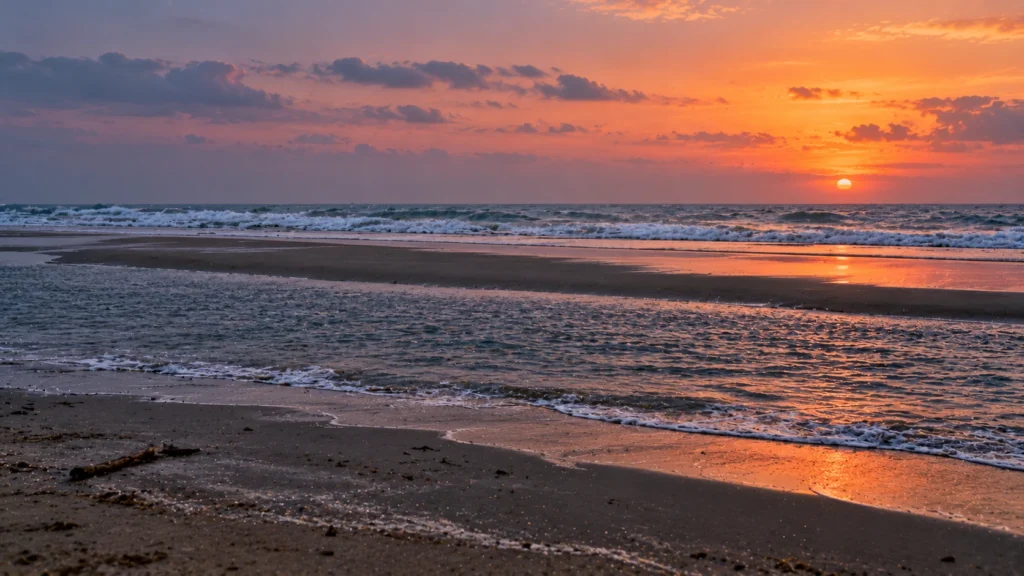
Tourists were swept away at Himchhari beach in Cox's Bazar, Bangladesh, on the afternoon of 21 October 2026. First reports said 3 dead and 2 missing; a fourth body was found on 22 October, with one person still missing. Reports differ on the cause: a large wave and strong current, or a sandbar covered by the rising tide.
Quick answers
What happened at Himchhari beach on 21 October 2026?
Tourists who went into the sea near the museum by Marina Resort in Cox's Bazar were swept away in the afternoon, and four have been found dead.
How many people died?
Four, as of the afternoon of 22 October. One person is still missing. Early evening reports said three dead and two missing.
What caused it?
No official cause. Early reports blamed a large wave and strong current; a later Prothom Alo report says the group was on a sandbar that the rising tide covered.
Was there a lifeguard?
A beach worker and lifeguards joined the rescue and search. The Sea-Safe lifeguard service says its cover ends around Laboni Point, further north.
What should I do on an Indian beach?
Swim only where lifeguards are on duty and the flag is not red, check the tide timetable before walking onto a sandbar, and save 112 and 108.
What happened
On the afternoon of Wednesday, 21 October 2026, a group of young tourists went into the water at Himchhari beach, on the Cox’s Bazar-Teknaf Marine Drive in Bangladesh, near the museum beside Marina Resort. Some were swept away. As of the afternoon of 22 October, four of them are dead and one is still missing, according to Prothom Alo, the Daily Star and Bangladesh Pratidin. We have not found a report that the fifth person has been found.
The time is not settled. Prothom Alo’s first report and the Daily Sun say about 4.30 p.m., the Daily Star says about 5 p.m., and the Business Standard says about 5.30 p.m. Reports spell the place Himchhari or Himchari. Himchhari is about 9 km south of Cox’s Bazar town, according to Prothom Alo. Fire service and beach staff searched until about 7.30 p.m. on Wednesday without finding the missing people (Prothom Alo, Daily Sun). The body of a fourth tourist was found around 8 a.m. on Thursday in the Sagar Bilash area of the same beach (Prothom Alo; the Daily Star’s Bangla report spells it Sagar Nibas), and divers and lifeguards kept searching for the last missing person (Ramu UNO, quoted by Prothom Alo).
How many died, and how many were in the water
The toll rose through the 24 hours, so older reports are out of date. Evening reports on 21 October said three dead and two missing (Prothom Alo, Daily Star, Business Standard, Daily Sun). On Thursday morning the fourth body was recovered, which makes four dead and one missing. Dhaka Tribune and Ittefaq also carry early reports, but both pages were behind a bot check and we could not open them; one search listing for Ittefaq gave three dead and three missing, which is an early figure we do not use.
Other numbers still do not match:
- Who went in. Early reports quote police and a lifeguard official saying a group of 12 tourists from Dhaka came to the beach and five of them went swimming (Prothom Alo, Daily Sun). The Daily Star says people from two groups went in, one from Bayezid in Chattogram and one from Uttara in Dhaka. The Ramu UNO told the Daily Star’s Bangla desk that seven tourists from Uttara reached Cox’s Bazar around 11.30 a.m. that day, and the Daily Star’s Bangla report says six tourists went missing. We cannot give a firm total.
- How many were rescued alive. The Daily Star says one person was rescued and taken to Cox’s Bazar Sadar Hospital. Prothom Alo’s Thursday report says locals rescued three members of the Chattogram group alive and that they were being treated there. Bangladesh Pratidin reports that one person pulled out in critical condition later died in hospital. These accounts cannot all be right, and the outlets also disagree on the names and ages of the dead. We do not name or describe anyone.
What was the cause
No official finding has been published. Three accounts are in the reports, and they may be partly true together.
- A large wave and strong current while bathing. This is what police, lifeguard sources and a district beach worker said in the first reports (Prothom Alo, Daily Sun, Business Standard, Bangladesh Pratidin). The Business Standard quotes the Himchhari police outpost officer saying strong currents swept the tourists away.
- A sandbar covered by the rising tide. Prothom Alo’s Thursday report, citing the upazila administration, police and local people, says two groups crossed the Rezu canal near the Pychhar Dwip museum to walk on a sandbar that had appeared between the canal and the sea. When the tide began to rise in the afternoon, the water deepened and the sandbar went under, and the tourists drowned. Other outlets do not mention the sandbar. We do not know whether the museum named there is the same one beside Marina Resort, though the two descriptions point to the same stretch of beach.
- People trying to help each other. The Ramu UNO told the Daily Star’s Bangla desk that none of the group could swim, and that when they saw some people struggling in the water, others went to help and all were swept away by the current. This is an official’s account, not an inquiry finding.
Lifeguards, crowds and warnings
After the first deaths, Imtiaz Ahmed, regional director of the private lifeguard service Sea-Safe, gave Prothom Alo and the Daily Sun some context. He said the service has 27 lifeguards for about five km of beach from Kolatoli to Laboni Point, and that this is not enough to cover the long stretch further south through Dariyanagar, Himchhari, Patuartek and Inani to Teknaf. He said over 3 lakh tourists were in Cox’s Bazar, rooms were full in more than 500 hotels and resorts, and a large crowd had gathered at Laboni Point for the idol-immersion festival that afternoon, so many people moved to Dariyanagar and Himchhari to bathe. He also said at least 20 hidden channels (rip currents) have formed along Kolatoli, Sugandha, Laboni and the Himchhari-Dariyanagar stretch, and that red flags are displayed in several places but many people ignore them. He added that another tourist died after being swept away at Laboni Point on 27 September. These are his statements to the press; we found no official count of lifeguards or channels. A district-appointed beach worker and fire service divers joined the search.
We found no report on whether a red flag was flying at Himchhari that evening, and no report of a probe, a bathing ban or any compensation, up to 22 October.
Why this matters for Indian beaches
Nothing here is unique to Bangladesh. Festival crowds, a holiday week and an unsupervised beach make the same mix in India, and the pattern is easy to picture on the Goa coast, at Digha and Mandarmani in Bengal, at Puri and on the Konkan and Kerala beaches. A low tide can expose a wide, flat sandbar that looks like extra beach. When the tide turns, water can fill the gap between the sandbar and the shore faster than a person can walk back, and the channel behind you is the one you have to cross. Close to the shore, a rip current can pull a swimmer out even in knee-to-waist deep water. The lessons below are ours, not findings of any inquiry in this case.
Lessons for readers
- Do not walk out on an exposed sandbar, sand spit or tidal flat unless you know the tide timetable. If you can only get there by crossing a canal or channel, the same water will be between you and the shore when the tide comes in. Ask the local lifeguards or the tourism office when high tide is, and be back well before it.
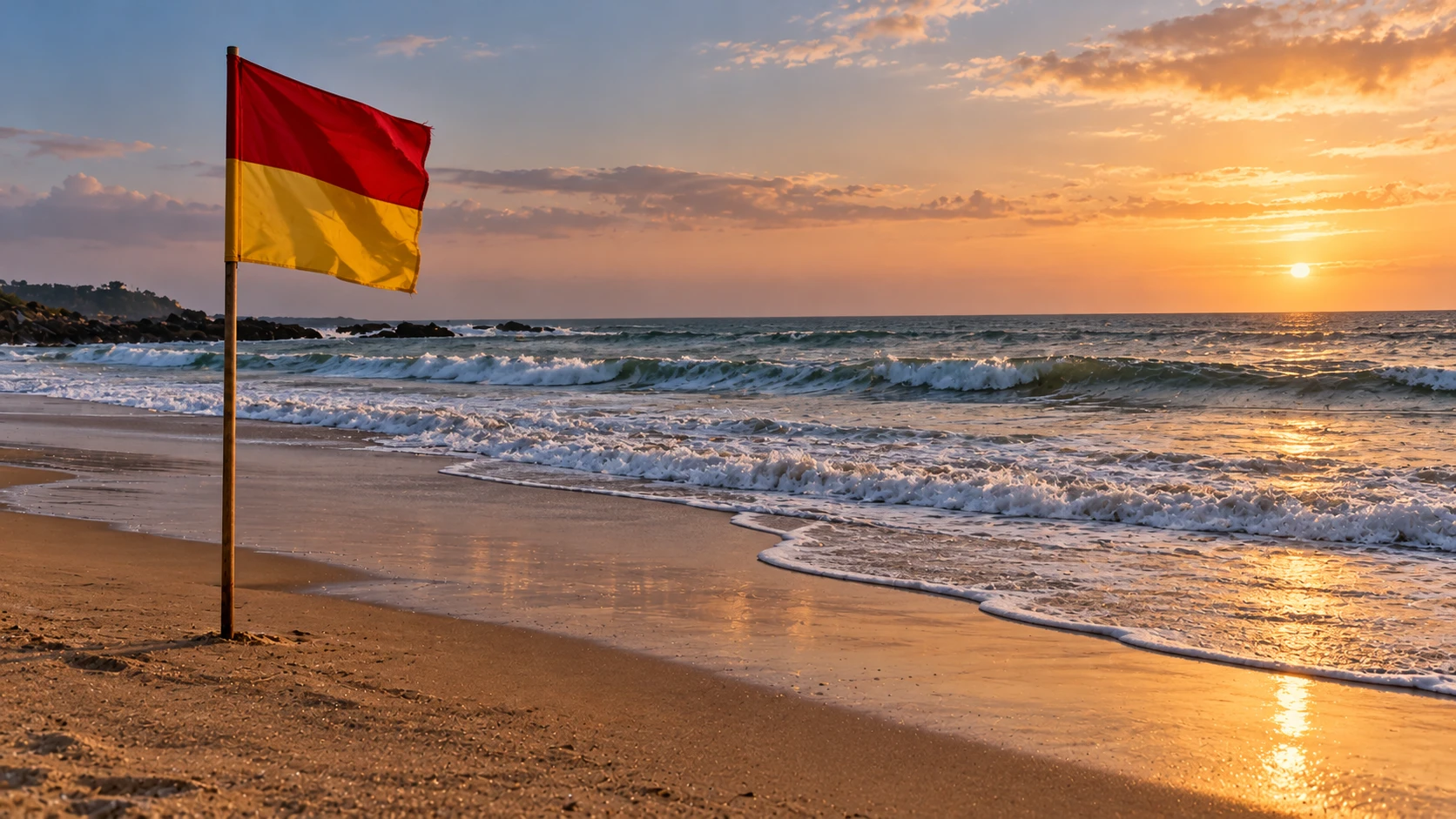
- Swim only where there are lifeguards and flags. A red flag means stay out. A stretch with no lifeguard and no flags is a place to paddle at most, not to swim. Remember that the supervised patch may be a few km away from where the crowd goes.
- Non-swimmers should not go in above the knee. Waves knock people over before the water is deep. Keep children within arm’s reach and never let a group go in without one adult staying on the sand.
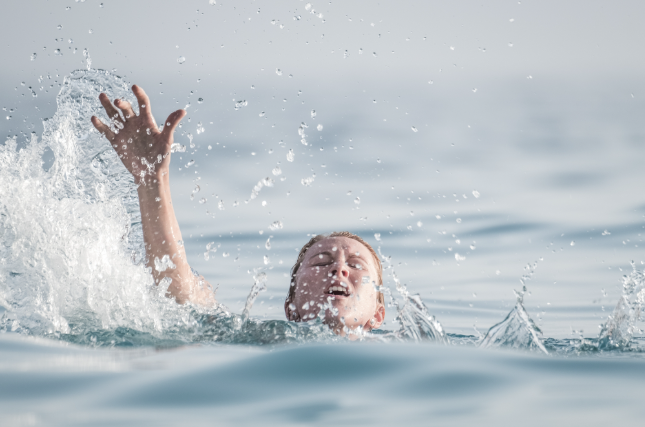
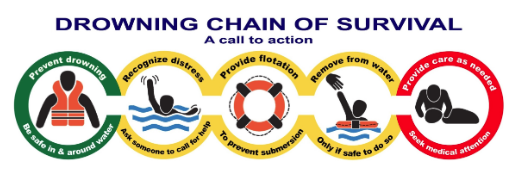
- If someone is in trouble, do not run in after them. Shout for lifeguards, throw a float, a cooler, a rope or anything that floats, and call for help. The Ramu UNO’s account of non-swimmers going in to help is a reminder that rescuers drown too. Our guide on saving a drowning person without risking your own life explains this in detail.
- If a current pulls you out, do not fight it straight back to shore. Stay calm, float, wave and call, and when you can, swim across the current (parallel to the shore) until you are out of the pull, then swim in.
- Festival and holiday days need more caution, not less. Lifeguards are stretched, and people spill onto beaches nobody is watching. Pick the supervised beach, even if it is crowded.
- Check official sea alerts before you go. India’s INCOIS issues high-wave and swell-surge alerts for the coast, and local police and district administrations announce beach closures. Read our notes on keeping children safe near waves and water safety.
If you are on an Indian coast
These numbers apply only in India, not in Bangladesh. Dial 112, the national emergency number, for police, fire and ambulance, and 108 for an ambulance in most states. Note the nearest lifeguard post, the beach’s emergency number and the time of high tide when you arrive, and tell someone in your group where you are going. We do not print a Bangladesh emergency number here because we did not open an official page that lists it.
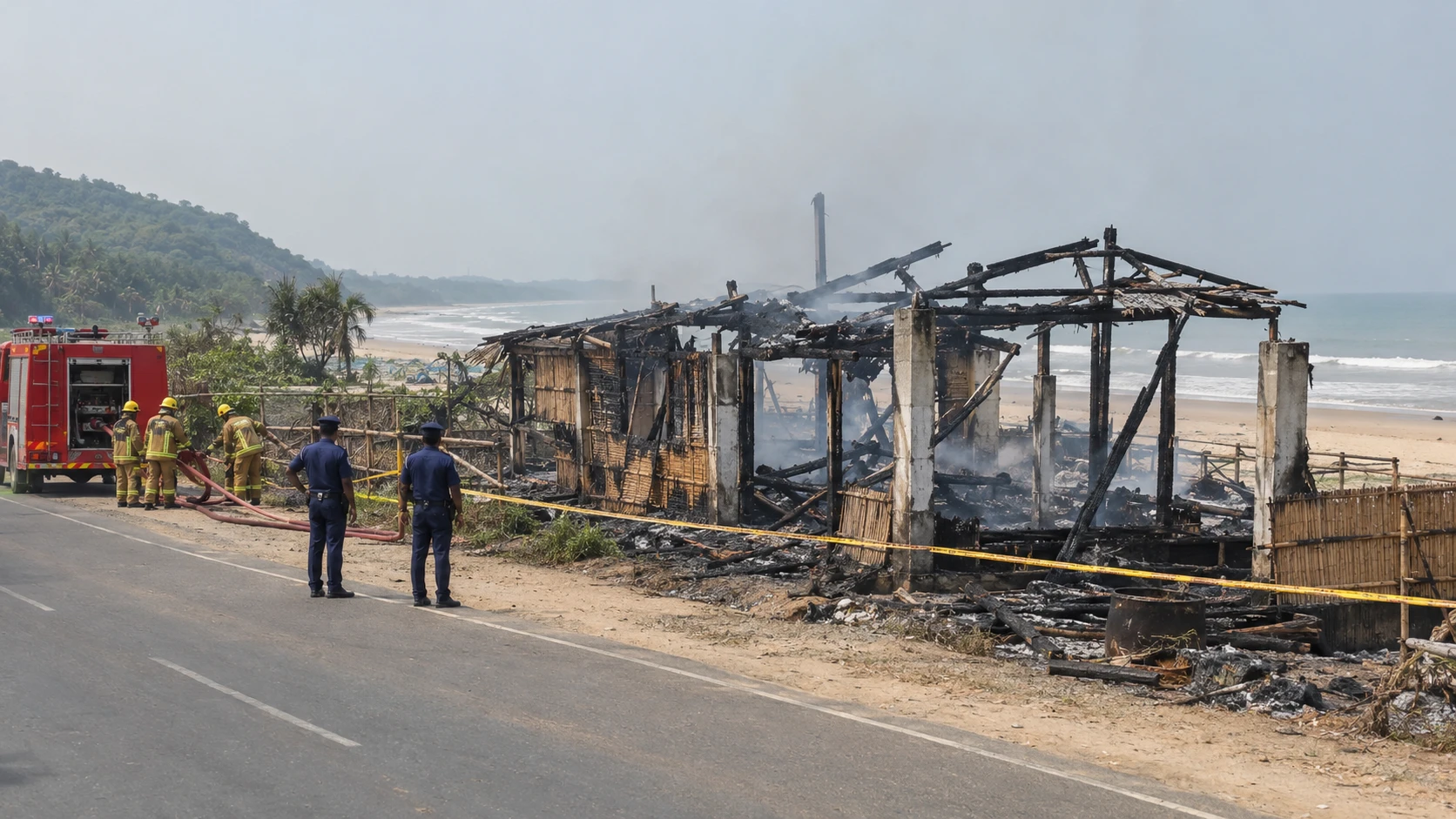
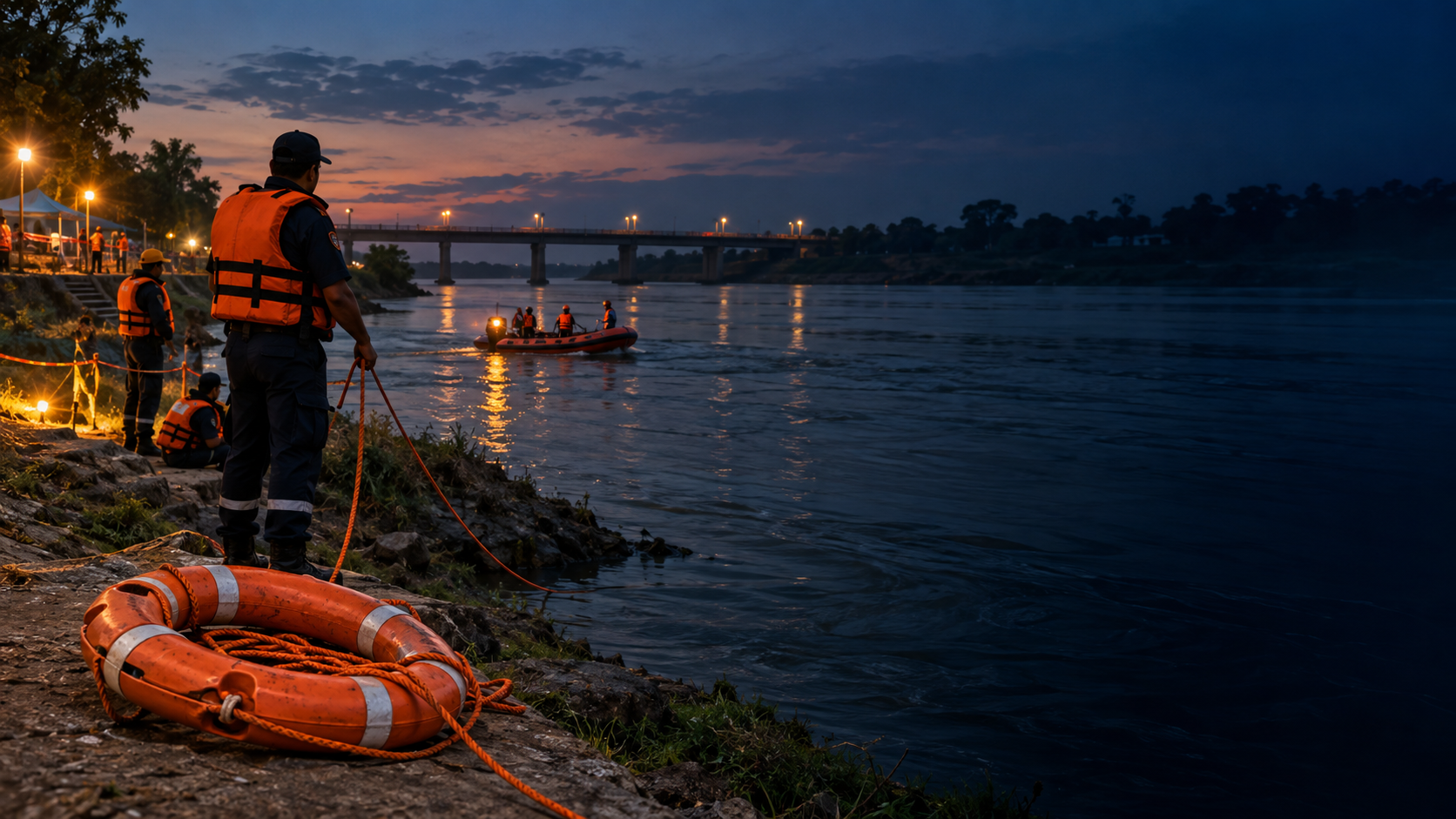
Cox’s Bazar has been in our reports once before this month. The Inani resort fire was a different hazard; see our report on the Inani Beach resort fire. For a river case where an unplanned rescue added to the toll, see Sai River, Lucknow.
What is still not known
We do not know whether the last missing person has been found, how many people were in the water, how many were rescued alive, or exactly where the group entered. We do not know whether the sandbar account or the wave-and-current account (or both) is correct, whether a warning flag was flying, or whether any inquiry has been ordered. We will update this page when an official finding or a revised toll is published.
- Tourists go into the sea at Himchhari beach and several are swept away; locals and lifeguards pull some out; three are dead
- Fire service, lifeguards and beach workers search until about 7.30 p.m. without finding the missing
- Bodies are taken to the morgue at Cox's Bazar Sadar Hospital
- Local people see a body near Sagar Bilash; fire service and police recover it, taking the toll to four
- Fire service divers and lifeguards continue the search for one missing person
- Prothom Alo reports, citing the upazila administration, police and locals, that the group had gone onto a sandbar that the rising tide submerged
Why consequences escalated
- At least four tourists drowned at Himchhari beach on 21 and 22 October 2026 and one person remains missing.
- The toll rose from three to four between the evening of 21 October and the morning of 22 October.
- The cause is not established: reports describe a large wave and strong current, or a sandbar submerged by the rising tide.
- The Ramu UNO says none of the group could swim and that people who tried to help were also swept away.
- A lifeguard-service official says rescue cover is thin south of Laboni Point and that red flags were being ignored.
Failures and risk multipliers
- Going into the sea in the late afternoon without lifeguard cover at an unsupervised stretch.
- Walking out onto a sandbar between a canal and the sea as the tide was about to rise (Prothom Alo's account of the cause).
- Non-swimmers entering the water, and people going in to help others without a flotation aid.
- Swimming despite red flags that, according to the lifeguard service, many visitors ignore.
- A festival and holiday crowd moving from the supervised stretch to beaches with little cover.
Actions that reduce risk
- Do not walk onto sandbars or tidal flats without knowing the tide timetable, and return well before the tide turns.
- Swim only where lifeguards are on duty and the flag is not red.
- If someone is in trouble, call for help and throw something that floats; do not swim out to them.
- If a current pulls you out, float, call for help and swim across the current, not against it.
- If you are on an Indian coast, save 112 and 108 and the beach's lifeguard number.
Leave a comment