
Quick answers
How do I teach my child what to do if their clothes catch fire?
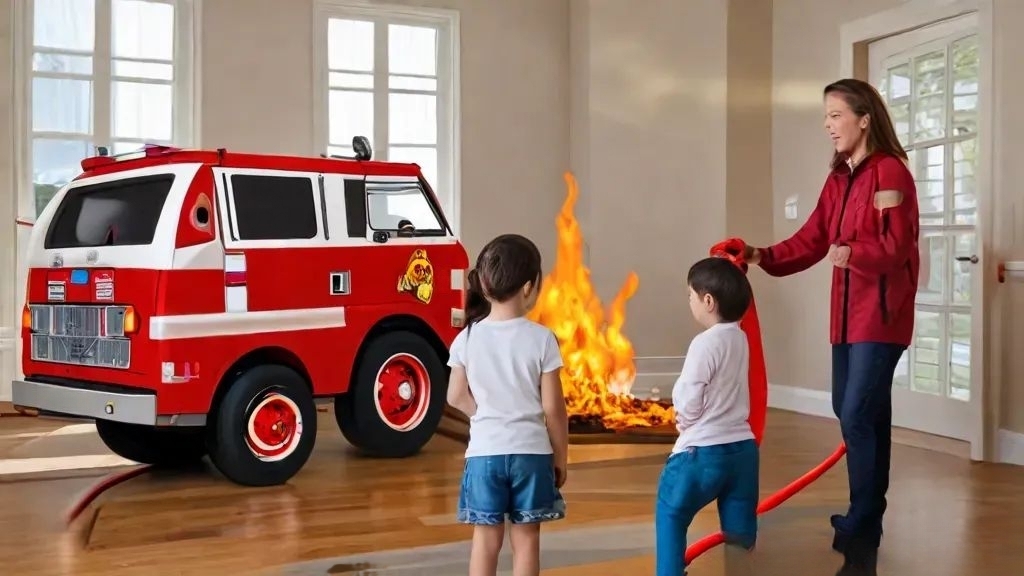
Show them stop, drop and roll: stop where they are, drop to the ground, cover the face and roll until the flames are out. Practise it on a mattress until they can do it without thinking. A simple rhyme helps them remember.
How do I make a fire escape plan with my children?
Draw a map of your home together, mark two ways out of each room and fix one meeting point outside. Then walk the routes and run short, calm drills now and then so it becomes a habit.
What should children do when the smoke alarm goes off?
Get out straight away, without stopping for toys or bags, and go to the meeting point. Press the test button once so they know the sound, and make sure they know never to hide.
How should a child call for help in a fire?
Once safely outside, they should dial 112 or 101, say what is happening and give the full address slowly, with building, wing, floor and a landmark. Practise it with a toy phone.
Children are curious about fire. A matchbox on the puja shelf, a lighter on the kitchen platform, a row of diyas on Diwali night: all of it looks interesting to a four-year-old. And in a real fire, many young children do the wrong thing. They hide under the bed or inside a cupboard, because that is where they feel safe.
The good news is that children pick up safety habits quickly, especially through play and repetition. Here is what to teach them, and how to make it stick without frightening them.
Why children need to be taught, not just told
A child who has only heard “don’t touch fire” does not know what to do when the smoke alarm goes off at night. A child who has practised the escape plan a few times will usually follow it without waiting to be told. In a fire you may not be able to reach every child yourself, so what they have learnt can save their life and keep injuries down.
Six things every child should know
1. What starts fires
- Matches, lighters, candles, diyas, agarbatti, firecrackers, the gas stove and electrical sockets and appliances. Explain simply that these are for grown-ups.
- If they find matches or a lighter, they should tell an adult straight away, not pick them up.
- Teach them to keep a safe distance from the stove, heaters and anything hot.
2. Stop, drop and roll
- If their clothes catch fire, they must stop where they are, drop to the ground, cover the face with their hands and roll over and over until the flames are out.
- Show them how, then practise it on a mattress or a dari until they can do it without thinking. Running only makes the flames bigger.
3. The home escape plan
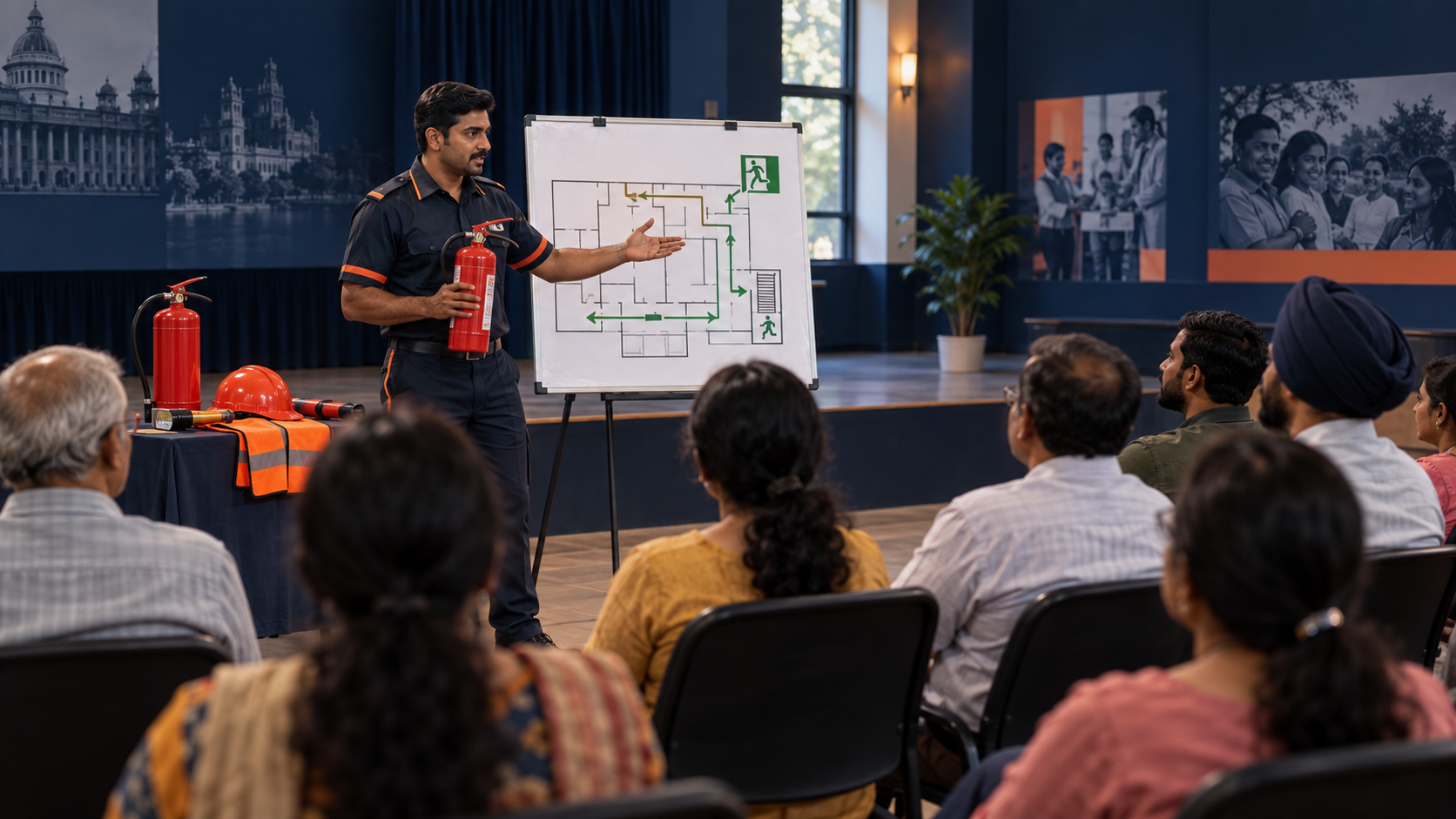
- Draw a simple map of your flat or house with the children, and mark two ways out of every room where you can.
- Walk the routes together. In a building, show them the staircase and explain that nobody uses the lift in a fire.
- Fix one meeting point outside, such as the society gate, and make sure everyone knows it.
4. The sound of the smoke alarm
- Press the test button so they know the sound, and tell them it means “get out now”.
- They should leave at once, without stopping for toys or school bags. Once outside, nobody goes back in.
5. How to call for help
- Teach them to dial 112 for any emergency, or 101 for the fire brigade, and to say what is happening and the full address slowly: building name, wing, floor, flat number, area and a nearby landmark.
- Practise with a toy phone. Speaking calmly and clearly matters more than speaking fast.
- They should call only once they are safely outside, or ask a neighbour to call.
6. Fire drills at home
- Run a short drill now and then, so the escape plan becomes a habit. Try one in the evening too, so they know the way in the dark.
- Keep it calm and light, almost like a game. The aim is confidence, not fear.
- During the drill, teach them to crawl low under smoke and to touch a door with the back of the hand before opening it.
Making it fun
- Stories and videos. Storybooks and short videos about firefighters and rescues hold a child’s attention. NDMA’s Hindi animation with Dost Appu is a good one to watch together.
- Games. Play “spot the danger” around the house: a charger left on the bed, a dupatta hanging near the stove, a matchbox on a low shelf. Online fire safety games that ask children to find hazards, match safety items or pick the escape route can help too.
- Drawing and crafts. Let them colour in the escape map or build a fire engine out of a shoebox, and talk about safety while they work.
- A visit to the fire station. Ask your local fire station whether they allow visits. Meeting firefighters and seeing the equipment up close makes the lessons real and easy to remember.
- Songs and rhymes. A short rhyme about stop, drop and roll, or about the smoke alarm, sticks in a child’s head. Make one up in your own language.
What parents and grandparents must do
Children copy what they see at home. If they watch you leave the gas on and walk away, or light crackers carelessly, that is the lesson they learn.
- Keep matches and lighters locked away or high out of reach.
- Never leave a child alone near a lit diya, candle or stove.
- Talk about fire safety now and then, not just once.
- Practise the escape plan with your children, and follow the same safety rules yourself.
Start tonight
At dinner, ask your child one question: “What would you do if the smoke alarm went off right now?” Listen to the answer. Then walk the escape route together once before bedtime, and check that they can say your full address.
What needs attention
- Children are curious about matches, lighters and flames, and often do not understand how fast fire spreads
- A child who has practised the escape plan knows what to do without waiting to be told
- Many children hide under a bed or in a cupboard during a fire unless they are taught to get out
- Stop, drop and roll is easy to learn through play and can save a child whose clothes catch fire
- Children can call for help if they know the number and can say their full address
Controls that reduce risk
- Keep matches and lighters locked away or out of reach
- Draw your home's escape plan with your children and mark two ways out of each room
- Press the smoke alarm test button so they know the sound
- Practise stop, drop and roll until they can do it without thinking
- Teach them to call 112 or 101 and say their full address slowly
- Take them to visit your local fire station
Common unsafe practices
- Leaving matches, lighters and agarbatti stands where small children can reach them
- Teaching fire safety in a way that frightens children so they freeze or hide
- Never practising the escape plan with the children
- Not teaching children their full address and the emergency numbers
- Letting children handle diyas, candles or firecrackers without an adult beside them
- Telling children to fight a fire instead of getting out

Leave a comment