
Quick answers
What should I do if a tyre bursts while I am driving?
Do not brake hard. Hold the wheel firmly with both hands, steer steadily and let the speed fall gradually. Switch on the hazard lights once the car is steady, pull over smoothly away from traffic and get everyone behind the barrier. The steps come from a US motoring club page we opened; we found no Indian official text.
Should I press the accelerator or lift off when a tyre bursts?
The AAA Club Alliance page we opened says a brief push on the accelerator can offset the pull of the burst tyre, while other motoring pages found in search say to ease off. We have not tested either. The point they share is no hard braking and no sudden steering.
How often should I check my tyres?
Before every long trip. An RTO officer quoted at the Samruddhi Mahamarg tyre centre advised checking tread wear every two to four months (Nagpur Today, June 2023). Check pressure on all four tyres and the spare as well.
How do I know a tyre is too worn?
If the tread wear indicators are showing or there is little tread left. An ITTAC drive on the Yamuna Expressway in April 2025 advised remembering PART: pressure, alignment, rotation and tread depth, and said worn tyres can cause blowouts and weaker braking.
Is nitrogen in tyres better than air?
The Samruddhi tyre centre educates drivers about nitrogen-filled tyres. We found no independent test in the pages we read. Correct pressure matters whichever gas you use.
Can I change a burst tyre on the highway myself?
Not on the traffic side of a fast road. Get everyone behind the barrier and call for help. On 12 November 2026 three people died near Alwar when a speeding vehicle hit them while a punctured car's tyre was being changed, according to three newspapers.
Is there a rule on how old a tyre can be in India?
We did not find one. Ask a good tyre dealer when they would stop trusting a tyre, and look at the date code on the sidewall. This is our note, not a legal rule.
Did a tyre burst cause the Jamnagar crash?
Gujarati newspapers report a tyre burst as the starting point, then the driver losing control and the car hitting the bridge. Police are looking into why the tyre burst. No report we read says whether it was old, worn or under-inflated.
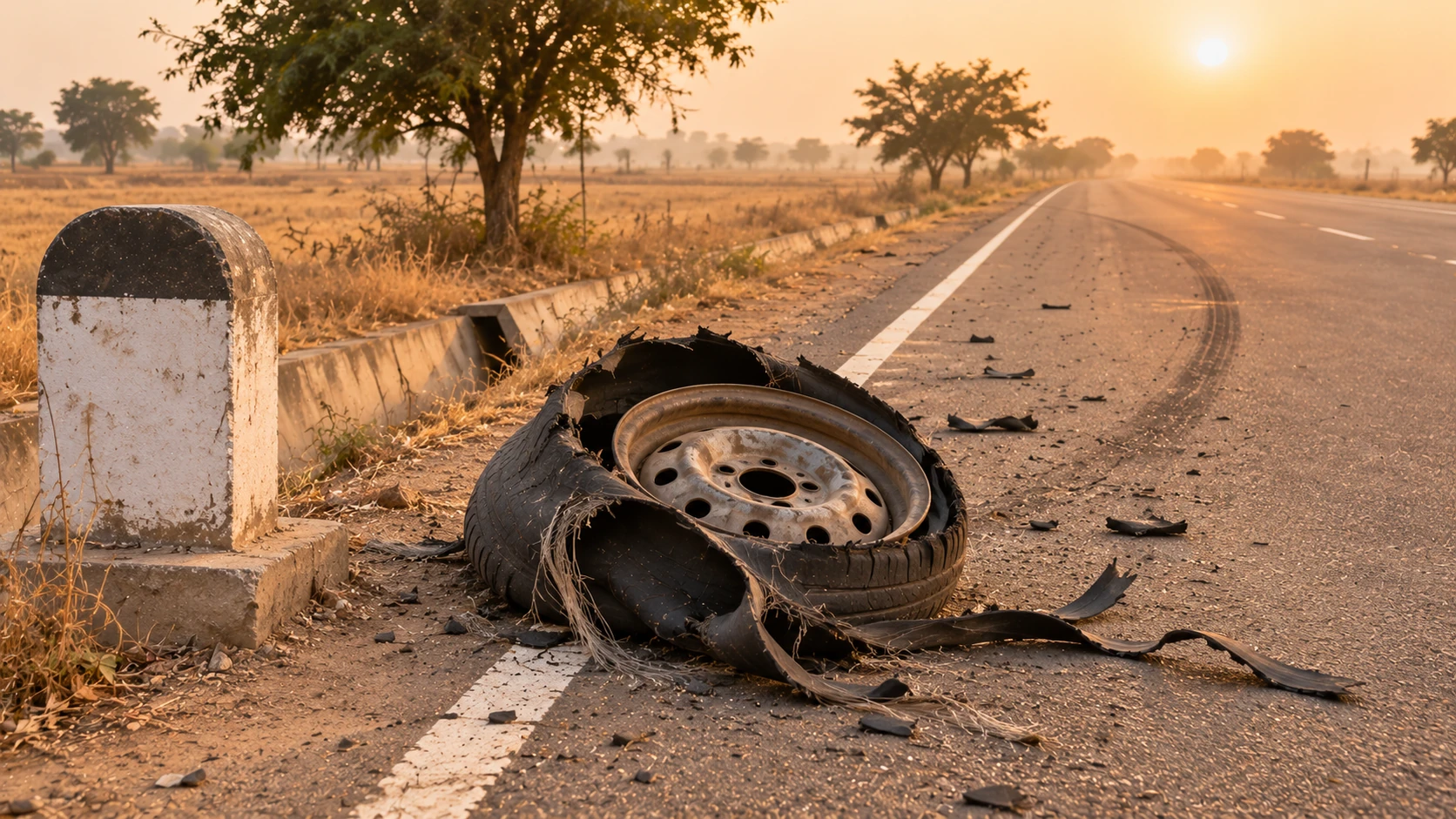
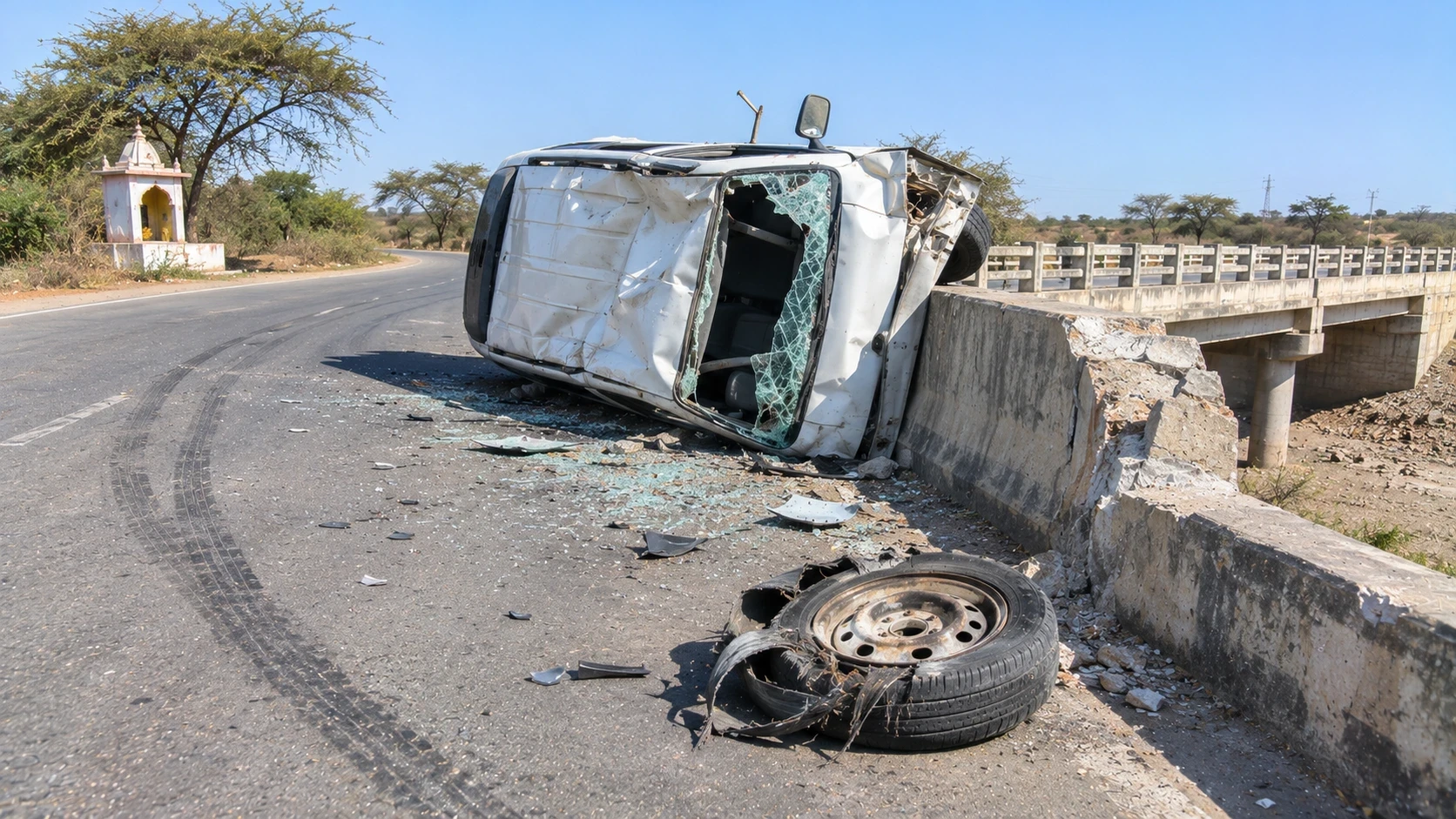
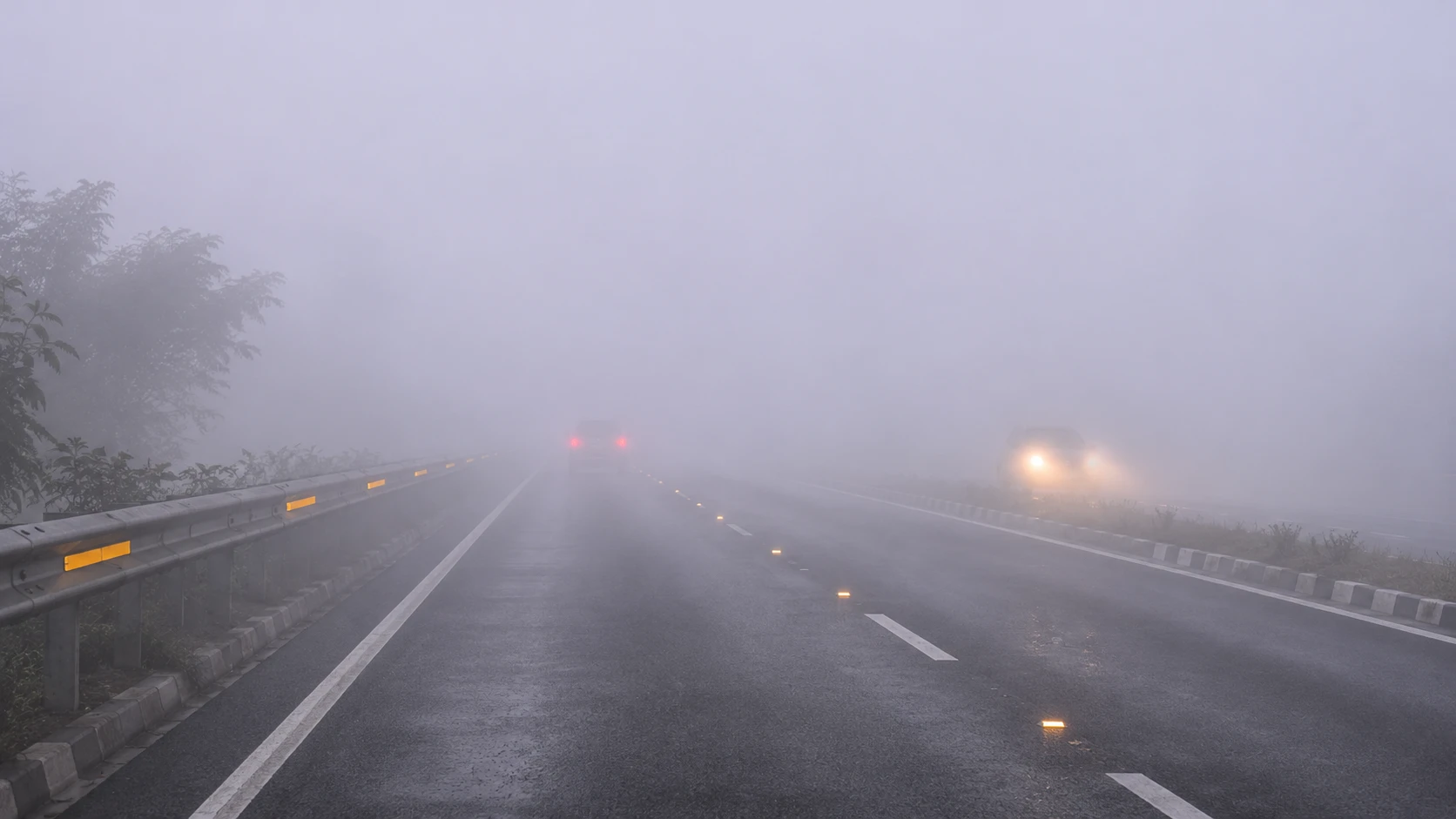
A tyre that bursts at highway speed leaves a driver very little time. On the night of Tuesday 10 November 2026, the Gujarati New Year day, an Eeco car going at speed lost a tyre on the Jamnagar-Kalavad highway near Aliyabada, hit the bridge and overturned. Two women of one family died and six others were hurt, according to the Gujarati newspapers we read. Why the tyre burst has not been reported, and we do not say that it was old, worn or low on air. This page is about tyre burst safety on an Indian highway: what to check before a long trip, what to do in the first seconds if a tyre goes, and what not to do once you have stopped. Checked 12 November 2026.
In short
- Before a long trip, check pressure on all tyres and the spare, tread, sidewalls and the load. A US motoring club lists weak or damaged sidewalls, low pressure, overloading and worn tyres as the usual causes of a blowout.
- If a tyre bursts, do not brake hard. Hold the wheel firmly with both hands, steer steadily and let the speed fall gradually. Switch on the hazard lights once the car is under control and pull over smoothly.
- When you have stopped on a highway, do not change the wheel on the traffic side. Get everyone behind the barrier and call for help. Our guide to a breakdown on a highway or expressway explains how.
- Treat the Indian figures with care. A tyre-industry drive on the Yamuna Expressway reported that over 2 per cent of 2,000 tyres checked were unfit; that is the organisers’ own figure, not an official count.
- We found no Indian official text on handling a blowout. The steps below come from a US motoring club page we opened, and we say so where it matters.

What happened near Jamnagar
Divya Bhaskar, Gujarati Jagran, Sandesh and News18 Gujarati report that the Eeco, with eight members of one family on board, burst a tyre at speed near Aliyabada patiya, the driver lost control, and the car struck the bridge and overturned. Two women died at the scene, one of them 17 years old, and six others, including children, were taken to the G.G. Hospital in Jamnagar by 108 ambulance. Police have registered a case and are looking into why the tyre burst. The reports do not say how old the tyre was, what pressure it carried, how many seats the car had or exactly how fast it was going. Our case study of the Jamnagar crash sets out where the reports differ.
Why tyres fail
The AAA Club Alliance, a motoring club in the United States, lists the causes of a blowout on its page about handling one: a sidewall weakened or damaged by heat, weight or low pressure; underinflated tyres, which flex more and build heat; an overloaded vehicle; old tyres with little or no tread; and kerbs or road debris. These are foreign sources, but a tyre behaves the same way on the Ahmedabad-Rajkot road as on an American interstate.
Indian expressway operators have noticed the same thing. In June 2023, Nagpur Today reported that most accidents on the Samruddhi Mahamarg were being attributed to tyre bursts by the authorities concerned, who did not name an agency or give a number. The RTO officers quoted in the same report cautioned against judging the expressway only by its accident statistics, because accidents have several linked causes. A tyre-checking centre run by the Road Transport Department, the road corporation and a tyre company was set up near the toll plazas at Nagpur and Shirdi. In April 2025 the tyre makers’ association (ATMA) and the Indian Tyre Technical Advisory Committee (ITTAC) ran a three-day drive on the Yamuna Expressway. A press release carried by Tribune India says more than 2,000 tyres were inspected and more than 2 per cent were in poor condition and unfit for expressway driving. That figure is the organisers’ own, from a press release, and it does not say how the tyres were chosen.
Check before a long trip
- Pressure. Check all four tyres and the spare. Low pressure makes a tyre flex and heat up. Use the pressure the vehicle maker gives for your load, not a guess.
- Tread. The ITTAC drive advised remembering PART: pressure, alignment, rotation and tread depth. Worn tyres with the tread wear indicators showing can cause blowouts, weaker braking and reduced control. Replace them. The RTO at the Samruddhi centre advised checking tread wear every two to four months and inspecting tyres before a long trip.
- Sidewalls and wheels. Look for cuts, bulges and cracks, and for stones stuck in the tread. A kerb knock or a pothole hit can weaken a tyre that looks fine. If you see damage, change the tyre. This is our advice and follows the AAA list of causes.
- Age. Old tyres with little tread are on the AAA list. We found no Indian rule on how old a tyre may be, so ask a good tyre dealer what age they would stop trusting a tyre, and look for the date code on the sidewall. This is our note, not a rule.
- Load. Do not overload the vehicle. At Jamnagar, eight people were reported on board; the reports do not say the vehicle’s rated seats or load, and we do not suggest overloading caused the burst.
- Buy marked tyres. ITTAC has a short video on the importance of the ISI mark on tyres; see the video panel. Certification details are on the Bureau of Indian Standards site.
- Nitrogen. The Samruddhi centre also educates drivers about nitrogen-filled tyres. We found no independent test in the pages we read, so keep to correct pressure whichever gas you use.
If a tyre bursts
- Stay calm and do not brake hard. A sudden speed change and uneven grip can make the car difficult to hold.
- Grip the wheel with both hands and steer steadily. The car will pull towards the side of the burst tyre. Look where you want the car to go.
- Let the speed fall gradually. The AAA Club Alliance page we opened says a brief push on the accelerator can offset the pull before you slow; other motoring pages found in search say simply to ease off. We have not tested either, so our only firm advice is: no hard braking, no sudden steering.
- Switch on the hazard lights once the car is steady and guide it smoothly to the shoulder, away from the traffic.
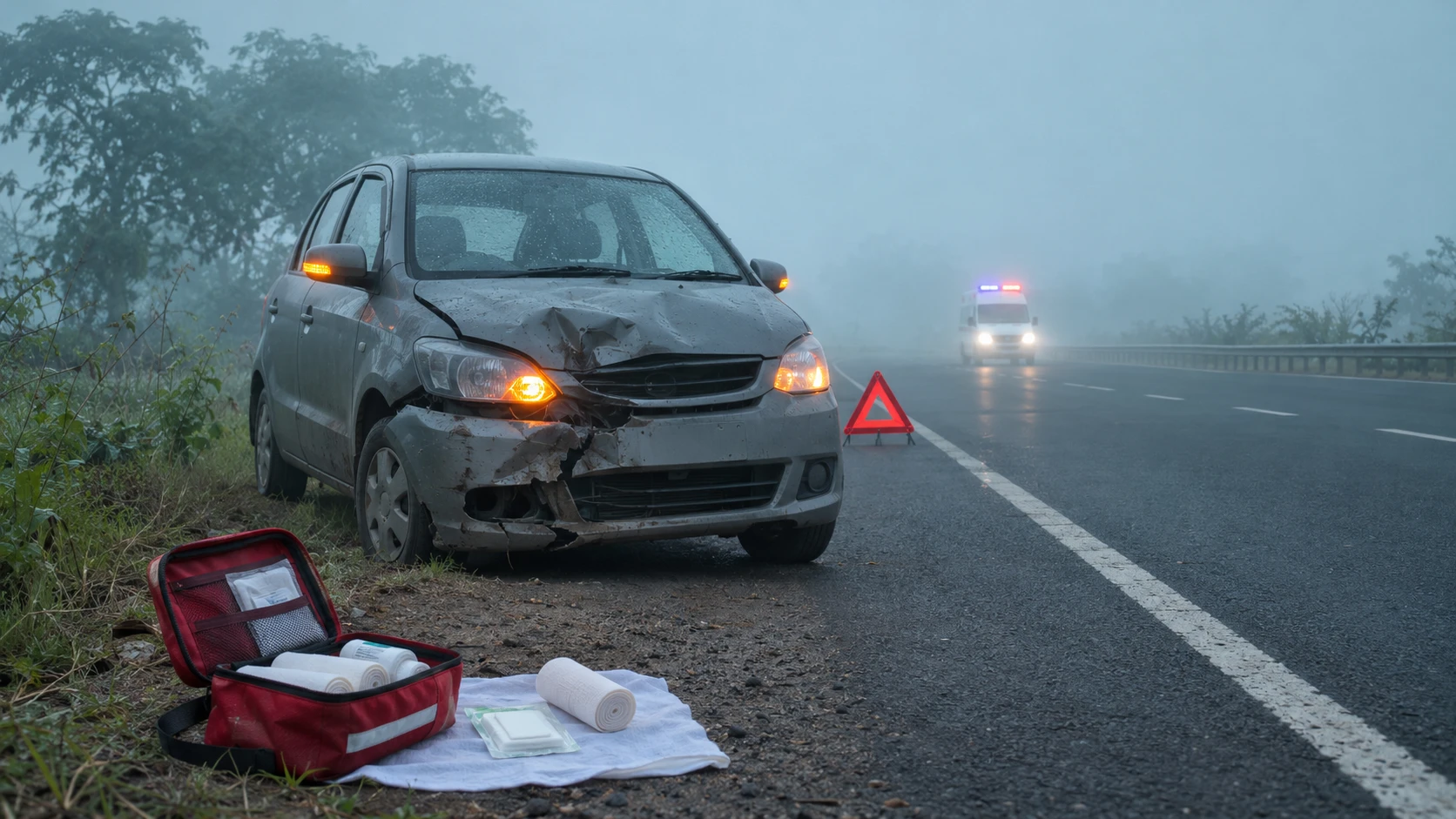
- Stop well clear. Handbrake on, engine off, everyone out on the side away from the road and behind the barrier.
After you stop: do not change the wheel on a fast road
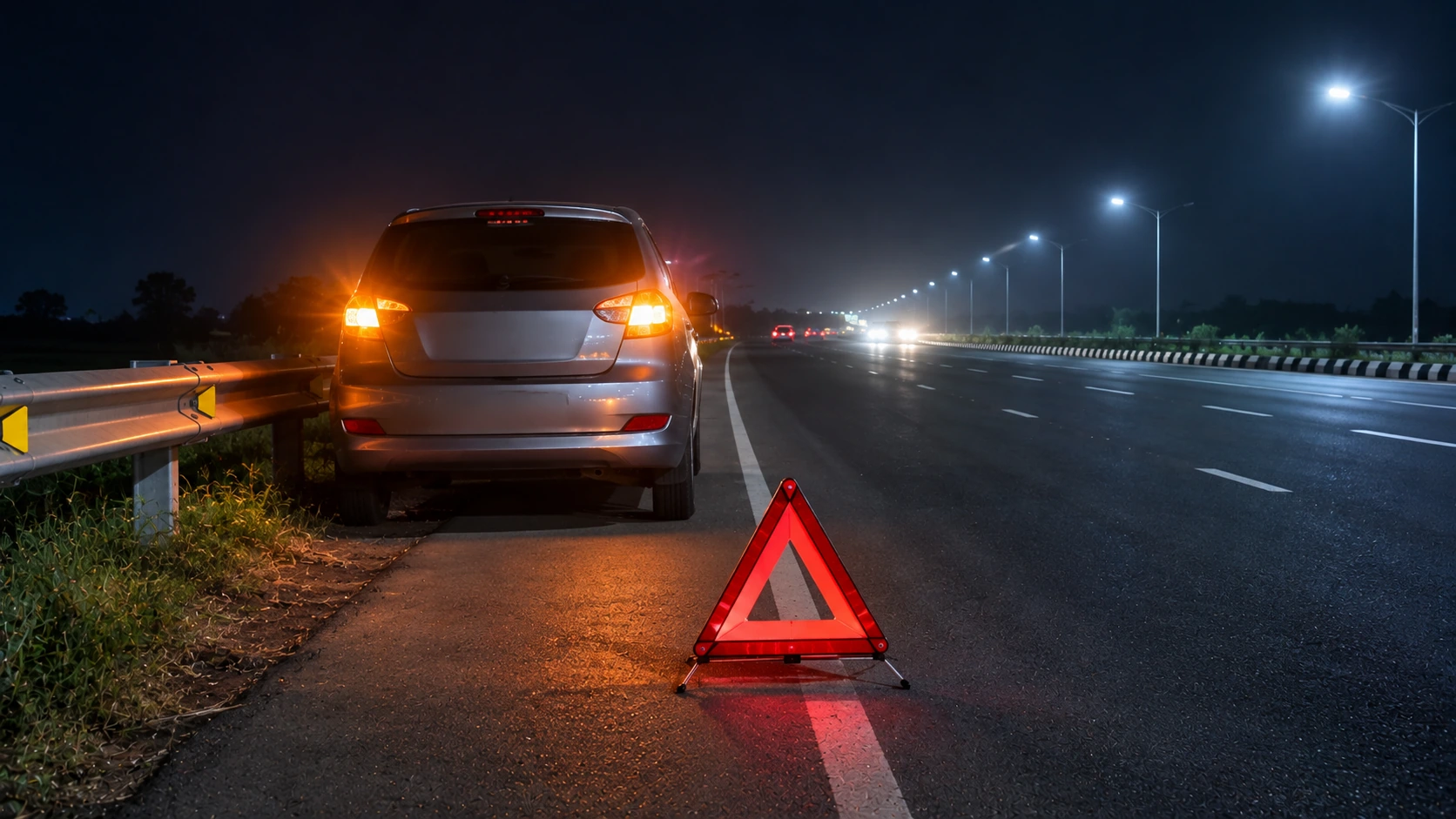
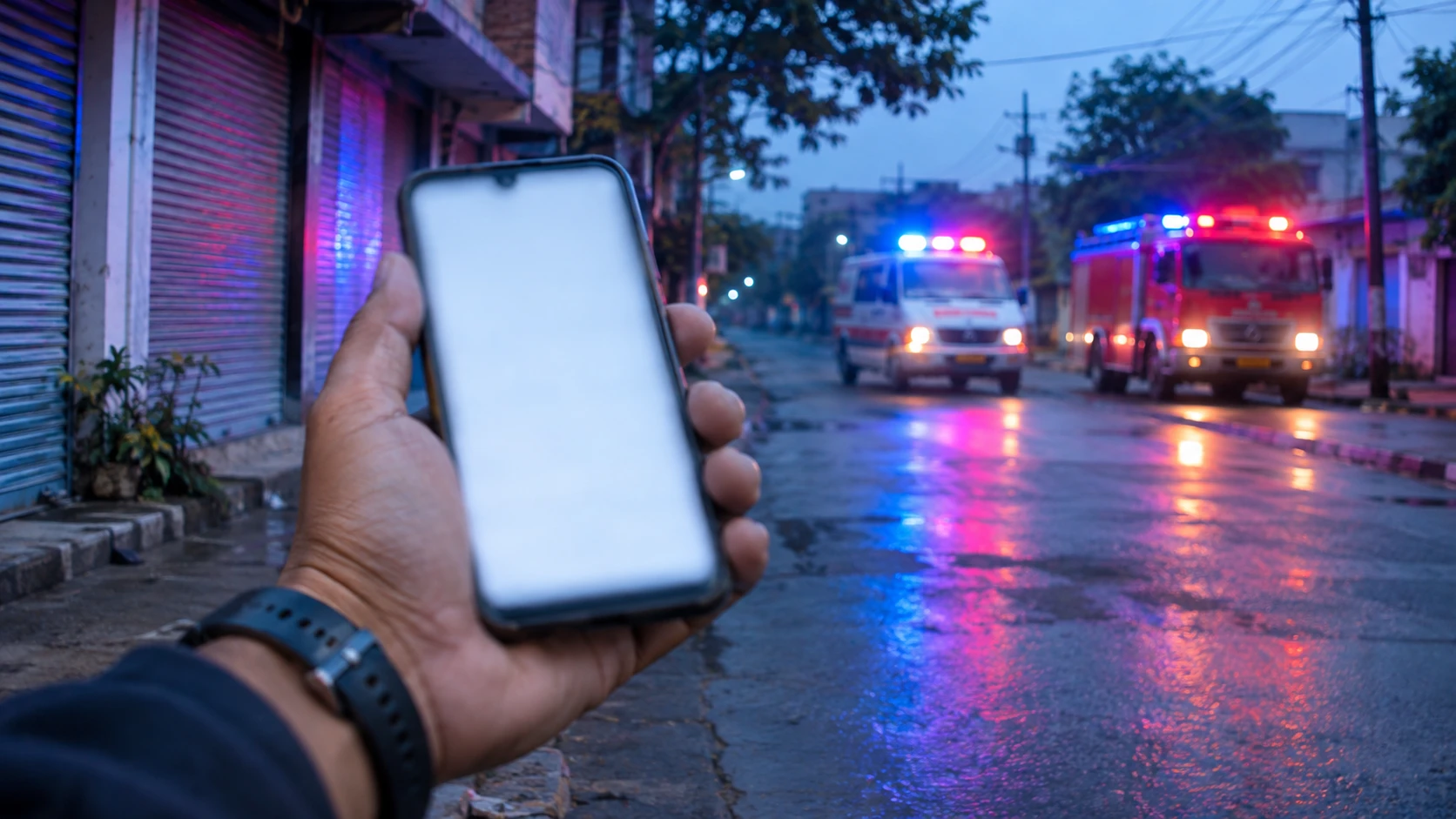
The next danger is a vehicle that comes upon yours too late. In the early hours of 12 November 2026, three people died on the Delhi-Mumbai Expressway near Alwar when a speeding vehicle hit them while the tyre of a punctured car was being changed, according to three Hindi newspapers; our highway breakdown guide has the details. If you cannot reach a safe place well off the carriageway, get everyone behind the barrier, put the hazard lights on and call 112 or your roadside assistance. Our guide to how to call 112, 101 or 108 says what to tell the control room. If you drive home late from a function, read the night driving plan for Indian families too.
What we could not confirm
We found no Indian official text, from the road ministry, the highway authority or a state transport department, on handling a blowout or on tyre age, so the steps and checks above come from a US motoring club, press reports and the tyre industry’s own drive. We did not open a tyre-maker’s or the Bureau of Indian Standards page. The ATMA and ITTAC figures are from a press release. The Samruddhi report names no agency for its finding and gives no numbers. The Jamnagar reports do not say why the tyre burst. This page is general safety information.
Do this today
- Check the pressure and tread of all four tyres and the spare before your next long drive.
- Look at every sidewall for cuts or bulges.
- Do not overload the vehicle.
- Tell everyone in the car what you will do if a tyre goes: no hard braking, steer steadily, stop well clear.
- Save 112 on your phone.
What needs attention
- A US motoring club lists weak sidewalls, low pressure, overloading and old, worn tyres as the usual causes of a blowout.
- The motoring page we opened says do not brake and steer firmly; it and other pages differ on a brief push on the accelerator.
- In June 2023 most accidents on the Samruddhi Mahamarg were attributed to tyre bursts by unnamed authorities, while RTO officers warned against judging by statistics alone.
- A tyre-industry drive in April 2025 reported more than 2 per cent of 2,000 tyres unfit on the Yamuna Expressway; the figure is the organisers' own.
- At Jamnagar on 10 November 2026 a tyre burst is reported as the start of a crash that killed two women; why it burst is not stated.
Controls that reduce risk
- Check pressure and tread on all four tyres and the spare before a long drive.
- Look at every sidewall for cuts or bulges and replace damaged tyres.
- Do not overload the vehicle.
- Tell everyone in the car what to do if a tyre goes.
- Keep a reflective triangle and a torch in the boot, and save 112 on your phone.
Common unsafe practices
- Braking hard or swerving when a tyre bursts.
- Driving on worn tyres with the wear indicators showing.
- Skipping the spare when checking pressure.
- Overloading the vehicle for a family trip.
- Changing the wheel on the traffic side of a fast road.
- Trusting a tyre that has hit a kerb or pothole and looks fine.
Leave a comment