
Quick answers
What should I do first if my car breaks down on a highway?
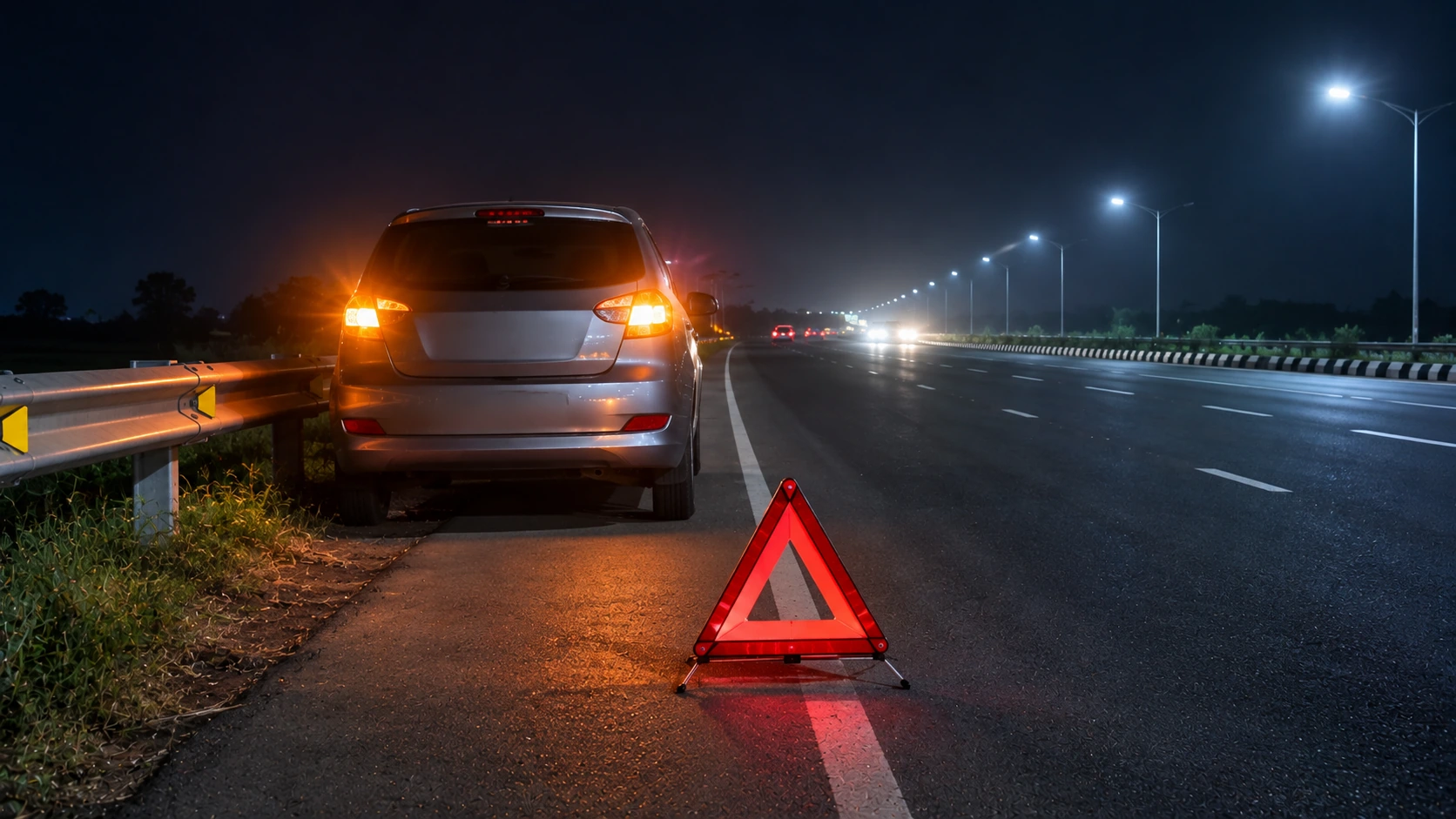
Switch on the hazard lights, let the vehicle slow, steer to the shoulder or a safe lay-by, put the handbrake on and switch off the engine. Then place the reflective triangle 50 metres behind on a highway, and get everyone out on the side away from the traffic.
How far behind should I put the warning triangle?
On highways and major fast roads, 50 metres behind the vehicle, and before the bend if the vehicle is on a bend (Regulation 28 of the Motor Vehicles (Driving) Regulations, 2017). In a tunnel the rule is 20 metres in front and behind (Regulation 20(3)).
Should passengers stay in the car or get out?
On a fast road at night, get out on the side away from the traffic and move well clear, behind a barrier or down the embankment. This is our general advice; we did not find an Indian official rule on where passengers should stand.
Can I stop anywhere on an expressway?
No. Stopping is not allowed on narrow stretches, sharp bends and in acceleration and deceleration lanes (Regulation 22). Use the emergency lane or a safe spot, and only for a real emergency.
What number do I call for a highway breakdown?
Call 112 if there is danger, fire or injury. For a mechanical fault, call your insurer's or maker's roadside assistance. We could not open an official NHAI page, so we do not give a highway helpline number.
Is there a fine for breaking down on an expressway?
Not as a national rule that we could find. In February 2025, Noida Traffic Police were reported to fine commercial vehicles that break down and block the Noida Expressway, with fines of Rs 5,000 to Rs 20,000 under section 201 of the Motor Vehicles Act. That is a local measure.
Why do vehicles crash into stopped trucks?
Often the driver comes upon the standing vehicle too late, especially at night, in fog or at speed. Our cases at Nadiad, Simga and Shahdol are examples; in Shahdol, police said the driver did not see the standing vehicle. Reports do not say whether each truck had lights or triangles.
What if I have no warning triangle?
Keep the hazard lights on, move everyone behind the barrier, and call for help. A torch or phone light held by someone standing well back and not in the lane can help. Do not stand in the lane to wave traffic down.
Most of us think of a breakdown as an irritation: a flat tyre, an engine that will not start, a clutch that gives up. On a busy highway or an expressway at night, it is one of the most dangerous moments of a journey. A stopped vehicle you cannot see in time is a wall, and the one thing that decides what happens is how early the driver behind notices it. We have three cases on this site in the last year and a half where a vehicle ran into a stationary one: a light vehicle into an oil tanker near Nadiad, a bus into a broken-down truck on NH-130 in Chhattisgarh, and a bus into a parked truck on the Shahdol-Rewa road. This page tells you what the rules say, and how to stop, signal and wait. Checked 10 November 2026.
In short
- Switch on the hazard lights the moment the vehicle slows or stops. Regulation 28 of the Motor Vehicles (Driving) Regulations, 2017 says so for vehicles with more than two wheels.
- Put the reflective triangle 50 metres behind the vehicle on a highway, and before the bend if you are stopped on one (same regulation).
- Do not stop at a bend, in a narrow spot or in an acceleration or deceleration lane if you can roll on to a safer place. Regulation 22 lists these as no-stopping places.
- Get everyone out and away from the road, behind a barrier or well down the embankment, and keep them there. Do not stand between your vehicle and the traffic. This is our own advice.
- Call 112 if there is danger, or your insurer or roadside assistance if there is not. Stay off the carriageway.
What the rules say
We read the text of the Motor Vehicles (Driving) Regulations, 2017 on Indian Kanoon, which says it could not verify the original gazette page, so check the wording on an official site before relying on it.
- Regulation 28 (breakdown). For a vehicle with more than two wheels that has broken down where it can be recognised late as a stationary obstacle: the hazard warning lights are switched on immediately; on highways and major fast roads the reflective warning triangles are placed 50 metres behind the vehicle; if there is a bend, they go before the bend.
- Regulation 22 (stopping and parking). Stopping is not allowed on narrow roads or where the view is obstructed, at sharp bends, in acceleration and deceleration lanes, on or within five metres before a pedestrian crossing, and on a level crossing.
- Regulation 20(3) (tunnels). If you must stop in a tunnel, use hazard lights and put warning triangles 20 metres in front of and behind the vehicle.
- Regulation 29 (accident). After a minor accident, move the vehicles out of the traffic path if possible, put triangles and hazard lights on, and call police or an ambulance if anyone is hurt. After a major one, vehicles that cannot be moved stay in place until the police arrive.
- Regulation 31 (lights). Use lights at night and when the view is poor. Use fog lamps only when visibility is considerably affected, and together with dipped headlamps.
Some police act on breakdowns too. In February 2025, India TV reported that Noida Traffic Police were fining commercial vehicles that break down and block the Noida Expressway, quoting fines of Rs 5,000 to Rs 20,000 under section 201 of the Motor Vehicles Act, with 22 vehicles seized in a week and about 210 challans for obstruction. That is a local measure, not a national rule, and it covered commercial vehicles only at the time.
When the vehicle starts to fail
- Do not brake hard. Take your foot off the accelerator, switch on the hazard lights and let the vehicle slow. Signal early and steer left towards the shoulder.
- Try to reach a safe place. A wide shoulder, a lay-by, a petrol pump, a toll plaza or a service lane is better than the live carriageway. Many expressways have an emergency lane; use it only for a real emergency.
- Do not stop at a bend, on a bridge, in a dip or just before a rise, where a driver comes upon you suddenly.
- Turn the wheels away from the road, put the handbrake on and switch off the engine. In the dark, leave the hazard lights on and, if the battery allows it, the parking lights.
Make yourself seen
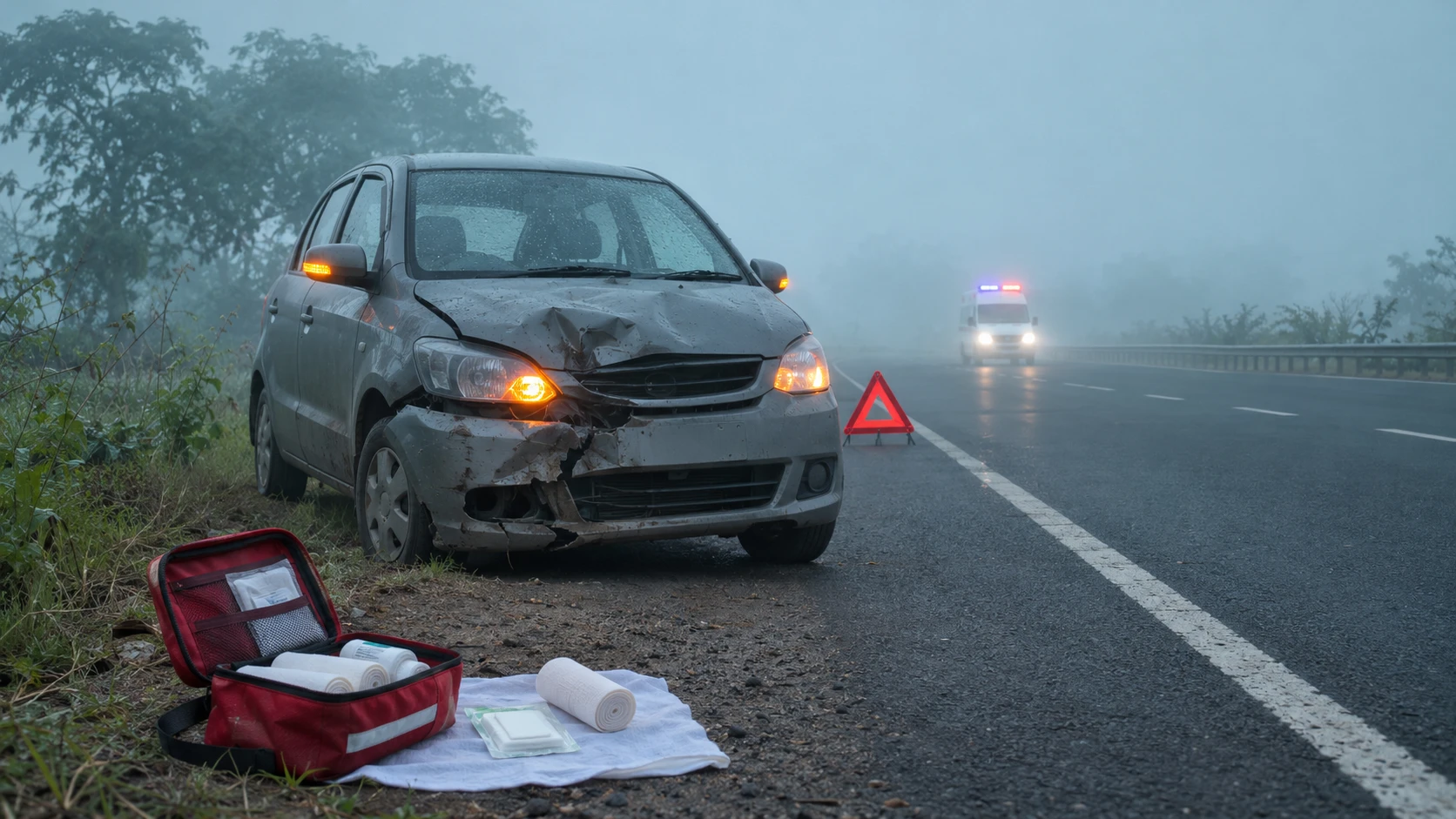
- Place the reflective triangle 50 metres behind you on a highway, or before the bend. If you have a second triangle, put it further back. Walk along the outside of the shoulder, facing the traffic.
- If you have no triangle, a torch or a phone light held by someone standing well back, in line with the vehicle and not in the lane, helps. Do not stand in the lane to wave.
- In fog, rain or at night, put on all the lights that are still working.
- If you cannot place the triangle safely because traffic is too fast and close, stay with the group behind the barrier and call for help instead. A triangle is not worth a life.
Where everyone should stand
- Get all passengers out on the side away from the traffic, and move them well clear: behind the guard rail, on the embankment or in the field.
- Keep children and older people together. Do not let anyone stay in a stopped car on a fast road at night.
- Do not change a tyre on the traffic side, and do not do roadside repairs on a fast road at night.
- If you feel unsafe, do not accept a lift from strangers; wait for help.
Who to call
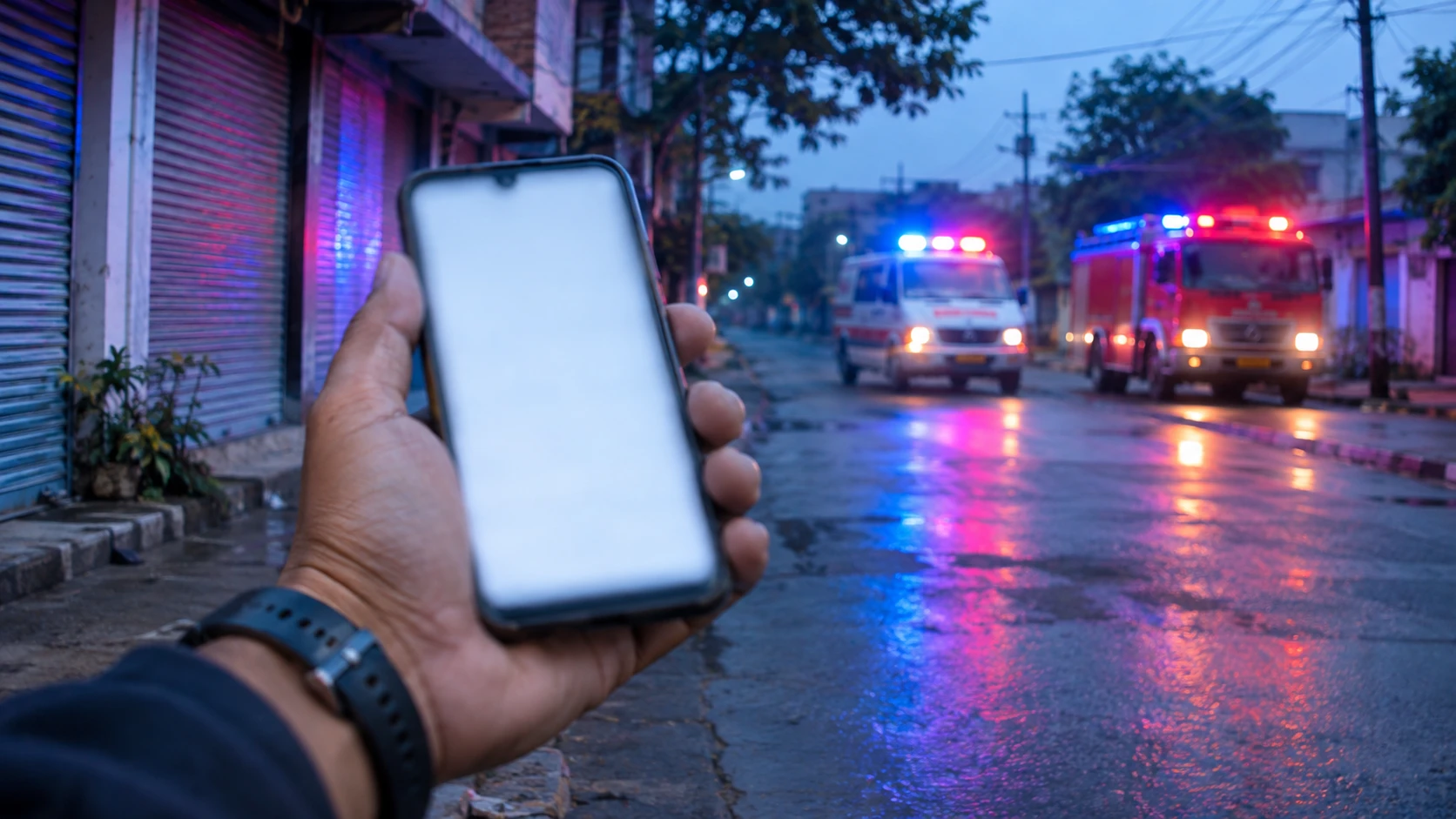
- 112: the single emergency number for police, fire and ambulance (PIB). Use it if there is smoke, fire, an injured person or a danger to traffic. Our page on how to call 112, 101 or 108 tells you what to say.
- Your insurer’s or vehicle maker’s roadside assistance for a mechanical fault. Keep the number on your phone.
- We could not open an official NHAI page, so we do not list a highway helpline number. Look for it on the sign boards and on your toll receipt.
What if you are the driver behind?
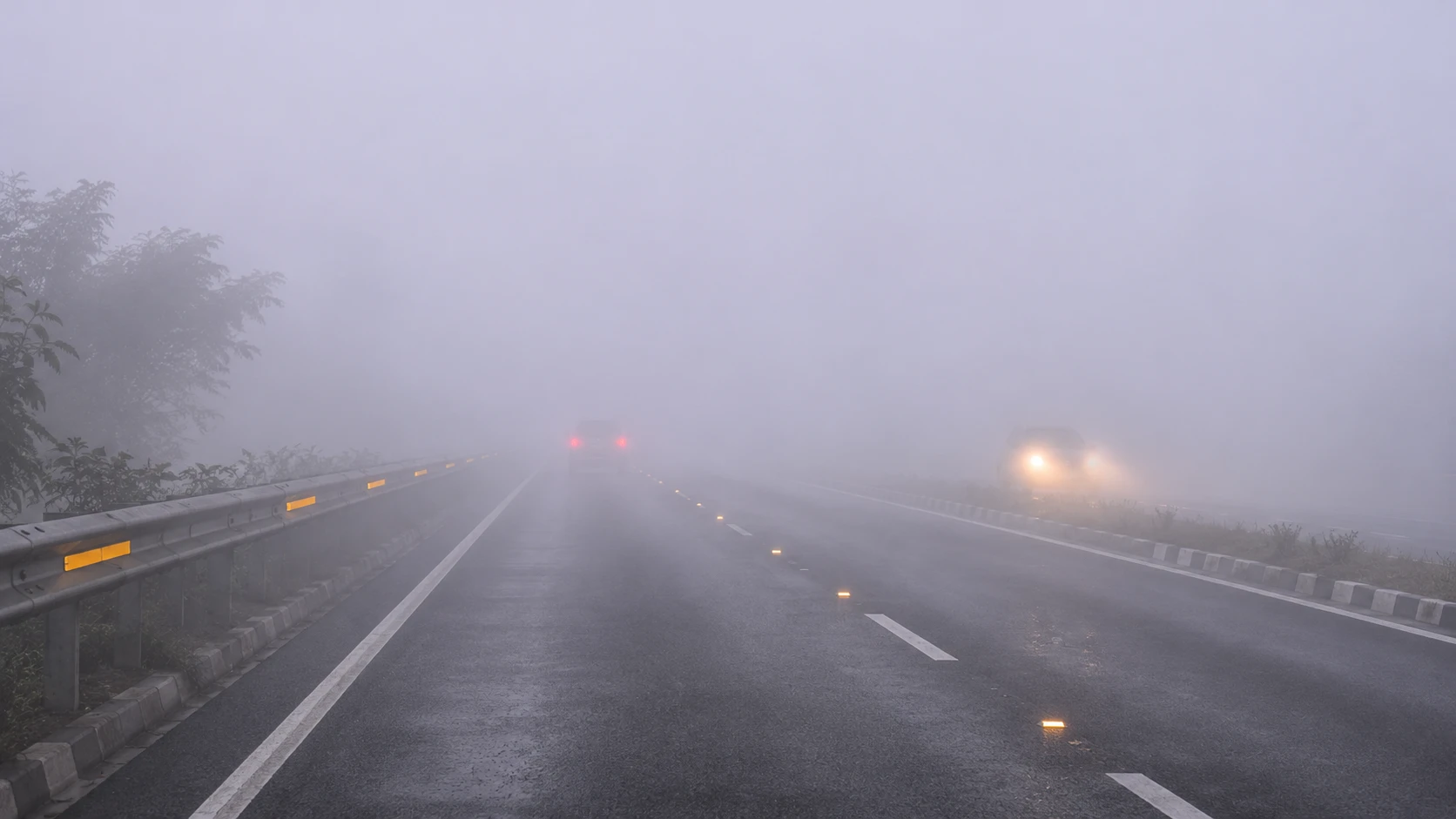
A stopped vehicle is easier to see if you are looking for it. At night and in fog, slow down so that you can stop within the distance you can see, as Regulation 16(2) says. Keep a longer gap in bad weather (Regulation 17(3)). If you see hazard lights or a triangle ahead, slow down and change lane early. Our page on driving in fog on Indian highways has more.
Three recent cases
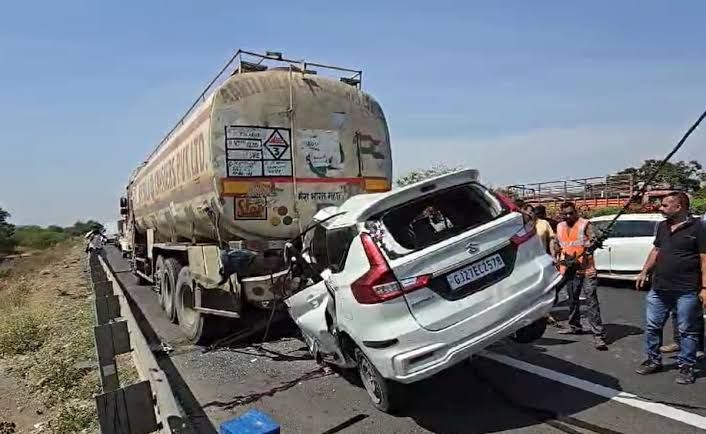
- Nadiad, Ahmedabad-Vadodara Expressway, April 2024. A light utility vehicle with ten people hit the rear of a stationary oil tanker; eight died at the scene and two later. See the case study.
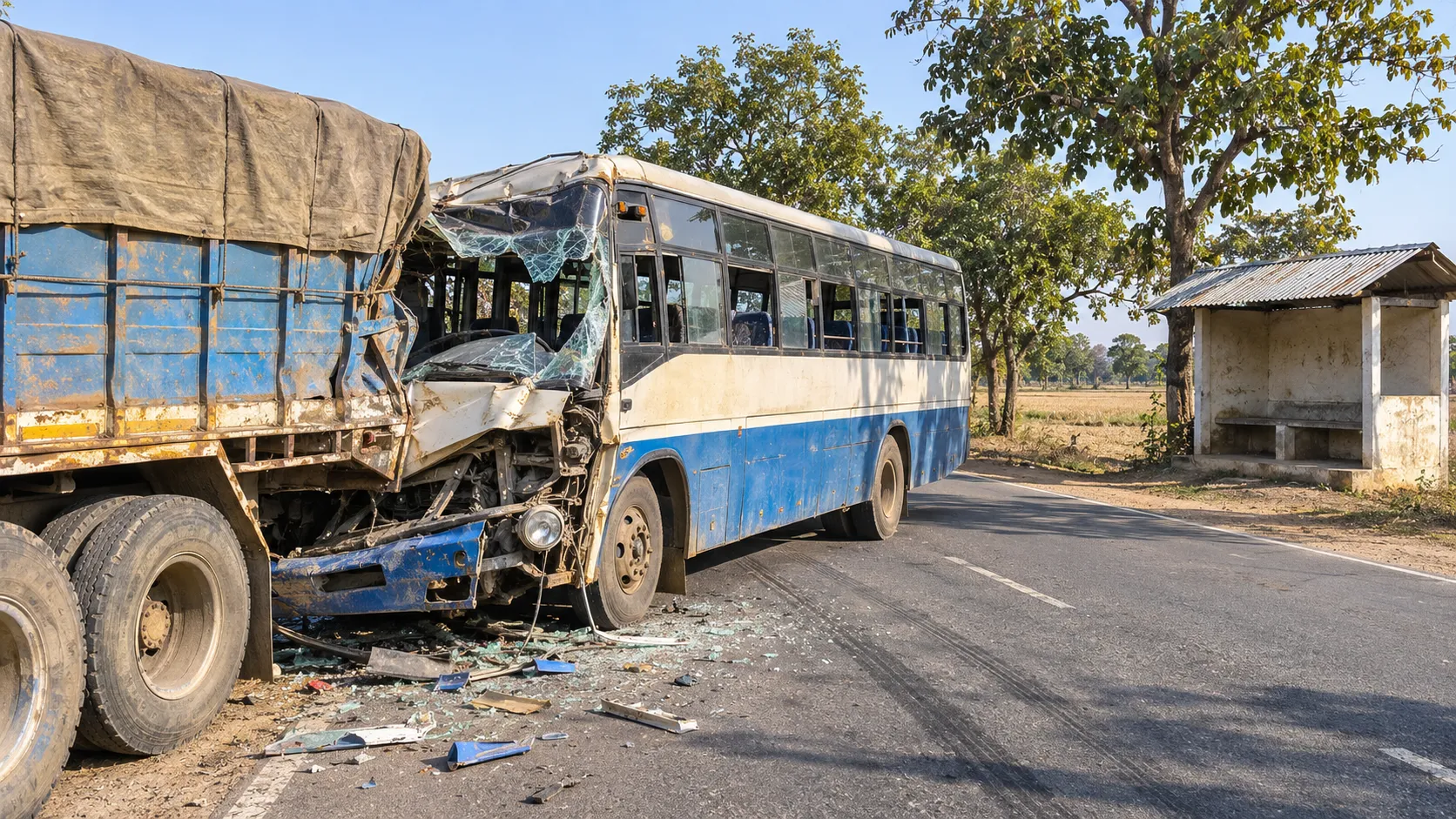
- NH-130, Simga, Chhattisgarh, 26 October 2026. A private bus with about 22 people hit the back of a broken-down truck at about 5.30 am; three died at the scene and reports say two more died later. The cause is not established. See the case study.
- Shahdol-Rewa road, 4 November 2026. A passenger bus hit the back of a truck standing at the roadside; about 30 were injured. Police said the driver did not see the standing vehicle and are looking into visibility and the vehicle’s position. See the case study.
We do not say that any of these vehicles had no triangle or lights, because the reports do not say. We use them to show what happens when a driver comes upon a standing vehicle too late.
What not to do
- Do not stop on the fast lane or just after a bend because “it will start again”.
- Do not leave your passengers inside the vehicle on a fast road at night.
- Do not stand behind your vehicle, between it and the traffic.
- Do not put up a bonnet and walk away with no lights on.
- Do not drive on with a hot engine, smoke or a burning smell. Stop, get out and call for help. See our page on a fire brigade number for what to say.
What we could not confirm
The Driving Regulations were read on a third-party legal site, not on the gazette. We found no Indian official text on where passengers should stand or how to walk along a shoulder; those steps are our general advice. We could not open any NHAI page, so we give no helpline. The Noida fine is a local police measure reported by one outlet. The reports of the Simga and Shahdol crashes do not say whether the stationary truck had lights or triangles. This page is general information.
What needs attention
- The Driving Regulations 2017 require hazard lights at once and a triangle 50 m behind on highways (reg 28).
- Stopping at bends, in narrow places and in acceleration and deceleration lanes is not allowed (reg 22).
- At Nadiad, a light vehicle carrying ten hit a stationary oil tanker; ten died.
- At Simga, a bus hit the back of a broken-down truck at about 5.30 am; three died at the scene and reports say two more later.
- At Shahdol, a bus hit a standing truck; about 30 were injured and police said the driver did not see it.
Controls that reduce risk
- Keep a reflective triangle and a torch in the boot.
- Save 112 and your roadside assistance number on your phone.
- Check tyres, battery and fuel before a long highway trip.
- Tell the family the plan: get out on the far side and move clear.
Common unsafe practices
- Stopping at a bend or just after a rise because the vehicle might restart.
- Leaving passengers inside a stopped vehicle on a fast road at night.
- Standing behind your vehicle in the traffic line.
- Raising the bonnet with no hazard lights or triangle.
- Changing a tyre on the traffic side.
- Driving on with smoke or a burning smell.

Leave a comment