
Quick answers
Is it safe to drive home at night after a wedding or family function?
It can be, if the driver is sober and rested, every seat belt is fastened and the speed matches what the headlamps show. If the night is long, stay over or share the driving. Nothing in our sources says one hour of the night is safe or unsafe by itself.
How many road accidents happen at night in India?
The MoRTH report for 2023 counted 99,945 accidents between 6 pm and 9 pm (20.8 per cent) and about 2,02,194 between 6 pm and 6 am (about 42 per cent, our sum). These are shares of accidents, not risk per kilometre, and the table does not count deaths.
What should I do if my vehicle breaks down on a highway at night?
Move to a lay-by or as far off the carriageway as possible, switch on the hazard lights, place the reflective triangle 50 metres behind (and before a bend), get everyone out on the side away from traffic, and call 1033 on a National Highway or 112.
Are warning triangles and reflective tape compulsory in India?
The Motor Vehicles (Driving) Regulations, 2017 require reflective triangles 50 metres behind a broken-down vehicle on fast highways, and Rule 104 of the Central Motor Vehicles Rules requires reflective tape on heavy goods vehicles and trailers made from 1 April 2009. We read these in unofficial copies, so check the current text.
How often should a driver take a break on a long drive?
The Uttarakhand Traffic Police advises a 15-minute break after every three to four hours, and sleep of 7 to 8 hours beforehand. We found no national advisory with a fixed interval. Stop sooner at the first sign of tiredness.
Is it a crime to drive after drinking even a little?
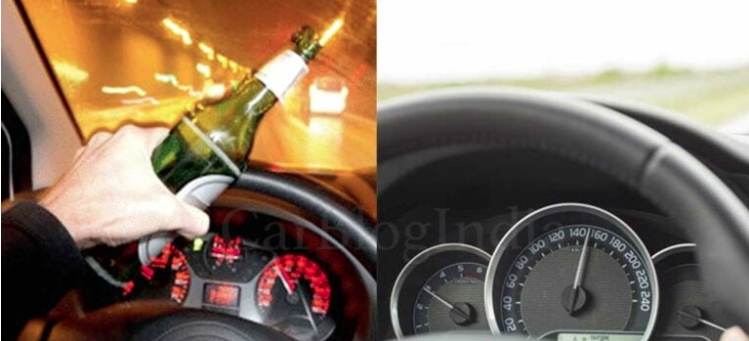
The Motor Vehicles Act treats driving with more than 30 mg of alcohol per 100 ml of blood as an offence under section 185, as the Uttarakhand Traffic Police explains. Apart from the law, any drink makes a night drive less safe.
Does a seat belt matter in the back seat?
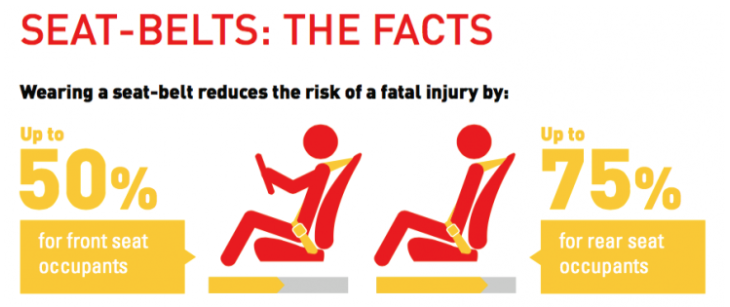
The regulations ask every occupant to wear a seat belt where one is fitted. MoRTH recorded 16,025 deaths in 2023 among people not wearing a seat belt, 7,584 of them passengers.
What number should I call after a crash on a highway?
Call 112 for the police and 108 for an ambulance in most states, and 1033 on a National Highway for NHAI's patrol, ambulance and crane help. Stay until the police arrive.
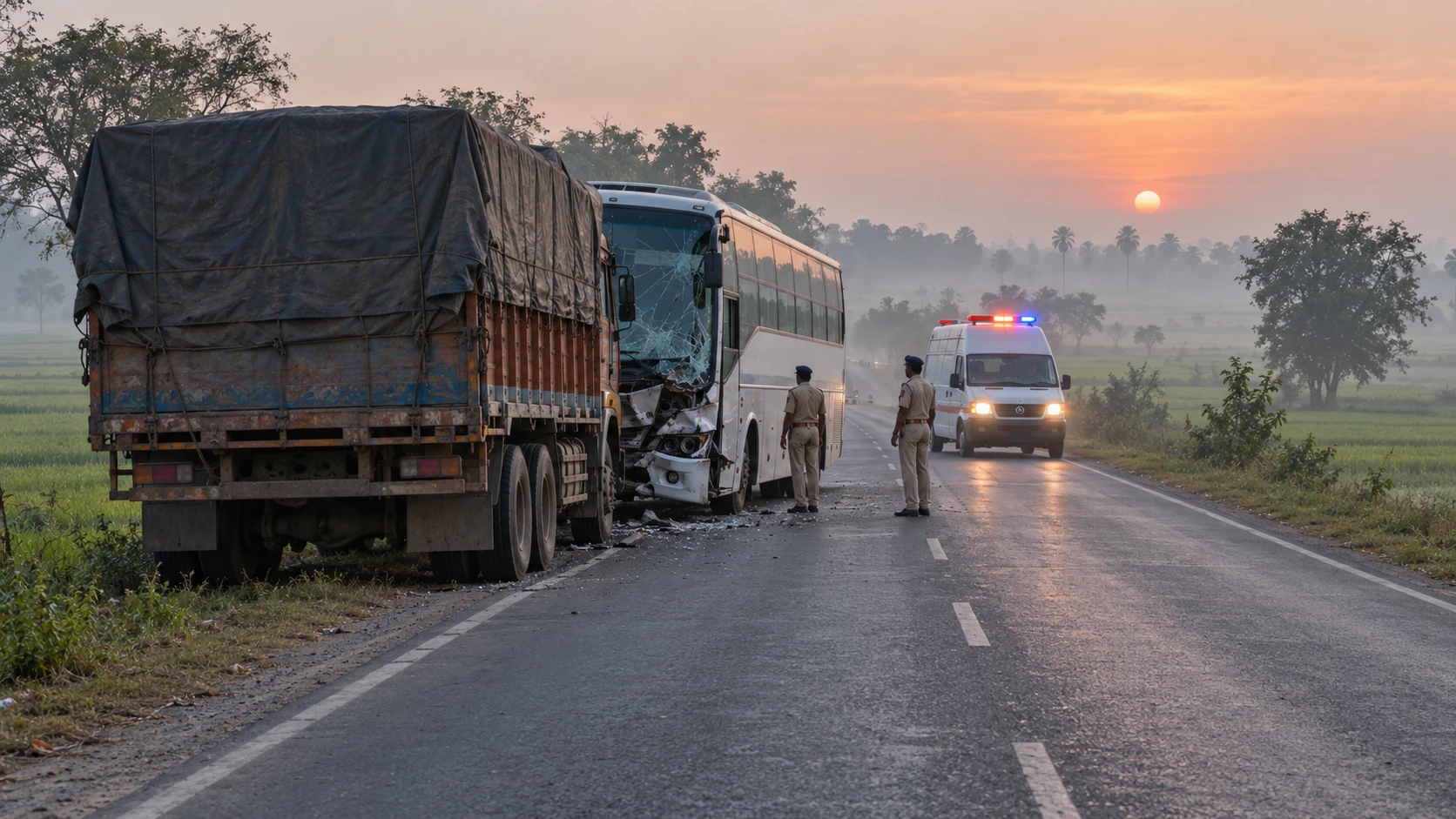
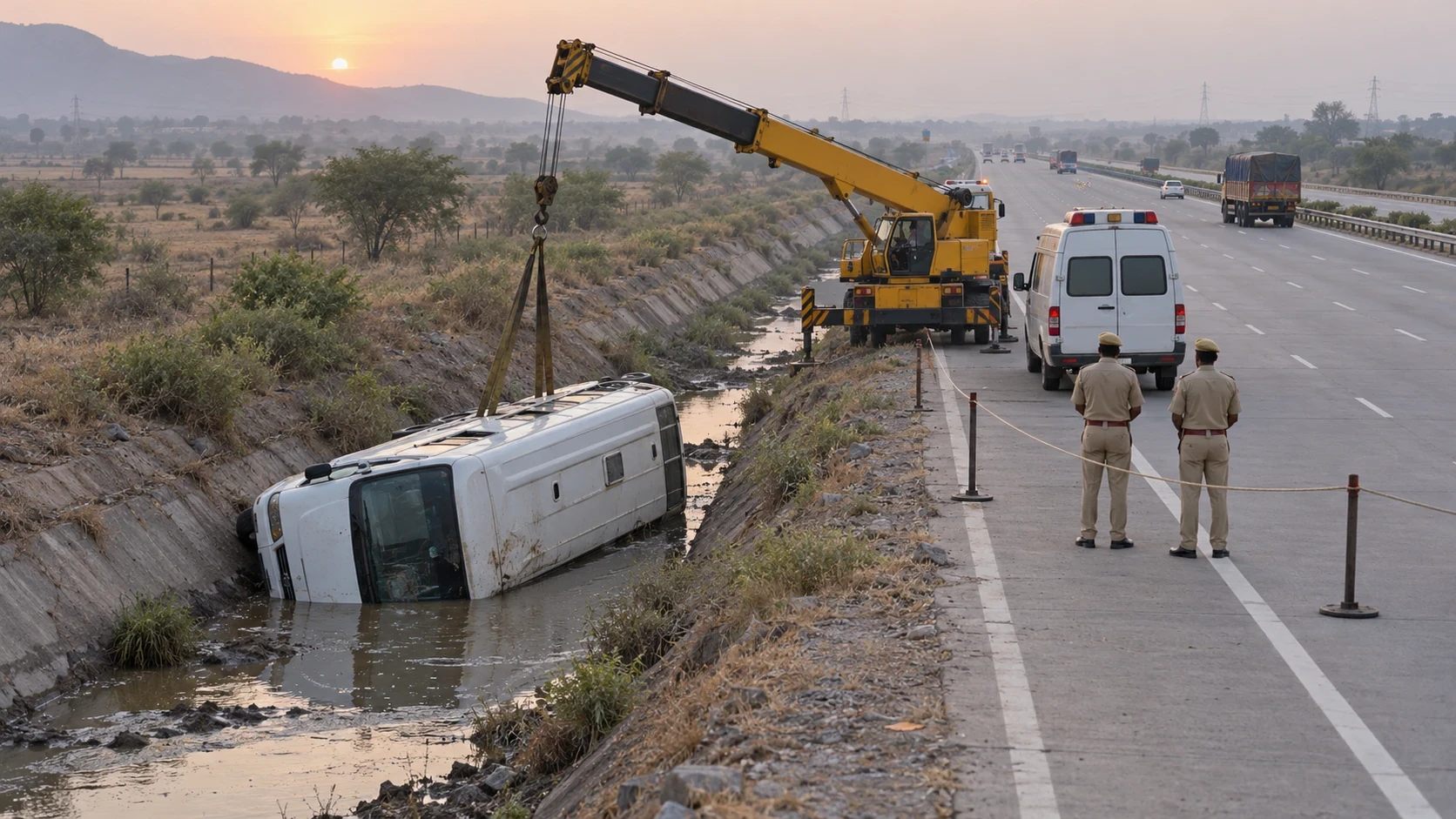
Weddings, tilak ceremonies and pujas often end late, and the family then has to get home in the dark: a long day behind them, a heavy meal, sometimes a driver who has had a drink, and a vehicle full of elders and children. On the night of Sunday, 1 November 2026, a trailer and a Maruti Eeco van collided head-on near a petrol pump on the Hata-Pipraich road in Kushinagar, Uttar Pradesh. The van was bringing people home from a relative’s tilak ceremony, and seven people died, as most reports say (six were reported at first). Earlier that same Sunday, at about 11 am, two people died when a fire engine caught fire after a collision with trailers on NH-48 near Rishabhdev in Udaipur. That one was in daylight, so it is not a night crash, but it is one more highway crash with trailers. No cause has been confirmed in either case, and we do not suggest one. This guide is for the drive home: what to decide before you leave, what the official numbers show, what the rules say about lights and parked vehicles, and what to do if the vehicle has to stop or a crash happens. Checked 2 November 2026.
In short
- Decide who drives before the function starts. The driver does not drink, has slept, and is not asked to do the whole run alone if it is long.
- If the night is long, do not drive through it. Leave earlier, stay over, or hand the wheel to a rested second driver.
- Every seat belt, every seat. The regulations require every occupant to wear a seat belt where one is fitted. In 2023, 16,025 people killed on Indian roads were not wearing one.
- Dip the high beam in good time, keep lamps clean, and never drive on parking lights.
- Slow down for small red dots. At night a trailer or truck at rest may be the least visible thing on the road.
- If you must stop, use a lay-by, switch on the hazard lights, put out the triangle 50 metres behind and keep everyone away from traffic. Call 1033 on a National Highway and 112 anywhere.
What the official numbers show
The Ministry of Road Transport and Highways (MoRTH) report Road Accidents in India 2023 counted 4,80,583 road accidents and 1,72,890 deaths. Counted by the time of day, the busiest period was between 6 pm and 9 pm, with 99,945 accidents, or 20.8 per cent of the total. Adding the four slots from 6 pm to 6 am, we get 2,02,194 accidents, about 42 per cent of all accidents (our own sum of the report’s table). Roads are far emptier after midnight, so these are shares of accidents and not a measure of risk per kilometre. The report’s time table counts accidents and not deaths, so we cannot say how many deaths occurred at night.
The same report shows why a highway at night is not like a city lane. National Highways carried 31.2 per cent of accidents but 36.5 per cent of deaths (63,112 deaths), though they are about 2.1 per cent of the road network. Collisions where a vehicle hit another from behind were the largest type, with 1,10,656 accidents and 36,804 deaths. Collisions with a parked vehicle made 13,810 accidents and 5,636 deaths. Trucks and lorries were the impacting vehicle in 33,997 deaths, which works out to about 19.7 per cent (our calculation), and 5,461 of the 21,496 car, taxi, van and light-vehicle occupants who died were hit by a truck or lorry. Drunken driving or drugs were recorded in 9,143 accidents and 3,674 deaths, and seat belts were not worn by 16,025 of those killed, 8,441 drivers and 7,584 passengers. The report has no separate category for tiredness or sleep, so no official count of fatigue crashes is available to us.
Before you leave the function
- Name the driver early, while everyone is still thinking clearly, and make it a person who will not drink. Under the Motor Vehicles Act the legal limit is 30 mg of alcohol per 100 ml of blood, and the driving regulations require the driver to be fit in body and mind. Do not accept a lift from anyone who has been drinking, however short the road. Say so, politely, and book a cab or wait.
- Count the hours. A driver who has been up since morning, driven to the venue and then waited through the ceremony is not fresh at midnight. If the journey home is long, stay over, or share the driving among people who are rested.
- Do not overfill the vehicle. Children on laps and elders without a seat belt are exactly the people a crash hurts most. The regulations ask that a child up to twelve years sit in an appropriate child restraint where one is provided.
- Look over the vehicle in daylight if you can: headlamps, tail lamps, brake lights, indicators, hazard lights and tyres. Wipe the lamps and the reflectors. Keep a torch, a reflective triangle and a charged phone in the vehicle.
- Tell someone your route and your expected arrival time, and ring when you reach home.
Tiredness is a stop signal
The Uttarakhand Traffic Police, on its public road-safety pages, says fatigue reduces reaction time, concentration and alertness, and that after every three to four hours of driving one should take a 15-minute break, with tea or coffee, cold water on the face or a short nap. It also advises 7 to 8 hours of sleep and says one can only delay tiredness, not stop it. It says fatigue-related crashes occur most often from 2 to 4 am, 6 to 7 am and 6 to 7 pm, but gives no source for that, so we treat it as an officer’s observation and not a statistic. We found no national advisory from MoRTH or NHAI giving a fixed break interval.
In plain terms: frequent yawning, heavy eyelids, drifting within the lane, missing a turn or not remembering the last few kilometres mean it is time to stop. Music, an open window and loud talk do not make real drowsiness safe. Passengers help by staying awake, speaking up early and, if the driver is nodding, asking to stop at the next safe place. Our guide to night driving has more on this, and night travel in shared tempos and on hill highways covers the last stretch home by shared vehicle.
Lights: use them properly
Regulation 31 of the Motor Vehicles (Driving) Regulations, 2017 says the driver shall use the specified lighting devices at nightfall, at night and at dawn, and when visibility is poor. Lamps must be kept in good working order and not be hidden by dirt or any object. A driver must not drive on parking lights only, must not use high beam inappropriately, for long, or on well-lit roads, and must dip it in good time for an oncoming vehicle or when driving close behind another. Fog lamps are for fog, dust, storm, rain or snow, and then only with dipped headlamps. Government told the Lok Sabha in August 2025, as reported, that it keeps no separate data on crashes caused by high-beam glare, so we cannot tell you how many crashes glare causes.
Slow vehicles and parked trailers
A big trailer at the roadside at night is easy to miss and hard to avoid at highway speed. The rules try to make it visible. Regulation 28 says that if a vehicle with more than two wheels breaks down, its hazard lights shall be switched on immediately and, on highways and major roads with fast speed, reflective warning triangles shall be placed 50 metres behind it, and before a bend if the vehicle stands near one. Regulation 22 says a vehicle shall not be parked on a main road, or a stretch where the notified speed limit is 50 km/h or more. The Central Motor Vehicles Rules, 1989 (Rule 104, as we read it in an unofficial copy) require reflective tape on heavy goods vehicles and trailers made on or after 1 April 2009, white at the front and a contour marking at the rear and sides. And in December 2025 NHAI advised motorists to fit reflective tapes on their vehicles, as it announced fog-safety measures. Rules do not guarantee that every parked vehicle is marked, and we have no official figure for how many are not.
So the habit that protects you is yours: keep your speed so that you can stop within the distance you can see, keep a gap from the vehicle in front, do not overtake near bends or crests, and slow down early when you see hazard lights or a triangle.
| What you see ahead at night | What it may be | What to do |
|---|---|---|
| A few small red dots that do not seem to move | The rear of a slow or stationary vehicle, such as a trailer, a tractor-trolley or a truck at the roadside. Rear lights and reflectors may be dirty, faded or missing. | Ease off at once and keep easing until you know whether it is moving. Do not wait for a clear shape. |
| Hazard lights blinking, or a red triangle on the road | A vehicle has stopped. The Motor Vehicles (Driving) Regulations, 2017 ask the driver of a broken-down vehicle to put on the hazard lights and, on fast highways, to place reflective triangles 50 metres behind it. | Slow early, check your mirror, and move into the next lane only when it is clear. Stay well away from people standing near the vehicle. |
| A dark shape on the road with no lights at all | A vehicle parked without lights or a load that sticks out. We have no official figure for how often this happens. | Drive at a speed at which you can stop within the distance your headlamps show. If you cannot, you are going too fast for that road at that hour. |
| Glare from an oncoming vehicle | High beam in use. The regulations say it must be dipped in good time when a vehicle approaches, or when driving close behind another vehicle. | Look to the left edge of the road, slow down, do not look into the lights, and do not flash high beam back in anger. |
| Your own eyes closing, a wandering lane, a missed turn | Tiredness. Officials describe fatigue as a common cause of crashes and say a break is the remedy. | Stop at the next safe lay-by, petrol pump or dhaba. Not on the carriageway or the shoulder. |
If your vehicle has to stop at night
- Do not stop on the carriageway if you can help it. Make for a lay-by, a petrol pump or a dhaba, not the shoulder of a fast road.
- Switch on the hazard lights at once.
- Place the reflective triangle 50 metres behind, and before a bend if there is one, walking on the side away from traffic.
- Get everyone out on the side away from the road and stand well clear, behind a barrier if there is one, not between the vehicle and the traffic.
- Call for help. On a National Highway, 1033 is NHAI’s 24×7 toll-free helpline for cranes, ambulances and obstacles on the road; it is described in a PIB release of 27 May 2026. Anywhere, 112 reaches the police, and 108 an ambulance in most states (see our emergency numbers guide).
If a crash happens: the first minute
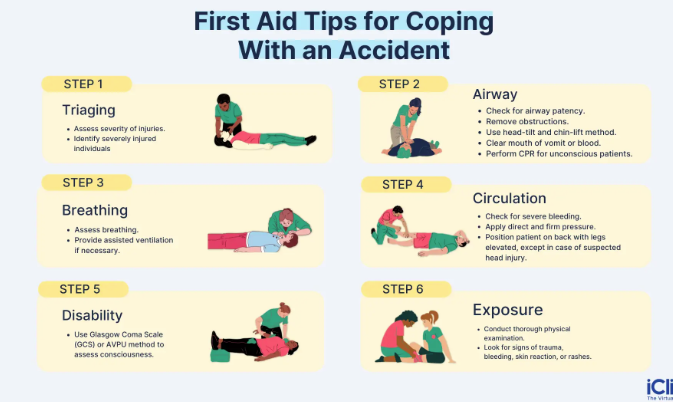
Regulation 29 of the same rules says that after a major accident everyone involved should check themselves and the others for injury, call medical help and the police at once, move the vehicles to the side of the road if possible, and stay until the police arrive. Put on hazard lights and keep people off the carriageway. Do not move an injured person unless there is danger such as fire. Our guides on road accident first aid and what a witness can do safely at a road crash explain what to do while help comes.
A family box
- Agree the rule before the function: one named sober driver, no drink for the driver, a second driver or an overnight stay if the night is long.
- Seat belts for everyone, including the back seat. Check that every belt works before the ceremony, not at midnight.
- Keep a triangle, a torch and a charged phone in the boot. Save 112 and 1033.
- Tell the elders that asking the driver to stop for a break is not rude.
- Our emergency wallet card keeps the family’s numbers on one printable card.
What we could not confirm
- The causes of the Kushinagar and Udaipur crashes. Neither report we read says a parked vehicle was involved, and we do not link either to tiredness, drink or lights.
- Deaths by time of day. The MoRTH table we read counts accidents only. We did not open the 2024 annual report.
- An official count of crashes caused by tiredness, glare or unmarked parked vehicles. None of the sources we opened gives one.
- The official gazette text of the 2017 driving regulations and Rule 104. We read the regulations in a copy hosted by Kerala Police and Rule 104 in a legal database, and did not check later amendments, including the 2020 amendment to the driving regulations.
- Any official Instagram, Facebook or LinkedIn video on night driving. We searched and found none we could open and check, so the videos below are from YouTube.
Do this at the next function
Name the driver, keep him or her sober and rested, buckle every seat, dip your lights, slow down for small red dots, and stay over if the night is long. For related reading, see our night driving plan and the emergency numbers guide.
What needs attention
- About 20.8 per cent of 2023 road accidents were between 6 pm and 9 pm, and about 42 per cent between 6 pm and 6 am; these are shares of accidents, not risk per kilometre.
- National Highways carried 31.2 per cent of accidents and 36.5 per cent of deaths in 2023 on about 2.1 per cent of the road network.
- Rear-end collisions were the largest type: 1,10,656 accidents and 36,804 deaths; collisions with a parked vehicle were 13,810 accidents and 5,636 deaths.
- Trucks and lorries were the impacting vehicle in 33,997 deaths, about 19.7 per cent (our calculation from the MoRTH matrix).
- The 2017 driving regulations ask for hazard lights and reflective triangles when a vehicle breaks down, require seat belts for all occupants where fitted, and set rules for high beam.
- The causes of the Kushinagar and Udaipur crashes of 1 November 2026 are not established.
Controls that reduce risk
- Name a sober driver before the function, and plan a second driver or an overnight stay if the night is long.
- Buckle every seat and check the belts before you start.
- Check lamps, reflectors, tyres; keep a triangle, torch and charged phone in the vehicle.
- Dip high beam in good time and keep a gap behind the vehicle ahead.
- Stop at a lay-by, petrol pump or dhaba at the first sign of tiredness.
- Save 112 and 1033 on every phone in the family.
Common unsafe practices
- Starting a long drive at midnight after a full day, with the same driver who drove there.
- Letting a driver who has had a drink take the wheel because the road is short.
- Leaving back-seat passengers and children without a seat belt.
- Driving on high beam behind another vehicle or at oncoming traffic.
- Driving faster than the distance the headlamps light up.
- Stopping on the carriageway or shoulder of a fast road without hazard lights or a triangle.
- Pushing on while tired because home is only an hour away.


Leave a comment