
Quick answers
What is the safe speed for driving in fog on a highway?
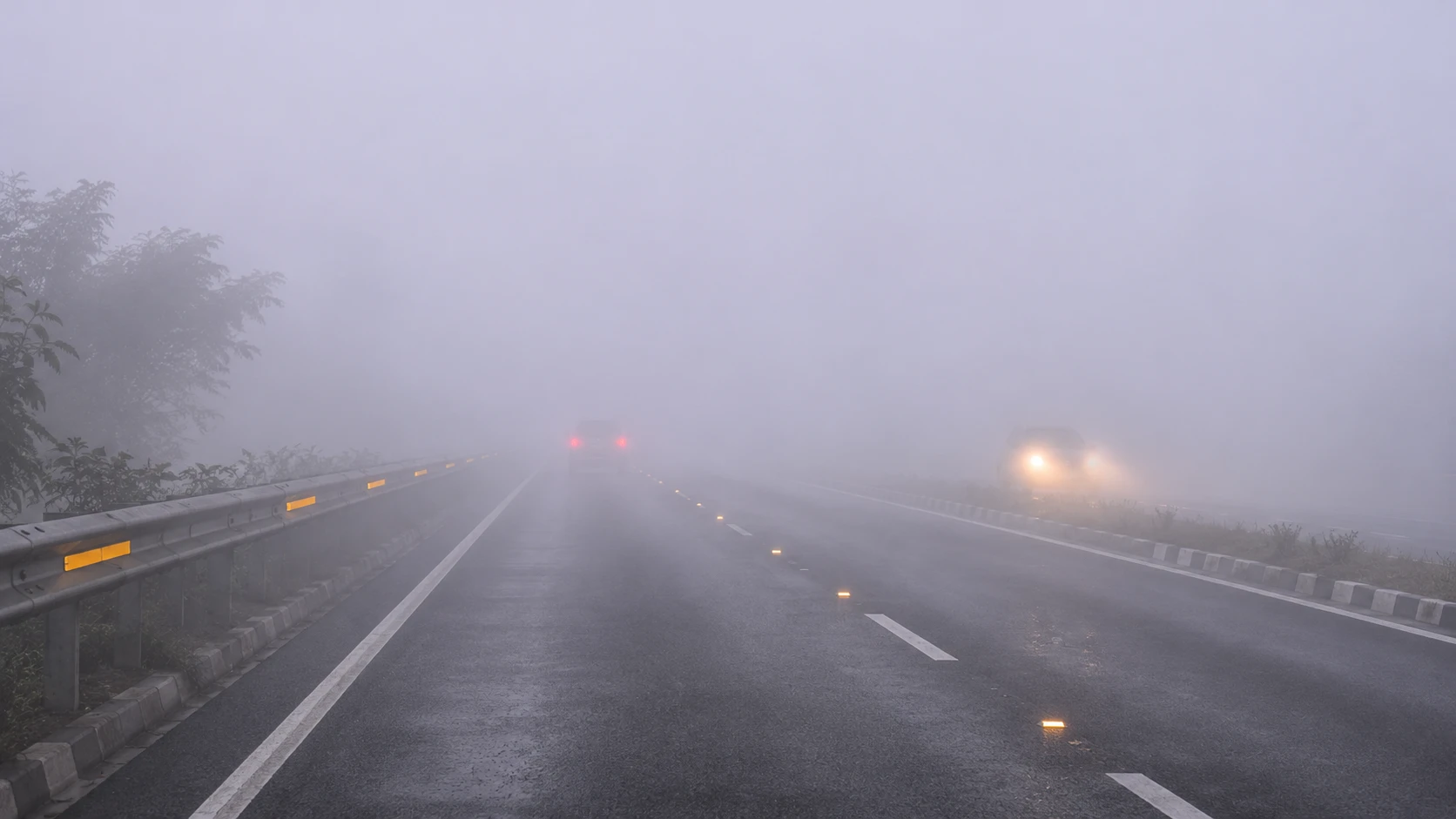
NHAI asks National Highway users to drive at 30 km/h or less in foggy conditions so that they can stop the vehicle safely. The Motor Vehicles (Driving) Regulations, 2017 require a lower speed in fog, low enough to stop within the range of your forward vision. In very dense fog that can mean even slower, or stopping at a safe place.
Should I use fog lamps or low beam in fog?
Use dipped (low) headlamps. Regulation 31 allows the fog lamp only when visibility is considerably affected by fog, dust, storm, rain or snow, and only with dipped headlamps. Do not use high beam, and do not drive on parking lights alone. The IMD also advises using fog lights.
Can I use high beam in fog?
Do not. Regulation 31 bars inappropriate use of high beam. A California Highway Patrol tip, carried by the US National Weather Service, says high beams reflect off fog and make a white wall; that is American advice, not an Indian rule.
Should I switch on the hazard lights while driving in fog?
NHAI's December 2025 release asks for head and back lights blinking. The Regulations require hazard warning lights when a vehicle breaks down or is parked on the road. We found no Indian rule that settles the question for a vehicle that is moving, so we do not state one. If you stop, switch them on.
Can I overtake in fog?
Regulation 14 says no vehicle may overtake if the traffic situation is not clear. In dense fog you cannot see that the road is clear, so do not overtake.
What should I do if the fog is so thick that I cannot see the road?
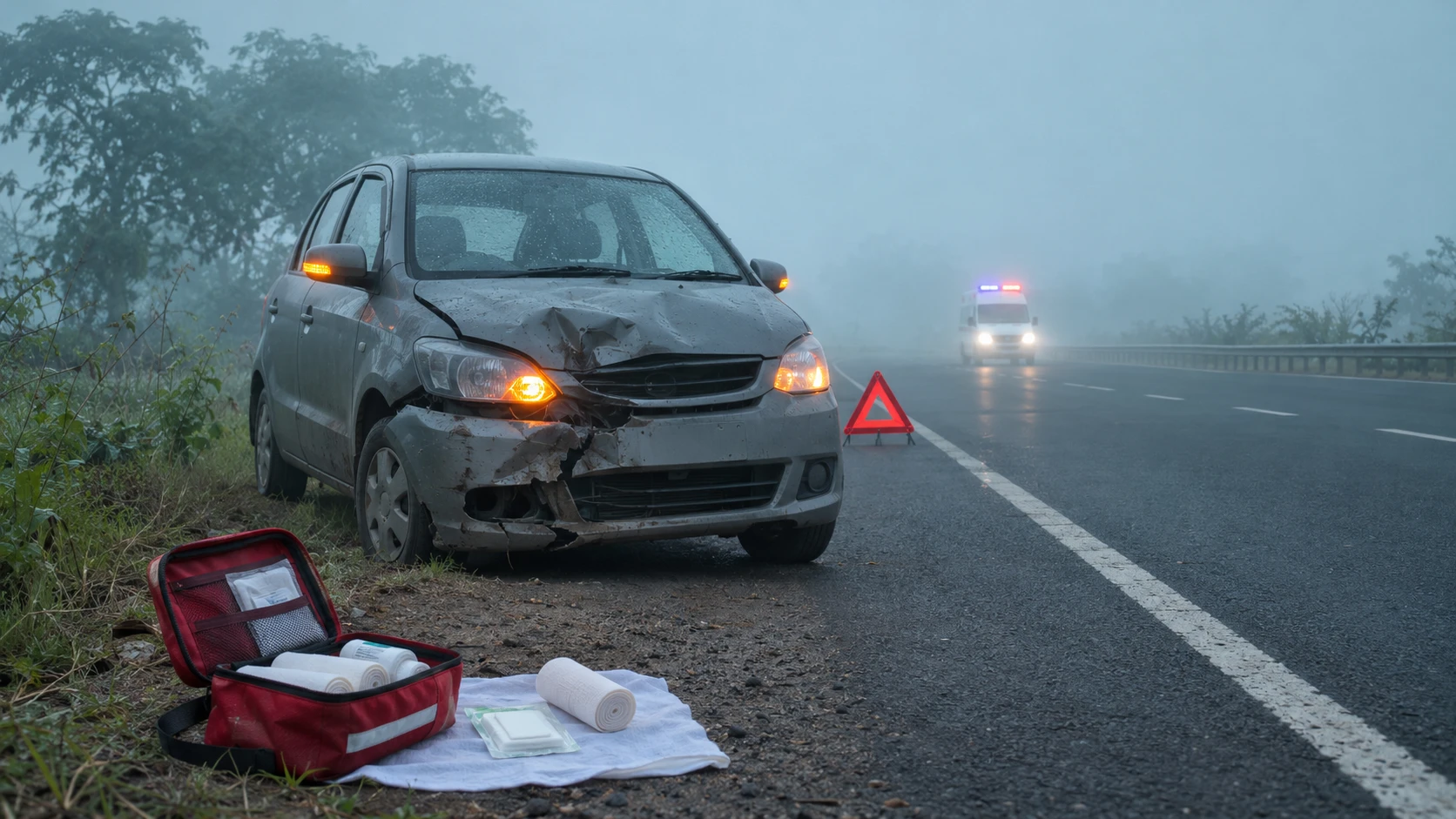
Do not stop on the carriageway. NHAI says to park only at designated places such as truck lay-byes and wayside amenities. If you have to stop, switch on the hazard lights, put the warning triangle 50 metres behind, move away from the traffic and call 1033 or 112.
I am caught in a pile-up. What do I do?
Check yourself and others for injury, call 112 or 1033 and ask for an ambulance and the police, and move the vehicle to the side only if you can do it safely. Regulation 29 asks the driver to stay in the area until the police arrive. We found no official Indian guidance written specially for fog pile-ups, so the steps about seat belt and standing clear of traffic are our judgement.
Which number should I call for help on a National Highway?
1033 is NHAI's toll-free helpline for National Highways, working 24 hours, according to a PIB release of 27 May 2026. It covers breakdowns, medical help and road obstructions. Dial 112 anywhere in India.
How much of India's road death toll happens in fog?
In MoRTH's Road Accidents in India 2023, foggy and misty weather accounts for 34,266 accidents (7.1 per cent) and 14,617 deaths (8.5 per cent). About three-fourths of accidents and deaths happened in clear weather. The weather column rests on police records and does not show cause.
Fog comes down on Indian roads every winter, mostly across the north, and a highway that was clear a minute ago can turn into a white wall. This page is a short driving checklist built on what the National Highways Authority of India (NHAI), the Motor Vehicles (Driving) Regulations, 2017, the India Meteorological Department (IMD) and Indian Railways actually say. Where only a foreign source covers a point, we say so. Checked 4 November 2026.
In short
- Slow down, and in thick fog go to 30 km/h or less. That is NHAI’s advice to National Highway users. The Regulations say to drive slowly enough to stop within the distance you can see.
- Use dipped headlamps. Fog lamps only when visibility is really poor, and only together with dipped headlamps. Not high beam, and not parking lights alone.
- Keep your lane and your distance, and do not overtake when you cannot see that the road ahead is clear.
- Do not stop on the highway. Use a lay-by or a wayside amenity. If the vehicle breaks down, put on the hazard lights at once and place the warning triangle 50 metres behind.
- Call 1033 on a National Highway, or 112 anywhere, if you break down or see a crash.
- If you can, wait. When the IMD warns of dense fog, it lists difficult driving and a risk of road collisions.
What the official numbers show
The Ministry of Road Transport and Highways (MoRTH) report Road Accidents in India 2023 records the weather at every crash. Of 4,80,583 accidents, 34,266 (7.1 per cent) happened in foggy and misty weather, and 14,617 of the 1,72,890 people killed (8.5 per cent) died in them. That works out at about 43 deaths per 100 fog and mist accidents against about 36 per 100 for all accidents (our own arithmetic); the report does not say why. Nearly three-fourths of accidents and deaths happened in clear weather, so fog is not the main source of road deaths. It is a condition that leaves very little room for a mistake. The weather column rests on how the police recorded each crash, so please do not compare states closely. For the wider picture see our highway plan for the drive home after a function and night driving plan.
Before you leave
The IMD issues fog warnings in its daily bulletins. Its press release of 22 December 2025 calls visibility below 50 metres very dense fog and visibility of 50 to 199 metres dense fog. For dense and very dense fog it lists difficult driving conditions and, unless precautions are taken, road traffic collisions, and it suggests being careful while driving and using fog lights.
The Cyberabad Traffic Police advise, in a video description, checking weather forecasts and road reports before and during the trip, delaying the journey if there is a warning of poor visibility, and driving in such conditions only if you really need to. Test your fog lamps, clean the windscreen, and know how to demist: if the glass fogs inside, open a side window slightly, turn the demister up and use the air conditioner to take out moisture.
Speed
NHAI’s release of 15 December 2025 asks National Highway users to drive in lane, keep a safe distance from the vehicle ahead and drive at 30 km/h or less, so that they can stop the vehicle safely. The legal rule, regulation 16(2) of the Motor Vehicles (Driving) Regulations, 2017: during fog the vehicle must be driven at a lower speed, so that the driver can stop within the range of forward vision.
So 30 km/h is NHAI’s ceiling for thick fog, and the real limit is whatever lets you stop within what you can see. In the very dense fog the IMD describes, under 50 metres, our reading is that you may need to go slower still. Do not speed up to escape the fog: the Cyberabad Traffic Police list that belief among the reasons for crashes.
Lights
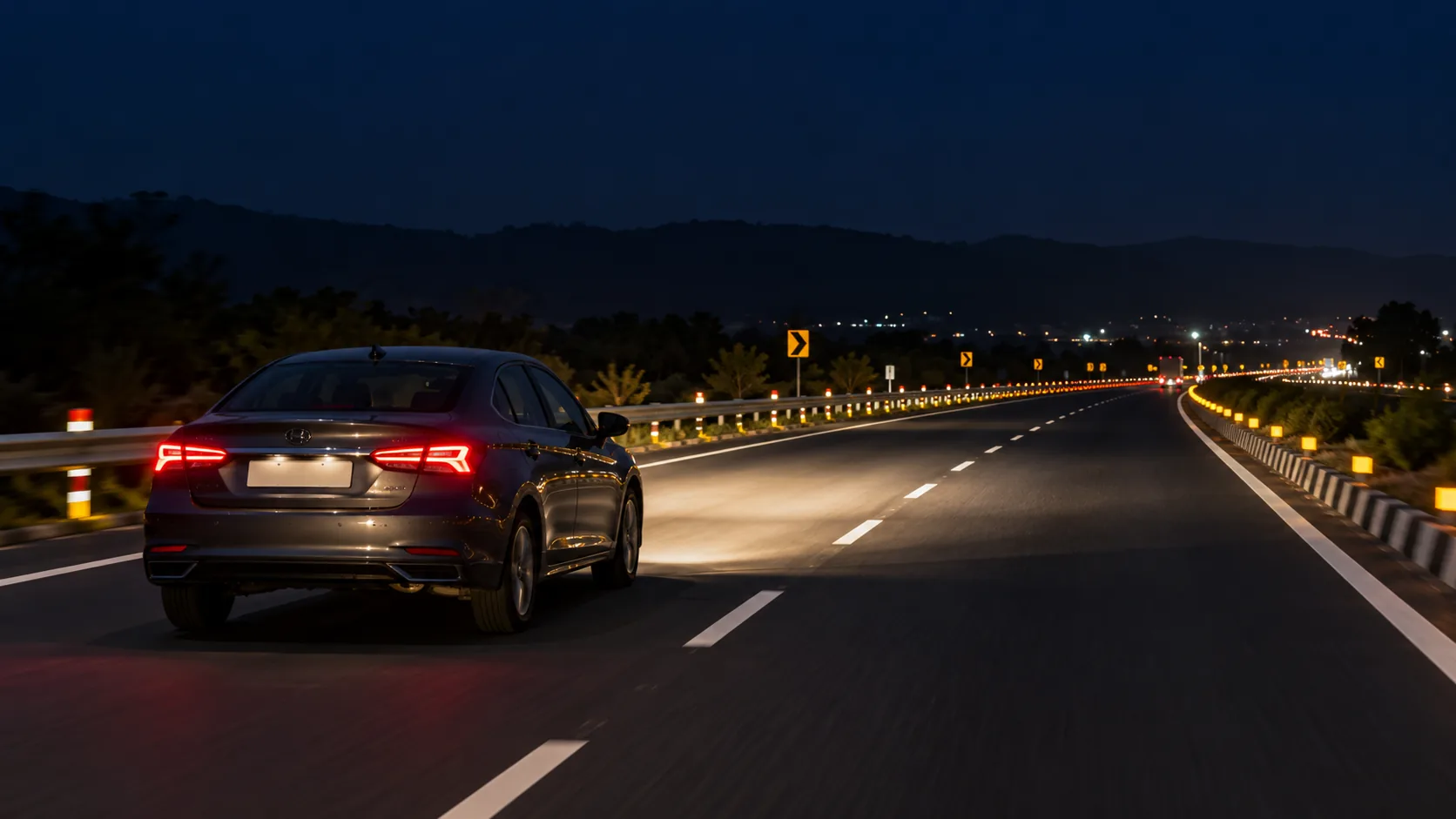
Regulation 31 says to use the lighting devices at night, at dawn and at other times when visibility is poor, and not to drive on parking lights only unless a police officer directs it. High beam must not be used inappropriately, and the fog lamp may be switched on only when visibility is considerably affected by fog, dust, storm, rain or snow, and only with dipped headlamps. The IMD also advises fog lights. On high beam, the only source we opened is American: a California Highway Patrol tip says it reflects off fog and makes a white wall.
NHAI’s December 2025 release also asks for “head/back light blinking”. The Regulations require hazard warning lights when a vehicle has broken down or is parked on the road, and we found no Indian rule that settles whether you should blink them while moving, so we do not give one.
Lane, distance and overtaking
- Stay in your lane and keep a safe gap, as NHAI asks. Regulation 14 bars overtaking when the traffic situation is not clear. In dense fog you cannot judge that, so do not overtake.
- Do not follow the tail lamps in front too closely. The UK Highway Code warns that rear lights can give a false sense of security, and says to brake early and gently so that your brake lights warn those behind.
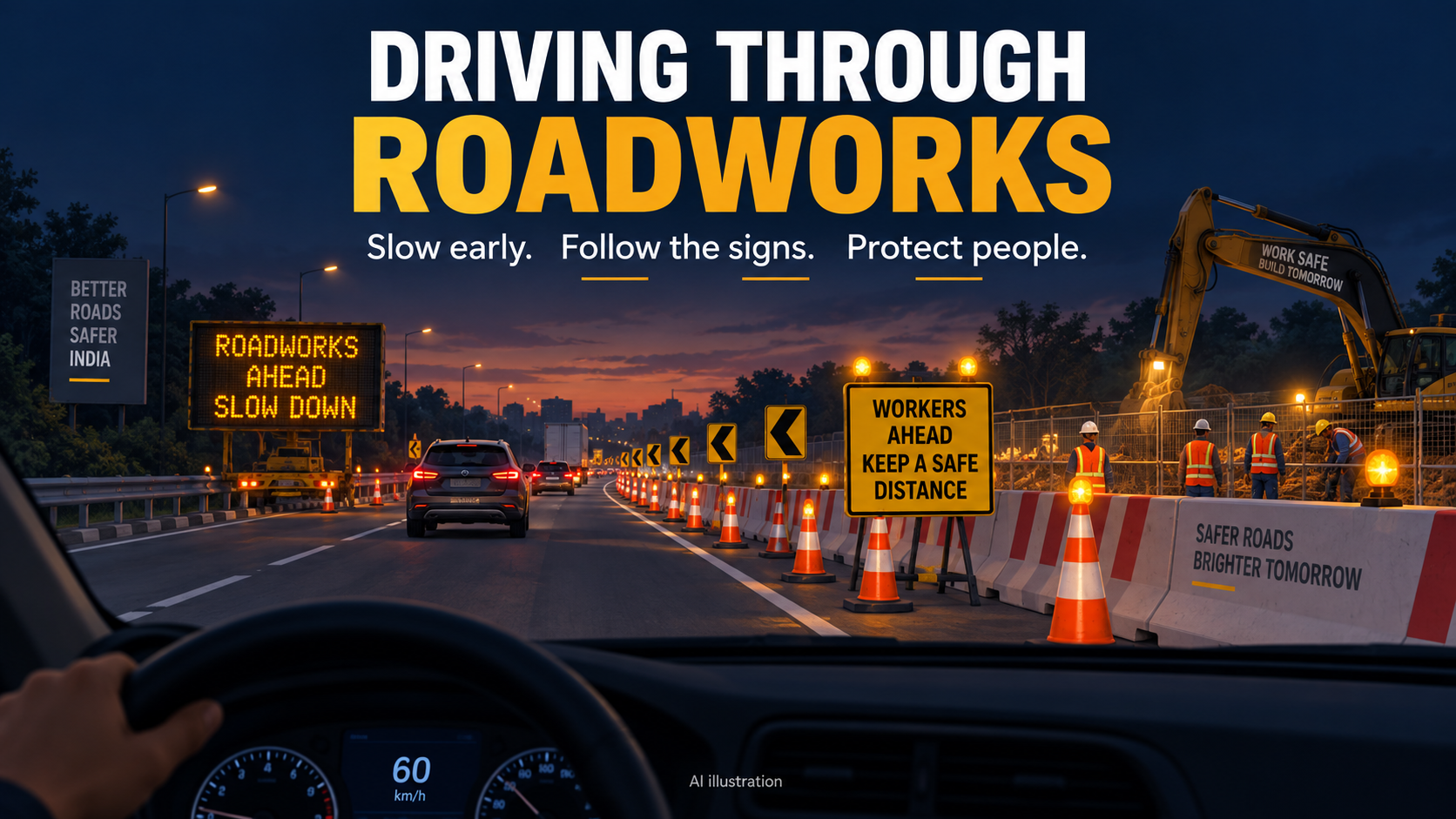
- Slow down further at construction sites and diversions, as NHAI asks. See driving through roadworks.
If you must stop
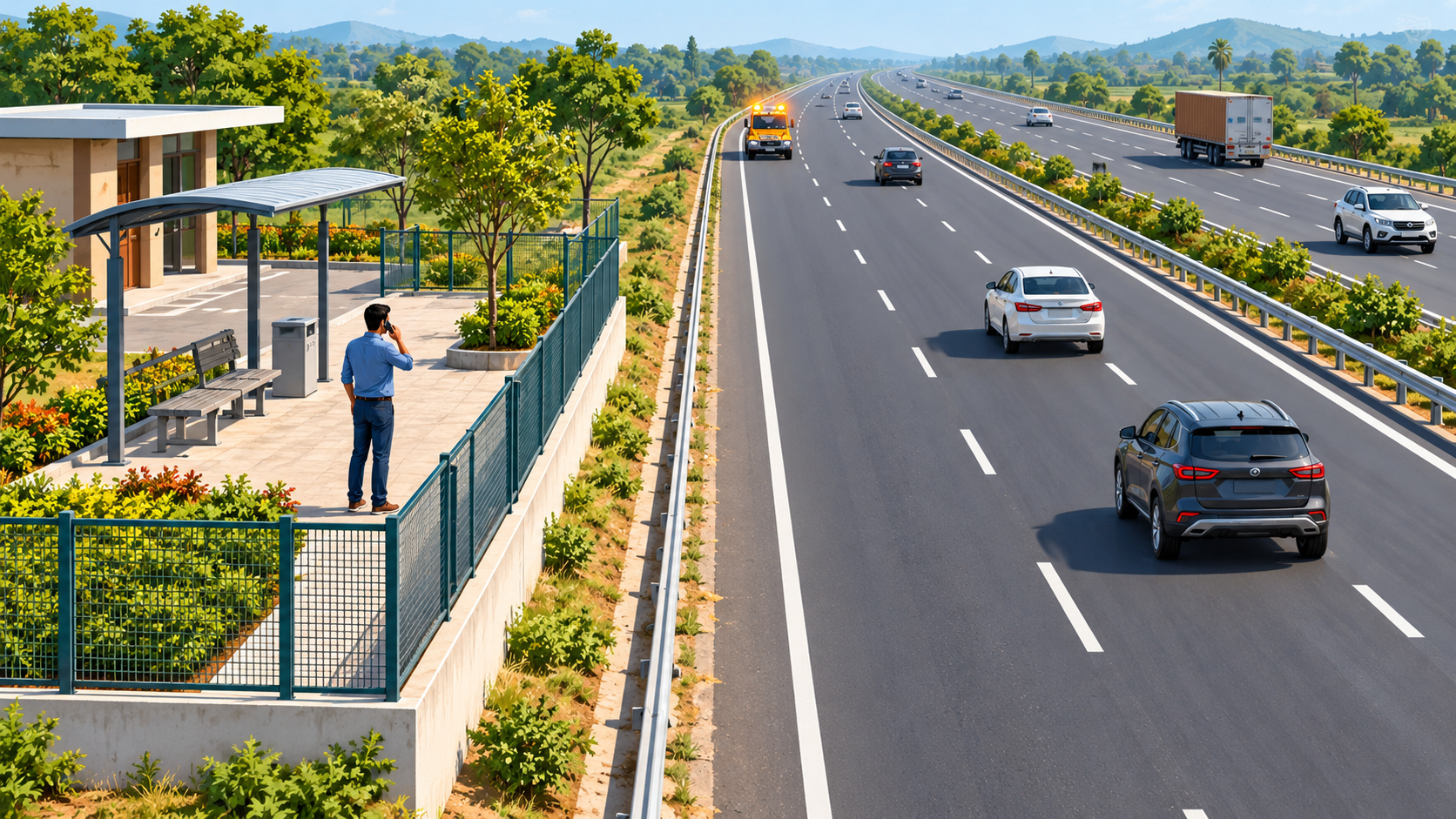
NHAI says do not park on the highway at all, but only at designated places such as truck lay-byes and wayside amenities. If you must stop for a breakdown, regulation 28 says to switch on the hazard warning lights immediately and, on highways and major roads, to put reflective warning triangles 50 metres behind the vehicle, and before the bend if the vehicle is at a bend. In very dense fog 50 metres may be your entire view, so we would also move everyone away from the traffic, behind the crash barrier or well off the carriageway (our advice). The California Highway Patrol says to turn the lights off on the shoulder; in India, follow the hazard-light rule above.
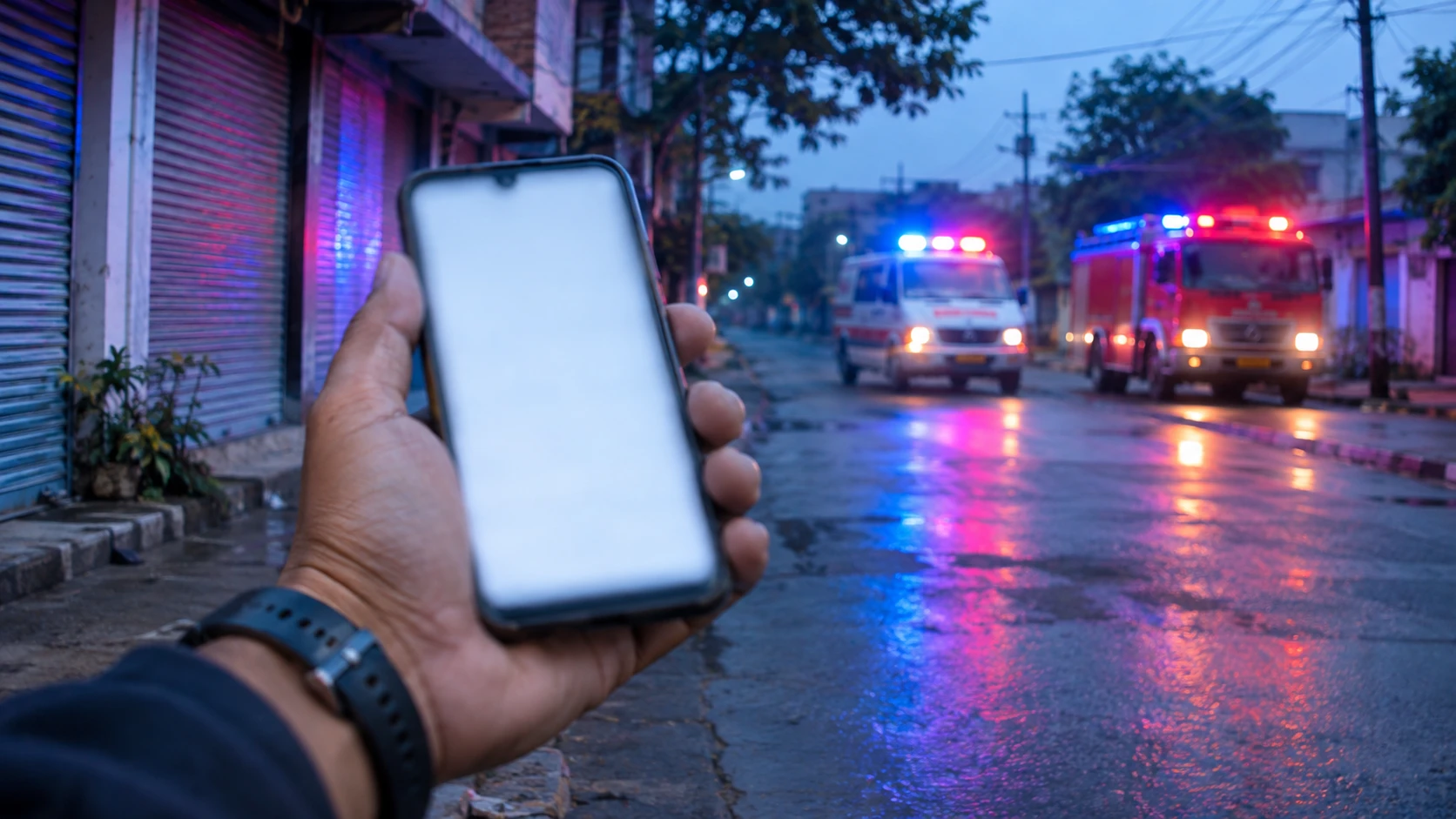
On a National Highway, 1033 is NHAI’s toll-free emergency number, working 24 hours. A PIB release of 27 May 2026 says it gives crane help for breakdowns, medical aid and help with road obstructions. Anywhere else, dial 112. Our pages on emergency numbers in India and the 112, 101 and 108 call tell you what to say.
If you are in or near a pile-up
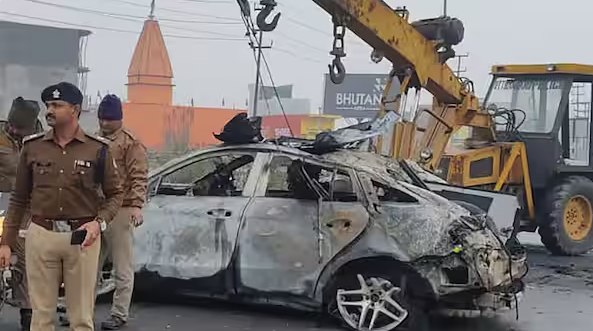
Regulation 29 sets out the first steps after a major accident. Check yourself and the others in your vehicle for injury. If anyone is hurt, call medical help and the police at once. Move the vehicle to the side of the road if you can. If you cannot, stay in the area until the police arrive, unless your injuries prevent it.
We found no official Indian guidance written for fog pile-ups, so the rest is our judgement. Keep the hazard lights on and your seat belt fastened until the vehicles around you have stopped moving, then leave only if you can step away from traffic, not into it. Do not stand on the carriageway to look or to film. Ring 112 or 1033 and give the road, kilometre stone and direction. For first aid before help arrives, see road accident first aid and what a witness should do.
Two-wheelers, trucks and level crossings
- Riders. An NDTV clip advises an anti-fog coating on the helmet visor and bright or reflective riding gear.
- Trucks and other commercial vehicles. NHAI asks for reflective tape across the full width of the vehicle, white at the front and red at the back.
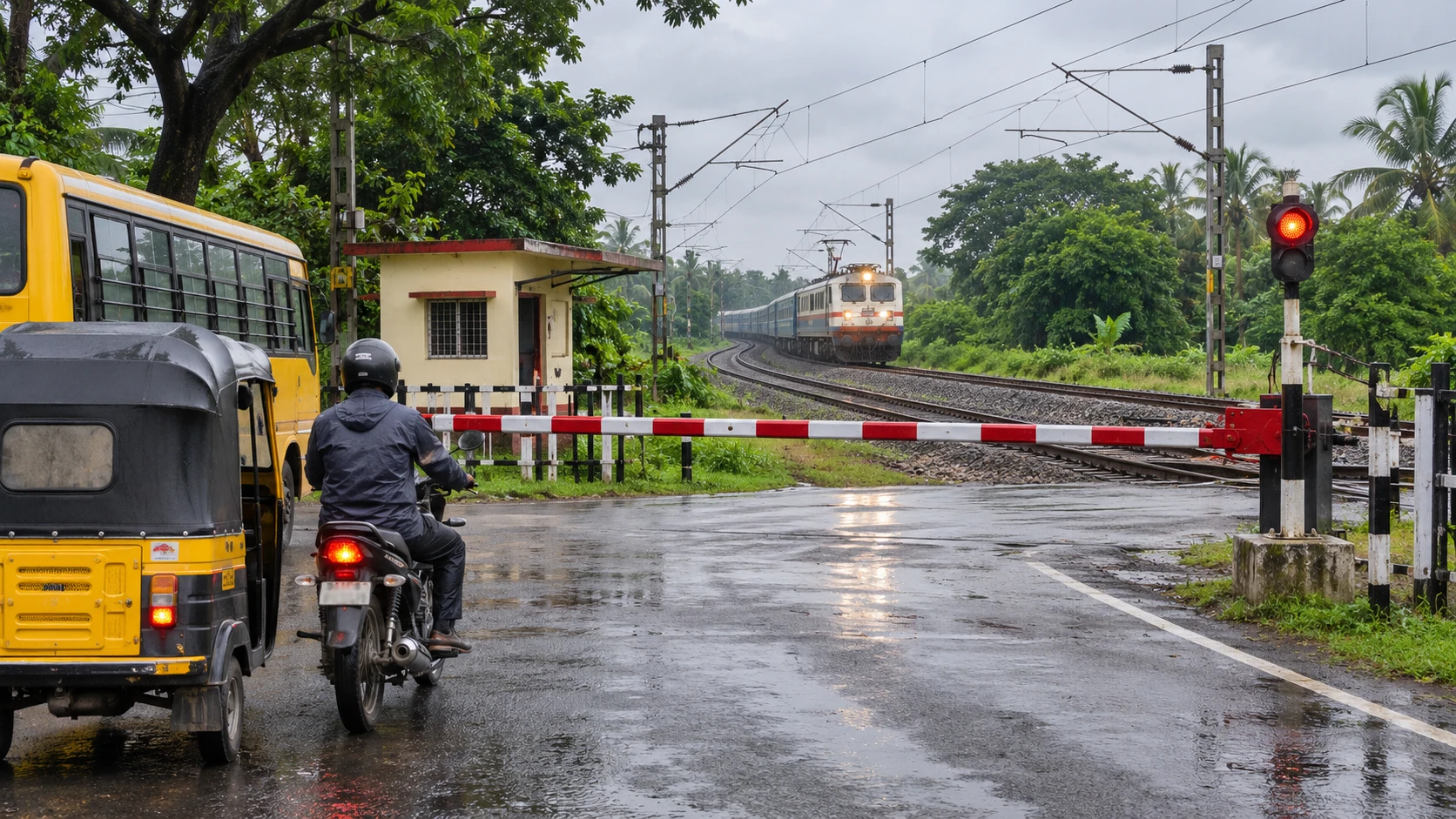
- Level crossings. Indian Railways tells loco pilots in fog to run at a speed at which they can stop short of any obstruction, never more than 75 km/h, and to whistle often at level crossings. Regulation 19 says to enter an unguarded crossing only after ensuring that no train is in sight, which you cannot do from your seat in fog. Stop, open the window and listen. See our railway level crossing guide.
What needs attention
- NHAI's fog advice to highway users is lane driving, a safe distance, 30 km/h or less, and parking only at lay-byes and wayside amenities.
- The Motor Vehicles (Driving) Regulations, 2017 require a lower speed in fog, dipped headlamps for fog lamps, no overtaking when the road is not clear, and hazard lights with a triangle 50 m behind at a breakdown.
- IMD lists difficult driving conditions and a risk of road collisions for dense and very dense fog, and advises fog lights.
- MoRTH's 2023 report puts foggy and misty weather at 7.1 per cent of accidents and 8.5 per cent of deaths; most crashes happened in clear weather.
- No official Indian guidance written for fog pile-ups was found.
Controls that reduce risk
- Check the IMD warning and road reports; delay the journey if you can.
- Clean the windscreen and mirrors, test the fog lamps, know how to demist.
- Slow down early; 30 km/h or less in thick fog.
- Dipped headlamps; fog lamp only with them and only when needed.
- Use a lay-by or wayside amenity if you must stop.
- Save 1033 and 112 on your phone.
Common unsafe practices
- Speeding up to get out of the fog.
- Using high beam, or driving on parking lights alone.
- Tailgating the tail lamps ahead.
- Overtaking when you cannot see that the road is clear.
- Stopping on the carriageway or the lane edge.
- Standing on the road at the scene of a crash, or filming it.



Leave a comment