
Quick answers
Why do fires in cities turn deadly?
Urban fires kill because of illegal construction, blocked exits, poor fire NOC compliance and electrical overload in malls, high-rises and markets.
How can village homes be protected from fire?
Replace kerosene lamps with solar lamps, store LPG cylinders in ventilated spaces and organise village-level fire volunteer groups.
What can city residents do about fire safety?
Demand fire audits in residential complexes, report locked fire exits in malls and offices, and keep a fire blanket or portable extinguisher at home.
What causes fires in rural India?
Rural fires are linked to open flames, kerosene lamps, straw huts and the absence of nearby fire stations, often in huts, kitchens and godowns.
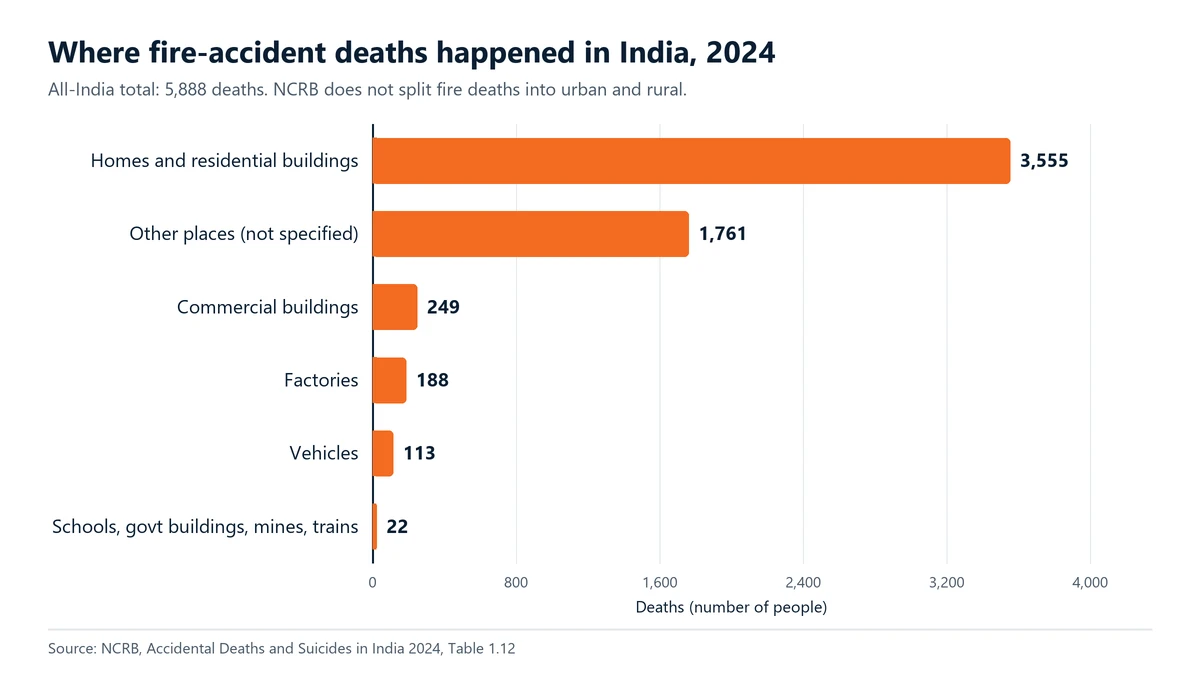
In 2024, the NCRB recorded 5,888 deaths in 5,971 fire accidents across India. It does not publish a split between cities and villages, but it does show where people died: 3,555 deaths (60.4%) were in homes, 249 in commercial buildings, 188 in factories and 113 in vehicles. (Source: NCRB, Accidental Deaths & Suicides in India 2024, Chapter 1 and Table 1.12)
Two kinds of risk, one result
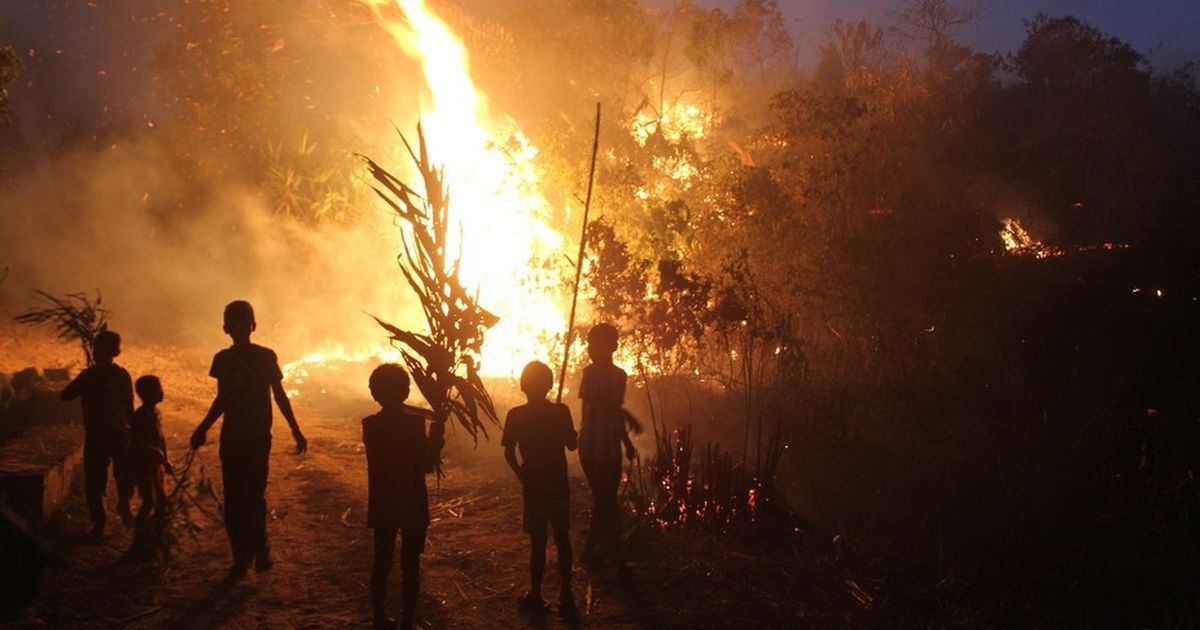
City fires make the headlines: a hotel in Kolkata, a game zone in Rajkot, a coaching centre in Surat. Village fires rarely reach the TV news, but for the family that loses a house, a cattle shed or a child, the loss is just as complete.
The causes differ.
- In cities, fires turn deadly because of illegal floors and construction, blocked or locked exits, fire systems that are not maintained, and overloaded wiring in crowded buildings.
- In villages, the risk comes from open flames: chulhas, kerosene lamps and diyas near thatch, straw stacks and dry fodder, crop-residue burning that spreads, and long distances to the nearest fire station.
What is the same everywhere is that most people die at home, and that we tend to think about prevention only after the loss.
What you can do
If you live in a city
- Ask your society or RWA for a fire audit, and for the date of the last pump test and drill.
- Report locked fire exits in malls, offices and coaching centres to the fire service.
- Keep a fire blanket in the kitchen and a serviced ABC extinguisher at home.
- Fit a smoke alarm in the passage outside the bedrooms.
If you live in a village
- Replace kerosene lamps with solar or electric lights where you can.
- Keep the chulha and any open flame well away from thatch, straw and stored fodder.
- Keep LPG cylinders upright, in a ventilated place, and switch off the regulator after cooking.
- Keep a few buckets of water or sand ready in the dry season.
- Form a village fire volunteer group, and find out where the nearest fire station is and how long it takes to arrive.
What government and institutions can do
- Bring smoke alarms and fire-safety awareness to rural homes, through panchayats and self-help groups.
- Set up quick-response fire units or volunteer teams for villages far from any fire station.
- Enforce fire rules strictly in city buildings, and act on illegal construction and locked exits.
Fire safety has to reach every corner, not just the cities. Wherever you live, fire does not choose. Tonight, check two things at home: the gas regulator is off, and nothing that burns is kept near a flame.
What needs attention
- Six in ten fire-accident deaths in India happen in homes, in cities and villages alike
- NCRB does not publish a city and village split of fire deaths, so claims of exact urban and rural tolls are not reliable
- City fires turn deadly through illegal construction, locked exits and poorly maintained systems
- Village fires often start from open flames near thatch, straw or fodder, and fire stations are far away
- City fires get media attention while village fires rarely do
- Simple home measures work in both settings
Controls that reduce risk
- Get a fire audit done in your housing society
- Report locked exits in public buildings to the fire service
- Switch village homes from kerosene to solar or electric lights
- Form village fire volunteer groups with buckets, sand and basic training
- Bring smoke alarms and awareness to rural homes through panchayats
- Enforce fire rules and act on illegal construction in cities
Common unsafe practices
- Thinking fire is mainly a city or factory problem
- Keeping kerosene lamps or chulhas near thatch and straw
- Leaving the LPG regulator on after cooking
- Locking fire exits in malls, offices and coaching centres
- Ignoring illegal floors and overloaded wiring in city buildings
- Not knowing how far the nearest fire station is


Leave a comment