
Quick answers
What is hydrostatic testing of a fire extinguisher?
It is a controlled pressure test used to check whether an extinguisher cylinder can safely hold pressure. It must be done by competent people using suitable equipment.
Can I hydrostatically test an extinguisher myself?
No. The cylinder must be safely discharged, inspected, pressure-tested and returned to service through an authorised and competent service process. Improvised testing can make the cylinder burst violently.
How often is hydrostatic testing required?
In India, IS 2190:2024 Annex F gives every 3 years for water and foam extinguishers and every 5 years for dry powder, CO2 and clean-agent extinguishers, with CO2 cylinders also tested before refilling where applicable. Also follow the cylinder marking, the maker's instructions and your local authority, not a twelve-year figure from the internet.
Does passing a hydrostatic test mean the extinguisher is ready for use?
Not by itself. The valve, hose, agent, seals, pressure gauge, operating parts, label and service record must also pass the required inspection and maintenance.
What is HPT in a fire extinguisher?
HPT is the hydrostatic pressure test of the extinguisher shell or cylinder. A trained service provider empties and inspects the unit, fills it with liquid and holds it at the specified test pressure to check for leaks, distortion or too much expansion.
How often is HPT required for fire extinguishers in India?
IS 2190:2024 Annex F gives a 3-year interval for water and foam extinguishers and a 5-year interval for dry powder, CO2 and clean-agent extinguishers. CO2 cylinders are also tested before refilling as applicable.
What does the HPT date on an extinguisher tell you?
It shows when the shell or cylinder last passed hydrostatic pressure testing. Use it with the extinguisher type to find the next due date, and check that the service certificate matches the unit's serial number.
What is the HPT test pressure for a CO2 fire extinguisher?
The Annex F minimum schedule in IS 2190:2024 is 225 kg/cm2 held for 30 seconds for CO2 extinguishers. The service provider must still check the cylinder's factory test pressure and applicable specification.
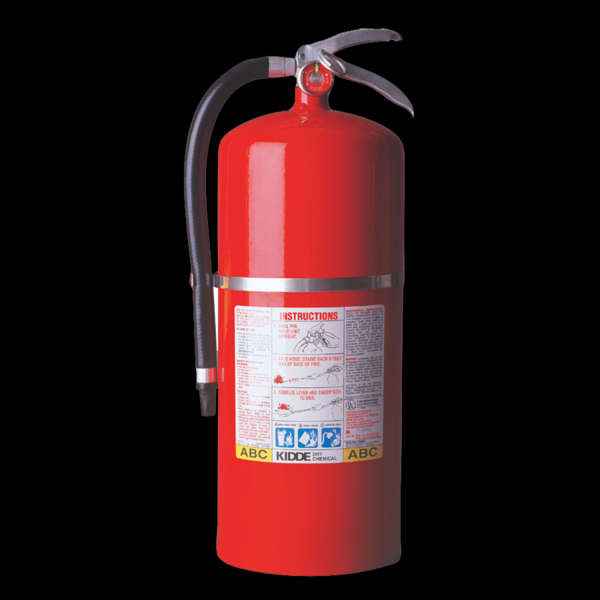
The red extinguisher on the wall of your office, shop or society may look exactly as it did the day it was fixed there. Inside, the steel shell can still rust, thin out or crack, especially in humid or coastal places. An extinguisher is a pressure vessel. A weak shell can fail when you most need it, or even burst. That is why rechargeable extinguishers need a hydrostatic pressure test, usually called HPT, at fixed intervals.
What is a hydrostatic pressure test?
A trained service technician empties the extinguisher, takes off the valve and hose, and checks the shell inside and out. The shell is then filled with water or another suitable liquid and pressed to a test pressure well above its normal working pressure, and held there for a set time. The technician watches for leaks, bulging, distortion or too much expansion.
Liquid is used, not air or gas, because compressed air stores a huge amount of energy. If a shell fails under air pressure it can burst violently. Never let anyone test an extinguisher with compressed air, nitrogen or CO₂, and never try it yourself.

The steps
- Visual check of the outside, the threads and any old repairs.
- Safe discharge of the pressure and removal of the agent. Clean agent must be recovered, not released into the air.
- Removal of the hose and valve.
- Inspection of the inside for rust and damage.
- Pressure test with liquid, at the specified pressure and hold time.
- Draining, cleaning and thorough drying. Water left inside a dry powder or CO₂ cylinder causes rust and clumping.
- Refilling with the correct agent, new seals, pressurising, leak check, marking and return to its place.
A shell that leaks, bulges, is badly rusted, has been in a fire, has an illegal weld or patch, or has damaged threads fails. It must be destroyed so it cannot go back into service, and replaced.
How often? The Indian rule
You may read online that extinguishers need HPT every twelve years. That is a US interval for certain dry-chemical extinguishers. It does not apply to every extinguisher, and it is not the Indian rule.
In India, BIS IS 2190:2024, Annex F, sets the interval by type:
| Extinguisher type | HPT interval | Minimum test pressure and hold time (Annex F) |
|---|---|---|
| Water | Every 3 years | 35 kg/cm² for 150 seconds |
| Foam | Every 3 years | 35 kg/cm² for 150 seconds |
| Dry powder | Every 5 years | 35 kg/cm² for 150 seconds |
| Clean agent | Every 5 years | 35 kg/cm² for 150 seconds |
| Carbon dioxide (CO₂) | Every 5 years, and before refilling as applicable | 225 kg/cm² for 30 seconds |
The service provider must still check the factory test pressure marked on your extinguisher and the cylinder specification. CO₂ cylinders also come under PESO’s Gas Cylinder Rules, 2016. Non-rechargeable, one-time-use extinguishers are not hydro-tested; they are discarded or handled as the standard says. The label tells you which kind you have.
HPT is only one check
A fresh HPT sticker does not mean the extinguisher will work. It does not test the valve, the hose, the agent or whether it is the right type for the fire. Your extinguishers also need:
- Regular visual checks by the building staff: is it in its place, easy to reach, gauge in the green, pin and seal in place, no dents, rust or cracks?
- Periodic maintenance by a competent service agency, as IS 2190 sets out, with the tamper seal and pin checked and a new seal fitted.
- HPT at the interval for its type.
When the agency takes extinguishers away for testing, make sure they leave equal replacements, so no area is left without cover. When they come back, match the serial numbers with the certificates.
Today, walk round your premises and read the manufacture date and the last HPT date on each extinguisher. If a water or foam unit was last tested more than three years ago, or a powder or CO₂ unit more than five, call your service agency this week.
What needs attention
- The old twelve-year figure is a US interval for certain dry-chemical extinguishers; IS 2190 sets intervals by type for Indian premises
- Annex F gives three-year intervals for water and foam, and five-year intervals for dry powder, CO₂ and clean-agent extinguishers
- The minimum schedule in Annex F is 35 kg/cm² for 150 seconds for water, foam, dry powder and clean agent, and 225 kg/cm² for 30 seconds for CO₂; the service provider must still check the extinguisher's factory test pressure and cylinder specification
- IS 2190:2024 requires trained people with suitable pressure-testing equipment, safeguards and service manuals
- High-pressure expellant cylinders on wheeled extinguishers must be tested at least every five years, with a limited exemption in the standard for small cartridges
- CO₂ cylinders must be hydro-tested before refilling as required by IS 2190:2024 and the Gas Cylinder Rules
- Non-rechargeable units are not treated like rechargeable cylinders; the standard says to discard them or recover clean agent, not to hydro-test them routinely
- Hydrostatic testing does not prove that the extinguisher will discharge properly, has the right agent, that the hose and valve work, or its fire rating and access
- A current test stamp cannot make a rusted, damaged, discharged, blocked or wrong-type extinguisher acceptable
- Taking several extinguishers away for testing without replacements creates a separate fire-safety gap
Controls that reduce risk
- List every extinguisher by ID, type, size, manufacture date, last HPT date and next due date
- Use IS 2190:2024, not an overseas table, as the starting schedule for Indian premises
- Check CO₂ cylinders against the PESO Gas Cylinder Rules and the accepted cylinder code before refilling
- Take damaged, rusted, leaking, fire-exposed or illegally repaired units out of service at once
- Use a competent service agency with trained staff, guarded equipment, calibrated gauges and the means to recover agent
- Issue a work order that names the standard, test pressure, hold time, pass criteria, marking and certificate
- Keep equal replacement extinguishers in place while units are away
- Match returned serial numbers to certificates and check agent, weight, pressure, seals, hose, gauge and instructions
- Record failures and make sure condemned shells cannot come back into service
- Check due dates at least every three months, and after any use, damage, heat exposure or doubtful service
Common unsafe practices
- Applying the US twelve-year dry-chemical interval to extinguishers kept under Indian requirements
- Testing every extinguisher at the same pressure and hold time
- Using compressed air, nitrogen or CO₂ instead of the approved hydrostatic method
- Pressurising before a full visual and internal check
- Testing a shell with an illegal weld, a patch, heavy rust, damaged threads, fire damage or an obsolete design instead of condemning it
- Hydro-testing a non-rechargeable extinguisher as if it could be serviced
- Releasing clean agent into the air instead of recovering it
- Leaving water inside a dry powder or high-pressure cylinder after the test
- Refilling with a different agent, mixing powders or using unapproved spare parts
- Sending every unit in an area away together without temporary replacements
- Accepting a sticker without a test record for that cylinder and a traceable service provider
- Treating HPT as a substitute for routine checks, annual maintenance and training
Leave a comment