
Why an e-bike battery may fail
Many electric two-wheelers use lithium-ion battery packs. Damage, manufacturing defects, unsuitable chargers, electrical faults, heat exposure or unauthorised modification can contribute to failure. Not every fire has the same cause, and an outwardly normal battery is not a guarantee of safety. India’s EV safety requirements address battery-management and protection functions, but product condition and user practices still matter.
Choose and charge the whole system
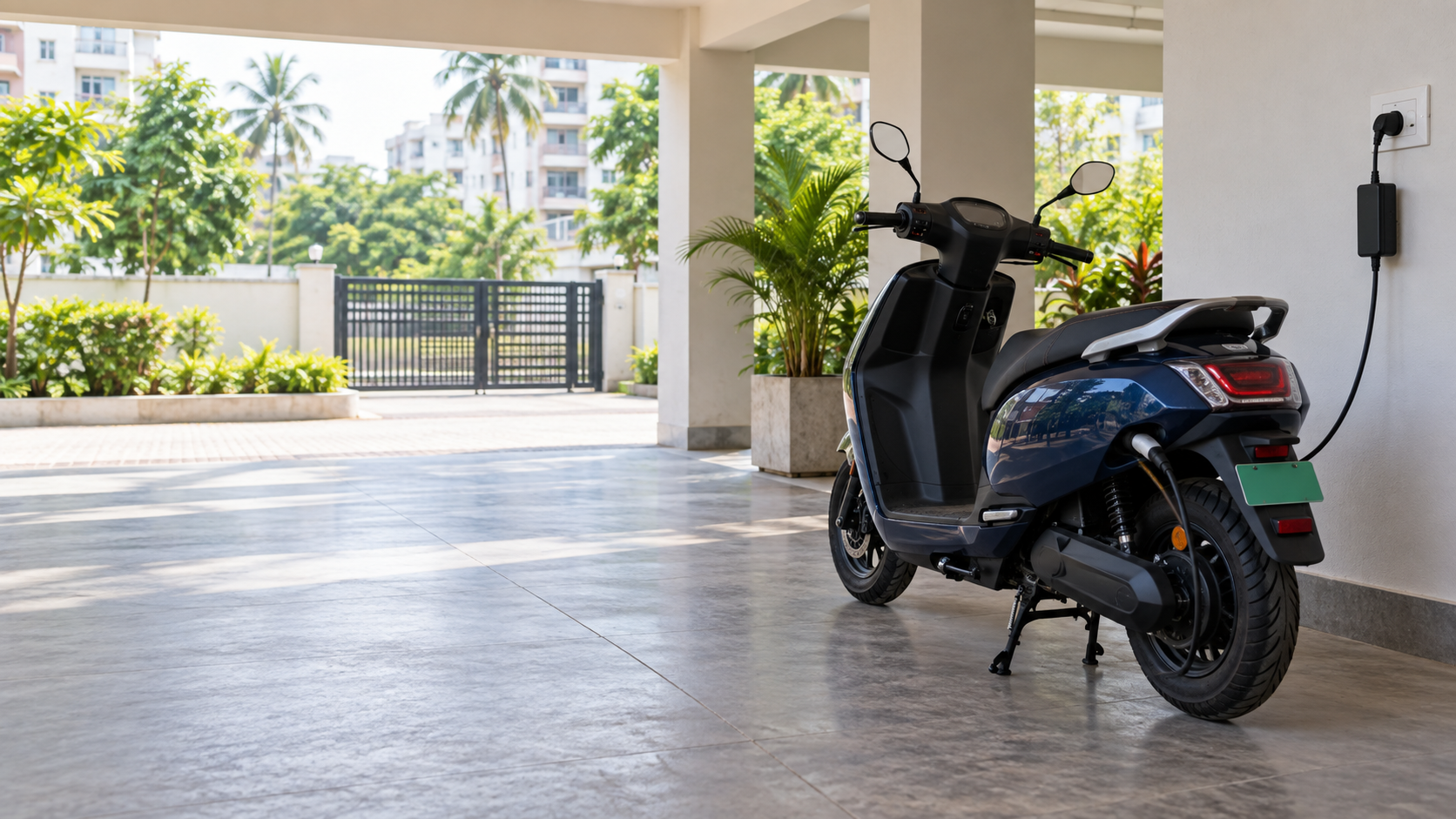
Buy a reputable vehicle and use the battery and charger specified or approved for that exact model. A plug that fits is not proof that a charger is compatible. Avoid improvised wiring, damaged plugs, extension leads and multi-plug adapters. Follow the maker’s charging instructions and stop charging when directed. Do not charge a large battery where the vehicle blocks a door, stair or escape route. Have damaged wiring checked by a qualified person.
Act on warning signs
Stop using a battery that is swollen, leaking, unusually hot, hissing, emitting a strange odour or smoke, or was damaged in a crash or flood. If it can be done without approaching a hot or venting pack, disconnect charging power; otherwise move away. Do not open or repair a pack yourself. Ask the maker or a qualified service provider for inspection and safe disposal instructions. Do not put a suspect battery back on charge to see whether it works.
If smoke or fire starts
Warn everyone nearby and evacuate. Avoid the smoke and keep the exit clear. Call 112 from a safe place in India; tell responders that a lithium-ion vehicle battery may be involved and whether anyone is missing. Do not move a smoking or burning vehicle through an occupied building. Do not rely on a small household extinguisher to control a developing battery-pack fire. Follow the emergency service’s directions and do not re-enter until the area is released.
What this guide does not prove
It does not claim a single cause for any particular e-bike fire, a universal safe charging duration or a simple home remedy for a battery in thermal runaway. Manufacturer instructions, product type and local electrical conditions differ. Keep receipts, service records and any recall information so defects can be reported accurately.
Sources: US Fire Administration, community battery-safety guidance; UL Solutions, e-bike system certification and chargers; India Ministry of Heavy Industries, EV battery safety standards; Government of India, 112. Reviewed 29 September 2026.
What needs attention
- A battery-pack failure can have several causes; no single cause explains every e-bike fire
- The charger, battery and vehicle need to be compatible as a system
- Damage, abnormal heat, swelling, hissing, odour or smoke require stopping use
- Charging should not obstruct an escape route
- A developing pack fire is an evacuation and emergency-response problem, not an improvised repair
Controls that reduce risk
- Use the manufacturer-specified or expressly approved battery and charger
- Inspect the vehicle, plug and cable for damage before charging
- Do not use extension leads or multi-plug adapters for vehicle charging
- Keep the vehicle and charging lead away from doors, stairs and escape routes
- Follow the maker’s instructions for charging and service
- Stop using a pack after crash, flooding or abnormal heat and seek qualified advice
- Check and act on manufacturer recall notices
Common unsafe practices
- Relying on equipment without a hazard assessment
- Blocking or compromising escape routes
- Delaying the alarm or emergency call
- Attempting a response beyond training or safe conditions
- Re-entering before authorised clearance
- Treating a checklist as a substitute for competent inspection
Leave a comment