
Quick answers
Is a fire NOC enough to make a factory safe?
No. Fire safety is not a box to tick on a compliance checklist. Industries have a duty to keep fire protection systems, alarms, drills and inspections working because the lives of workers and visitors depend on them.
Who is at risk if a factory neglects fire safety?
Not only workers but also visitors, suppliers and contractors who enter or work near the premises face the danger when fire protection is neglected.
What should a factory do to stay prepared for a fire?
Complete a site-specific hazard assessment, verify applicable state and local requirements, use competent inspection for installed systems, keep alarms and exits usable, train people, practise evacuation and record defects with an owner.
What should I do if a fire breaks out in an industrial unit?
Raise the alarm, move away from smoke and fire, use the safest exit and not lifts, call 112 from a safe place with the full address, and do not re-enter until the responsible authority gives clearance.
In Gujarat, the bustling heartbeat of India’s industrial prowess, a silent crisis is unfolding—one that threatens every life that steps foot inside or even near an industry in the state. It’s not just the workers who face this danger; it’s every visitor, supplier, and contractor who unwittingly walks into a potential death trap. This isn’t hyperbole—it’s a grim reality brought about by a shocking lapse in safety regulations. In February 2022, Gujarat’s Labour Department stopped asking factories for a fire NOC (No Objection Certificate) before granting or renewing a factory licence, because the government had not yet settled who should issue fire NOCs to industries. For years after that, factories had no clear route to a fire-safety check.
A Dangerous Precedent: The Absence of Fire NOCs in Gujarat
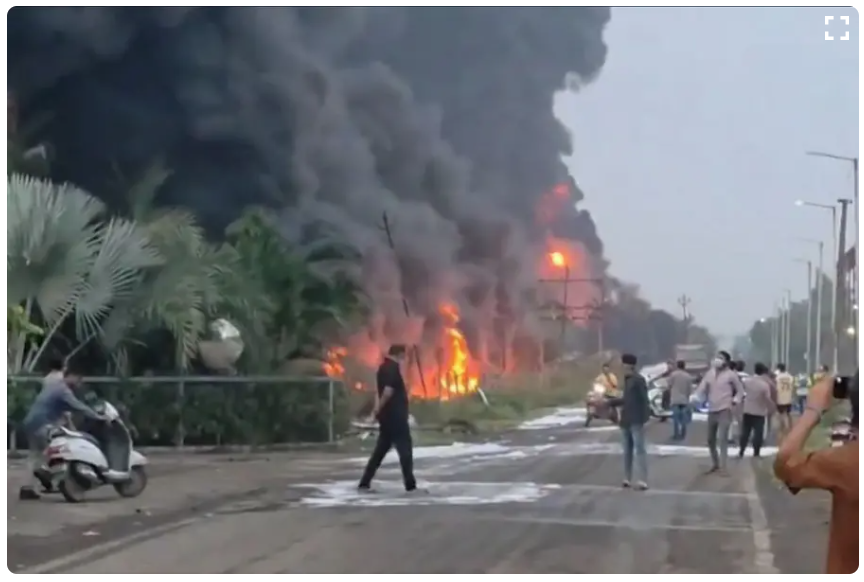
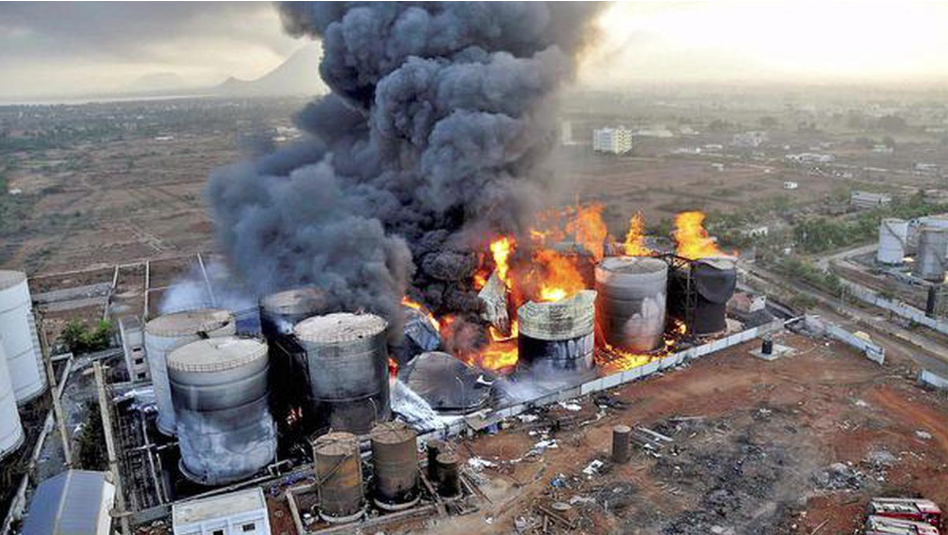
In the aftermath of the tragic Rajkot fire accident, the government swiftly moved to seal properties across the state, all in the name of precaution. But the question that haunts us is—what about the industries? The very places where the highest risks are concentrated are running without the basic safety compliance that a fire NOC ensures. We’ve witnessed an unsettling number of industrial accidents in recent years, each claiming lives and leaving families shattered. Who will answer for these deaths? Who bears the responsibility for the lives lost because of this glaring negligence?
This is not just a bureaucratic oversight; it’s a ticking time bomb. The absence of fire NOCs means that there are no formal checks or assurances that these industries are equipped to handle fire emergencies. No drills, no inspections, no guarantees that the fire alarms will sound when needed, or that fire suppression systems will work.
Fire NOC rules are made by each State under its own fire-safety law, so they differ from State to State. This certificate is not just a piece of paper; it’s a critical validation that the premises have been inspected and are compliant with fire safety norms. It’s a measure designed to protect lives, to ensure that in the event of a fire, there is a fighting chance to prevent loss of life and property. In Gujarat, the question of who issues fire NOCs to factories stayed unsettled for years. In July 2026 the State decided to give its Urban Development Department sole charge of factory fire NOCs and fire-safety inspections; a formal notification was still awaited when this was reported.
The Cost of Complacency: Lives Lost in Preventable Tragedies
The numbers are serious. DGFASLI’s Standard Reference Note 2024 records 221 deaths in Gujarat’s registered factories in 2023 and 240 in 2022 — the highest of any State that reported data in both years. NCRB recorded 245 fire-accident deaths in Gujarat in 2024, and 121 deaths in factory or machine accidents, again the most of any State. These aren’t just statistics; every one is a family that lost someone. Every time an industrial fire breaks out, we’re reminded of the glaring gaps in our system. We’re reminded that someone—somewhere—allowed these industries to operate without the necessary precautions, and now, people are paying the ultimate price for this negligence.
Who is accountable for these deaths? It’s a question that echoes through the corridors of power, demanding answers. The lives lost in these accidents were not just numbers—they were fathers, mothers, brothers, sisters, and children. They were people who went to work one day and never came home, their lives cut short by a failure to prioritize safety over convenience.
Industries’ Moral Obligation: Beyond Compliance, Toward Safety
But let’s not just point fingers at the government. Industries themselves have a moral obligation—one that goes beyond merely obtaining a fire NOC. Fire safety isn’t just a box to tick off on a compliance checklist; it’s a fundamental duty. It’s about recognizing that the people who walk through the doors of these factories and plants are not just workers—they are human beings with families and lives that matter.
Fire protection systems are not just mandatory; they are a basic need. As human beings, we need to understand the paramount importance of life and prioritize it above all else. After the removal of the fire NOC requirement, many industries have shamefully neglected their fire protection responsibilities. This isn’t just a lapse in judgment; it’s a gross disregard for human life. It’s time for industries to wake up to the reality that fire safety measures are not just about avoiding penalties—they are about saving lives.
A Call to Action: Prioritize Safety, Value Life
Every single day, as we go about our lives in Gujarat, there’s an unseen risk lurking in the background—an industrial sector that’s playing with fire. And every life that enters these industrial spaces, whether directly or indirectly, is at risk. This is not just a local issue; it’s a crisis of national importance.
We must demand better from our authorities, our industries, and ourselves. It’s time to make fire safety in industries a priority. It’s time to recognize that in a state known for its entrepreneurial spirit and economic dynamism, the most valuable resource we have is human life. We cannot afford to lose it due to preventable tragedies.
This is a wake-up call, not just for Gujarat, but for the entire nation. It’s time to act before the next disaster strikes. It’s time to ensure that every industry in Gujarat is safe, compliant, and ready to protect the lives of those who work within their walls. Only then can we say that we are truly valuing the lives that are at the heart of our economic success.

What needs attention
- From February 2022 Gujarat's Labour Department stopped asking for a fire NOC before issuing or renewing a factory licence
- For years after that, factories had no clear route to a fire-safety check
- In July 2026 the State decided to give its Urban Development Department charge of factory fire NOCs; a formal notification was awaited when reported
- DGFASLI records 221 deaths in Gujarat's registered factories in 2023 and 240 in 2022
- Workers are not the only ones at risk; visitors, suppliers and contractors enter the same sites
- A NOC is a check at one point in time; alarms, drills and suppression must work every day
Controls that reduce risk
- Get a competent fire-safety audit of your factory even if no authority has asked for one
- Service and test alarms, hydrants, sprinklers and extinguishers on a fixed schedule
- Run evacuation drills for every shift, including contract and temporary workers
- Brief every visitor, driver and supplier on exits and the assembly point
- Keep a written record of defects and the date each was fixed
- Follow the Urban Development Department's process once the factory fire NOC notification is issued
Common unsafe practices
- Treating the missing NOC requirement as a reason to stop fire-safety work
- Letting alarms, hydrants and sprinklers go unserviced because no inspector is coming
- Skipping fire drills and leaving contract workers out of training
- Allowing visitors and suppliers on site with no safety briefing
- Blocking exits and access roads with raw material or finished stock
Leave a comment