
Quick answers
What should I do if an adult is choking?
If they can cough, let them. If they cannot speak, cough or breathe, shout for help and ask someone to call 112, give up to five back blows between the shoulder blades while they lean forward, then up to five abdominal thrusts with a fist above the navel, and keep alternating. If they go limp, lay them down and start CPR. This follows Resuscitation Council UK and St John Ambulance, which are foreign.
How do I help a choking baby?
Sit down, lay the baby face down along your thigh with the head supported and lower than the bottom, and give up to five back blows between the shoulder blades. Then turn the baby face up and give up to five chest thrusts with two fingers in the middle of the chest, just below the nipple line. Do not give abdominal thrusts to a baby. Call 112 and take the baby to hospital after.
Can I give abdominal thrusts to a baby?
No. Babies under one year get back blows and chest thrusts. The 2025 Resuscitation Council UK guidance uses chest thrusts for infants, and abdominal thrusts for children over one and adults.
When should I call 112 or 108 for choking?
As soon as the cough is silent or weak and the person cannot speak or breathe. Ask someone else to call while you start; if you are alone, start and put the phone on speaker. 112 is the single emergency number in India and includes the 108 ambulance. Even after the object comes out, a doctor should check anyone who has had thrusts.
Should I put my finger in the mouth of a choking person?
Not blindly. Resuscitation Council UK says not to use blind finger sweeps, and the NHS says not to poke blindly or repeatedly. Remove an object only if you can see it and it is easy to grasp.
What if the person choking is pregnant or very large?
The American Red Cross says to give chest thrusts instead of abdominal thrusts if the person is pregnant or you cannot reach around the abdomen. That is American guidance, so ask a trainer to show you where to place your hands.
Do I need to go to hospital after the object comes out?
Yes, get checked. Resuscitation Council UK says anyone treated with abdominal thrusts or chest compressions should be evaluated because the thrusts can cause injury, and St John Ambulance says a baby who has had chest thrusts, or a child who has had abdominal thrusts, should be seen in hospital.
Which foods are choking hazards for small children?
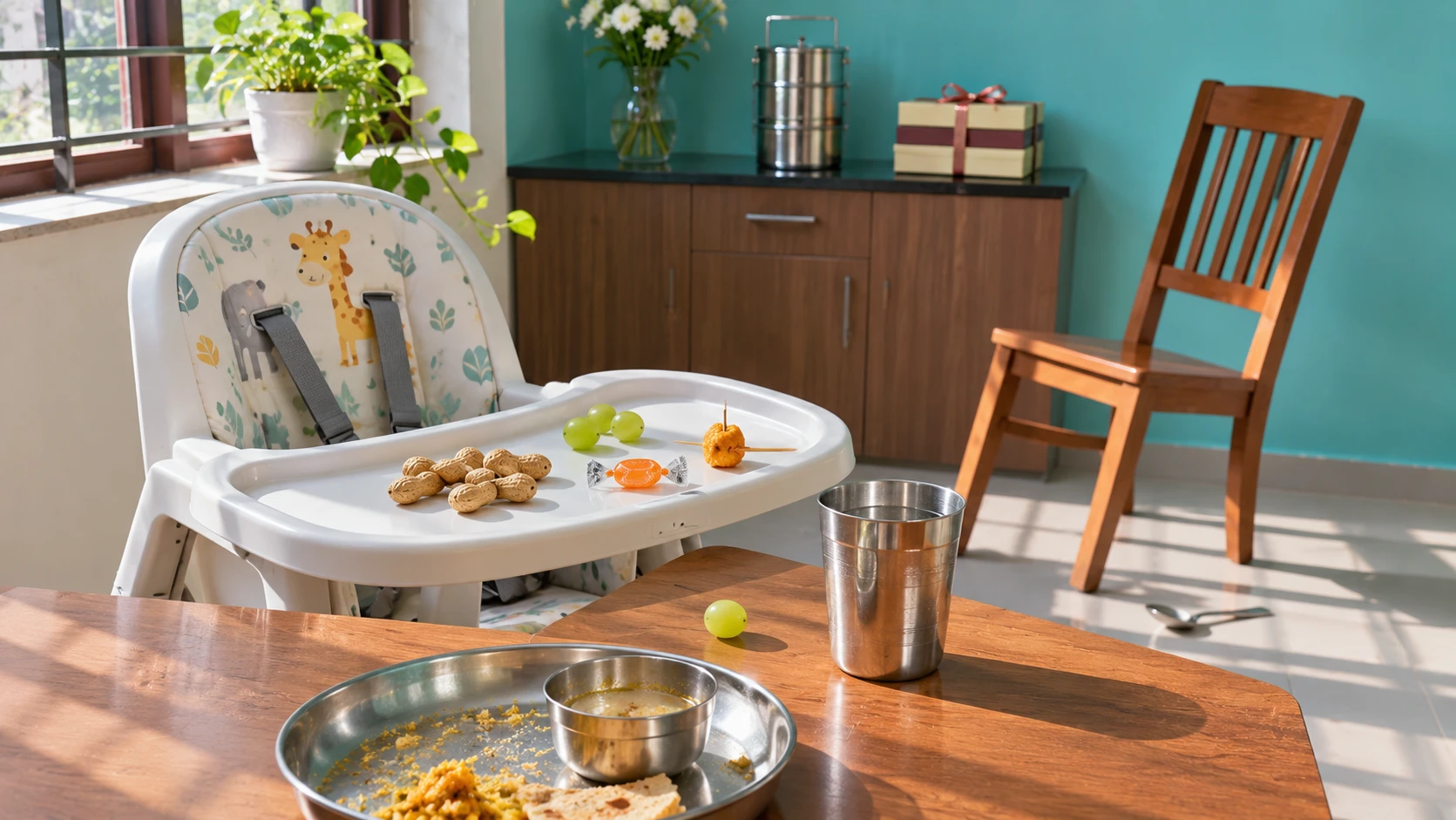
Until about age four: whole nuts and peanuts, hard sweets, popcorn, chewing gum, whole grapes and raisins, raw carrot, sliced sausage, ice cubes and food on toothpicks or skewers (INSPQ, Quebec). The NHS adds jelly cubes, marshmallows and sticky sweets, and says to crush or flake nuts for children under five.
Do anti-choking suction devices work?
We do not know. In July 2026 Resuscitation Council UK made no recommendation for or against them and said back blows and thrusts should be given first, as they need no equipment. Do not delay the standard steps to look for a gadget.
Choking is quiet. A person at a table stops talking, puts a hand to the throat, and a family dinner or a wedding buffet turns into an emergency in moments. The first minutes belong to whoever is standing nearby. With the wedding season opening on 20 November 2026 and festival sweets and dry fruit on every plate, this is the right week to read the steps once. We found no Indian official step-by-step text for bystanders, so the steps below follow the Resuscitation Council UK (2025), the NHS and St John Ambulance, labelled foreign, with Indian sources used for the emergency number, CPR and the training gap. Checked 5 November 2026.
In short
- Coughing loudly means the airway is still open. Stay with the person and let them cough. Do not slap them on the back yet.
- If they cannot cough, speak or breathe, give up to 5 back blows, then up to 5 abdominal thrusts, and keep alternating. Someone should call 112 now.
- Babies under one are different: up to 5 back blows, then up to 5 chest thrusts. No abdominal thrusts.
- If the person becomes unresponsive, lay them down, keep 112 on speaker and start CPR.
- Never poke blindly into the mouth, and see a doctor after, even if the object has come out.
- Prevention is food and supervision: cut round and hard foods small for children, keep whole nuts and hard sweets away from toddlers, and keep children seated while they eat.
What we could and could not find from Indian sources
A 2019 perspective in the Indian Journal of Community Health notes that data on choking from India is scarce, that there is no uniform basic life support or first aid programme in the country, and that the Indian Society of Anaesthesiologists’ CPR programme did not yet cover choking. The 2015 Indian first aid guidelines, written with the Indian Red Cross Society, AIIMS and the Belgian Red Cross, list choking among their topics, but the choking steps are not in the paper text we could read. Our searches of MoHFW, NDMA, AIIMS and ICMR pages turned up no choking steps. That is why the steps here are foreign and why you should learn them hands-on, from a trainer, on a manikin.
First, work out how serious it is
- Mild choking: the person can still speak, cry, cough loudly or breathe. Encourage them to keep coughing. Stay beside them and watch.
- Severe choking: they cannot speak or breathe in, the cough is silent or weak, they may clutch the throat, turn red and then blue. A child or baby may go quiet. The NHS says to shout for help straight away.
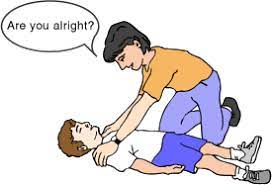
- If someone is eating and suddenly cannot talk or cough, suspect choking. Ask “Are you choking?” If they nod and cannot answer, start.
Adult or child over one year: what to do
- Step 1. Shout for help and ask someone to call 112. The 2025 Resuscitation Council UK algorithm says to call the ambulance service when the choking is severe, and to use the speaker if you are alone. In India 112 is the single number that covers police, fire and ambulance, and 108 for an ambulance is unified under it (PIB).
- Step 2. Up to five back blows. Help the person lean forward and support the upper body with one hand. With the heel of your other hand, hit sharply between the shoulder blades. A small child can be laid face down across your lap if you can manage it (NHS). Check the mouth after each blow and take out only what you can see.
- Step 3. Up to five abdominal thrusts. Stand or kneel behind, put your arms around the waist, make a fist and place it between the navel and the bottom of the breastbone. Grip the fist with your other hand and pull sharply inwards and upwards. Keep pressure off the lower ribs, especially in children (NHS). Check the mouth after each thrust.
- Step 4. Keep alternating five back blows and five thrusts until the object comes out, help arrives or the person goes limp.
- Step 5. If they become unresponsive, lower them to the floor, call 112 on speaker if not done, open the mouth and remove an object only if you can clearly see it and grasp it, then start CPR (NHS, Resuscitation Council UK).
Baby under one year: what to do
- Step 1. Shout for help. Do not leave the baby. If you are alone, put your phone on speaker and call 112 after you start.
- Step 2. Up to five back blows. Sit down, lay the baby face down along your thigh or forearm, supporting the head and neck, with the head lower than the bottom. Give up to five sharp blows with the heel of your hand between the shoulder blades. Check after each; you may not need all five.
- Step 3. Up to five chest thrusts. Turn the baby face up along your thighs, head lower than the feet. Put two fingers in the middle of the chest, just below the line of the nipples, and push down sharply, up to five times, checking after each (NHS). St John Ambulance describes the same thrust with two thumbs and the hands around the chest; a trainer can show you which grip suits your hands.
- Step 4. Keep alternating until it clears or the baby goes limp. Do not give abdominal thrusts to a baby. The 2025 Resuscitation Council UK algorithm uses back blows and chest thrusts for infants.
- Step 5. If the baby becomes unresponsive, start baby CPR. Our page on child emergencies describes it, and a hands-on class is the only way to learn it properly.
If CPR is needed after choking
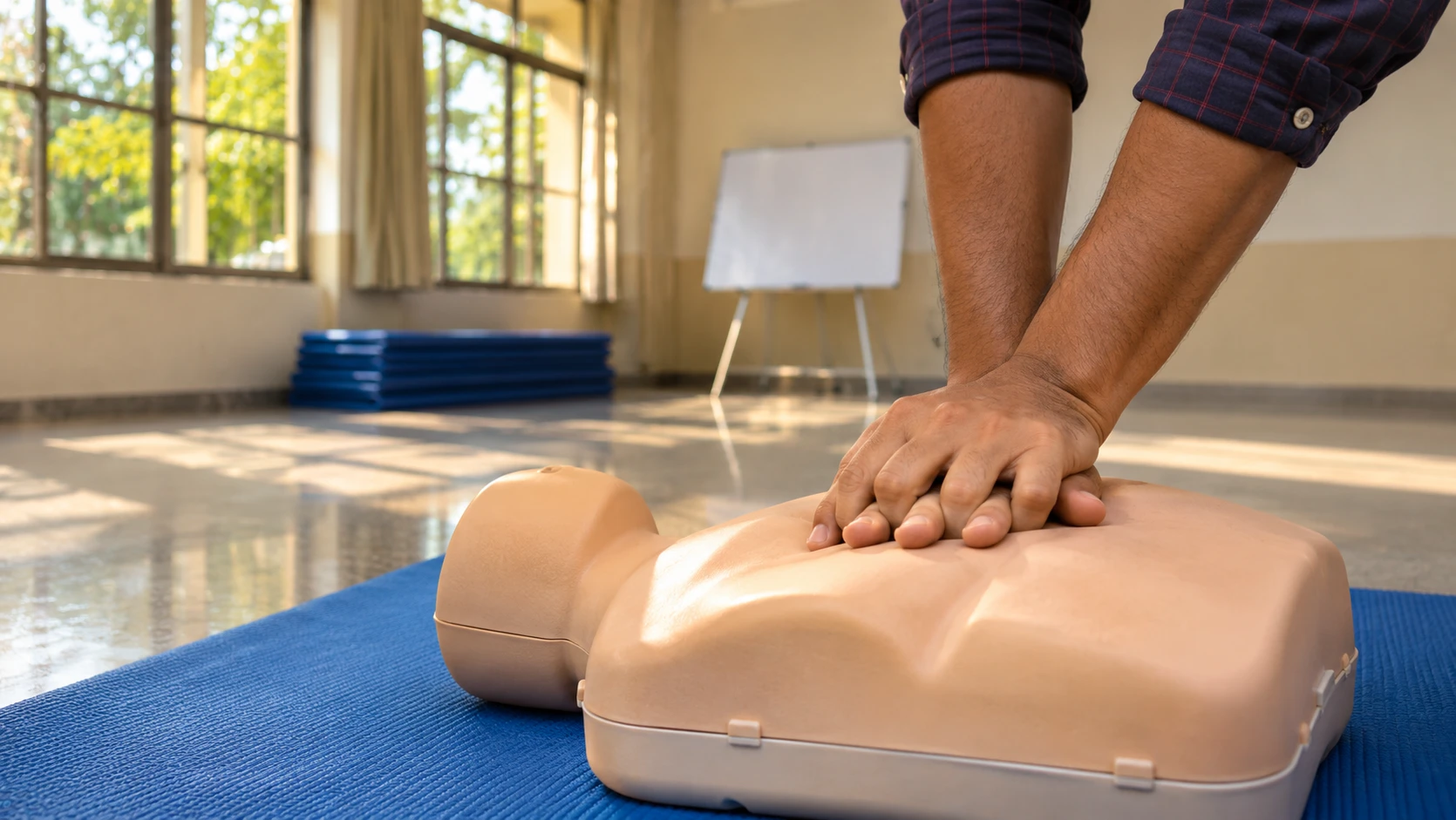
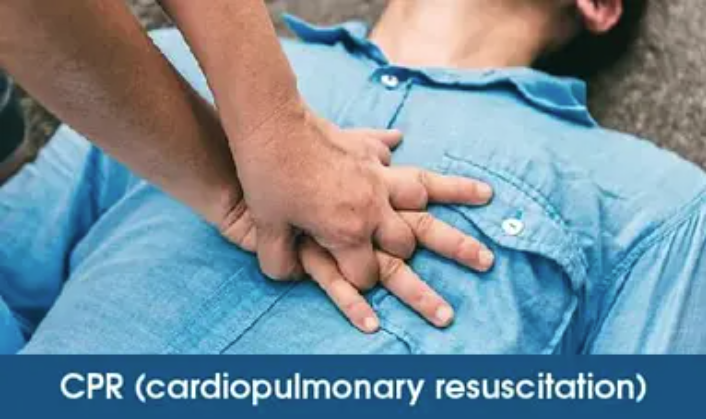
Resuscitation Council UK says to start CPR if the person becomes unresponsive. The Resuscitation Council formed by the Indian Society of Anaesthesiologists teaches compression-only CPR for untrained bystanders in adults, but its own paper says compression-only CPR may not be effective in cardiac arrest after asphyxia, and that traditional CPR with breaths may improve survival in such a case. Choking is asphyxia. So if you have been trained to give rescue breaths, give them; if not, continue compressions, which in our reading are better than doing nothing. Our pages on hands-only CPR and CPR myths cover the technique, and basic first aid has the shorter version of all this.
Pregnant, or too large to reach around
The American Red Cross says to give chest thrusts instead of abdominal thrusts if the person is obviously or known to be pregnant, or if you cannot wrap your arms around the abdomen. This is the American Red Cross, not an Indian source, and it changes only where the thrust goes. Ask a trainer to show you the hand position.
What not to do
- No blind finger sweeps. Resuscitation Council UK says not to; the NHS says not to poke blindly or repeatedly because it can push the object further in. Take out only what you can see.
- Do not give water, bread or banana to “push it down”. We found no guideline that recommends it, and a person who cannot breathe cannot swallow safely. This is our reading.
- Do not hit a person who is coughing well. Let them cough.
- Do not hold a child upside down by the legs and shake. It is not in any guideline we opened.
- Do not rely on a suction gadget bought online. In July 2026 Resuscitation Council UK made no recommendation for or against them, and said that back blows and thrusts should come first because they can be given at once with no equipment.
- Do not skip the doctor. Anyone treated with abdominal thrusts or chest compressions should be checked, because the thrusts can cause injury (Resuscitation Council UK). A baby who has had chest thrusts, and a child who has had abdominal thrusts, should be seen in hospital even if the object has come out (St John Ambulance).
Prevention at weddings, festivals and in children’s food
Most of this is about children under four and a few very common foods.
- Foods that carry a choking risk until age four (INSPQ, Quebec): peanuts, nuts and seeds, hard candy, popcorn, chewing gum, whole grapes and raisins, raw carrot and celery, sliced sausage, ice cubes, and food on toothpicks or skewers. The NHS adds jelly cubes, marshmallows and sticky sweets, and says children under five should have whole nuts and peanuts crushed or flaked.
- How to prepare: cut grapes into quarters, grate hard raw vegetables and fruit, and take out bones, cores and pits (INSPQ).
- At a wedding or festival, in our reading, the usual culprits are whole groundnuts and chana, nut-studded laddoos and chikki, hard toffees and mouth-freshener seeds, grapes in fruit chaat, and paneer or fruit on toothpicks and skewers. Keep those bowls and trays out of a toddler’s reach, and tell older children not to hand them to a younger one.
- Seat children to eat. INSPQ says to supervise a child at all times at meals, use a belted high chair, never let a child walk or run with food in the mouth, and not feed a child in a car. A wedding buffet is the opposite of all four, so plan for it: a plate of cut fruit and soft food at a table with an adult.
- Older people who have trouble swallowing should tell the host and take softer food. That is our suggestion, and a doctor should advise on swallowing problems.
- Everyone, in our reading: sit down, chew, and do not talk or laugh with a full mouth.
- Hosts and caterers: cut grapes and fruit small for the children’s plates, and use plain plates for toddlers rather than skewers. Know who in the family has done a first aid class, and keep the number 112 handy.
We looked for Indian official advice on choking-safe foods for children and did not find it; the ICMR-NIN Dietary Guidelines for Indians 2024 came up in our search, but we did not read the booklet in full and cannot say whether it covers this. Our Diwali safety page and page on pandals and festival crowds cover other festival risks, and medicines at home covers swallowed tablets.
Do these today
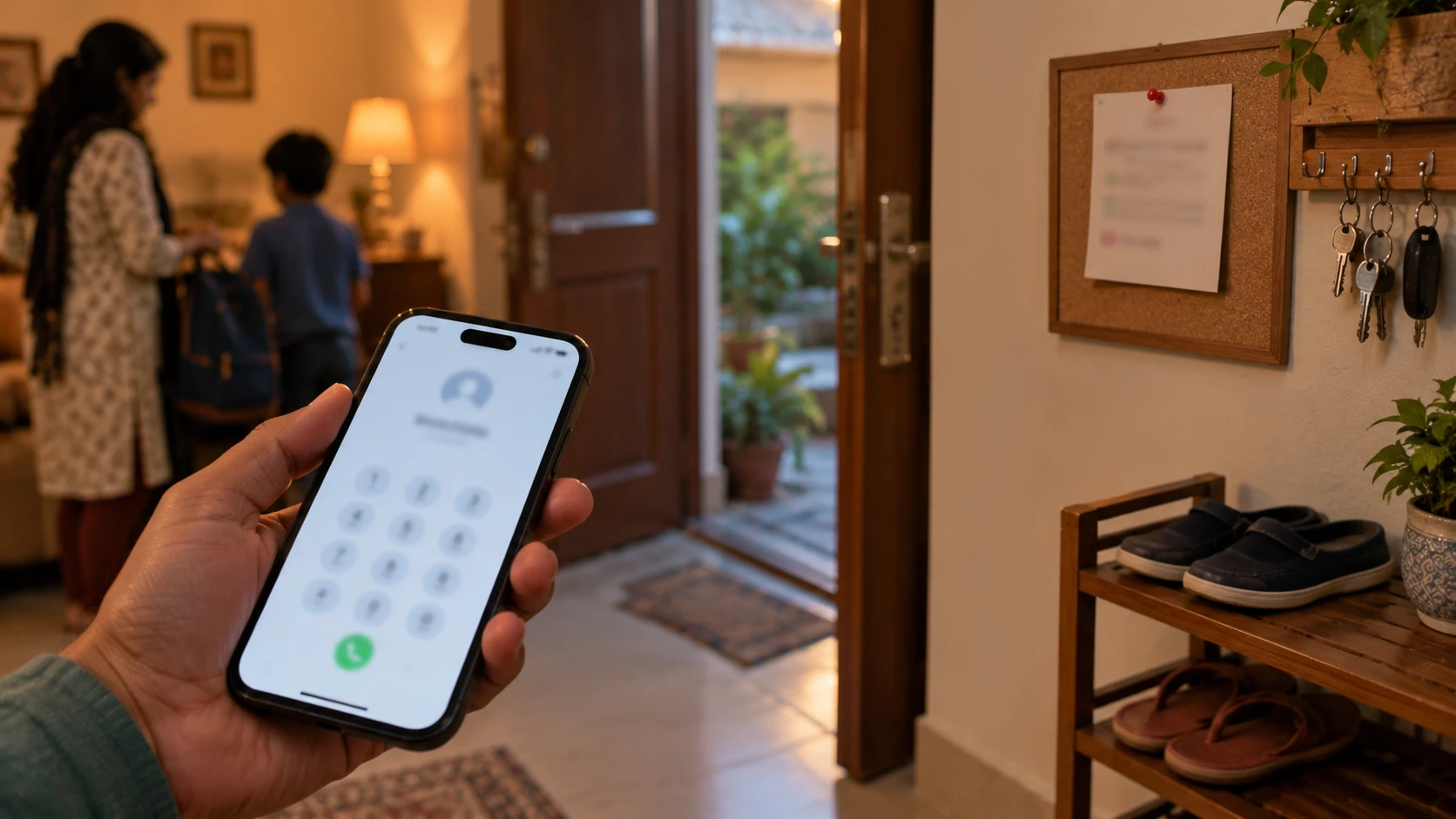
- Save 112 and 108 on your phone and tell the family. Our page on how to call 112, 101 or 108 says what to tell the operator.
- Practise the movements once on a cushion or a soft toy: five blows between the shoulder blades, five thrusts with the fist, and for a baby two fingers on the chest.
- Book a hands-on first aid class for the family, with a trainer and a manikin.
- Check the snack tray on the table: whole nuts, hard sweets, grapes and toothpicks, and who is within reach.
- Watch the three videos below once. They are foreign learning videos, not Indian.
What we could not confirm
We found no Indian official bystander text for choking in the MoHFW, NDMA, AIIMS or ICMR pages we searched, and the Indian Red Cross manual link we tried returned the website’s home page. We did not read the 2024 ICMR-NIN booklet in full. The Resuscitation Council UK paediatric algorithm PDF was read, the adult and infant details come from the RCUK, NHS, St John Ambulance and American Red Cross pages we opened. Foreign guidelines differ in small ways (for example, St John Ambulance describes two thumbs and the NHS two fingers for baby chest thrusts, and some countries still teach thrusts without back blows). Guidance is reviewed over time; we did not check for changes after 5 November 2026. The 20 November wedding-season date comes from one panchang site. We did not watch the videos in full, and the two St John Ambulance videos date from 2016. This page is first aid information, not medical advice, and is no substitute for a hands-on class. Call 112 in an emergency.
What needs attention
- The 2025 Resuscitation Council UK guidance and the NHS and St John Ambulance pages agree on the sequence: cough, up to 5 back blows, up to 5 abdominal thrusts for adults and children, and chest thrusts instead of abdominal thrusts for babies.
- Blind finger sweeps are not advised; an object is removed only if clearly visible.
- Everyone treated with thrusts should be checked by a doctor afterwards.
- We found no Indian official bystander text; an Indian journal perspective of 2019 records that India has no uniform first aid programme and little choking data.
- Children under four need extra care with whole nuts, hard sweets, grapes, popcorn and food on skewers (INSPQ, NHS).
Controls that reduce risk
- Save 112 and 108 on your phone.
- Practise the movements once on a cushion or soft toy.
- Book a hands-on first aid class for the family.
- Cut grapes and fruit small and keep whole nuts and hard sweets from toddlers.
- Seat children to eat; no walking or running with food.
Common unsafe practices
- Blind finger sweeps in the mouth.
- Slapping a person who is coughing well.
- Giving water or bread to push it down.
- Abdominal thrusts on a baby.
- Waiting to see if it clears before calling 112.
- Skipping the doctor after thrusts.
- Letting toddlers eat nuts, hard sweets or skewers at a buffet.






Leave a comment