
Quick answers
What is compressive asphyxia?
Asphyxia means the body is not getting enough air, and compressive means pressure on the chest or body is the cause. The NDMA crowd guide uses the term without defining it and says it has historically been the most common reason for deaths in crowd disasters. The plain-words meaning here is ours.
Do people in a stampede die from being trampled?
Trampling is one cause. The NDMA guide lists crushing, suffocation and trampling, and says compressive asphyxia has historically been the most common reason for deaths in crowd disasters.
What did the Hathras post-mortems show?
PTI reported on 3 July 2024 that Etah's Additional Chief Medical Officer said asphyxia due to compression was the cause of death in almost all of the 27 cases brought to the district hospital there. The overall toll was 121. It is one hospital's account, not a finding on every death.
What did the Chorbagan autopsies show?
Our case study reports, citing PTI via India Today, that preliminary findings pointed to traumatic asphyxia from heavy and sustained pressure on the chest as the likely cause for most of the 19 dead. The final reports were awaited when we last updated the page.
How can I reduce the risk in a crowd?
Learn the exits when you arrive, travel light, do not push into a blocked front but hold and alert the people behind you, do not rest at entry or exit points, avoid rumours and leave early when the crowd feels tight. The first four points follow the NDMA's advice to visitors.
What should I do if someone cannot breathe in a crowd?
Call 112 or 108 at once and give the exact place. Once they are clear of the crush, loosen tight clothing, check their breathing and keep checking until help arrives, as the US National Library of Medicine's first aid page advises. Do not wait to see if they improve.
Is traumatic asphyxia the same as compressive asphyxia?
News reports and medical writing use both terms for deaths from pressure on the chest. We found no Indian official text that sets out a difference, so we use the NDMA's term and report others as written.
Where is the full NDMA guide?
It is the 2014 guide Managing Crowd at Events and Venues of Mass Gathering. We read the copy hosted by the Goa State Disaster Management Authority. Its advice is written mainly for organisers and administrators.
After a stampede, the news often says people died of “asphyxia” or “compressive asphyxia”, and families are left asking what that means when nobody was stabbed or burnt. This page explains the term in plain words, what the National Disaster Management Authority says about it, what reports from recent Indian crowd crushes say, and what a visitor can do to stay out of danger. It is awareness information for the public, not medical advice, and it makes no claim about treatment beyond what the official pages cited here say. In any emergency, call 112 or 108. Checked 10 November 2026.
In short
- Asphyxia means the body cannot get enough air. In a crowd crush the cause is pressure on the body from other people and barriers. That plain meaning is ours: the NDMA guide uses the term without defining it.
- The NDMA guide says compressive asphyxia has historically been the most common reason for deaths in crowd disasters. It lists the causes of death as crushing, suffocation and trampling.
- The danger is the crowd’s density and movement, not one person’s behaviour. The NDMA points to crowd force, information, space and time.
- Staying out is the best protection. Learn the exits, travel light, leave when a crowd first feels tight, and never push into a blocked front.
- If someone cannot breathe, call 112 or 108 at once. Do not wait to see if they get better.
What the term means
“Asphyxia” is a medical word for the body not getting enough air. “Compressive” says why: something is pressing on the chest or body so tightly that the chest cannot expand to breathe. In a crowd crush, the something is the weight of people packed together against each other, a barricade, a wall or a closed gate.
You will also see “traumatic asphyxia” and “crush asphyxia” in news and medical writing. We have not found an Indian official text that sets out how these terms differ, and we are not doctors, so we use the NDMA’s word, compressive asphyxia, and quote reports in their own words.
What the NDMA says
The NDMA’s 2014 guide, Managing Crowd at Events and Venues of Mass Gathering, is written for state governments, local authorities, administrators and organisers. We read the copy hosted by the Goa State Disaster Management Authority. In its section on crowd management strategy it says four circumstances, crowd force, the information (false or real) the crowd acts on, the physical space and the duration of the incident, play a very important role in producing either overcrowding (a large number of people per unit area) or high desired velocity (accelerated movement). It adds that this has on occasion led to deaths from crushing, suffocation and trampling, and that historically compressive asphyxia has been the most common reason for deaths in crowd disasters. Its crowd disaster figure shows crush disasters (compressive asphyxia), suffocation and trample disasters as separate outcomes of overcrowding and high desired velocity.
The guide credits the four factors to the researcher Fruin (1993). In plain words, a lot of people, a rumour or an announcement, a narrow place and little time, put together, are what turn a crowd into a crush. That last sentence is our reading, not the guide’s wording.
The text we read has no advice on body position for an individual caught in a crush. Its advice to visitors is about avoiding the situation, which we set out below.
What recent Indian reports say
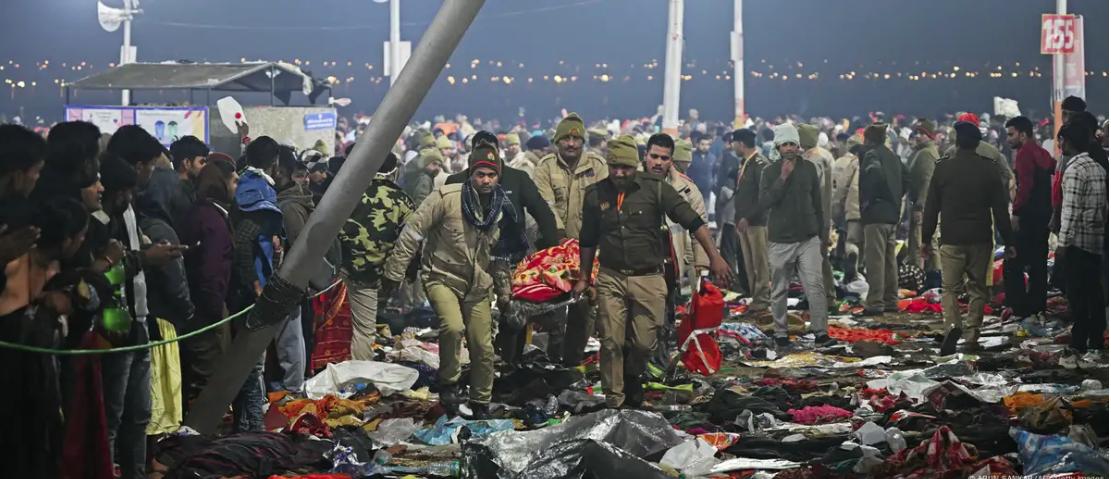
Hathras, July 2024. PTI reported on 3 July 2024 from Etah, where 27 bodies were taken to the district hospital, that the Additional Chief Medical Officer said asphyxia due to compression was found to be the cause of death in almost all the cases there, and that most of those victims were women aged 40 to 50. The overall toll in the same report was 121. That is one hospital’s account of 27 bodies, not a finding on all the deaths. Our guide on stampedes at religious gatherings has the wider record.
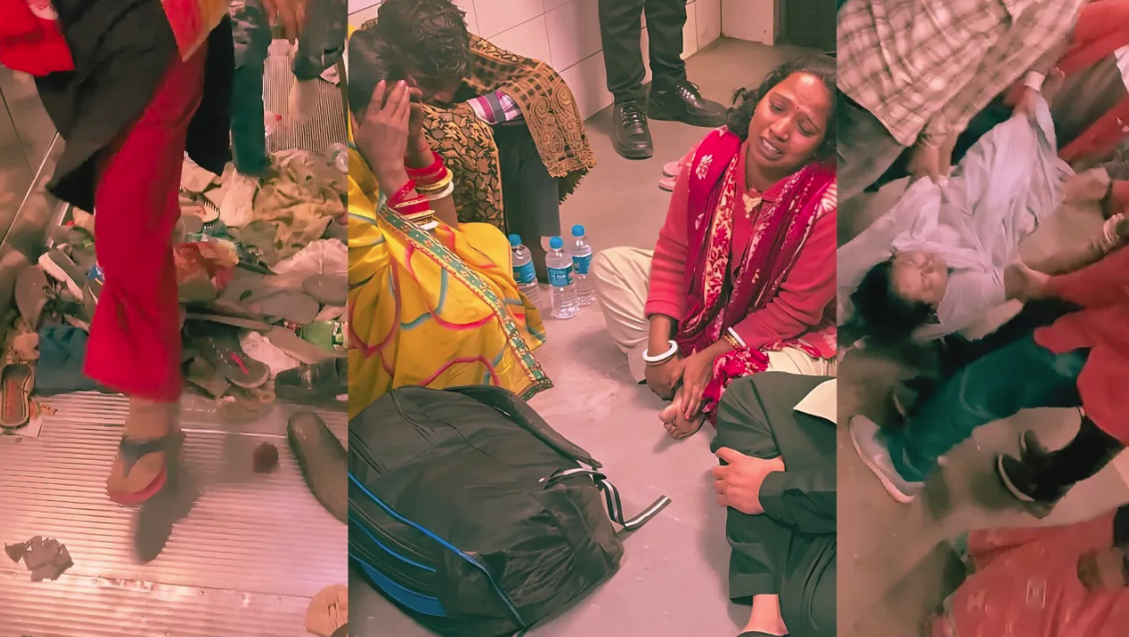
Chorbagan, Kolkata, 17 October 2026. Our case study of the Chorbagan pandal crush records 19 people killed and 25 injured at the exit of a Durga Puja pandal. It reports that, according to PTI as carried by India Today, preliminary autopsy findings point to traumatic asphyxia, caused by heavy and sustained pressure on the chest, as the likely cause of death for most of the 19, that an official said seven had asphyxia along with injuries to several organs, and that final post-mortem reports were awaited when we last updated it. These are preliminary findings relayed by a news agency.
Ashok Dham, Lakhisarai, 17 August 2026. Our case study reports that seven women died and 25 were injured after a barricade broke, a pole fell and a false rumour of live current set off panic, and that a police officer said some of the injured had fallen ill from humidity and suffocation. No official finding had been published when we wrote it.
All three show the pattern the NDMA describes: a narrow point, a trigger, and people who cannot move away.
How to reduce the risk
Most of this comes from the “Do’s and Don’ts for visitors” in the NDMA guide, and we say where a point is our own advice.
- Learn the layout when you arrive. The NDMA asks visitors to get acquainted with the venue layout, including the entry and exit points and routes. Find two exits before you find a seat.
- Travel light. The guide asks visitors to carry medicines if advised and not to carry valuables or unnecessary food and clothing. A small bag leaves your arms free.
- Do not push into a blocked front. The guide says that where there is an obstruction ahead, do not push through or push back, but hold and alert the people behind you to hold until it is removed. This is the single most useful sentence in the guide for a visitor.
- Do not rest or sleep at entry or exit points, says the guide, and do not push, fight or provoke others in a crowd.
- Do not panic and do not spread rumours. In two of the cases above, a rumour or an announcement is reported to have been the trigger.
- Note the emergency numbers. The guide asks visitors to note emergency contact numbers. 112 is the single emergency number, with 101 for fire and 108 for an ambulance, as our emergency numbers guide explains.
- Leave early. If the crowd feels tight, if you cannot turn your shoulders or move your arms, go while you can. This is our advice. Our guide on warning signs of a crowd crush describes what to look for.
- Pick the quieter day and the side route. Our advice. The biggest bathing, darshan or festival days and the main gates carry the most people. See our guides on Magh Mela and Sankranti crowds, pandals and melas and ghat safety.
What to do if you are already caught in a crush is in our guide How to survive a stampede or crowd crush. We did not find that body-position advice in the NDMA guide text, so please read that page for the steps we give.
If someone cannot breathe
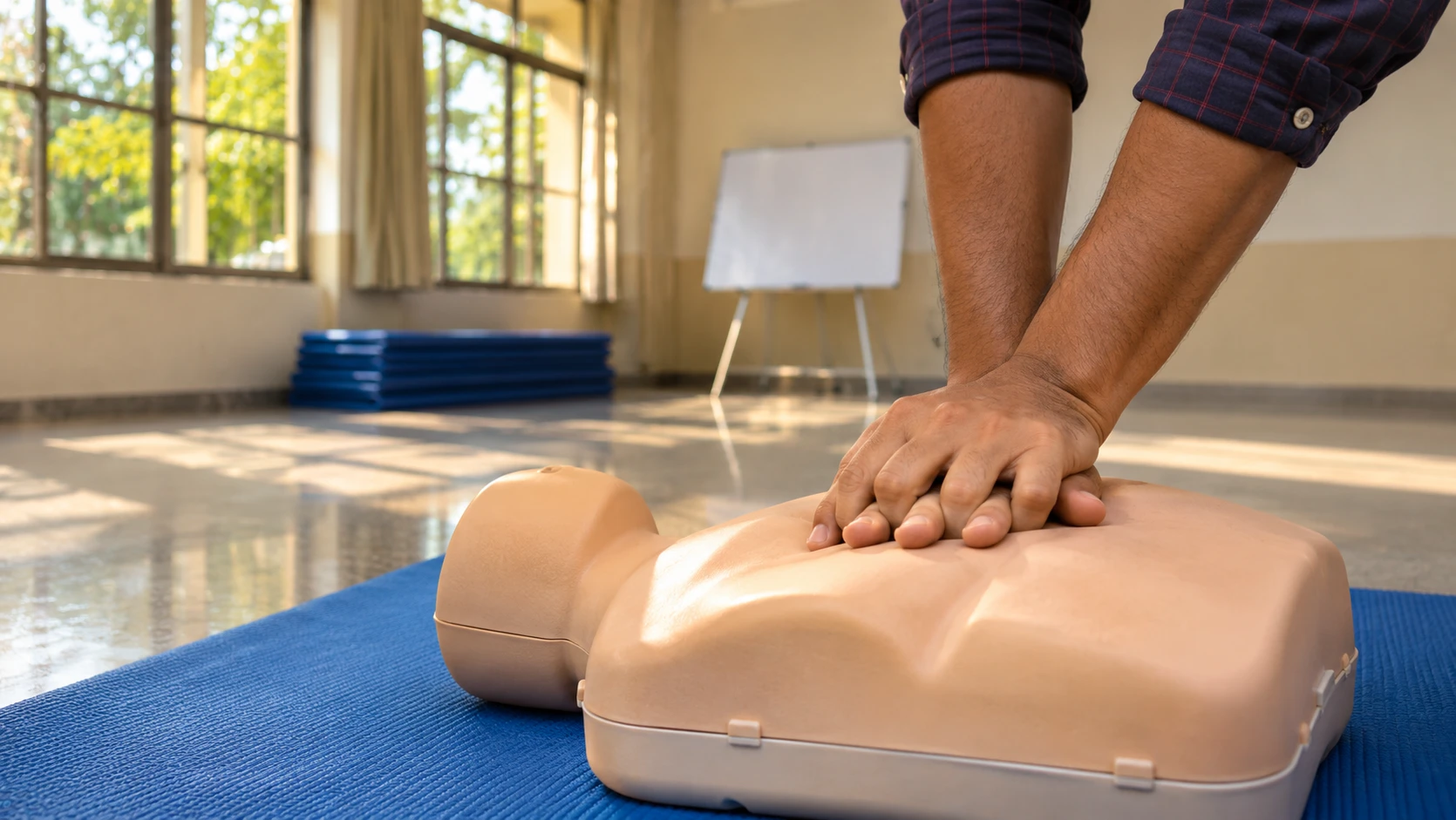
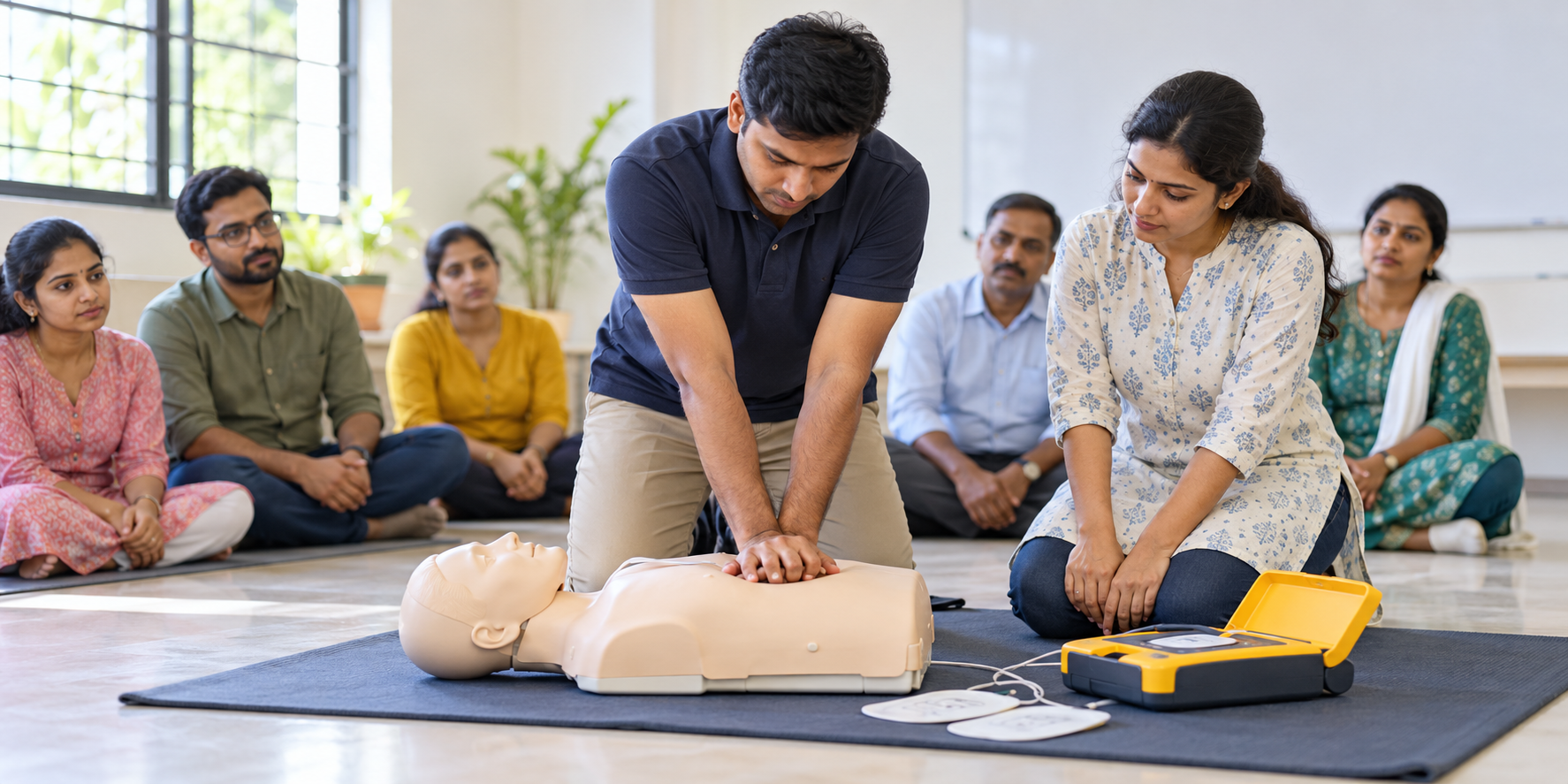
Call 112 or 108 straight away and give the exact place. If you can reach them safely, and the crush has eased, the US National Library of Medicine’s first aid page on breathing difficulties (review date printed as 1/8/2025) says to call the local emergency number right away, check the person’s airway, breathing and pulse, loosen any tight clothing and keep checking breathing and pulse until help arrives. It says not to give food or drink, not to wait to see whether the person improves, and not to move a person with a chest or airway injury unless it is absolutely necessary. That page is American, so for India use 112 or 108. In a crowd, moving someone out of the crush to a safer spot may be necessary, and that is a judgement for the scene. If the person is unconscious and not breathing normally, our page on hands-only CPR explains the steps, and the first five minutes of an emergency covers safe bystander actions. For a person trapped under a heavy weight, see crush injuries.
What organisers and authorities should do
The NDMA places the main duty on organisers and administrators: its Do’s and Don’ts say organisers should develop a comprehensive crowd management plan and should not admit visitors beyond the capacity of the holding and movement route, and that local administration should not allow an event to go ahead if crowd management preparedness is found wanting. The UK Health and Safety Executive’s page on assessing crowd risks, updated on 4 April 2025, lists surging and swaying that lead to crushing between people and against fixed structures, falling and being trampled, and crossflow of people caused by poor site design as hazards to plan for. That is British guidance, used here only to show that the hazard is understood the same way abroad.
What we could not confirm
The NDMA guide, in the text we read, does not define compressive asphyxia, give a crowd density at which it occurs or give advice on body position, so we state none of these. We did not open the other post-mortem reports from Hathras, the final Chorbagan reports or any Indian clinical guideline, and this page gives no medical explanation of how asphyxia harms the body. The Hathras figure of 27 bodies at Etah and the Chorbagan autopsy details come from PTI via news sites and, for Chorbagan, through our own case study. The NDMA text was read through a state copy and may have a later edition. We found no video we could use, because the NDMA’s own clips show children and we do not use thumbnails of minors.
What needs attention
- The NDMA guide says compressive asphyxia has historically been the most common reason for deaths in crowd disasters.
- The guide lists the causes of death as crushing, suffocation and trampling.
- Its advice to visitors is to know the layout, travel light, not to push into an obstruction and to hold others behind.
- PTI reported asphyxia due to compression in almost all 27 bodies at Etah after Hathras, one hospital's account.
- The Chorbagan findings are preliminary and relayed by a news agency; final reports were awaited.
- The NDMA text we read gives no density figure and no body-position advice.
Controls that reduce risk
- Find two exits when you arrive.
- Travel light and keep your arms free.
- Where the front is blocked, hold and tell the people behind you to hold.
- Leave early when the crowd feels tight.
- Call 112 or 108 for anyone who cannot breathe.
Common unsafe practices
- Pushing forward when the front is blocked.
- Stopping or resting at an entry or exit point.
- Waiting to see if a person who cannot breathe improves.
- Forwarding rumours that can set off panic.
- Staying in a tight crowd out of politeness or habit instead of leaving early.
- Carrying a big bag that ties up your arms.









Leave a comment