
Quick answers
What should I do if I smell LPG at home?
Do not light a match or flame or touch switches, turn the regulator off, open doors and windows, get everyone out and call the LPG emergency helpline from outside. HPCL's page gives 1906 as a 24x7 LPG emergency helpline. Our leak guide has the full steps. Call 101 or 112 for a fire.
Which number do I call for an LPG gas leak?
HPCL's page says to call 1906, a 24x7 LPG emergency helpline. For a fire or an emergency, call 101 or 112.
How do I check for an LPG leak safely?
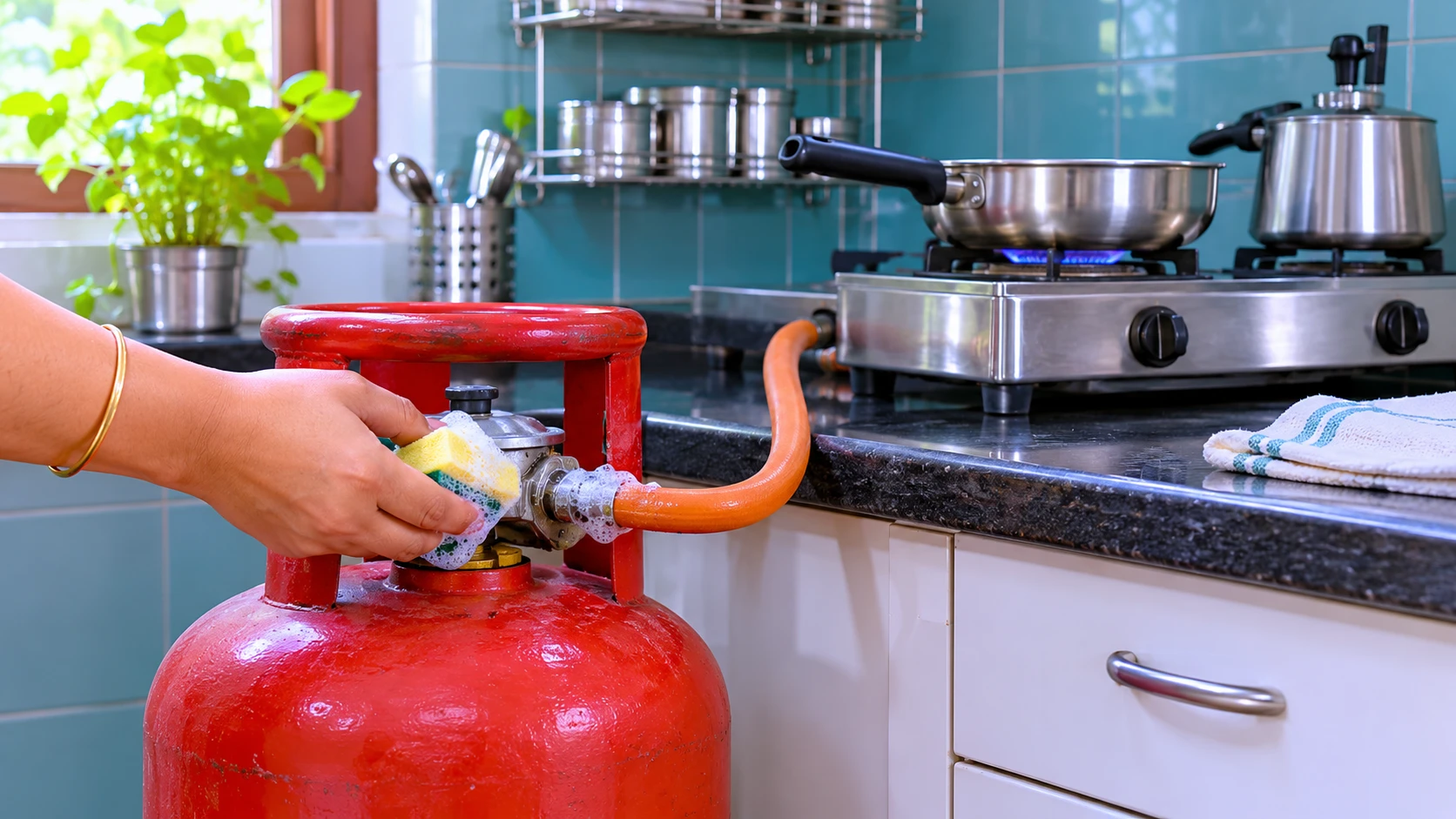
Not with a flame. The PMUY guidance says do not use a lighted match, suggests placing a thumb over the cylinder valve to feel a strong leak, and says soap solution may be used only for bung or body leaks.
Should I switch the regulator off at night?
Yes. The PMUY consumer guidance says to switch the regulator off every night before going to bed, and to turn it off when you have finished using the burner.
Where should an LPG cylinder be kept?
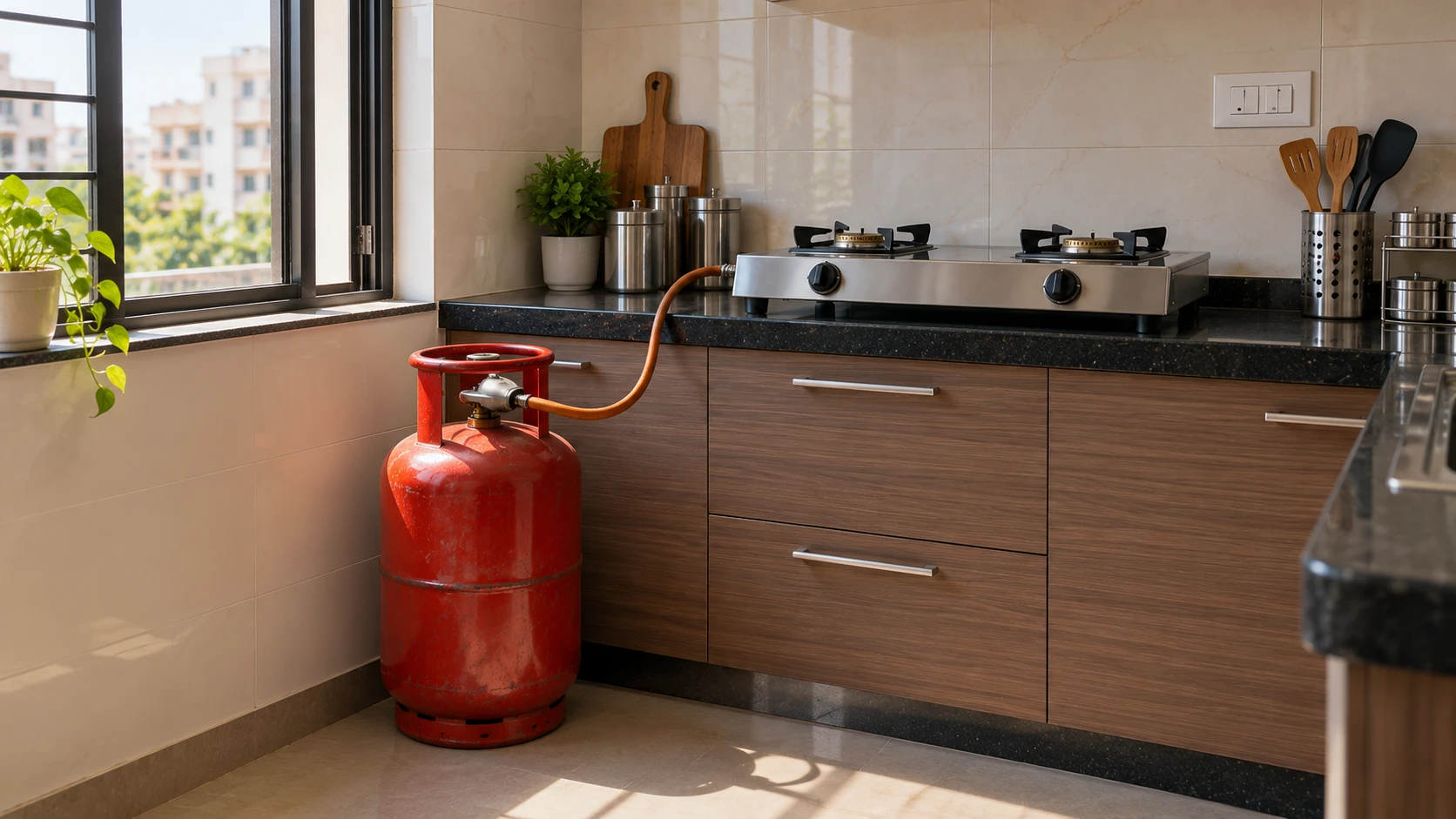
Upright, with the stove on a platform above the level of the cylinder. The PMUY guidance says never in a pit below floor level and not inside an enclosed compartment.
How often should the LPG installation be checked?
The PMUY consumer guidance says to get the installation checked every two years, to check the hose regularly and replace it if it cracks, and not to repair it yourself.
How many people die in LPG cylinder accidents in India?
The NCRB's 2024 report records 1,389 deaths in 1,355 fires from cooking gas cylinder or stove bursts, and 160 deaths in 146 domestic gas cylinder explosions. These are two separate NCRB categories, so we do not add them.
How do I know if my cylinder is due for its safety test?
Use our LPG cylinder test date checker and read the date-code section of our leak guide. The code stamped on a stay plate is not an expiry date but a due date for the next safety test, as our leak guide explains.
Almost every Indian kitchen has an LPG cylinder, and most of the accidents we write about begin with something small: a loose regulator, a cracked hose, a flame near a leak, a cylinder in the wrong place. We have a leak guide, a kitchen-habits page, a free test-date checker and a growing list of case studies. This page is the map. It does not repeat the leak steps; it tells you which page to open and shows what the cases have in common. The official pages it relies on are the PMUY consumer guidance on LPG installation safety and the HPCL helpline page, both opened for this page. Checked 10 November 2026.
In short
- Smell gas right now? Open our leak guide: LPG gas leak: what to do right now. HPCL’s page says to call 1906, a 24×7 LPG emergency helpline. Call 101 or 112 for a fire.
- Want to check your cylinder? Use the LPG cylinder test date checker and read the date-code section of the leak guide.
- Want the kitchen habits? They are below, from the PMUY guidance, with links to the longer pages.
- Cylinders in shops, stalls and agencies are a pattern in our recent cases. See the cases section.
- Never use a flame to look for a leak. The PMUY sheet says so in as many words.
Habits from the official sheet
The Pradhan Mantri Ujjwala Yojana consumer guidance PDF (undated) lists LPG installation safety tips. We read the full sheet. Among them, in our words:
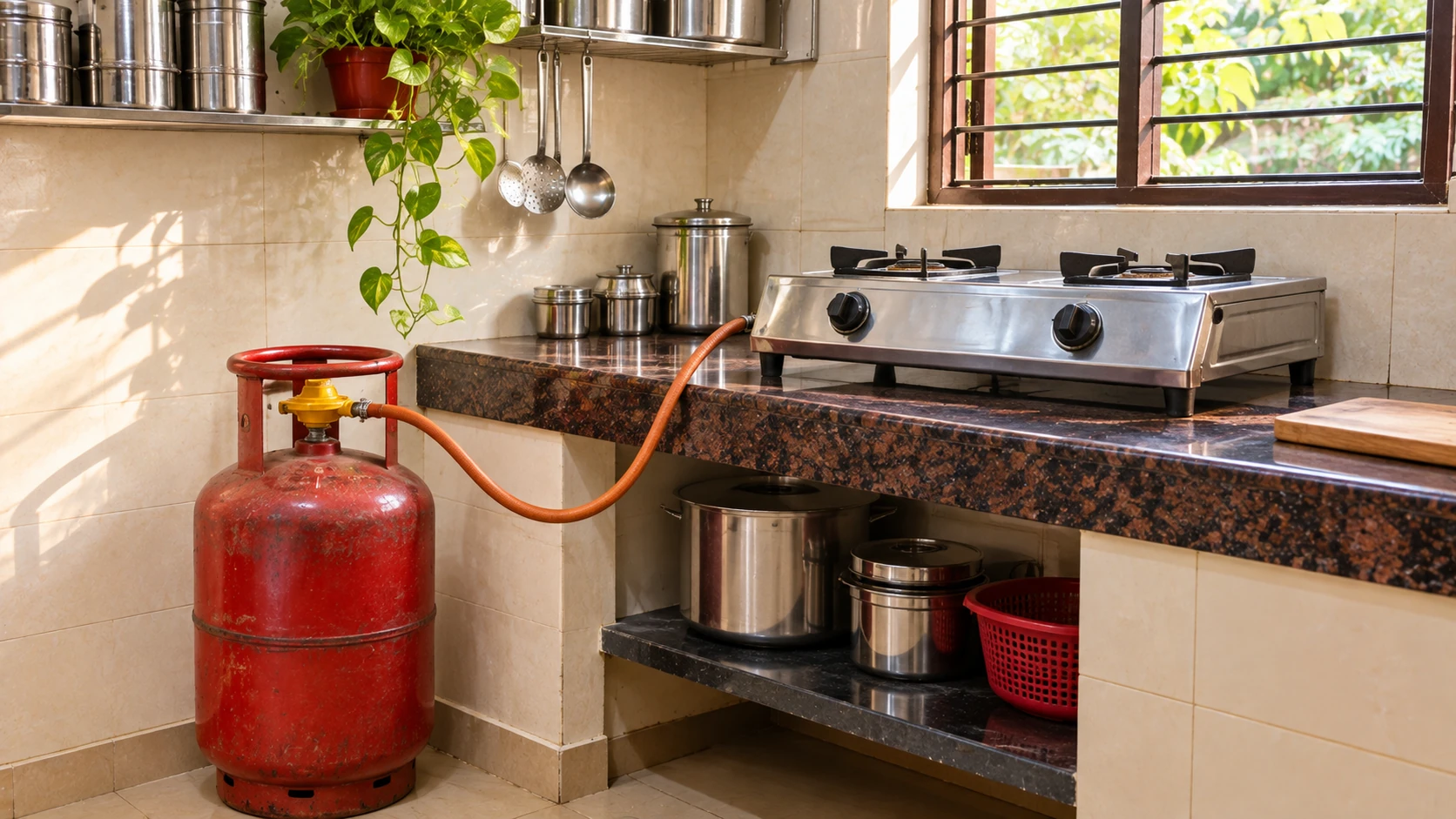
- Keep the cylinder upright, never in a pit below floor level and not inside a closed compartment.
- Keep the stove on a platform above the level of the cylinder.
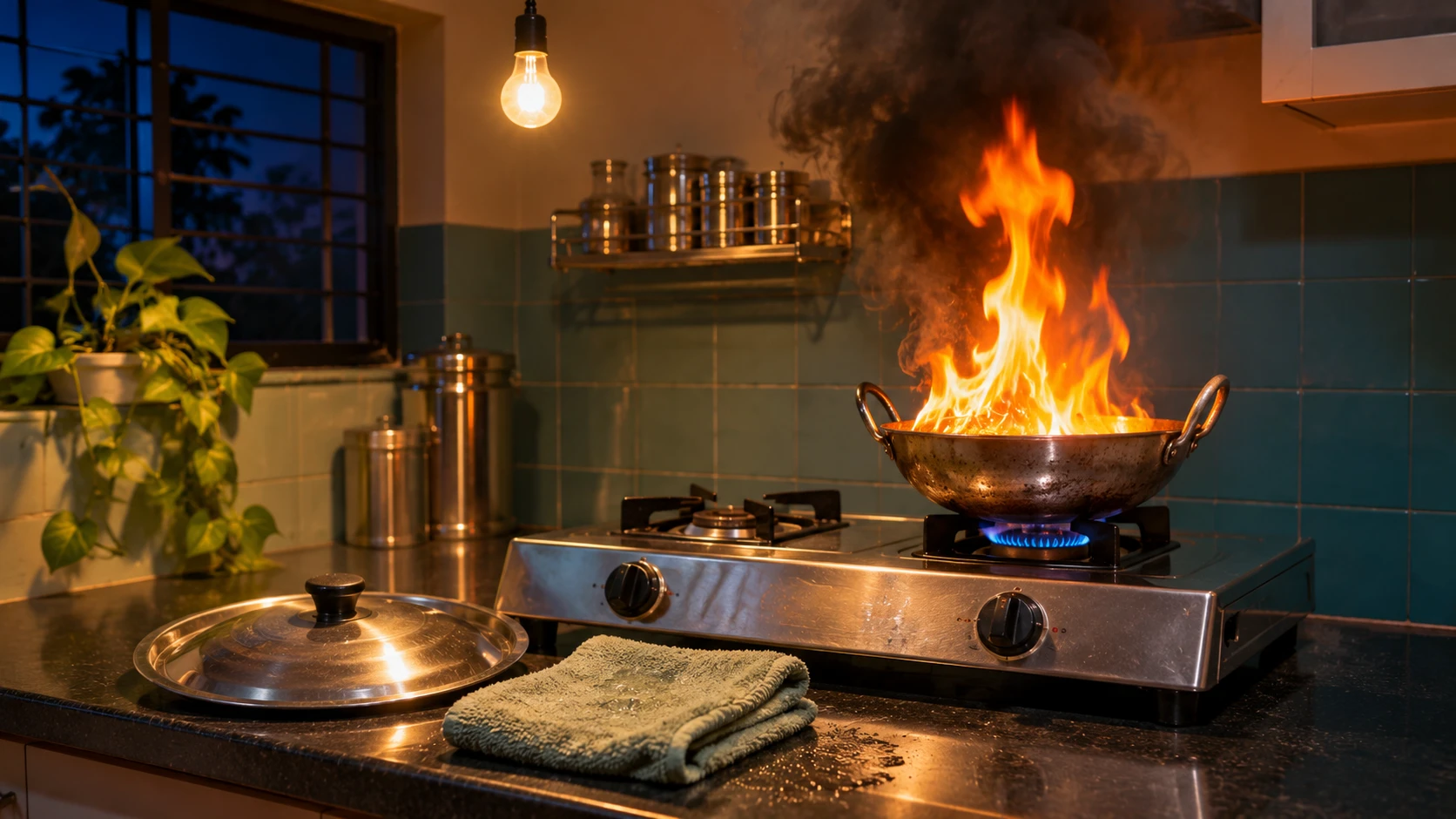
- Switch the regulator off every night before going to bed, and whenever you finish cooking.
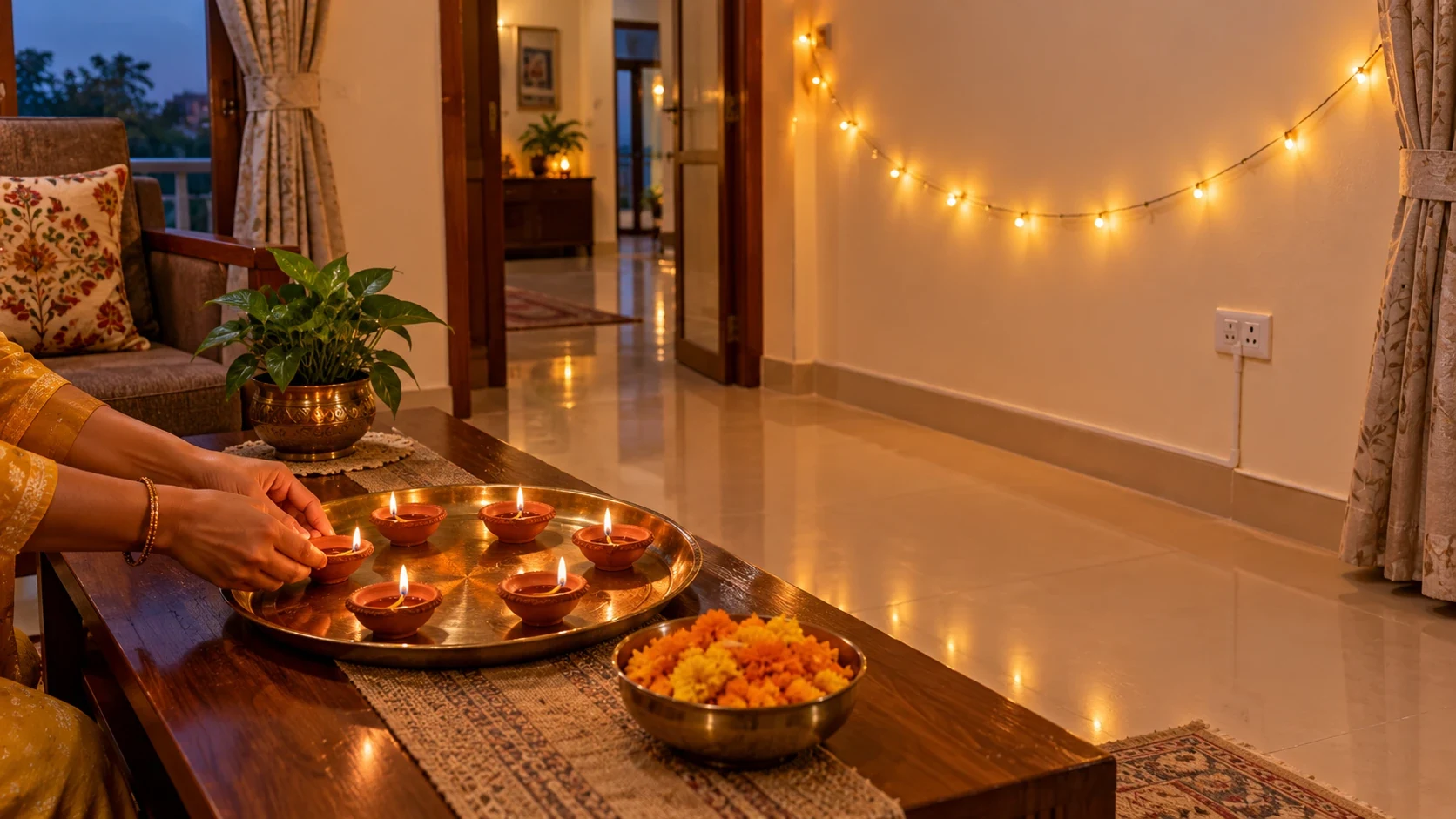
- Put off all flames, including puja lamps and incense sticks, before connecting or disconnecting a cylinder, and do not operate electrical switches then.
- Do not use a lighted match to check for leaks. The sheet suggests a thumb over the valve to feel profuse leakage and says a soap solution may be used only for bung or body leaks.
- Use a Suraksha hose or an ISI-marked hose and hotplate, keep the hose visible and uncovered, check it regularly and replace it if it cracks.
- Get the whole LPG installation checked every two years. Do not repair it yourself.
- Keep curtains away from the stove, keep children away from the installation, and do not leave vessels unattended on the burner.
The steps for a leak itself are in our leak guide, and the habit list as a printable page is in our free printable safety checklists. For the wider kitchen, see seven kitchen fire rules for Indian homes and festival-season home fire safety.
Which page to open
- LPG gas leak: what to do right now. The steps, the 1906 helpline, a burning hose or regulator, and how to read the test-date code on a cylinder.
- Kitchen gas leak accidents: prevention statistics. The NCRB numbers and what usually goes wrong.
- Living above a shop. Where shop cylinders and the stock below put a family at risk.
- Balloon gas cylinders at fairs and crowds. A different kind of cylinder, in a crowd.
- Car fire safety: petrol, CNG and EV. Including CNG cylinder rules.
- Gas leaks in India since Vizag 2020. Industrial gas leaks, for context.
- Fire brigade number in India and emergency numbers in India. What to say on the call.
What the numbers say
The National Crime Records Bureau’s Accidental Deaths and Suicides in India 2024 records 1,355 fires from cooking gas cylinder or stove bursts, in which 1,389 people died. It records a separate count of 146 domestic gas cylinder explosions, with 160 deaths. We read both rows in the full NCRB report. They are two different NCRB categories, one a cause of fire and the other a kind of explosion, so we do not add them. Our page on kitchen gas leak statistics gives the 2023 comparison and the figures for women and children.
What our recent cases have in common
These are cases from October and November 2026, as each case study states them. Causes are mostly unconfirmed, and we say so on each page. Read them for the pattern, not for blame.
Homes
- Gopalganj, Bihar, 13 October: gas leaking from a cooking cylinder caught fire from a puja diya. Two children were named dead, later reports said three, and about 17 were burnt.
- Gorakhpur, 10 October: a leak caught fire while a gas agency hawker was checking a cylinder; an elderly couple died.
- Giridih, Jharkhand, 18 October: a 5 kg cylinder caught fire and burst, killing a woman and her young niece. Police say she was trying to throw it outside.
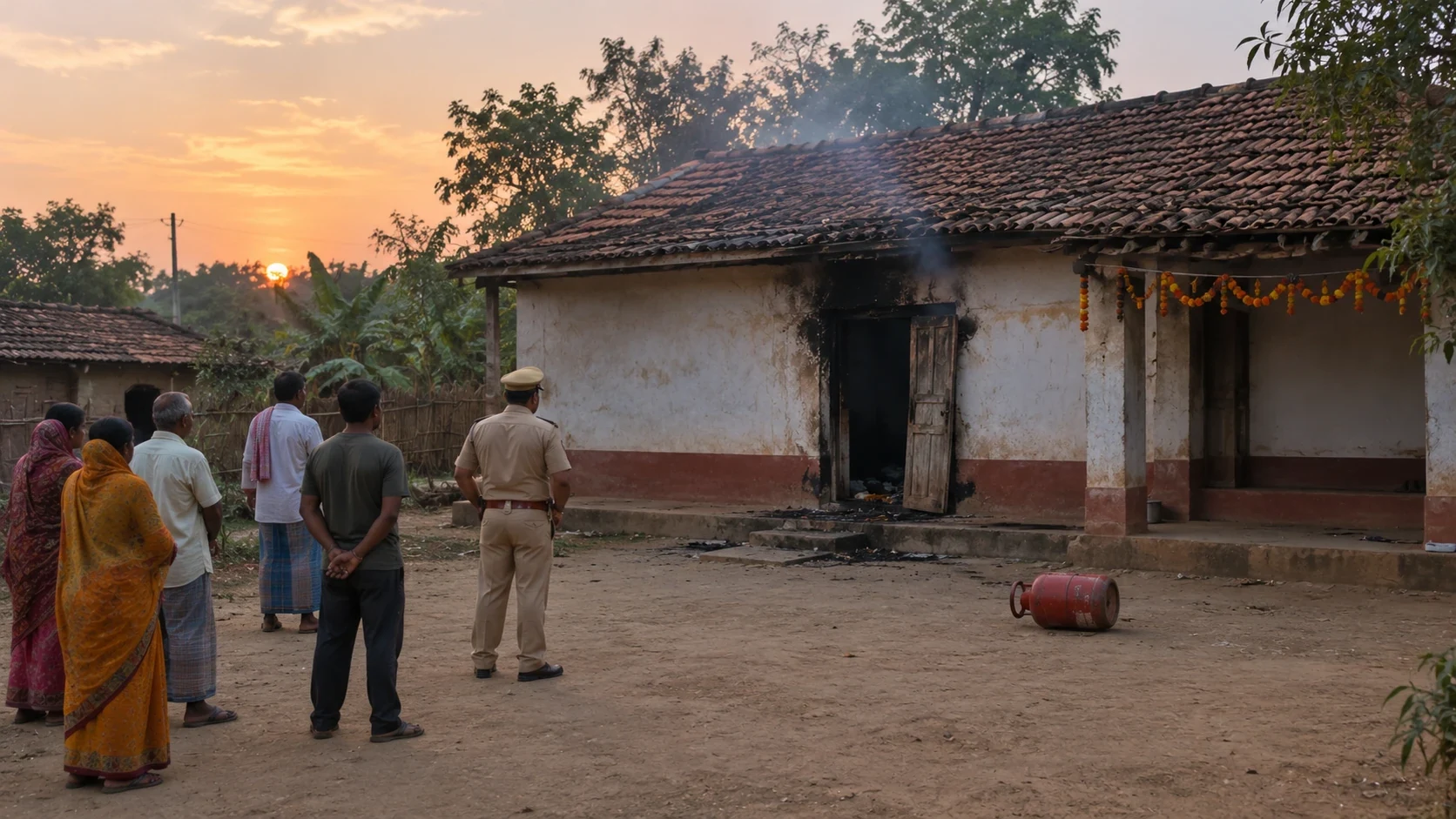
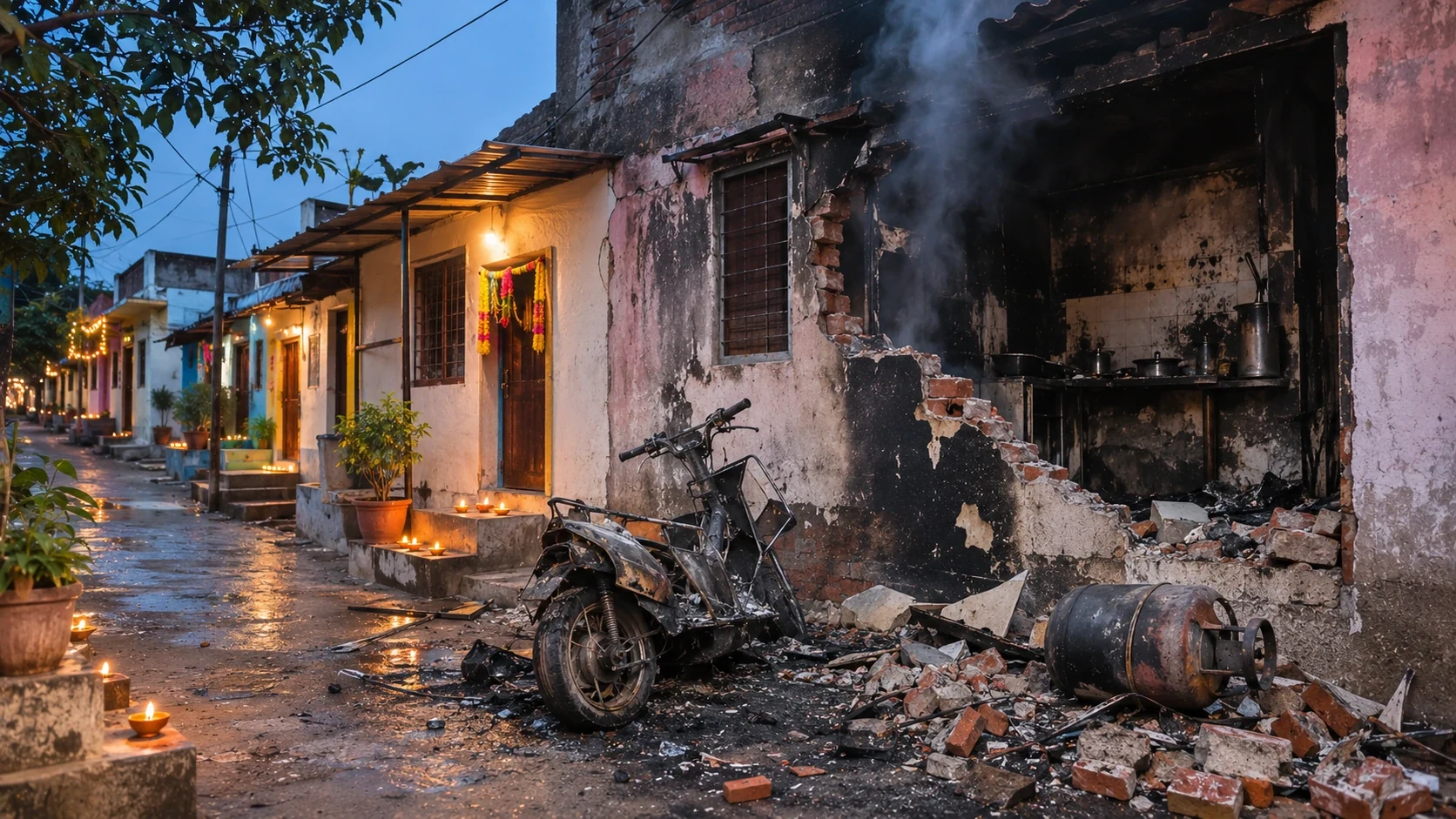
- Georai, Beed, 7 November: a cylinder exploded in a house on Diwali evening and the fire spread to four houses; cause not confirmed.
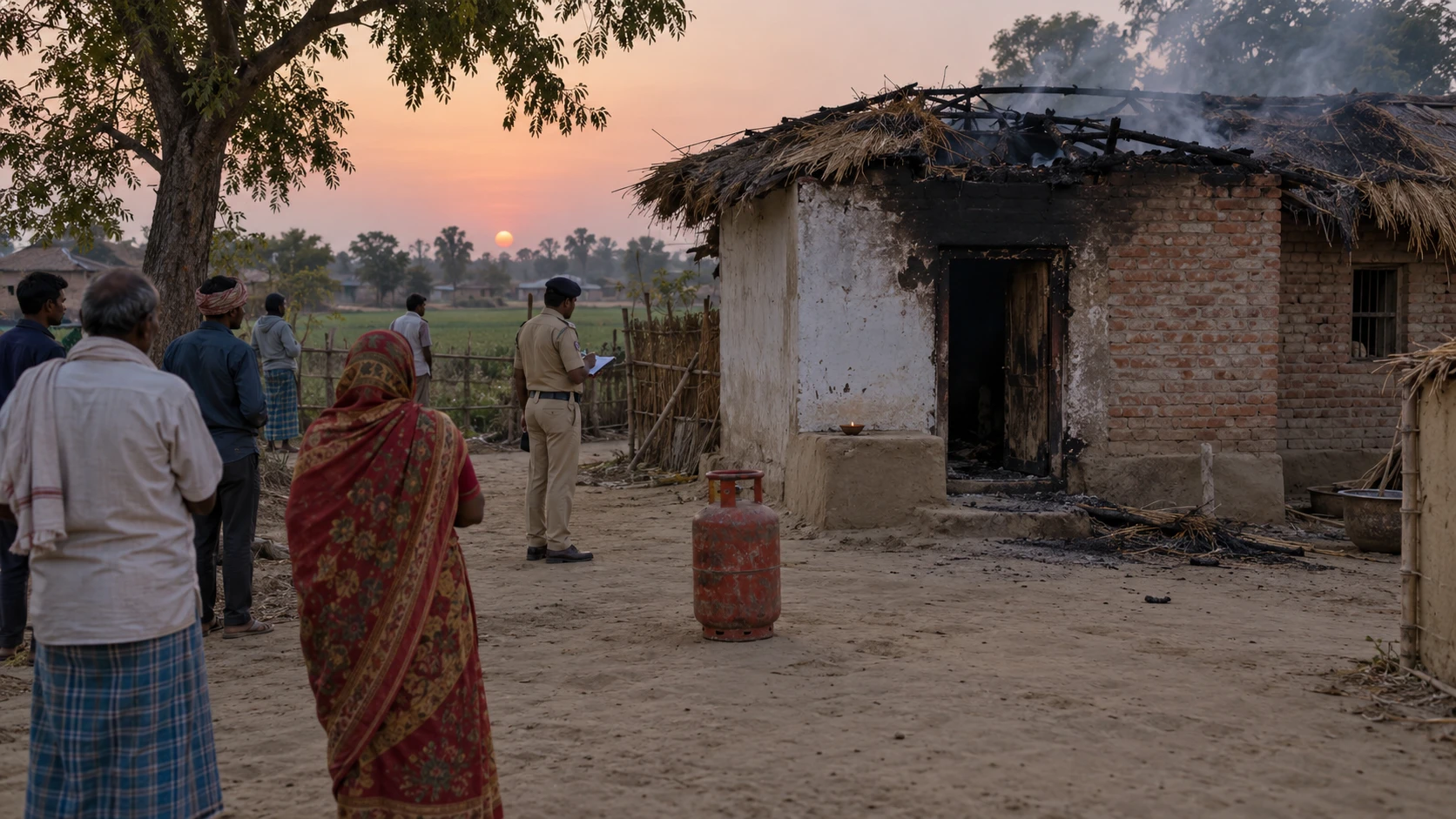
- Mogappair West, Chennai, 11 October: two LPG cylinders exploded in a thatched home; no injuries reported.
Shops, stalls, storage and agencies
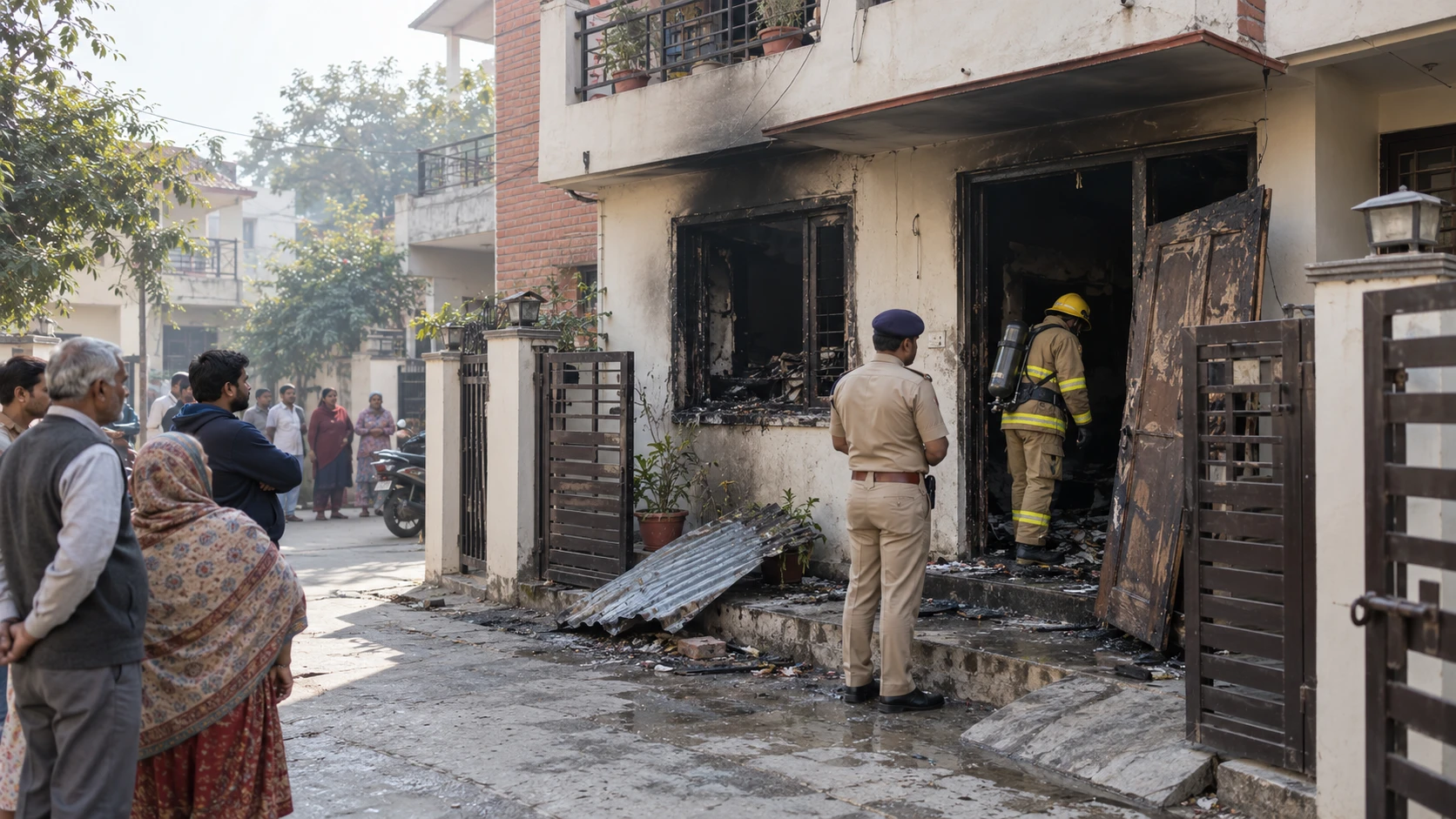
- Bengaluru, Abbigere Main Road, 24 October: cylinders exploded one after another in a shop; a couple living above were found dead two days later, and illegal refilling is alleged and under inquiry.
- RR Nagar, Bengaluru, 24 October: a cooking cylinder suspected to have leaked in a storage room blasted when the room was opened; three hurt.
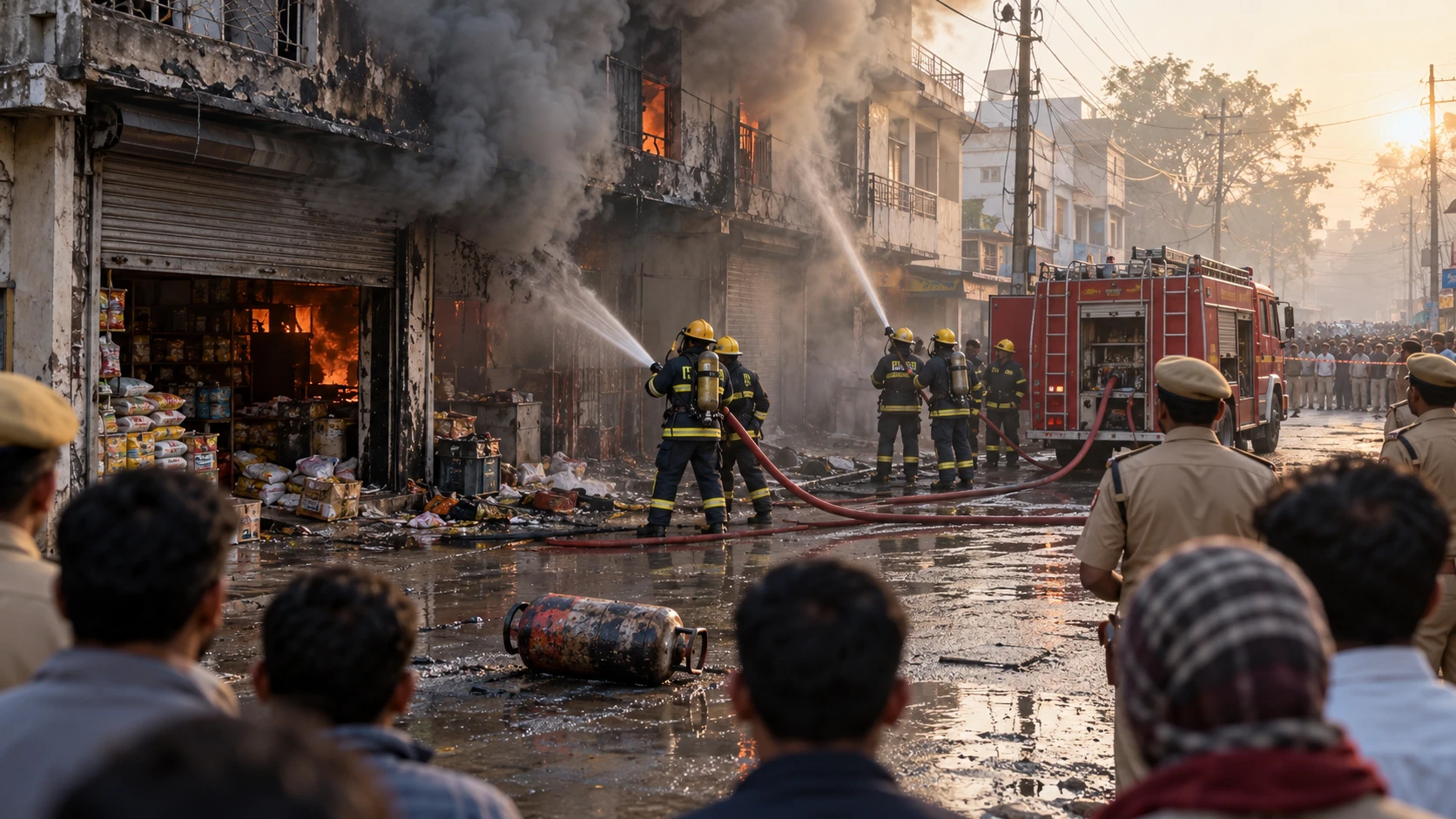
- Khekra, Baghpat, 8 October: a shop fire was followed by two cylinder blasts, and four died.
- Raipur village, Noida, 24 October: a fire during renovation work in tin-shed shops set off cylinders; one died.
- Saroorpur, Faridabad, 21 October: a fire in an LPG agency warehouse burst cylinders; an FIR alleges a reported leak was ignored.
- Coimbatore, August 2026: at least 12 cylinders exploded in temporary worker shelters.
Other gas: CNG, PNG and tankers
- Orchha, Niwari, 6 November: a vehicle CNG cylinder kept in a scrap dealer’s house leaked and burst; most outlets say 12 of one family were burnt.
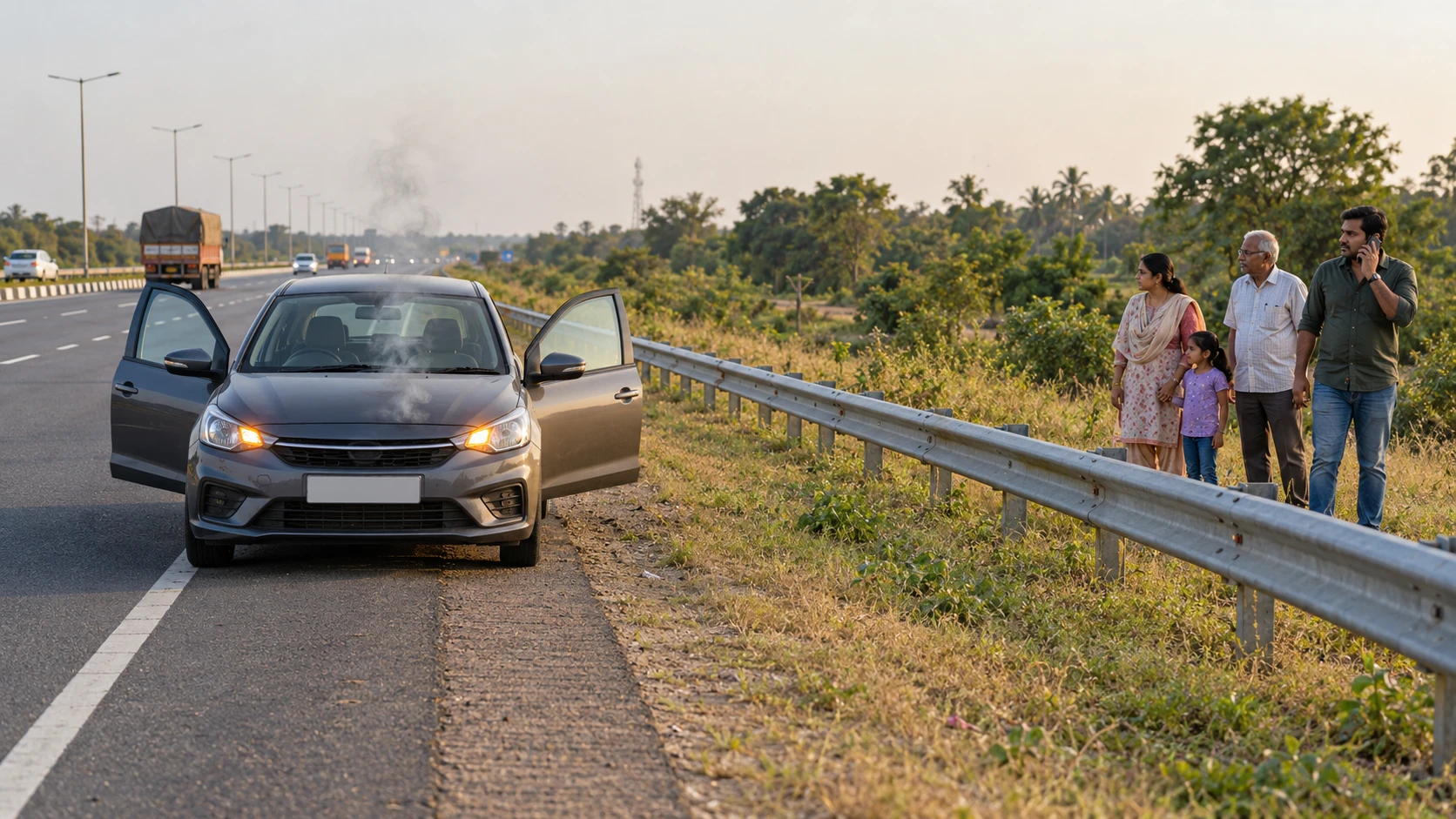
- Vadodara, Ramwadi, 5 November: the CNG cylinder of a burning parked car exploded before the fire brigade arrived; five people, many of them onlookers, were reported injured.
- Muzaffarpur, 2 November: a buried piped gas line was damaged during drain digging, then exploded; one dead, others hurt.
- Nandesari, Vadodara, 19 October and Jaipur-Ajmer highway, December 2024: gas tanker incidents on highways.
The pattern across these: a leak that was smelt or suspected and not stopped, a flame close by (a diya, a stove, a match), a cylinder stored where people live or work, and a fire that reached a second cylinder. That is also why the PMUY sheet puts so much weight on switching the regulator off.
Your city and the tools
- The City Safety Guides give emergency numbers and local risks. Cities with LPG cases above include Gorakhpur, Bengaluru, Beed, Faridabad, Coimbatore, Giridih, Gopalganj and Vadodara.
- The LPG cylinder test date checker and the Home Fire Safety Score take a few minutes.
- The India Incident Map shows our fire and explosion cases by place.
What we could not confirm
The PMUY sheet is undated, so we cannot say how recent its wording is. HPCL’s page says 1906 is a 24×7 LPG emergency helpline and showed a last-updated date of 10/09/2026 as printed; we did not test the number. We read the NCRB figures in the full 2024 report, whose table layout is dense, and our own statistics page gives the same totals. The causes of most cases listed above are unconfirmed in the reports we read, and counts are as each case study states them. We have not listed any commercial LPG or Indane, HP or Bharatgas rule for shops and stalls, because we have not opened an official page for it on this run. Both videos below are from oil companies and are in English or Hindi as titled; we did not watch them in full and their spoken language was not reviewed.
What needs attention
- The PMUY sheet puts the regulator, the hose, the cylinder's position and the rule against flames at the centre of LPG safety.
- NCRB 2024 recorded 1,389 deaths in 1,355 cooking gas cylinder or stove burst fires and 160 deaths in 146 domestic cylinder explosions.
- Our October and November 2026 cases include homes, shops, an agency warehouse, worker shelters, CNG vehicle cylinders and a gas pipeline.
- Most causes in those cases are unconfirmed in the reports we read.
- We opened no official page on rules for commercial LPG use on this run.
Controls that reduce risk
- Check the hose and regulator today and replace a cracked hose.
- Switch the regulator off every night.
- Check the cylinder with our test date checker.
- Save 1906, 101 and 112 on your phone.
- Read the leak guide once so you know the steps before you need them.
Common unsafe practices
- Using a match or lighter to look for a leak.
- Leaving the regulator on overnight.
- Keeping the cylinder in a pit, a closed cupboard or the stairwell.
- Lighting a diya or incense near a connection.
- Trying to repair the hose or regulator yourself.
- Storing spare cylinders where people sleep or work.





Leave a comment