
Quick answers
What do the colours on fire safety signs mean?
Green shows escape routes and exits. Red marks fire equipment and things you must not do. Blue tells you what you must do. Yellow warns you of a hazard.
What does a fire exit sign look like?
It is a green square or rectangle with a white running figure and an arrow pointing towards the nearest way out. Some also carry the words 'Fire exit'.
What is the difference between a prohibition sign and a mandatory sign?
A prohibition sign is round with a red border and a red bar, and tells you not to do something, such as smoke. A mandatory sign is a blue circle and tells you what you must do, such as keep a fire door shut.
Which standard covers fire safety signs in India?
BIS standard IS 12349 covers fire safety signs. The signs a particular building must display depend on its fire approval and the state fire rules. The UK Fire Safety Order often quoted online does not apply in India.
Why are fire safety signs important?
In smoke or a power cut, people do not read notices. They follow signs. Clear, visible signs help them find the exit and the nearest extinguisher quickly.
When a building is full of smoke and the lights have gone, nobody stops to read notices. People look for a green sign with a running figure and an arrow, or a red sign that shows where the extinguisher is kept. These signs only help if you already know what they mean. Here is a plain guide to the main fire safety signs you will see in offices, shops, factories, hospitals and housing societies.
Why fire safety signs matter
Employers and building owners have a legal duty to look after the people inside their premises. In India, the BIS standard IS 12349 (Fire protection: safety signs) covers signs for raising the alarm, escape routes, firefighting equipment and areas with a special fire risk. Which signs a particular building must put up depends on its fire approval and the fire rules of its state.
You will often see the Regulatory Reform (Fire Safety) Order 2005 quoted online. That is UK law. It does not apply in India.
What the colours mean
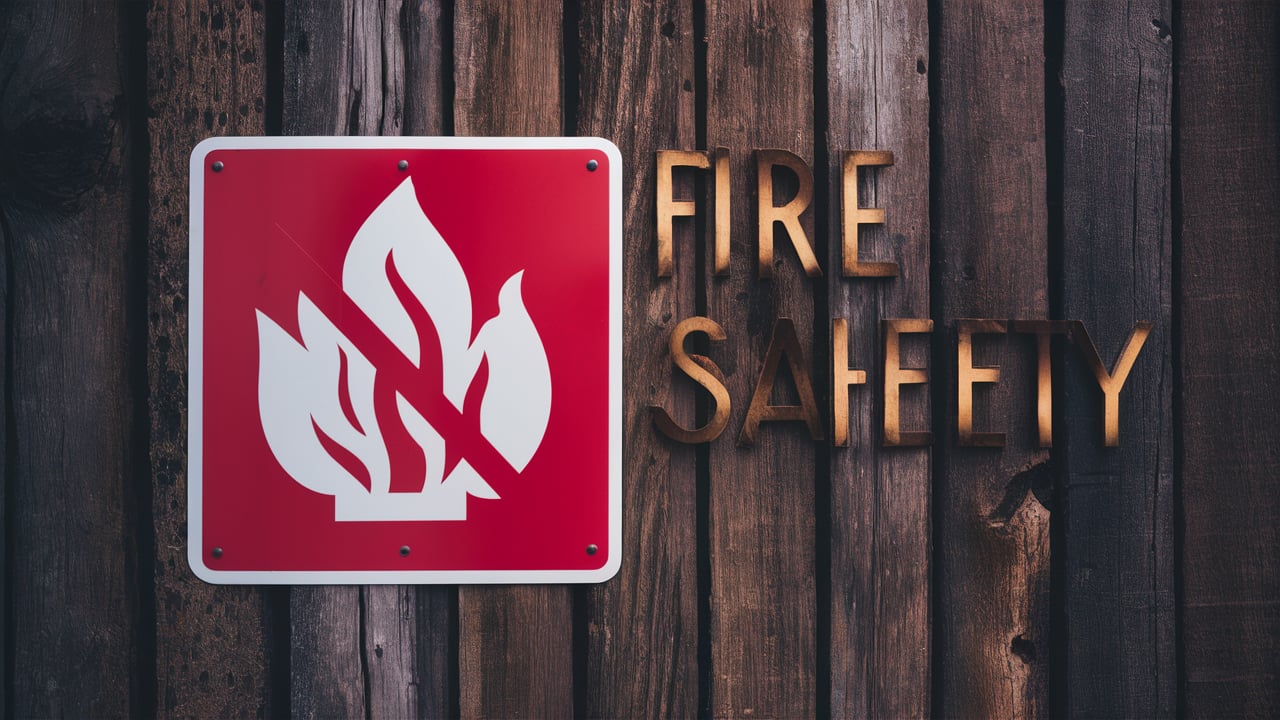
- Red is used for prohibitions and for firefighting equipment. A prohibition sign is round and white, with a red border, a red bar and a black picture. A fire equipment sign is a red square or rectangle with a white picture.
- Blue means you must do something. These signs are round and blue, with a white picture or white text.
- Green shows escape routes and emergency exits. The usual picture is a running figure with an arrow pointing towards the way out, sometimes with the words “Fire exit”.
- Yellow warns you of a hazard nearby. These signs are triangles with a black picture or black text.
The six types of sign you will see
Prohibition signs
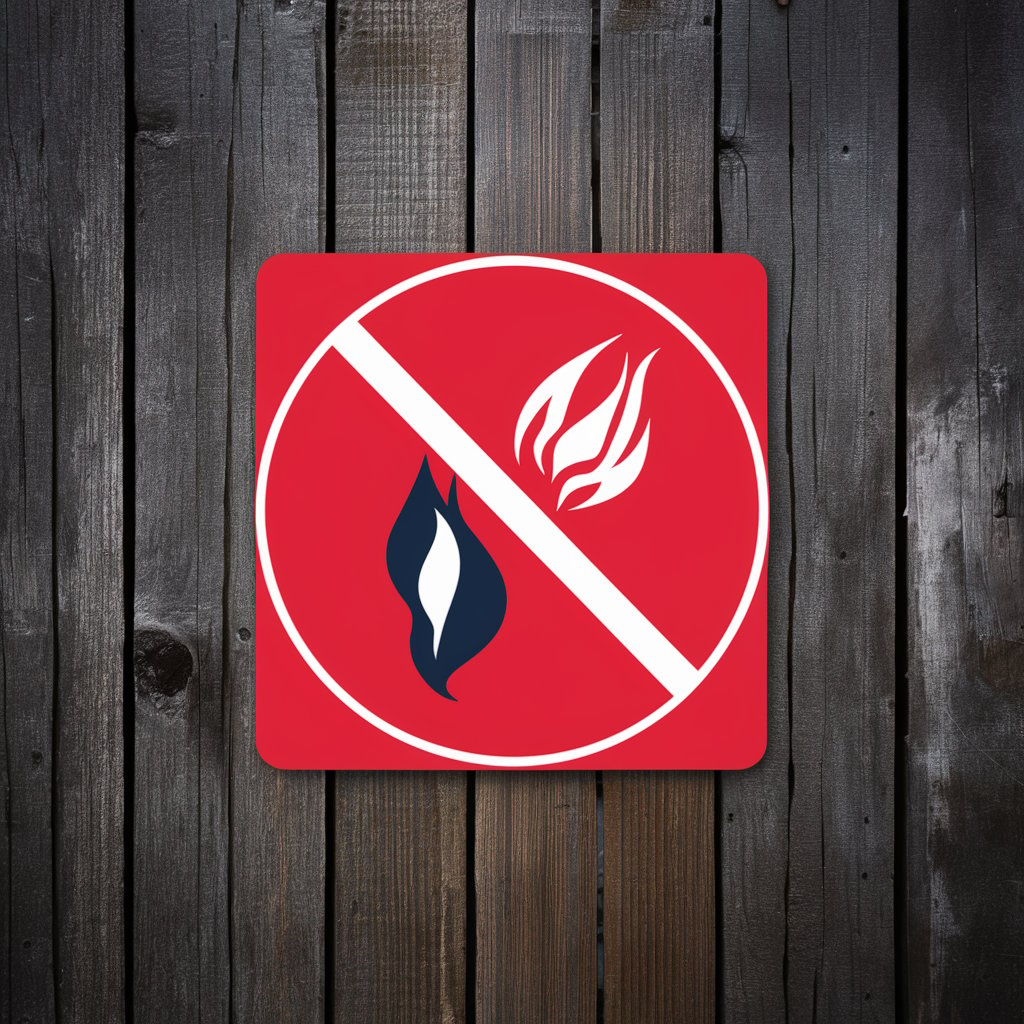
These tell you not to do something that could start a fire or make one worse. The best-known example is “No smoking”. You will find them near LPG banks, fuel stores and anywhere flammable material is kept.
Warning signs
Yellow triangles warn you about a risk, for example “Warning: fire risk”. Look for them on electrical rooms, fuel stores and chemical stores, and take them seriously.
Mandatory signs
Blue circles tell you what you must do. A common one on corridor and staircase doors is “Fire door: keep shut”. A fire door holds back smoke only when it is closed, so never wedge it open.
Fire exit signs
Green squares or rectangles with white symbols show the way to the nearest exit. Follow the arrow. In a large building there should be one at every turn, so that you never lose the trail.
Fire equipment signs
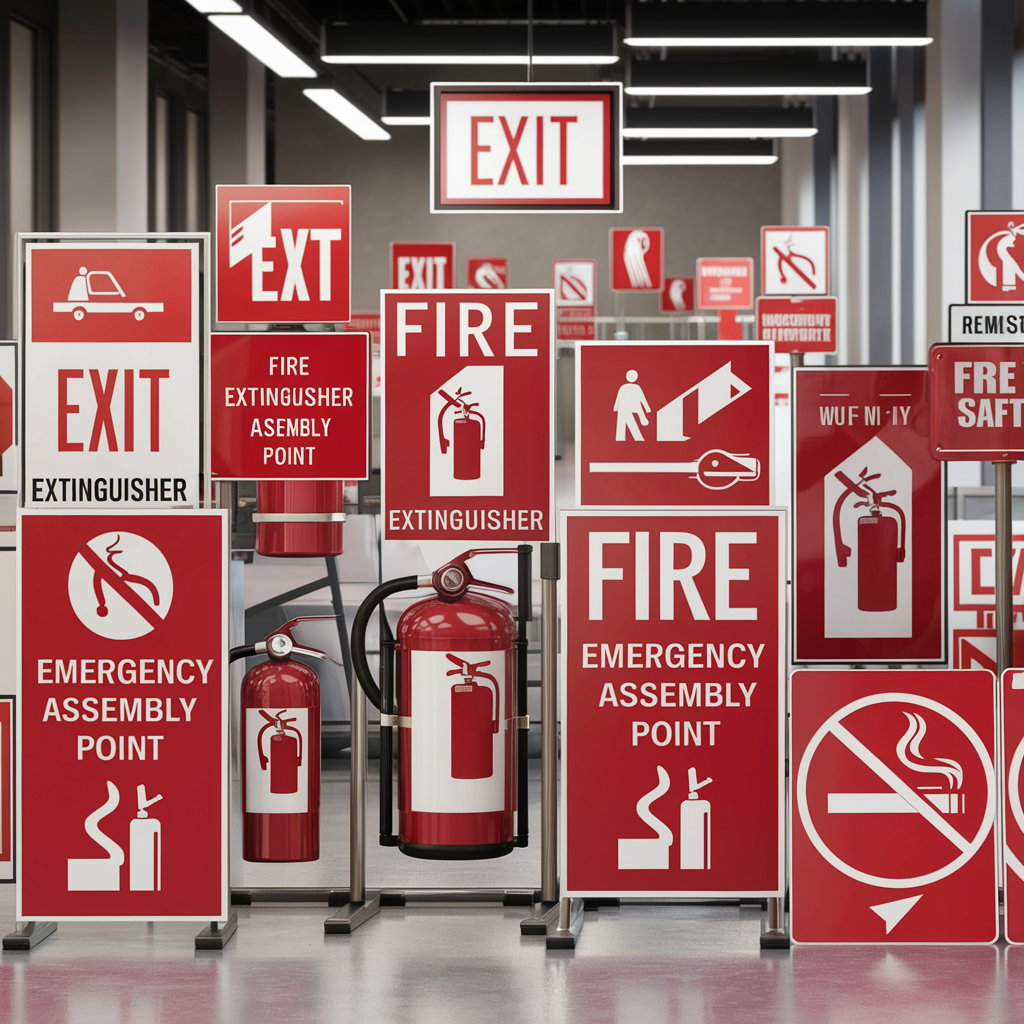
Red squares or rectangles with white symbols show where fire extinguishers, hose reels and fire alarm call points are kept. The sign is usually fixed above the equipment, so you can spot it even when people or stock are in front of it.
Supplementary signs
These add information to a main sign, such as a direction arrow or a text panel. They can be red, green or yellow, with black or white text, to match the sign they go with.
Signs that let you down
A sign is only useful if you can see it in smoke or in a power cut, and if it leads somewhere safe. The usual problems are easy to spot once you look for them. An exit sign points to a shutter that is locked at night. An extinguisher sign is hidden behind cartons or a display board. A faded paper sign cannot be seen in the dark. Photoluminescent signs, which glow after the lights go off, or lit exit signs with battery backup solve that last problem.
Check your building this week
Switch off the corridor lights one evening and see whether you can still read the exit signs. Then walk from your desk, shop counter or flat to the nearest exit and check that the door at the end actually opens. Show your children or new staff what the green running figure means. It takes five minutes, and on a bad day it could be what gets them out.
What needs attention
- In India, BIS standard IS 12349 covers fire safety signs for raising the alarm, escape routes, firefighting equipment and fire-risk areas
- Which signs a building needs depends on its fire approval and the state's fire rules
- Green square signs show the way out; red signs mark fire equipment and prohibitions
- Yellow triangles warn of a risk; blue circles tell you what you must do
- A sign helps only if it can be seen in smoke and in a power cut
Controls that reduce risk
- Walk every escape route and check that a green exit sign is visible at each turn
- Use signs that follow IS 12349 and fit photoluminescent or lit exit signs
- Mark every extinguisher, hose reel and alarm call point with a red sign above it
- Put yellow warning signs at LPG banks, fuel stores and electrical rooms
- Check signs after every renovation, partition change or new display
Common unsafe practices
- Quoting the UK Fire Safety Order as if it applies in India; it does not
- Putting exit signs that point to a locked door or a dead end
- Hiding extinguisher signs behind stock, curtains or display boards
- Using faded or home-made signs that do not glow or light up in the dark
- Putting up 'No Smoking' signs and then allowing smoking in that area

Leave a comment