
Quick answers
Why are fire drills important for a business?
They prepare people for an orderly evacuation, show up blocked routes and distant exits, test equipment, teach staff new routes and help meet legal requirements.
How often should fire drills be held?
For high-rise buildings, NBC 2016 says every three months for the first two years, then every six months. What actually binds you is your state fire rules, your fire NOC conditions and, for factories, the state Factories Rules.
How can a fire drill find problems in an evacuation plan?
It can show escape routes blocked with stock, or rooms too far from an exit, so you can fix them before a real fire.
What should be in place if the power goes off when the fire alarm sounds?
Keep a torch in every room, and use fluorescent arrows in corridors to point people to the nearest exit. A drill shows you what is missing.
Do new employees need fire safety training?
Yes. Brief every new joiner on exits, alarm points and the assembly point in their first week, and let regular drills test what they have learned.
Everyone has heard “practice makes perfect”. With fire drills, it is literally true. A drill is a rehearsal: someone sets off the alarm on purpose, and everyone in the building follows the evacuation plan they have been taught. Every employee should take part, from the newest trainee to the managing director.
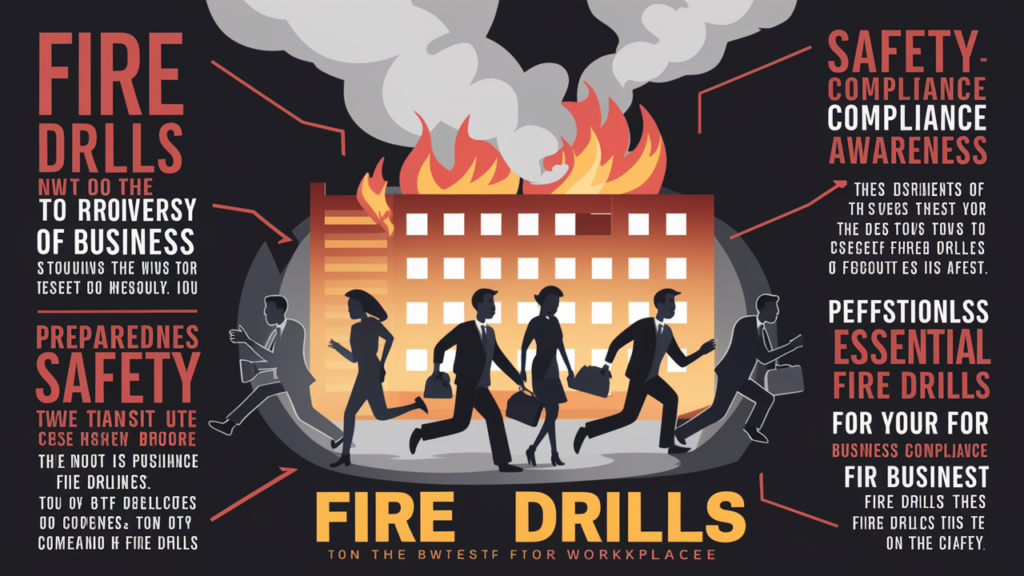
A drill tells you how long it really takes to get everyone out, and where the plan breaks down. Hold drills at regular intervals and keep some of them unannounced, so you see what would actually happen. Every building has its own layout and materials, so the drill has to be planned for that building.
Here are five reasons every business should hold them.
1. People know what to do
Fires in unprepared buildings have seen people panic, jump from windows and crush each other on the stairs. In that kind of chaos, the panic can kill more people than the fire itself. A drill turns the escape into a habit, so people walk out in order instead of running blind.
2. You find the weak spots
A drill shows up problems that the plan on paper hides. An escape route may be blocked with stock, or a cabin may be too far from the nearest exit. Find these in a drill and fix them, not during a real fire.
3. You test the equipment
Drills are a chance to check alarms, fire systems and the small things that help people get out. If the power cuts off when the alarm sounds, is there a torch in every room? Are there fluorescent arrows in the corridors pointing to the nearest exit? The drill tells you what is missing.
4. Staff learn new routes
Businesses grow, floors get rearranged and new people join. Each change can alter the way out. A fresh drill after every change means nobody is still heading for a door that has been blocked off, and new staff learn the route before they ever need it.
5. The law expects it
For high-rise buildings, the National Building Code of India 2016 (Part 4, Annex D) says fire drills should be held at least once every three months for the first two years, and at least once every six months after that, with a written record kept on the premises for three years for the fire brigade to inspect.
The NBC is a model code, so what binds you is your state’s fire rules and the conditions on your fire NOC. Factories also have their state Factories Rules. Check those for your building, and brief every new employee on the fire procedure in their first week.
Start this week
Find out when your office last had a drill. Then walk from your desk to the assembly point and time yourself. On the way, check that the second exit on your floor opens and is not being used as a store room. If you do not know who your floor warden is, ask today.
What needs attention
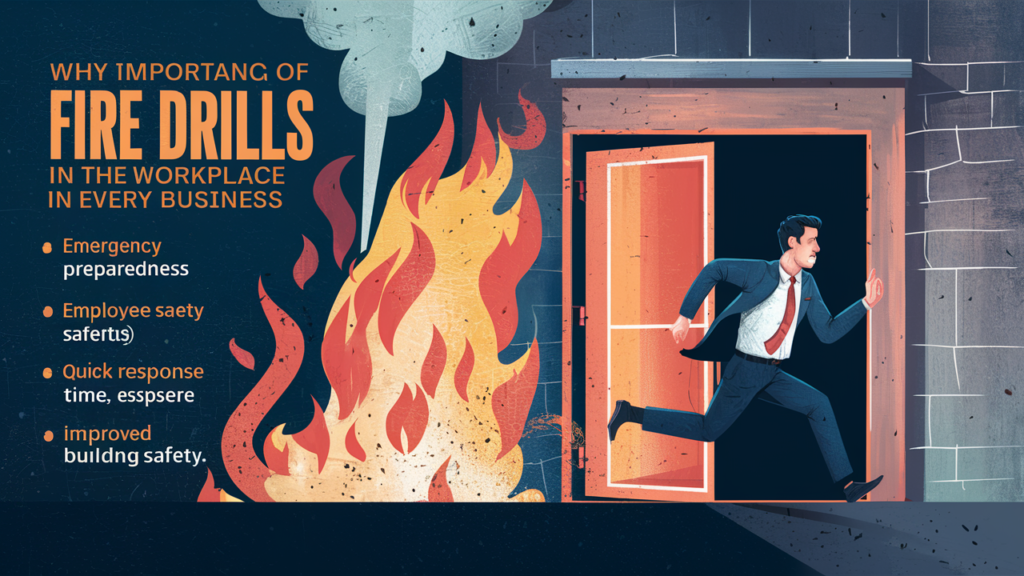
- In an unprepared crowd, panic, jumping from windows and stampedes can kill more people than the fire
- A drill shows you blocked routes and rooms that are too far from an exit before a real fire does
- Drills test equipment: if the power cuts off with the alarm, you find out whether torches and glow arrows are there
- Every change in layout or staff numbers needs a fresh drill so people learn the new route
- New employees need a fire briefing; a drill is where that briefing gets tested
Controls that reduce risk
- Hold a full evacuation drill at least once a year, and more often for larger or riskier sites
- Hold some drills without warning and time them
- Appoint floor wardens and a head-count person for every shift
- Write down every problem found and fix it before the next drill
- Brief every new joiner on exits, alarm points and the assembly point in their first week
Common unsafe practices
- Announcing every drill in advance, so people treat it as a break
- Letting senior staff or one department skip the drill
- Not timing the evacuation or counting heads at the assembly point
- Ignoring what went wrong in the last drill
- Using the same exit every time, so nobody learns the second route

Leave a comment