

Quick answers
Is it safe to live above a shop?
It can be, if there is a separate way out, fire-resisting separation between the shop and the home, shut fire doors, clear stairs and an alarm that sounds in the home when a fire starts in the shop. UK fire services give these conditions; we found no Indian official guidance for families in this situation.
What should I do if the shop below my home catches fire at night?
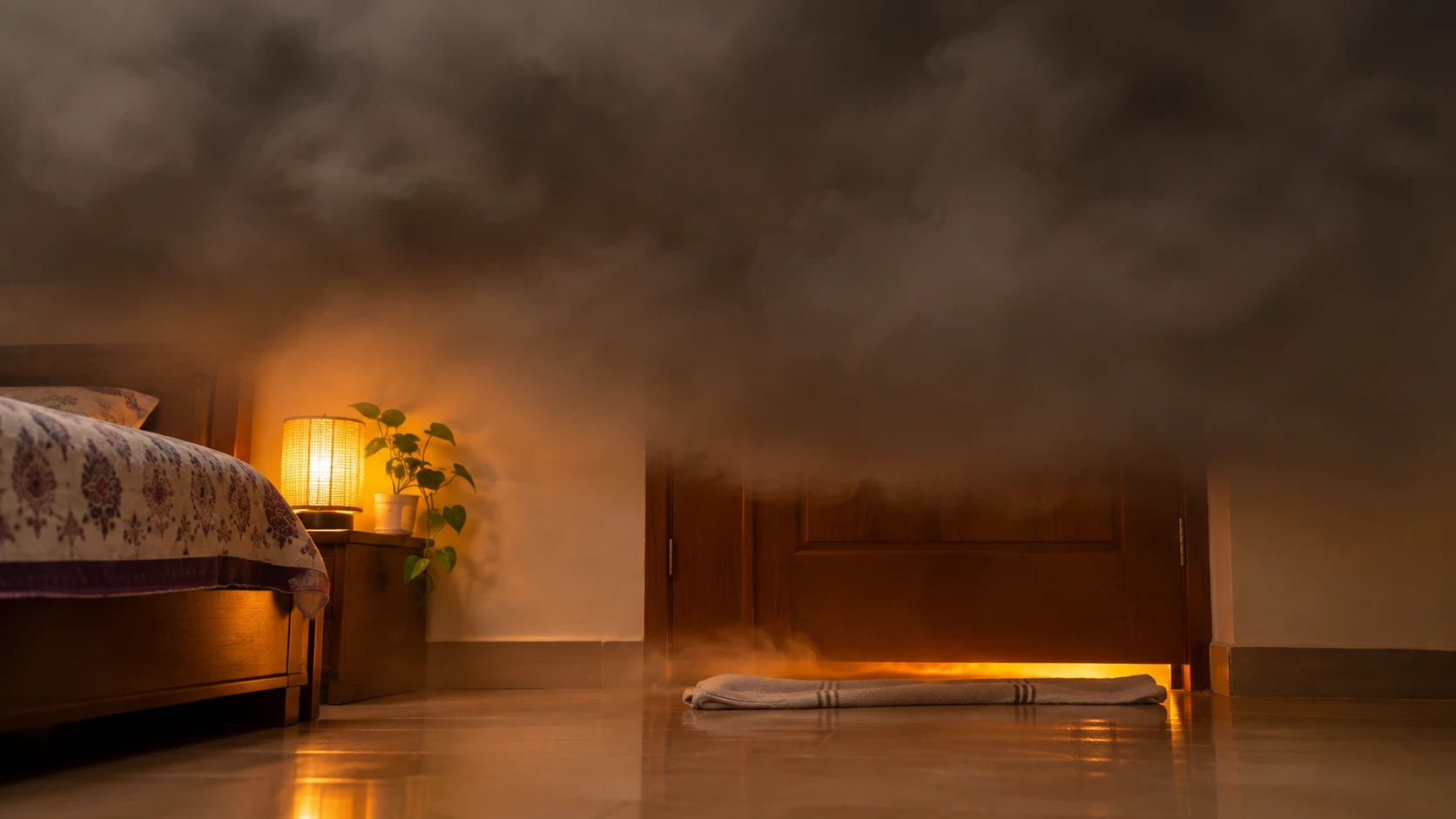
Wake everyone, call 101 or 112, feel the door, and leave only if the stair is clear and the exit does not run through the fire. If not, close the door, seal the gap with wet cloth, go to a street-side window or balcony and signal.
Why is smoke the bigger danger in a fire below a home?
Smoke rises up the stairs to the bedrooms and people are asleep. In the Dharashiv fire, News18 Marathi reports doctors said the deaths were mainly from smoke and suffocation, not burns.
Should the shop and the home have separate entrances?
UK fire services say a home above a business should have access that does not pass through the business, and Cheshire Fire and Rescue calls a single unprotected stair through the shop a risk to life. Indian rules depend on the state and the building, so ask your local fire office.
What kind of smoke alarm do I need for a flat above a shop?
At least alarms in the bedrooms and landing. UK guidance goes further, saying the alarm should detect a fire in either part and sound in the other. Ask a competent electrician or fire safety professional what suits your building.
Can I keep firecrackers or petrol in the shop below my home?
Only as the law allows. Firecrackers and petrol are regulated and need the right licence and storage. A shop with living quarters above is a dangerous place for them. See our pages on cracker storage and on petrol in containers.
What should I switch off when I close the shop?
The shop's lights, fans, chargers and signboard at the main switch, keeping on only what must stay, such as a fridge. This is our own advice, not an Indian rule.
How can neighbours help in a shop-house fire?
Call 101 first, keep the lane clear for the fire engine, and tell the crew where the family sleeps. Do not enter a smoke-filled stair without protection.
In small towns and market streets across India, the shop is on the ground floor and the family lives above it. It is convenient and it is how many families make a living. It also means that a fire in the stock, or in the shop’s wiring, starts directly under the people who are asleep. Three of the fatal family fires of the Diwali weekend, 8 to 9 November 2026, fit this pattern in the reports we read, and in each of them the cause is still not established. This page is a plan for families who live above a shop or godown, and for the shopkeeper who is also the landlord. Checked 10 November 2026.
In short
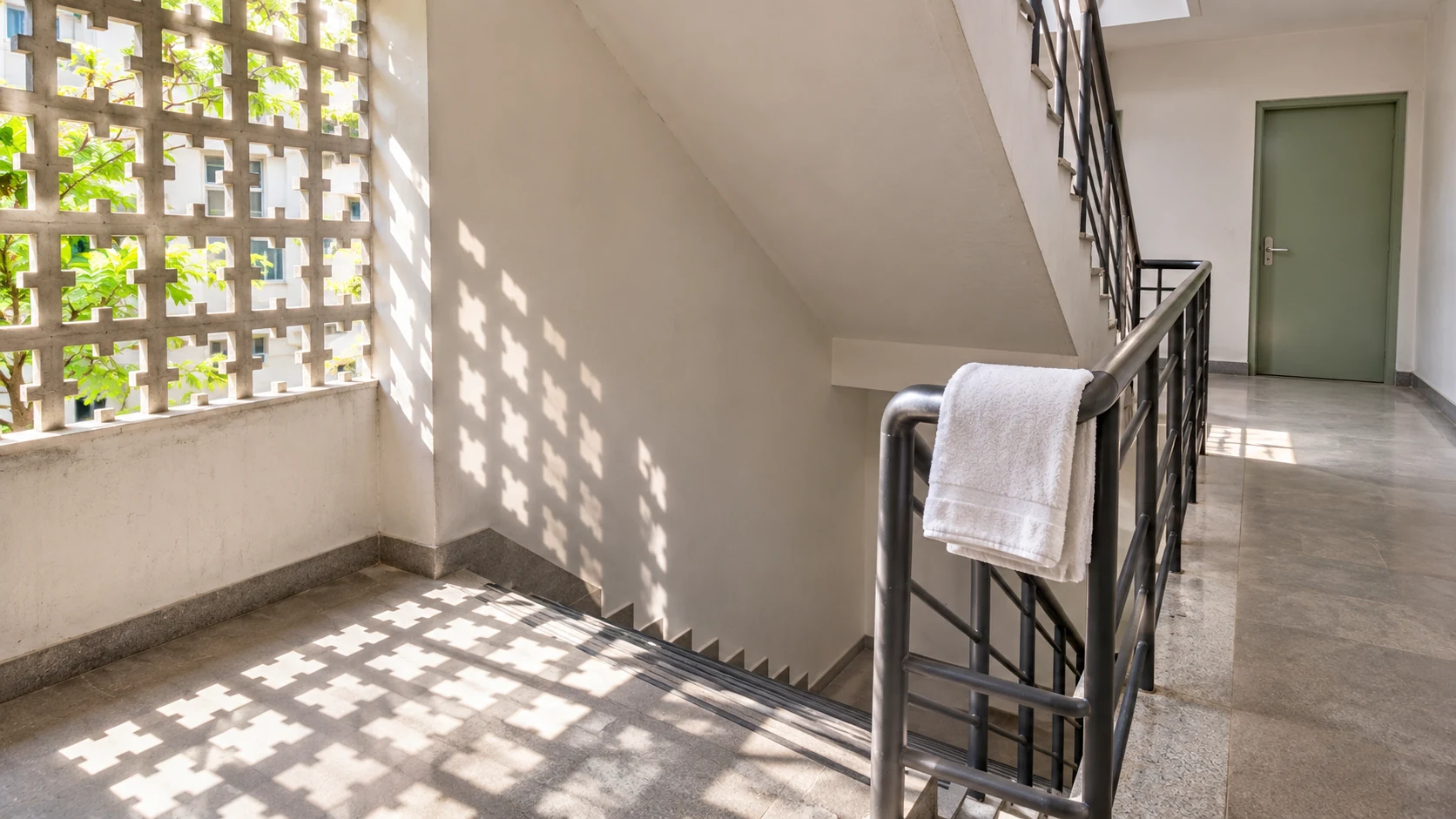
- Know your second way out. If the only stairs run through the shop or past its shutter, a fire in the shop traps you. Find another way, such as a separate staircase, a terrace route or a balcony you can reach safely, and keep it unlocked.
- Keep stock, cartons and cylinders out of the stairs and the landing. Plastic, cardboard and packaging feed a fire and block the way.
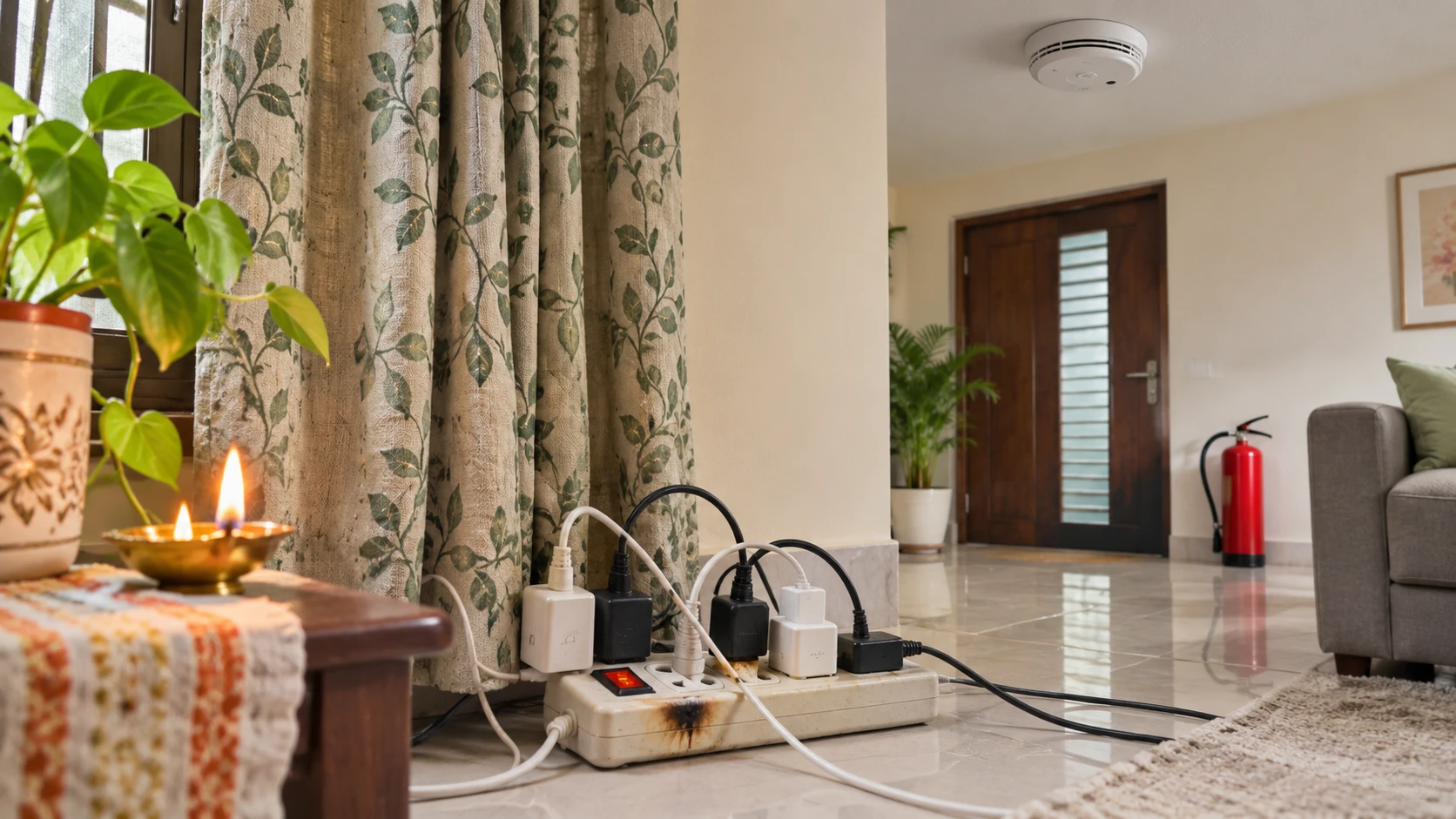
- Shut the shop door and switch off the shop’s lights, fans and chargers at closing (our advice, not a rule), and keep every diya, incense stick and candle away from stock and curtains.
- Ask for an alarm that sounds upstairs when something burns below. UK fire services ask exactly this question.
- If you wake to smoke: do not run down through the shop. Feel the door, and if the stair is filled with smoke, close the door, seal the gaps, go to a window or balcony, call 101 or 112 and signal.
What the reports say about three fires this weekend
These are our own case studies and the news reports they rest on, as of the morning of 9 November. In all three the cause is not established, there is no official finding, and reports differ on times and details.
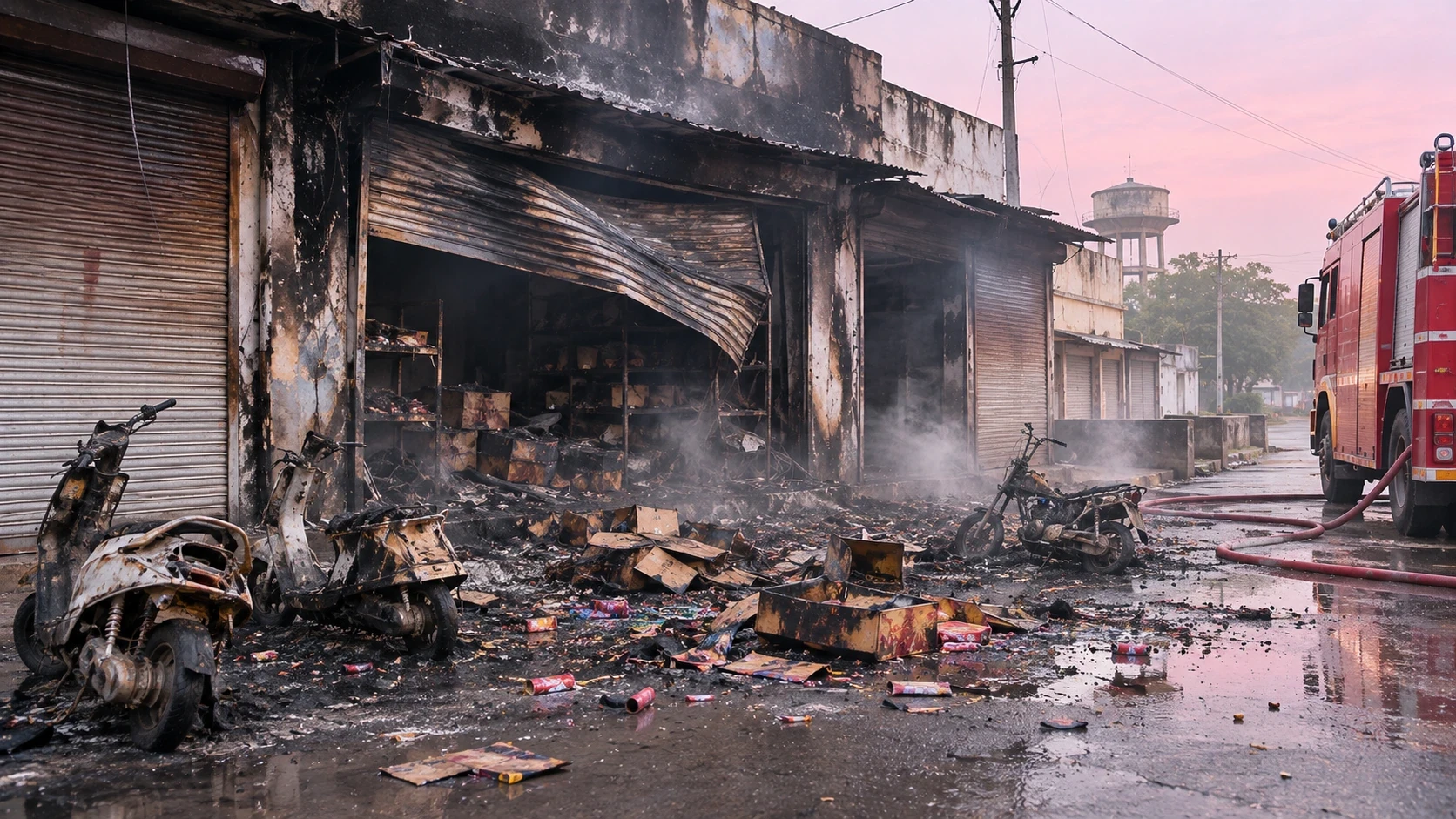
- Katni, Barhi, Madhya Pradesh, 8 November. The fire started in a crockery shop on the ground floor of a three-storey building and spread to the floors above, where the family lived. Six of one family died and two escaped. It took about five hours to bring under control. The SDOP said the cause was not known and could be a diya or a short circuit. See the case study.
- Dharashiv, Yedshi, Maharashtra, night of 8 to 9 November. A family lived on the upper floor of a building with a wholesale grocery and clothing shop below. Six died, mainly of smoke and suffocation according to News18 Marathi. Saam says plastic and grocery goods in the shop helped the fire spread; diyas were suspected locally, without an official source. See the case study.
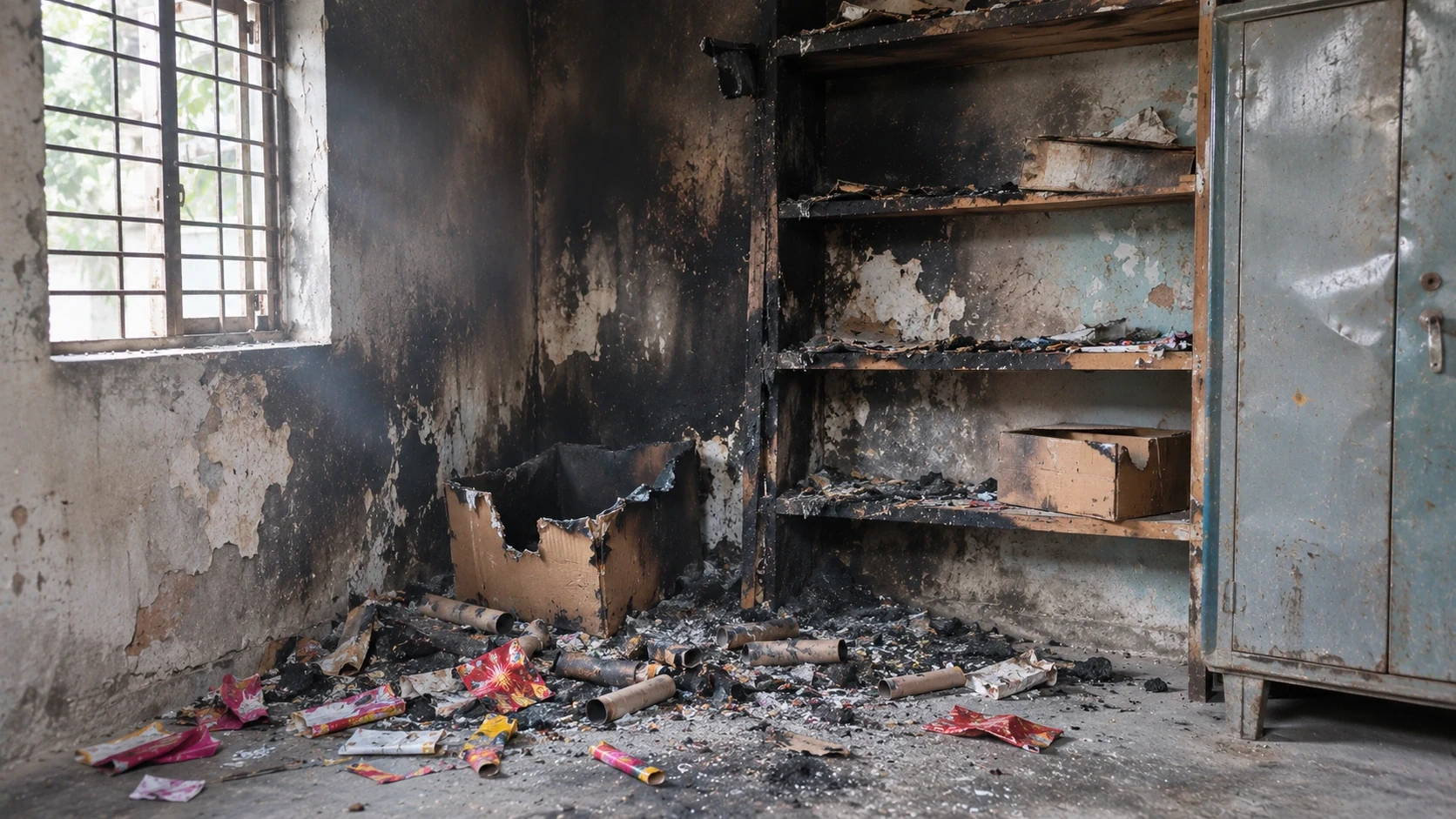
- Pali, Phalna, Rajasthan, 8 November. A fire in a firecracker shop with living quarters above it killed a ward councillor and her husband, and spread to a battery shop and a grocery shop next door. A spark from fireworks lit on the road is suspected; no report we opened mentions the licence. See the case study.
A fourth fire the same night, at a bullion trader’s house in Seoni, killed six of a family in the early hours. No report we opened says there was a shop on the ground floor, so we do not count it in this pattern. See the case study. The common thread, as far as the reports go, is a home above flammable stock with sleeping people and one way out. That is our reading, not a finding of any inquiry.
Why a home above a shop is different
- The fuel is right below you. Cartons, plastic, cloth, packing foam, firecrackers and gas cylinders burn fast and give off thick smoke, and smoke rises up the staircase to the bedrooms. Smoke, not flame, was the main cause of death in the Dharashiv reports.
- The shop closes at night and nobody is there. A fire can grow for a long time before the family wakes.
- The stairs often start inside the shop. The London Fire Brigade says that if a flat can only be reached through the commercial premises, fire can spread quickly and residents may have no way out.
- The shopfront shutter and the window grilles are locked at night, which keep thieves out and a family in.
What fire services abroad say about living above a business
We found no official Indian guidance written for families living above a shop, so this section is foreign guidance, from UK fire and rescue services, and it is labelled as such. The Delhi Fire Service pages we opened cover only the basics: dial 101, leave by the nearest exit, close doors behind you, do not use the lift, do not shout or run. The UK services agree on the following.
- Separate access. A home above a business should have an entrance and stair that do not go through the business. Cheshire Fire and Rescue says that a single unprotected staircase leading out of the shop or kitchen area is not acceptable and is a risk to life.
- Fire-resisting floors, ceilings and walls between the shop and the home, about 60 minutes of protection. Cheshire says this may be reduced to 30 minutes only with a suitable linked fire alarm and a fire risk assessment. Warning signs are holes or large cracks in the walls and floors, and ill-fitting or damaged doors.
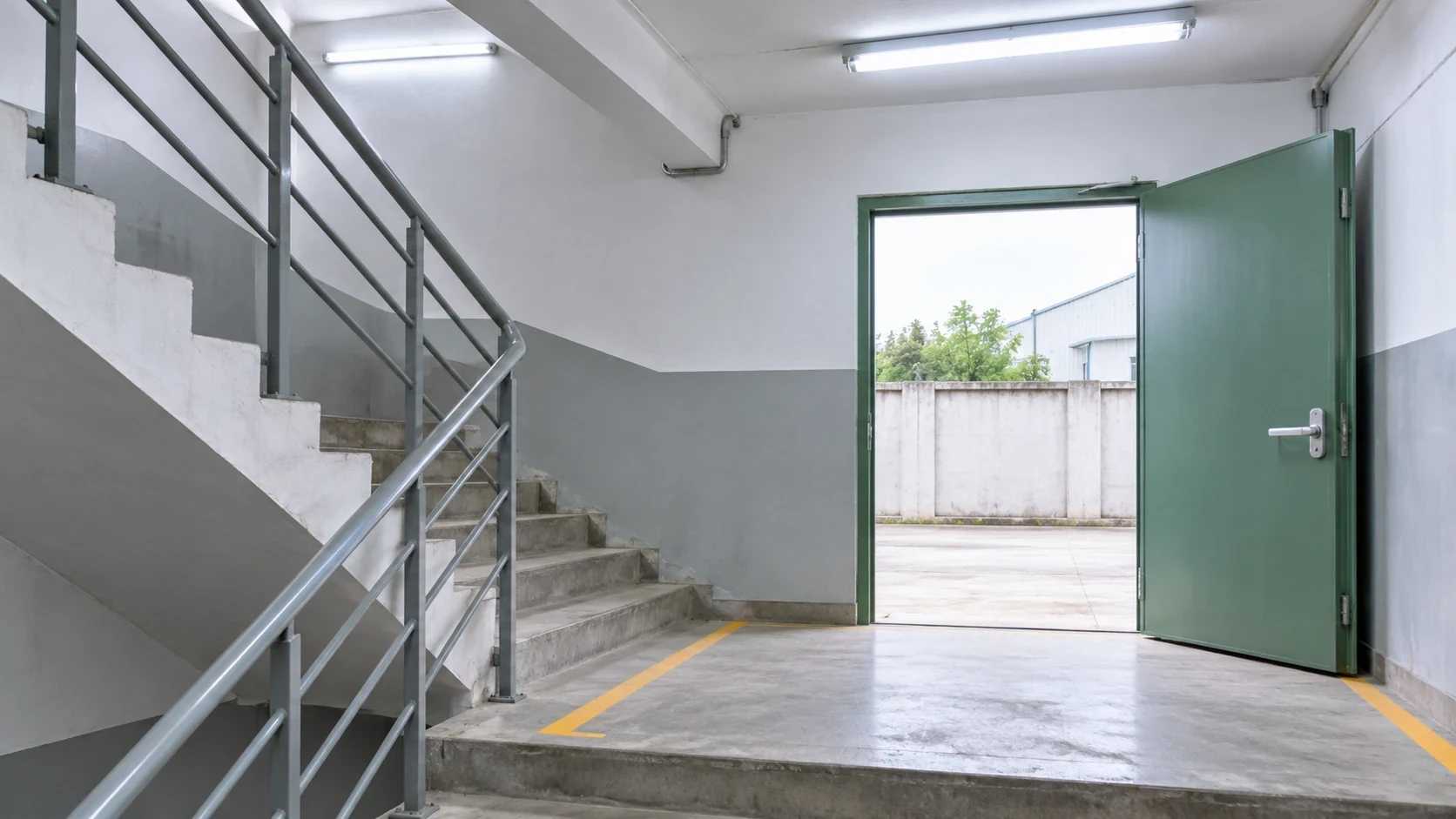
- Fire doors that stay shut. Where access is shared, doors between the shop and the stairs should be fire doors, and never wedged open.
- Clear escape routes. Keep stock, rubbish, cleaning materials, bicycles and furniture out of the stairs and the landing. Dorset and Wiltshire Fire and Rescue adds that large amounts of cardboard, gas canisters and refuse stored at the back also raise the risk.
- Detection that links both parts. The Cheshire page says the alarm should detect a fire in either part of the building and sound in the other. The Dorset and Wiltshire page also points to smoke alarm advice.
- Watch the services. Gas and electricity meters in an unprotected cupboard under the stairs, and exposed cables and gas pipes in the stairwell, are fire risks (London Fire Brigade).
Indian building rules differ and the requirements for a shop-house depend on the state, the plan and the height, so ask your local fire office, but the logic of these points holds anywhere.
What to do this week, as a family
- Walk the way out together, in the dark. Start from the bedroom. Count the steps to the stairs. Open the door at the bottom, the shutter and the grilles. Ask: if the shop is burning, can we still leave? If not, find a second way and practise it.
- Keep the keys where everyone can reach them, for the shutter, the grille, the terrace door and the balcony. Never padlock them from outside at night.
- Fit smoke alarms in the bedrooms and the landing. Ask a competent electrician or fire safety service about one that also detects a fire in the shop and sounds upstairs. Our page on escaping a smoke-filled room has the first two minutes in a flat, step by step.
- Keep a torch, a whistle, your phones and footwear by the bed, and save 101 and 112.
- Close the bedroom door at night. A closed door slows smoke and heat; the UK services stress shut fire doors for the same reason.
- Agree the plan with children and elders. Decide who wakes whom, and who carries or guides the youngest and the oldest.
What to do in the shop and the storeroom
- At closing, switch off the shop’s lights, fans, chargers and signboard at the main switch, keeping on only what must stay, such as a fridge. This is our own advice.
- Do not light a diya, incense or candle near stock, packing material or curtains. This matters most in the festival weeks, as our page on festival-season home fire safety explains.
- Keep gas cylinders, cartons, plastic and thermocol away from the stair. Do not store them under it.
- Firecrackers, petrol and other regulated goods need a licence and a proper place, not the room below a family. See our pages on illegal home firecracker units and cracker storage and petrol in a bottle or can.
- Have the wiring checked by a qualified electrician, especially after adding signboards, freezers and extension boards.
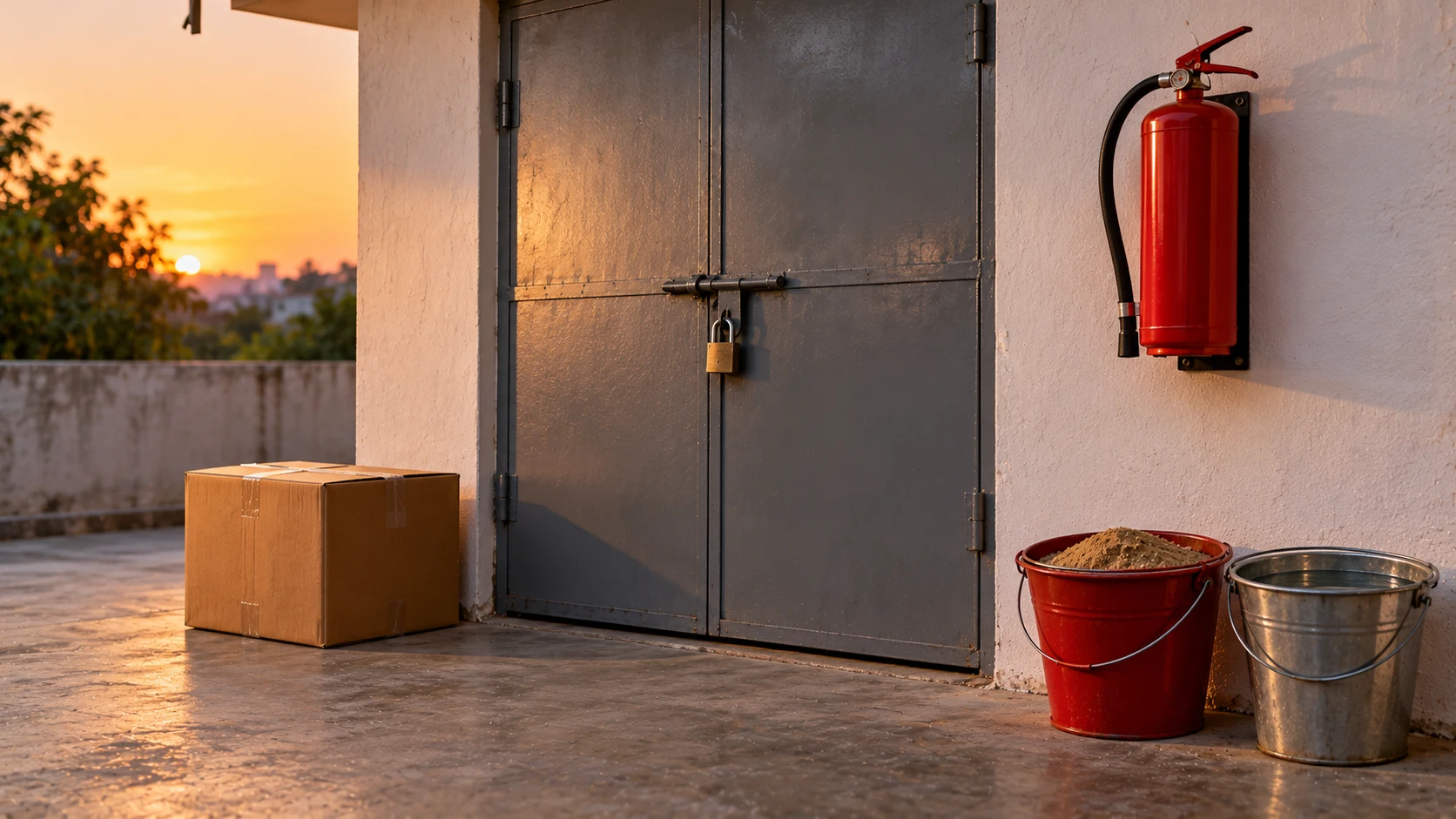
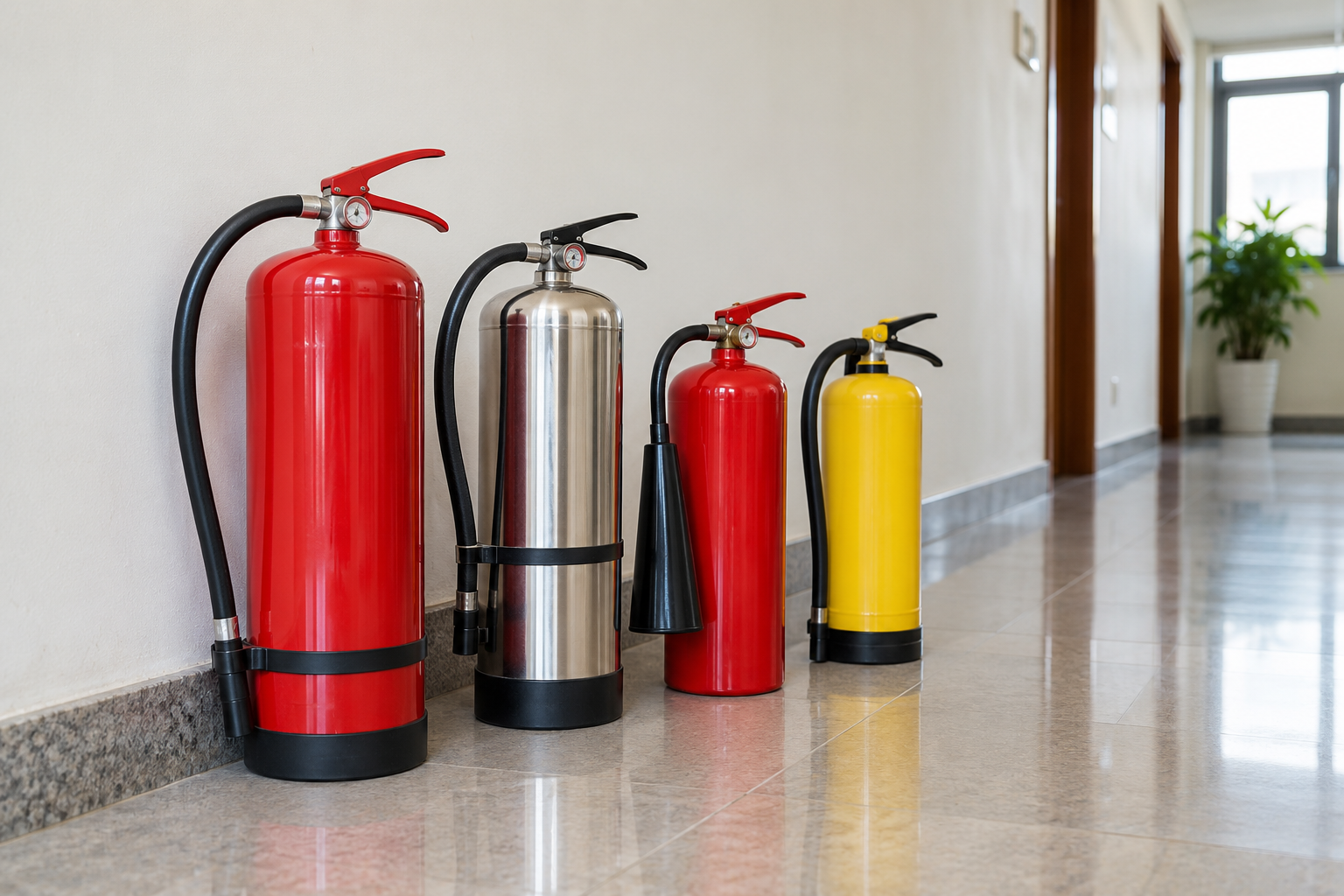
- Keep a fire extinguisher of the right type near the shop door and know how to use it, but never fight a fire at the cost of getting the family out. Our guide to extinguisher types (see the related list) explains which one to use.
If the fire starts below while you sleep
- Wake everyone and call 101 or 112. The Delhi Fire Service says dial 101 irrespective of the size of the fire.
- Feel the door with the back of your hand. If it is cool, open it slowly. If the stair is clear and the exit does not run through the burning shop, go out, close the door behind you and stay out.
- If the stair is full of smoke or the door is hot, do not open it. Close it, put wet towels or cloth in the gap, and go to a window or balcony that faces the street. Shout, wave a light cloth or use your phone torch so the crew can find you.
- Do not go down through the shop. Do not use the lift if there is one.
- Stay low. Our page on breathing in smoke explains why a wet cloth is a last resort.
- Neighbours: call 101 first, keep the lane clear for the fire engine and point the crew to the family’s rooms. Do not enter a smoke-filled stair without protection.
If you own the building
If you rent the shop, or the flat, or both, ask who is responsible for the stairs, the alarm and the wiring, and get it in writing. The UK pages put the duty on the owner or manager; in India, check with your local fire office and municipal rules. A shop-house with one staircase through the shop, stock under the stairs and a locked terrace door is a trap, whatever the paperwork says.
What we could not confirm
We found no Indian official guidance for families living above shops, and we did not read the National Building Code on mixed occupancy for this page, so the building-separation points rest on UK fire services and are labelled as such. The three fires are described as the news reports and our case studies record them on 9 November: the causes, times, the number of people in each house and the claims of delay or faulty equipment in Katni are unverified. Switching off the shop at closing, closing the bedroom door and keeping a torch and whistle are our advice, not an Indian rule. This page is general information.
What needs attention
- In the Katni fire the family lived above a crockery shop where the fire started; six died and two escaped.
- In the Dharashiv fire six died, mainly of smoke and suffocation, in a home above a grocery and clothing shop.
- In the Pali fire a firecracker shop with living quarters above burnt and killed a councillor and her husband.
- The causes are not established in any of the three; no official finding exists.
- We found no Indian official guidance for families living above shops; UK fire services give the building conditions.
Controls that reduce risk
- Walk the way out in the dark and find a second way.
- Keep keys for the shutter, grille, terrace and balcony where all can reach them.
- Fit smoke alarms in the bedrooms and landing.
- Switch off the shop at closing; keep flames away from stock.
- Save 101 and 112; keep a torch and whistle by the bed.
Common unsafe practices
- Stairs that start inside the shop with no other way out.
- Cartons, plastic or cylinders stored on or under the stairs.
- Padlocked shutters, grilles and terrace doors at night.
- Diyas, incense or candles near stock and curtains.
- Keeping firecrackers or petrol below a home without the right licence and store.
- Going down through the shop in a fire.






Leave a comment