
What happened here
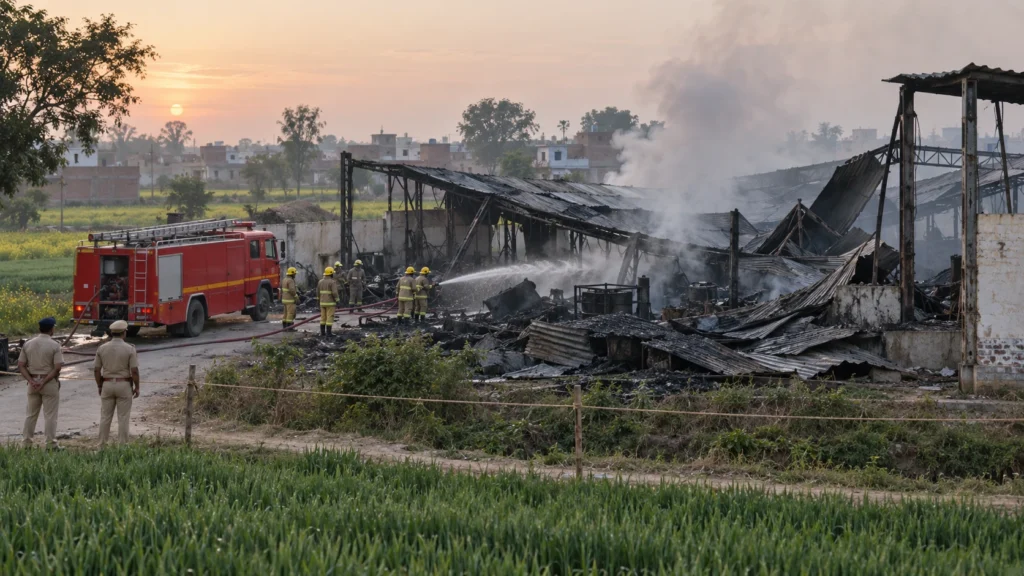
A fire at a foam and mattress unit on Safiabad Road near Barota village, Sonipat, in the early hours of 15 October 2026 killed two migrant workers from Lakhimpur Kheri, an uncle and his nephew, and injured four others. Stored foam helped the fire spread fast, a tin shed collapsed, and firefighters took about six hours to control it. The cause is under investigation.
Quick answers
How many people died in the Sonipat foam factory fire?
Two workers, an uncle and his nephew from Lakhimpur Kheri, Uttar Pradesh, according to police. Four other workers were injured.
Where did the fire happen?
At Legend Polyform Private Limited, a foam and mattress unit on Safiabad Road near Barota village in Sonipat district, Haryana, in the Kundli police station area.
What were the names of the workers who died?
Police identified them as Kailash, 34, and his nephew Sunil, 19 (The Tribune). Reports from Lakhimpur Kheri name the uncle as Kanhaiya Pal, 32, and give Sunil Pal’s age as 20. DNA tests were to confirm identity.
What caused the fire?
Police said the cause was under investigation. Amar Ujala reported that a short circuit is suspected, but this has not been confirmed.
Why did the fire spread so fast?
The unit stored foam and mattress material, which burns quickly, and the fire engulfed the whole facility, according to PTI.
What happened
A fire broke out at around 4 am on Thursday, 15 October 2026, at a foam and mattress-making unit on Safiabad Road near Barota village in Sonipat district, Haryana. The unit is named in reports as Legend Polyform Private Limited (The Tribune calls it Legend Poly Foam). It falls under the Kundli police station area, and the Barota police post also handled the case.
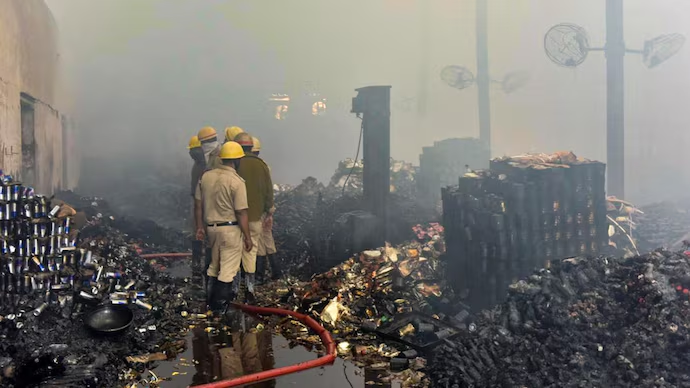
Two workers died and four were injured, police told PTI and The Tribune. According to The Tribune, about 30 to 35 people were working in the factory that night. Foam and other mattress material stored inside caught quickly, and PTI reported that the fire engulfed the whole facility. A tin shed came down during the fire, which made it hard for crews to get inside and search, Punjab Kesari and Dainik Tribune reported.
Firefighters needed about six hours to bring the blaze under control. The Tribune reported more than 10 fire tenders from Kundli, Sector 23, Education City and other stations; Dainik Tribune reported eight vehicles from Sonipat and Rai. Punjab Kesari quoted a fire official, Vinod Dhul, as saying the fire was under control by about 10 am.
The people
The two men who died were an uncle and his nephew from Lakhimpur Kheri in Uttar Pradesh, who worked at the unit. Police identified them as Kailash, 34, and his nephew Sunil, 19, according to The Tribune. Amar Ujala (Sonipat) and Dainik Tribune gave the same names and ages. Reports from their home district differ: Amar Ujala (Lakhimpur Kheri) named them as Kanhaiya Pal, 32, and Sunil Pal, 20, and Punjab Kesari called the uncle Kanhaiya. Both were from Hardi village (reported as Hardi Gudaria) in the Dhaurahra area. The State Disaster Response Force (SDRF) team from Rohtak found their remains in the debris. Amar Ujala and Dainik Tribune reported that DNA tests will confirm identity.
Amar Ujala reported that the two had left home about two months earlier to earn a living in Sonipat. The uncle had lost his wife about a year and a half ago and leaves three young children.
The four injured workers were named as Pawan, Rajesh, Hari and Prem Sagar. Amar Ujala and Dainik Tribune said Rajesh was in a serious condition and that they were being treated at a private hospital in Bahalgarh. One Punjab Kesari report said three of the injured were serious.
Response and investigation
Kundli police and the fire brigade reached the site. When workers were feared trapped, the administration called in the SDRF from Rohtak; its team head Rajesh Kumar led the search. Relatives of other workers feared more people were inside and asked for a wider search. Fire officials said they had no report of anyone else missing at the time, according to Punjab Kesari.
Kundli SHO Inspector Ravi confirmed the two deaths, said the families had been told and that the bodies had been sent for post-mortem. Dainik Tribune quoted him as saying action would follow on the basis of the families’ statements. Police told PTI the cause was under investigation. Amar Ujala reported that a short circuit is suspected. That is a preliminary view, not a finding.
By 16 October 2026 we could not find any report of an FIR, an arrest, a compensation announcement, or a statement on whether the unit had a fire NOC.
Why this matters
Polyurethane foam burns fast and hot and gives off thick, toxic smoke. A godown full of foam blocks and mattresses can go from a small flame to a fully involved fire in minutes, much faster than people on a night shift expect. Add a tin shed with few doors, workers who sleep or work near the stock, and a rural road far from the nearest fire station, and the margin for escape becomes very small.
Like these two men, many workers in Sonipat’s factories come from other states. They are often new to the site, may not know the second way out, and are rarely part of a fire drill. NCRB recorded 153 deaths in accidental fires in Haryana in 2024. Most were filed under “other causes”.
Lessons for factory owners and workers
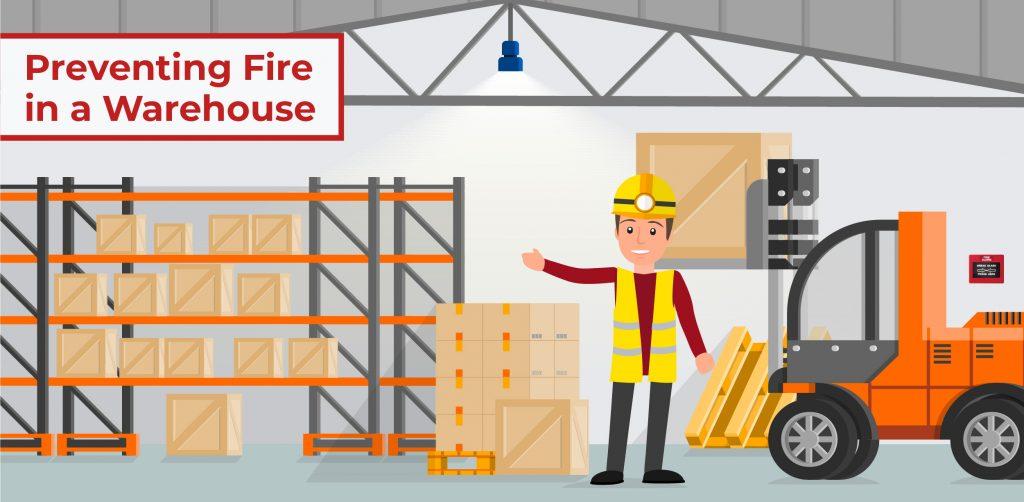
- Store foam like the fuel it is. Keep foam blocks and finished mattresses in a separate, walled store, away from machines, wiring and the work floor. Never stack it against exits or electric panels.
- Two ways out, always open. Every shed needs at least two exits at opposite ends. Doors must open from inside without a key, especially on the night shift. Locking workers in “for security” costs lives.
- Get the fire NOC and keep it honest. A unit storing this much combustible stock should have a valid fire NOC from the Haryana Fire and Emergency Services, working detectors, hose reels and extinguishers, and a water supply that the fire brigade can use.
- Look after the wiring. Loose joints, overloaded sockets and old cables near foam are an open invitation. Get the electrical installation checked by a licensed electrician and fix faults the same day.
- Brief every new worker on day one. In Hindi or the worker’s own language: where the exits are, where the alarm is, and where to gather. Keep a headcount list for each shift so the fire brigade knows who is missing.
- Do not go back in. Foam smoke can knock a person down within a few breaths. Get out, raise the alarm, call 112 or the fire brigade on 101, and tell the firefighters who is still inside.
What is still not known
The cause of the fire, where it started, whether the exits were open, whether the unit had a fire NOC and working fire equipment, and whether anyone will be booked have not been officially confirmed. The final identification of the two men by DNA and the condition of the injured have not been updated in reports we found. We will update this page when official information is published.
- Fire breaks out at the foam and mattress unit near Barota village during the night shift (Amar Ujala, Punjab Kesari)
- Fire brigade and Kundli police reach the site; foam stock lets the fire spread through the shed; tin shed collapses
- Two workers feared trapped; SDRF team from Rohtak called in to search
- Fire brought under control after about six hours (Punjab Kesari, quoting fire official Vinod Dhul)
- SDRF finds the remains of two workers; police confirm two deaths and four injured; bodies sent for post-mortem
- News of the deaths reaches Hardi village, Lakhimpur Kheri (Amar Ujala)
- No FIR, arrest, compensation or cause finding found in published reports
Why consequences escalated
- Two workers died and four were injured, according to police.
- About 30 to 35 people were working the night shift when the fire started.
- Stored foam and mattress material made the fire spread fast through the shed.
- A collapsed tin shed slowed the search; the SDRF found the two men in the debris.
- A short circuit is suspected in one report, but police say the cause is under investigation.
Failures and risk multipliers
- Large amounts of foam stored in the same shed where people work at night.
- A tin-shed structure that collapses in a fire and blocks rescue.
- No clear public record of fire safety approval or fire equipment at the unit.
- Night-shift workers, many of them migrants, who may not know the second way out.
Actions that reduce risk
- Store foam and finished mattresses in a separate walled store, away from machines and wiring.
- Keep at least two exits open and unlocked from inside on every shift.
- Get a valid fire NOC and keep detectors, hose reels and extinguishers working.
- Have a licensed electrician check wiring and panels near combustible stock.
- Keep a headcount list for each shift and brief every new worker in their own language.

Leave a comment