
Quick answers
What happened in the bus crashes of 20 and 21 October 2026?
A bus and a sand-laden truck collided head-on at Natore in Bangladesh, a passenger bus overturned on the Indus Highway at Rajanpur in Pakistan, and a bus and a truck collided on the Cairo-Assiut Western Desert Road in Egypt. About 12 to 14, 10 and 12 to 13 people died respectively.
Was the driver asleep in the Natore crash?
Passengers told reporters that the supervisor was driving and that the driver was in a rear seat, asleep in some reports and chatting in another. This is not a police or inquiry finding.
How many people die in bus accidents in India?
MoRTH 2024 recorded 3,855 deaths of bus occupants (2.2% of 1,77,175 road deaths) and 11,474 deaths where a bus was the impacting vehicle (6.5%).
Are night journeys more dangerous?
The MoRTH report shows 9.9% of accidents between midnight and 6 am and 42.5% between 6 pm and 6 am, but it counts accidents, not deaths, and has no fatigue category, so it cannot answer that. Fewer vehicles are on the road at night.
Is there a legal limit on how long a bus driver can drive?
The Motor Transport Workers Act 1961 set eight hours a day and a half-hour rest after five hours. The Act is replaced by the Occupational Safety, Health and Working Conditions Code, 2020, which sets eight hours a day and leaves intervals to notified rules. We did not find the notified driver limits.
What does the law say about seat belts and overloading in buses?
The 2019 amendment added section 194B (Rs 1,000 for driving without a seat belt or carrying passengers without seat belts, with a State power to exempt vehicles carrying standing passengers) and section 194A (Rs 200 per passenger above the number allowed).
What should I check before boarding a sleeper bus?
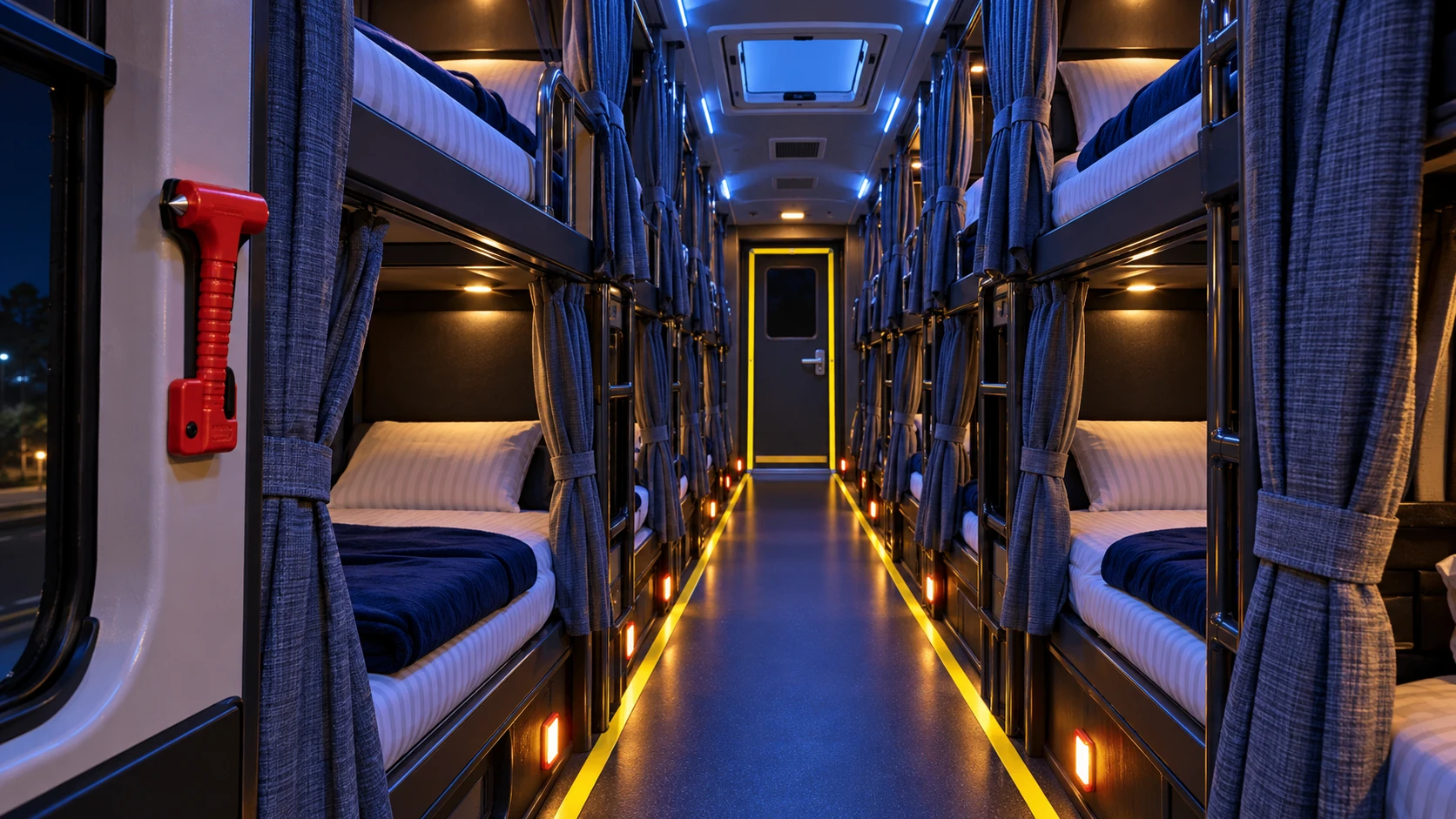
The emergency door, roof hatch and window hammer, that the gangway is clear, that you have a seat belt, and that the driver looks fit. Our sleeper bus guide has the full list.
Who do I call to report rash driving on a bus?
112 in an emergency. On a tolled national highway you can call 1033. We did not find a single national number for reporting a rash driver, so use the operator's helpline on your ticket too.
Which numbers should I call after a crash?
112 for any emergency, 101 for the fire brigade and 108 for an ambulance, which varies by State.
On Tuesday 20 and Wednesday 21 October 2026, three long-distance bus crashes killed well over thirty people in barely a day: a bus and a sand-laden truck met head-on on the Natore-Pabna highway in Bangladesh, a passenger bus hit a divider and overturned on the Indus Highway at Rajanpur in Pakistan, and a bus and a truck collided on the Cairo-Assiut Western Desert Road in Egypt. Two of the three happened in the small hours. In India the picture is the same one we keep writing about: sleeper and long-distance coaches running through the night, on roads where one tired driver, one wrong overtake or one blocked exit decides who gets home. This page sets out what the reports say about the three crashes, what recent Indian crashes and the official 2024 road-accident data show, what the rules actually require, and what a passenger can check before and during a night journey. Last checked: 22 October 2026, around 3 pm IST. Some figures are still moving.
In short
- Natore, Bangladesh, Tuesday 20 October, about 4 am: 12 dead by the revised count (14 was reported first and some outlets still use it), about 30 hurt. Passengers say the bus was being driven by its supervisor; the district probe committee says it had no valid fitness certificate. The cause is not established.
- Rajanpur, Pakistan, Wednesday 21 October, about 5.45 am: 10 dead and 44 hurt, per Rescue 1122. The bus was reportedly speeding when it hit a road divider and overturned. A case was registered against the driver.
- Cairo-Assiut Western Desert Road, Egypt, Tuesday 20 October: 12 dead and 30 hurt (Health Ministry, preliminary) or 13 and 34 (Al-Ahram, via AFP). An investigation is under way; no cause has been reported.
- India, MoRTH 2024: 1,77,175 road deaths; 70.3% of them linked to over-speeding. Buses were the offending vehicle in 11,474 deaths (6.5%), and bus occupants were 3,855 of those killed (2.2%).
- Driver tiredness is not counted as a cause in that report. We could not find a national figure for fatigue, so we do not give one.
The three crashes, as reported
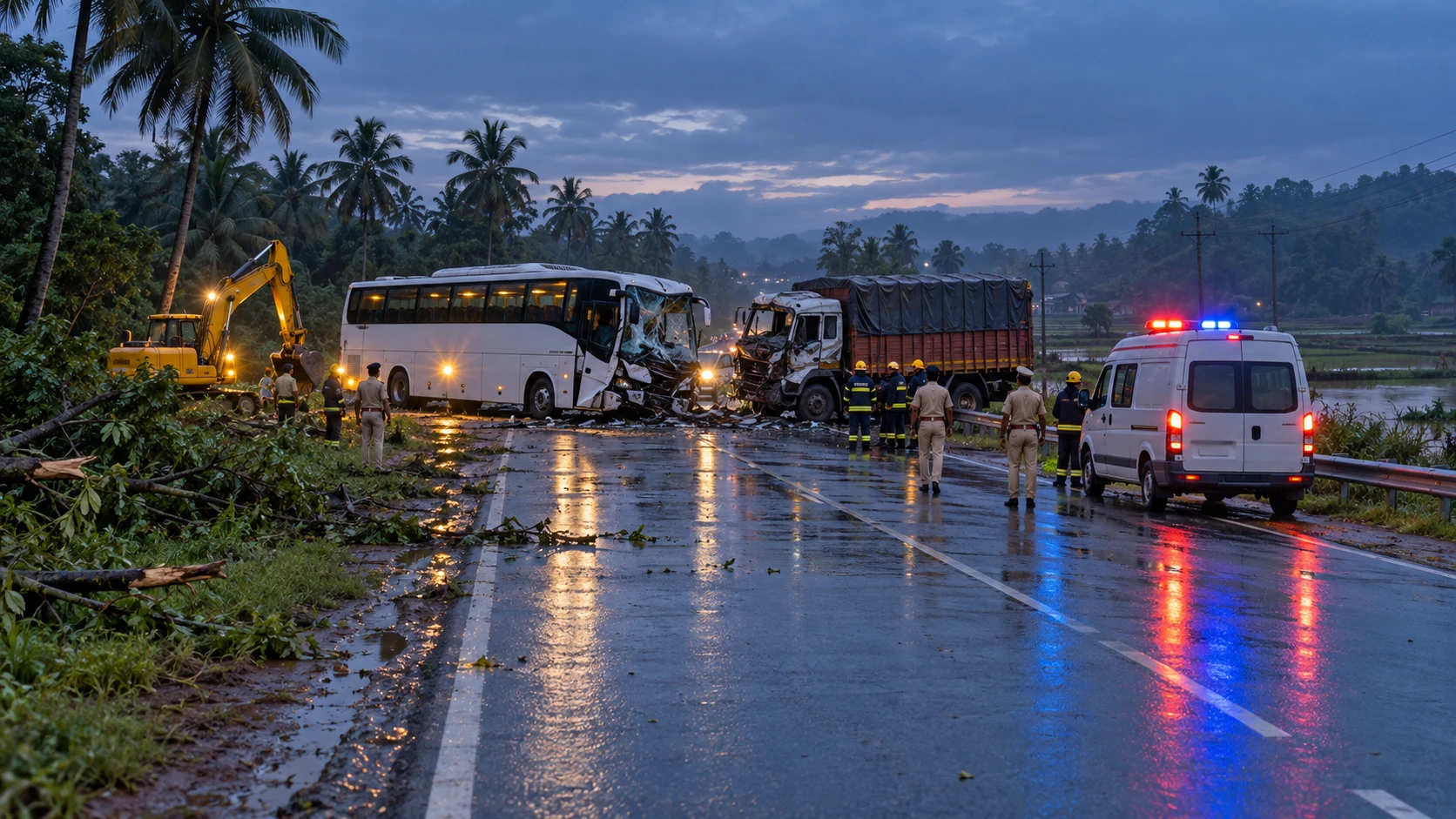
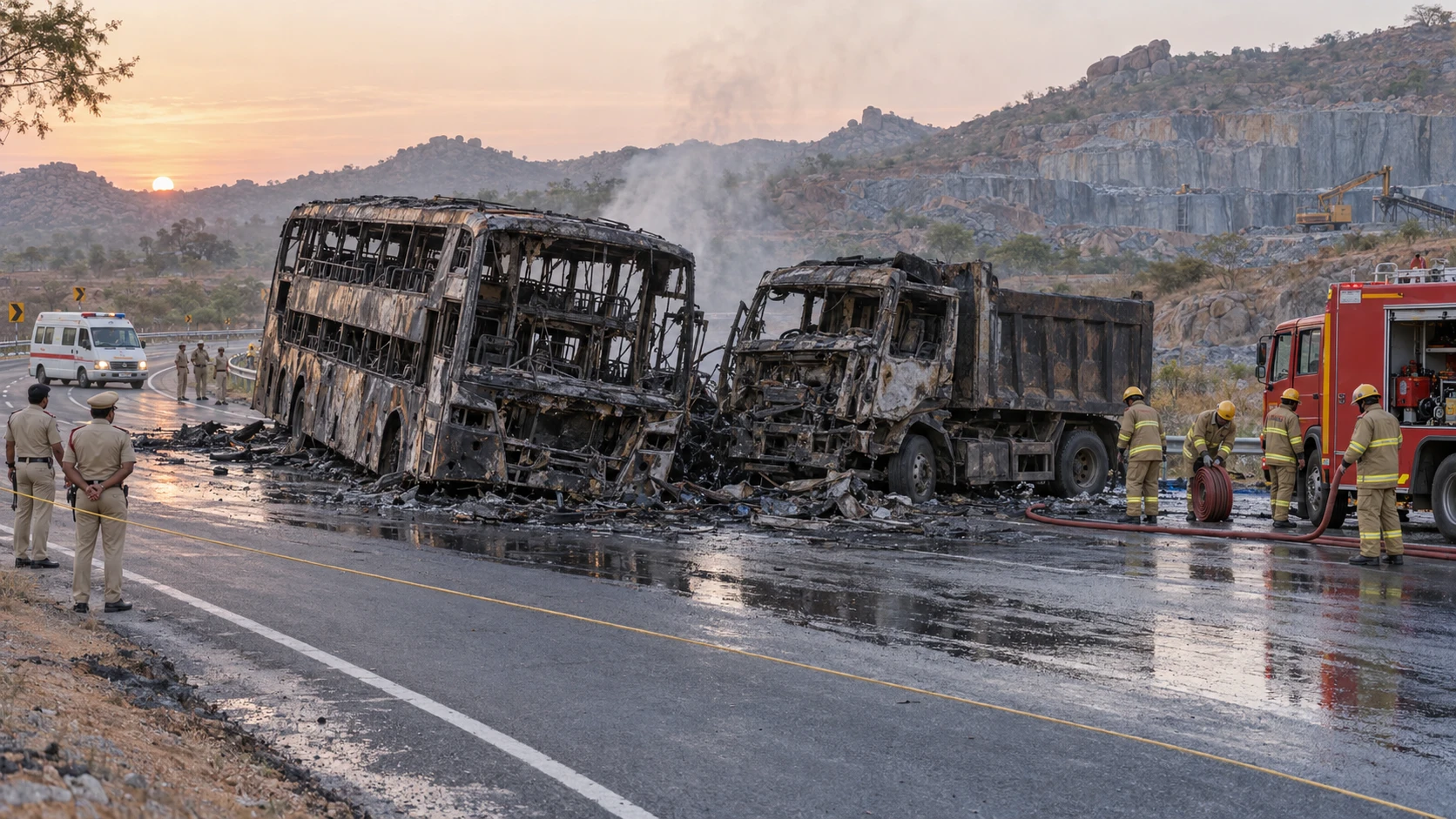
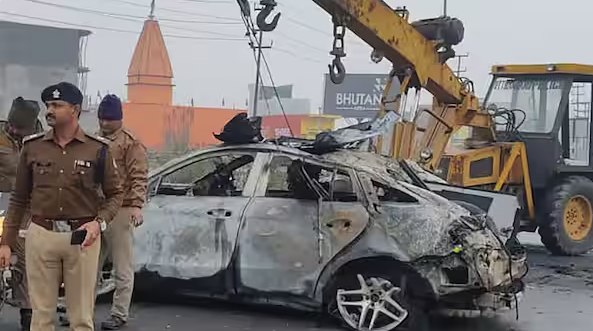
Natore, Bangladesh. A bus of RP Special Transport and a sand-laden truck collided head-on at Banpara, in Baraigram upazila, on the Natore-Pabna highway at about 4 am on Tuesday 20 October. The toll was first reported as 14, with 9 dead at the spot and 5 more in hospitals (Ajker Patrika, Bangla Tribune). By Tuesday evening the Additional Superintendent of Police put it at 12 (Prothom Alo), and bdnews24 and The Business Standard Bangla also carry 12; The Business Standard in English still said 14 on Wednesday. The number of injured is given as 20, 25, 30 or at least 32. We use 12 to 14 and say so.
Three surviving passengers told Prothom Alo that the supervisor took the driver’s seat after a halt at Ishwardi, and that the driver and his assistant went to the back. What the driver was doing there is told two ways: asleep, in the Prothom Alo and Bangla Tribune reports, and chatting, in the headline of a Prothom Alo video. These are passengers’ accounts, not a police finding. A police officer said nothing definite can be said without an investigation. The chief of the district probe committee said the bus was running with an expired fitness certificate, and that the speeding bus was trying to overtake another vehicle when it hit the truck (UNB, via The Business Standard). Police filed a case under the Road Safety Act against two unidentified drivers, although the drivers of both vehicles were among the dead (bdnews24). Our own case study, Natore bus-truck crash in Bangladesh, follows the facts as they come in.
Rajanpur, Pakistan. At about 5.45 am on Wednesday 21 October a passenger bus hit a road divider and toppled over on the Indus Highway at Bangla Hidayat, in Rojhan tehsil, Rajanpur district. Rescue 1122 reported 10 dead (seven men, two women and a girl) and 44 injured, with 10 ambulances and 35 rescuers sent. Some outlets carried 32 to 36 injured and earlier counts of 8 or 9 dead. The bus was reportedly travelling at high speed. The FIR, seen by Dawn, invokes sections 279, 322 and 337 of the Pakistan Penal Code against the driver. The deputy commissioner first said the driver and the owner had fled; later the driver was in police custody, being treated.
Cairo-Assiut Western Desert Road, Egypt. On Tuesday 20 October a bus and a large truck collided near kilometre 55, in the direction of Dahshur Gate. Egypt’s Health Ministry gave a preliminary 12 dead and 30 injured; Al-Ahram, quoted by AFP, gave 13 dead and 34 injured. AFP and Al-Ahram call the bus a tour bus; the ministry says a private-company passenger bus. The front of the bus was torn off, per AFP. An investigation is under way. None of the reports we read gives the hour of the crash or a cause.
So what do the three have in common? Long-distance buses, high-speed highways, a head-on or a roll-over, and a toll that took a day to settle. Whether tiredness played a part in any of them is not known. Only in Natore has anyone alleged it, and that is a passenger’s claim. That is why the rest of this page leans on Indian data and Indian rules rather than on guesses about these three.
India: recent crashes on long-distance and sleeper routes
These are crashes of the last twelve months that we have written up, each checked against at least two reports. Several happened between 3 and 6 am.
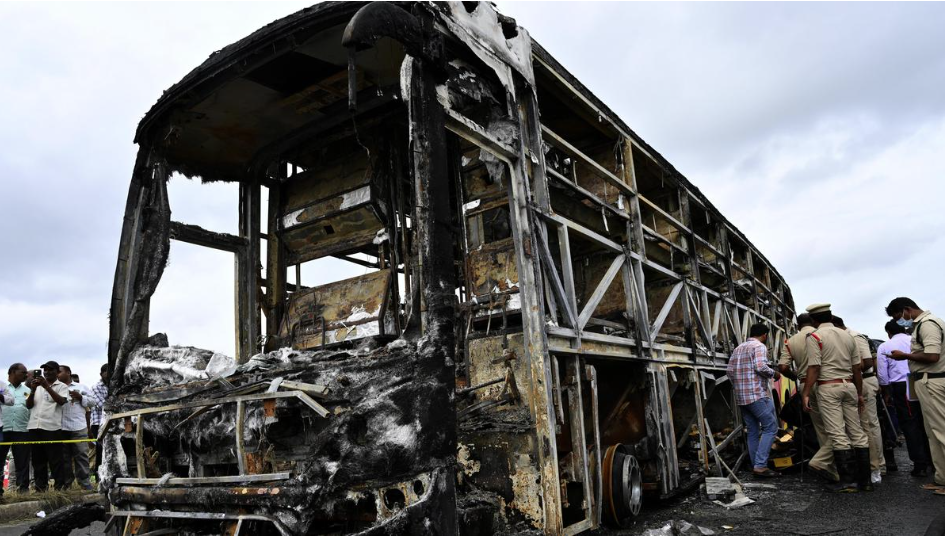
- Kurnool district, Andhra Pradesh, 24 October 2025, about 3 am. A Hyderabad-Bengaluru sleeper bus ran over a motorcycle lying on NH-44 and caught fire; 20 died, 19 of them bus passengers (Hindustan Times, Indian Express). A forensic report said the rider was drunk and his bike had skidded; the bus driver was arrested. Our case study.
- Markapuram, Andhra Pradesh, 26 March 2026, about 5.30 to 6.30 am. A sleeper bus hit a gravel-laden tipper near Rayavaram and caught fire; 14 passengers died (The News Minute, The Tribune). Police later said the driver had no valid licence and arrested him and the owner on 1 April (The News Minute). Our case study.
- Unnao, Uttar Pradesh, 1 July 2026, about 4.30 am. A Bihar-registered sleeper bus going from Haryana to Bihar crashed through the Agra-Lucknow Expressway railing and hit a car; five people in the car died (India TV, ETV Bharat). A Circle Officer said the preliminary view was that the driver may have dozed off; the exact cause was still being investigated.
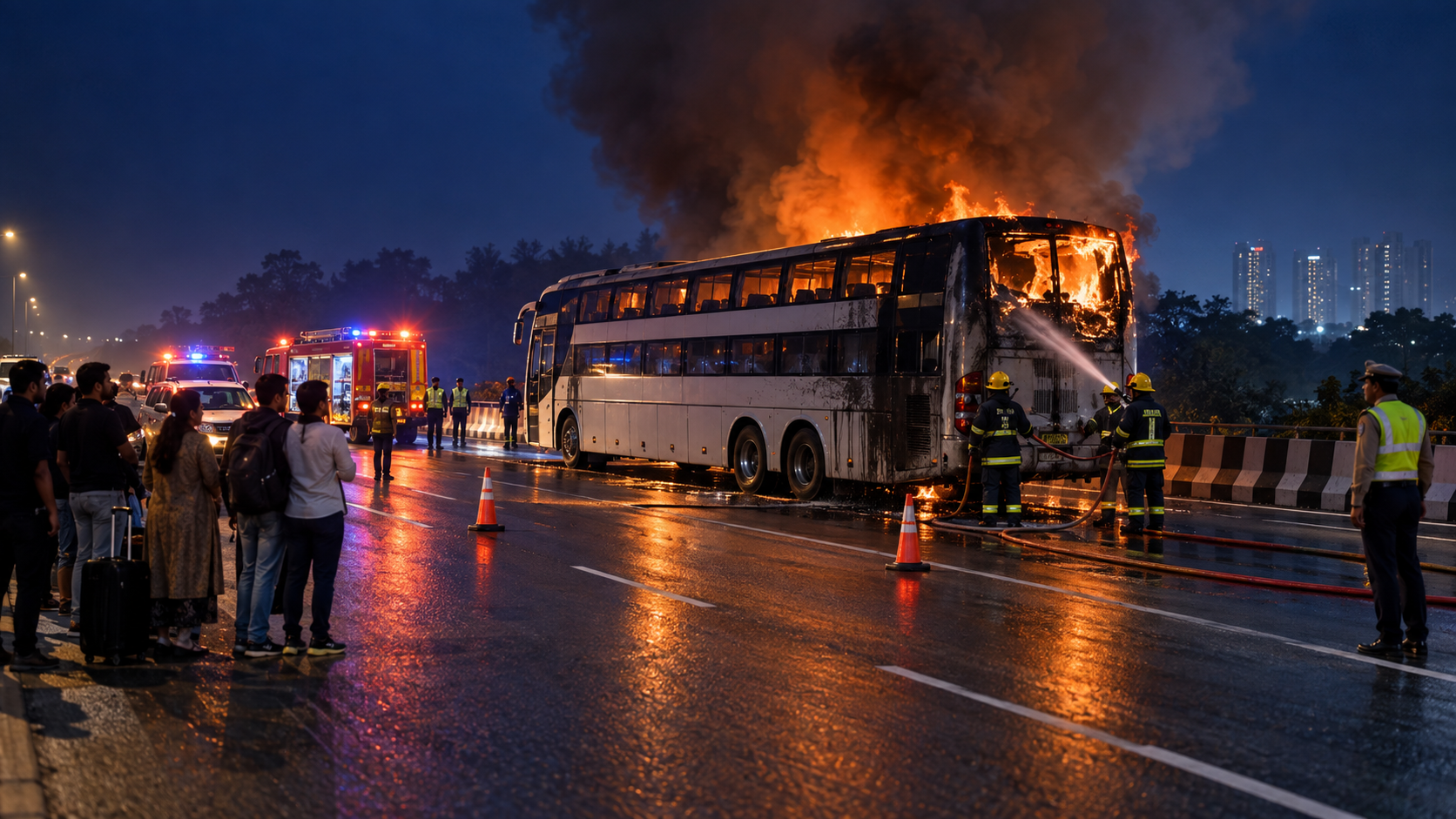
- Greater Noida, Uttar Pradesh, night of 23 to 24 September 2026. A sleeper bus caught fire on the Yamuna Expressway; nine died and 26 escaped. The driver and conductor were arrested, and the unusable emergency exit and luggage in the way are being examined (Hindustan Times, Indian Express). Our case study.
- Periyapatna, Mysuru, Karnataka, 16 October 2026, about 4.30 am. A private sleeper bus and a lorry collided head-on; four died and 31 were hurt, per PTI. The lorry is said to have swerved, but the cause is not confirmed (Deccan Herald, Deccan Chronicle). Our case study.
Note what these show and what they do not. Fire, a drunk rider, an unlicensed driver, a head-on and a possible doze are five different failures. No single cause explains night coach crashes, and in the Unnao case the word “dozed” is a police officer’s early view.
What the 2024 official data say, and what they do not
The Ministry of Road Transport and Highways (MoRTH) report Road Accidents in India 2024 gives these figures, which we read in the report itself. Our guide to India’s road deaths in 2024 and our NCRB state-wise accident deaths page carry more.
- 4,87,707 road accidents and 1,77,175 deaths in 2024.
- Over-speeding was linked to 1,24,522 deaths, which is 70.3% of the total (Table 3.1).
- Buses were the impacting vehicle in 11,474 deaths, 6.5% of the total (Table 4.5). Of those killed, 2,257 were pedestrians and 4,485 were two-wheeler riders.
- People travelling in buses made up 3,855 of those killed, 2.2% of the total (Table 4.4); the 2023 figure was 3,956.
- By time of day, 9.9% of accidents happened between midnight and 6 am (25,001 between 12 and 3 am, 23,398 between 3 and 6 am). The busiest slot was 6 to 9 pm, with 21.1% (Table 7.3). The report labels 6 pm to 6 am as night, and that stretch holds 42.5% of accidents.
Two cautions. First, that time table counts accidents, not deaths; we found no deaths-by-hour table in the report, so we cannot say how deadly the night hours are. Fewer vehicles run at 3 am, so a lower share of accidents then does not mean a lower risk per bus. Second, the report’s list of violations has over-speeding, drunken driving, wrong-side driving, red lights and mobile phones, but no line for driver fatigue or sleep. That is a gap in what India measures, not proof that tired drivers are not a problem. The report does list a new rule, effective for new models of M2 and M3 category passenger vehicles from 1 October 2027 and for existing models from 1 January 2028, requiring driver drowsiness and attention warning systems.
Why night coaches crash
These are the causes the sources above actually point to, with how firmly each is known.
- Speed. Over-speeding is the biggest recorded factor in India’s road deaths (70.3% in 2024). In Rajanpur the bus was reportedly speeding; in Natore the probe chief said the same.
- Overtaking at night. The Natore probe chief said the bus was overtaking when it met the truck. Overtaking against the flow is one of the acts the 2019 amendment lists as dangerous driving.
- Tired or relief drivers. On a single-driver night run, the same man drives through the hours when the body wants to sleep. Karnataka’s transport minister said in December 2025 that his state would ask the Centre for a compulsory four-hour rest for bus and truck drivers on national highways between midnight and 4 am (Akashvani). Andhra Pradesh’s cabinet sub-committee proposed a second driver, with a berth to rest, on routes over 300 km (The South First, April 2026). Both are proposals, not law.
- Who is at the wheel. Natore is alleged to have had a supervisor driving. Markapuram had a driver the police say held no licence. A bus is only as safe as the licence and training of whoever is driving it.
- Unfit buses. Natore’s bus had no valid fitness certificate, per the probe chief and the district commissioner. India’s sleeper-bus fires have involved blocked or undersized exits, which we cover below.
- Fire after a crash. Kurnool and Markapuram began as collisions and became fires. People die in minutes when exits are shut.
What Indian rules say
Driver hours. For years the limits for bus crews were in the Motor Transport Workers Act, 1961. Its text, which we read, says an adult worker may not work more than eight hours a day and forty-eight hours a week (section 13), with a longer limit of ten hours a day and fifty-four hours a week, with approval, on notified long-distance routes. No stretch of work may exceed five hours before a rest of at least half an hour (section 15), there must be nine consecutive hours of rest between duties, and the day’s spread-over may not exceed twelve hours (section 16). That Act is one of thirteen repealed by the Occupational Safety, Health and Working Conditions Code, 2020, which the Government announced as in force from 21 November 2025. Section 25 of the Code sets eight hours a day for a worker and leaves the intervals and spread-overs to be notified by the government. We did not find, and so do not state, the final numbers notified for drivers under the new Code. Until you see them, treat the 1961 figures as the old standard and not as today’s settled law.
The 2019 amendment to the Motor Vehicles Act. The Motor Vehicles (Amendment) Act, 2019 received assent on 9 August 2019, and its sections came into force by notification. We read its text. It made dangerous driving (section 184) an offence punishable with imprisonment of six months to one year, or a fine of Rs 1,000 to Rs 5,000, or both, and added to the definition causing alarm or distress to others on the road. The explanation to the section lists jumping a red light, a handheld device while driving, overtaking contrary to law and driving against the flow of traffic as dangerous driving. A repeat offence carries a fine of Rs 10,000. It also inserted section 194A, a fine of Rs 200 for each passenger above the number allowed in the registration certificate or permit, with the vehicle not allowed to move until the extra passengers are off-loaded, and section 194B, a fine of Rs 1,000 for driving without a seat belt or carrying passengers without seat belts. A State may exclude transport vehicles that carry standing passengers from the seat-belt rule.
Sleeper buses. Sleeper coaches must follow the bus body code AIS-052 and the sleeper standard AIS-119. According to the Government’s own statements, AIS-119 was revised in phases: the first phase from 1 December 2023, and a second for vehicles built after 1 July 2025 (PIB, 24 July 2024). The same release says fire detection and suppression under AIS-135 has covered the passenger compartment of long-distance buses since 1 October 2023. After the Jaisalmer and Kurnool fires, the Ministry told Parliament in February 2026 that it had advised all States to check AIS-052 and AIS-119 at registration and fitness inspection. In the Jaisalmer fire it noted emergency doors below the minimum size, seats blocking the way to the emergency door, one roof hatch instead of two and no fire detection and suppression system as required. At the time, 49,616 sleeper coaches were registered (PIB, 11 February 2026). Our guide to sleeper bus safety in India sets out the exits, hammers and markings you can check yourself.
Before you book and board
- Book with a licensed operator and note the bus’s registration number. If the bus that arrives is not the one you booked, or looks different, ask why before you board.
- Fasten your seat belt even when the bus is full and no one else does. The law already asks for it in section 194B, and our guide on helmet and seat belt use shows why it matters.
- Look for the emergency door, the roof hatch and the window hammer as soon as you sit down. Tell the conductor if an exit is locked, blocked by luggage or covered by a curtain.
- Keep your luggage out of the gangway and away from the emergency door.
- On a night run, ask how many drivers there are and whether the one who started will drive all night. Do not pretend to be a regulator; just ask, and notice the answer.
- Do not board if the driver looks unwell, smells of alcohol or is clearly exhausted. Take the next bus, or the day bus. It is one lost ticket, not a lost journey.
- Sleep in a seat or berth with your seat belt on if the bus has one, and wear shoes you can run in.
- Our night driving plan has more for people who drive themselves.
During the journey
- If the driver is drifting between lanes, swerving, speeding or overtaking dangerously, tell the conductor at once and ask the driver to slow down. If they ignore you, call 112.
- On a national highway you can also call 1033, the NHAI helpline, which NHAI says serves tolled stretches of national highways. It is not a number for every road.
- Do not film from the berth and leave the bus. If you must record rash driving, record the registration number, the place and the time, and then call.
- We did not find a single national number to report a rash driver, so use 112 and the operator’s own helpline from your ticket.
If a bus crashes
- Get out first, and help second. If there is smoke or fire, get everyone moving and use the emergency door and the roof hatch.
- Move well away from the road. At night, vehicles behind a crash can hit people standing on the carriageway.
- Call 112, the national emergency number, and say the road name, the nearest kilometre stone or town, the direction the bus was going, and how many may be inside. The ambulance number 108 works in many States, but the service varies by State, so 112 is the safe first call. Fire is 101.
- Do not move a badly hurt person unless there is fire or another immediate danger. Press firmly on heavy bleeding with a clean cloth. Our road accident first aid guide has the steps.
- If someone is burnt: Cool the burn under cool, clean running water for 20 minutes. No ice, toothpaste, oil or butter.
- If you stop to help at a crash as a bystander, you are protected under the Good Samaritan rules. Read our guide to bystanders’ legal obligations and our safe-help guide for crash witnesses.
More on the road-safety picture
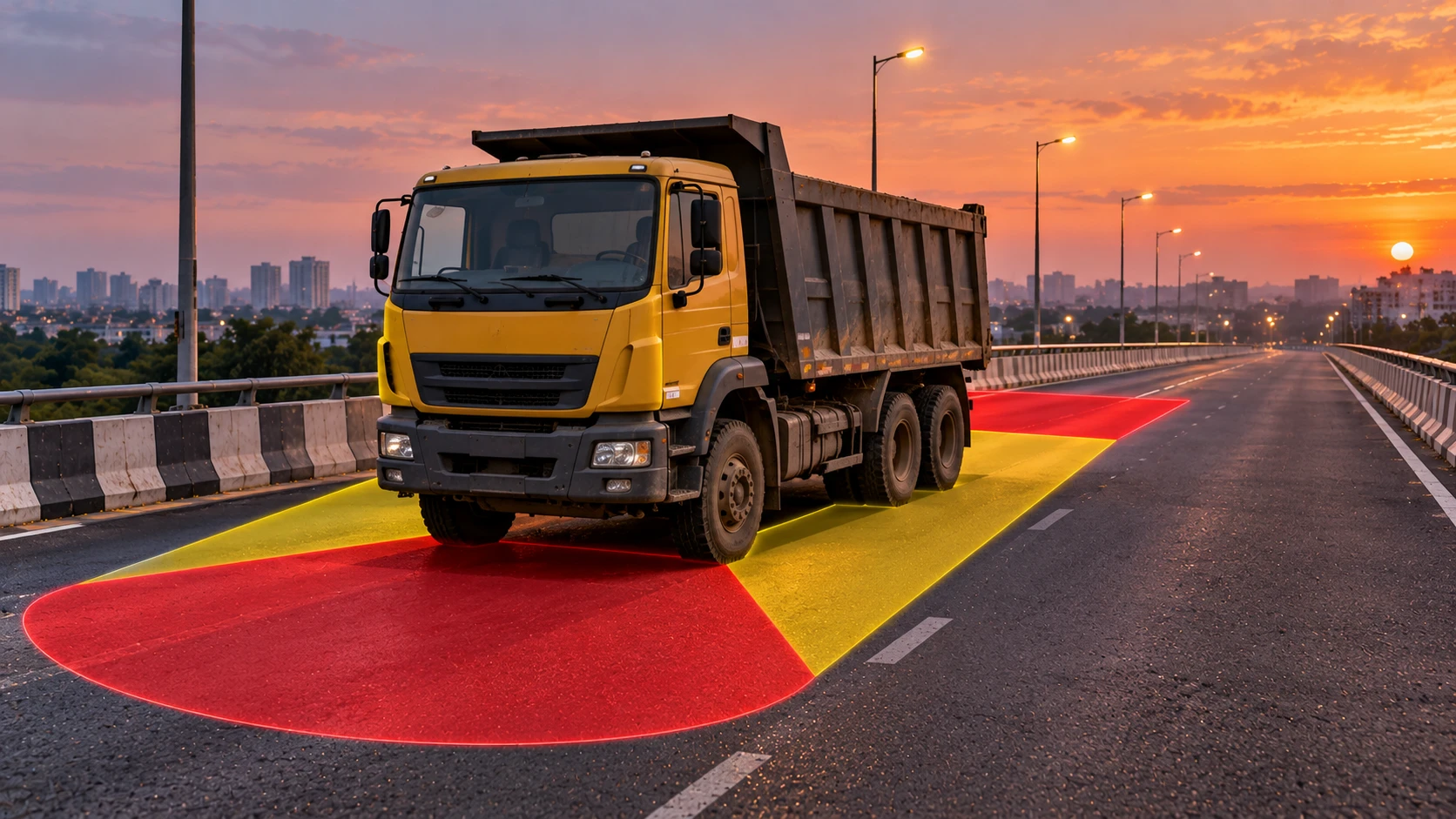
For another side of the same problem, read our blog on dumpers, trucks and two-wheelers and their blind spots and our look at Gujarat’s daily road-death numbers. Our guide to safety in buses, trains and metros has the NCRB view of public transport.
What is still not known
- The final death toll at Natore (12 or 14), who was at the wheel, whether the driver was asleep or chatting, and the probe committee’s report.
- The cause at Rajanpur beyond the FIR’s statement of speed, and the final injured count.
- The cause, the hour and the final toll of the Egypt crash.
- Whether the driver at Unnao dozed off, and the cause at Periyapatna.
- The driving-hour limits notified under the new Occupational Safety, Health and Working Conditions Code, and whether any State will make a night rest or a second driver compulsory.
- Any national figure for crashes caused by driver fatigue.
We will update this page if the picture changes. Last checked: 22 October 2026, around 3 pm IST.
What needs attention
- Speed is the largest recorded factor in India's road deaths, 70.3% in 2024. Rajanpur and Natore both involve reported speed.
- Sleeper and night coaches in India fail in different ways: collision, fire after collision, blocked exits, an unlicensed driver, a possible doze. No single cause explains them.
- In Natore the question of who was driving is alleged by passengers and untested; passengers differ on whether the driver was asleep or chatting.
- MoRTH's violation table has no line for driver fatigue, so India has no official national count of fatigue crashes.
- Hours of work for drivers are in labour law, which is in transition from the 1961 Act to the OSH Code 2020; the notified driver-specific limits were not found.
- Sleeper coach standards have been tightened in phases, but the Ministry itself found non-compliant exits and fire systems after Jaisalmer, so the rule on paper is not the bus at the stand.
- Early counts changed within a day (Natore 14 to 12; Rajanpur 8 or 9 dead to 10; Egypt 12 to 13). Read the time of any figure.
Controls that reduce risk
- Passenger: book with a licensed operator, note the registration number, find the emergency door, hatch and hammer, and wear the seat belt.
- Passenger: speak to the conductor if the driver is speeding or drifting, and call 112 if it continues.
- Family: share the bus number and expected arrival time with someone at home.
- Operator: use a rested relief driver on night runs, do not let a non-licensed person drive, keep exits clear and the fitness certificate valid.
- Regulator: check AIS-052 and AIS-119 at registration and at every fitness inspection, as the Ministry has advised States.
- Bystander: call 112, stay clear of traffic, press on heavy bleeding and do not move a badly hurt person.
Common unsafe practices
- Boarding a night bus without looking at the emergency exits.
- Keeping bags in the gangway or against the emergency door.
- Not wearing a seat belt because no one else does.
- Ignoring a driver who looks unwell, sleepy or drunk.
- Staying silent while the driver overtakes recklessly or speeds.
- Assuming a single driver can safely drive all night.
- Taking a bus that is not the one you booked.
Leave a comment