

Quick answers
Can a hotel stay open while it is being renovated?
NBC 2005 Part 4, clause 3.4.3.1, allows a building or part of it to be occupied during construction, repairs, alterations or additions only if all means of exit and fire protection measures are in place and continuously maintained for the occupied part. NBC 2016 was not opened, so check the current text.
What should I ask a hotel before accepting a room?
Ask whether any work is going on in the building, and on which floor, and ask for a room away from it. Walk to both staircases, count the doors from your room and look for blocked exits. These are our suggestions.
What is hot work?
Welding, cutting, grinding and any work that makes flame, sparks or heat. NFPA in the United States asks for a permit, clearing combustibles from 11 metres or moving the work, and a fire watch for at least 60 minutes after the work ends. That is American practice and not an Indian rule.
What should I do if there is smoke in the hotel corridor?
The Hong Kong Fire Services Department says to check the corridor first. If it has heavy smoke or abnormal heat, return to the room, stay low, seal door cracks with wet towels, turn off the air-conditioning and signal rescuers with a torch. Never use the lift. Call 112 and the front desk.
Do renovations in a high-rise building need the fire authority's approval?
NBC 2005 Part 4, clause 3.2.7, says any addition, alteration or construction of cubicles or partitioning for a floor area above 500 square metres in a high-rise building needs the approval of the local fire authority. Check the current edition and your State's rules.
What happened at the Ghaziabad hotel fire?
On 27 October 2026 a fire began on an upper floor at the rear of the Banana Tree hotel in Sahibabad where renovation was under way, spread through 12 rooms and 18 people were rescued, according to ETV Bharat. No casualties were reported and the cause had not been determined. Other reports differ on the time and floor.
Who do I call in a fire?
112 covers fire, police and ambulance, and 101 is the fire service. Call the hotel front desk as well with your room number.
Hotels get tired and need fresh paint, new rooms, a better lobby. Owners rarely want to shut the whole place while the work goes on, so guests keep checking in while the painters, welders and carpenters are a floor away. That arrangement can work. It can also go wrong very fast, and the guest on the third floor is the last to know.
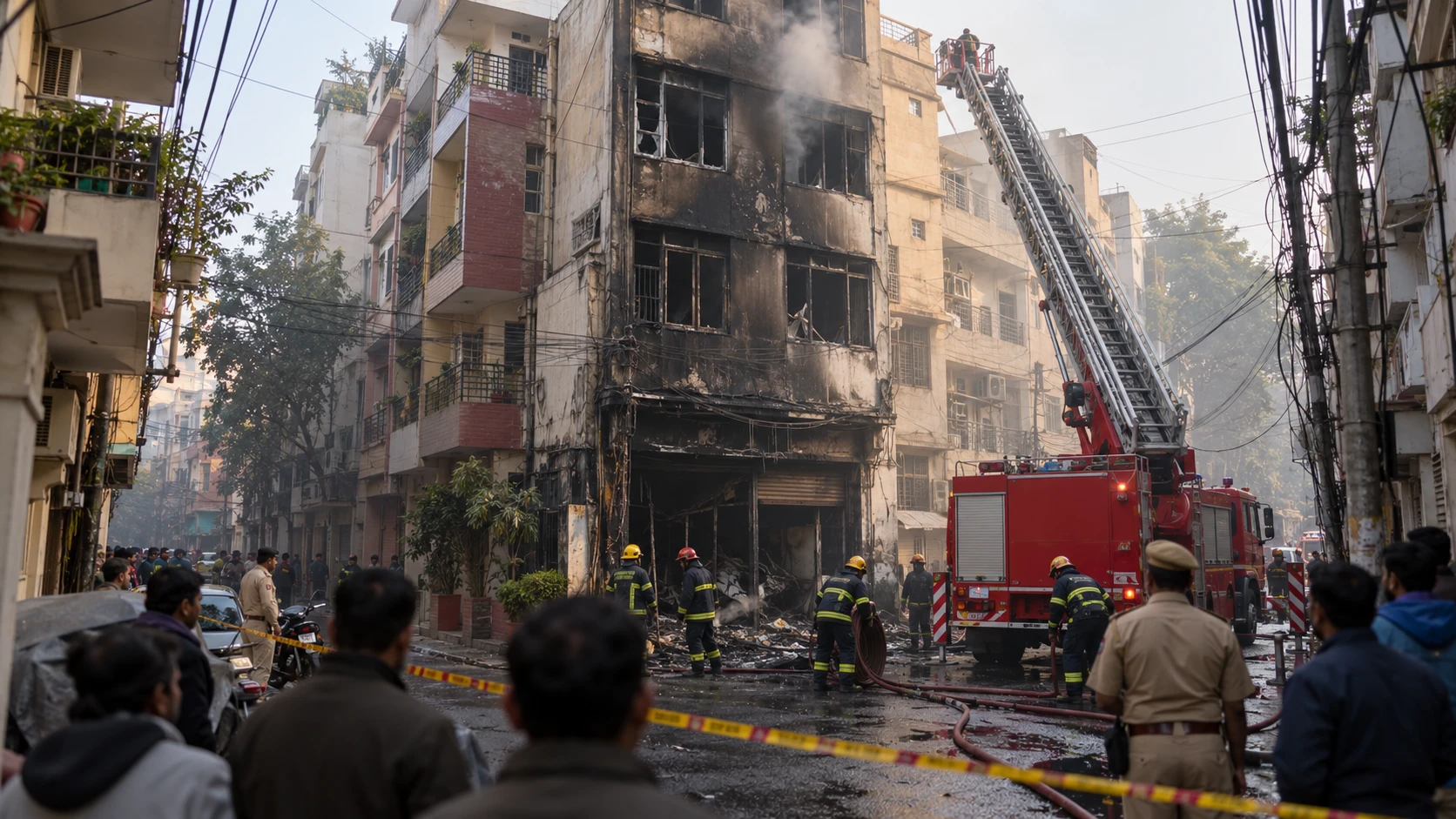
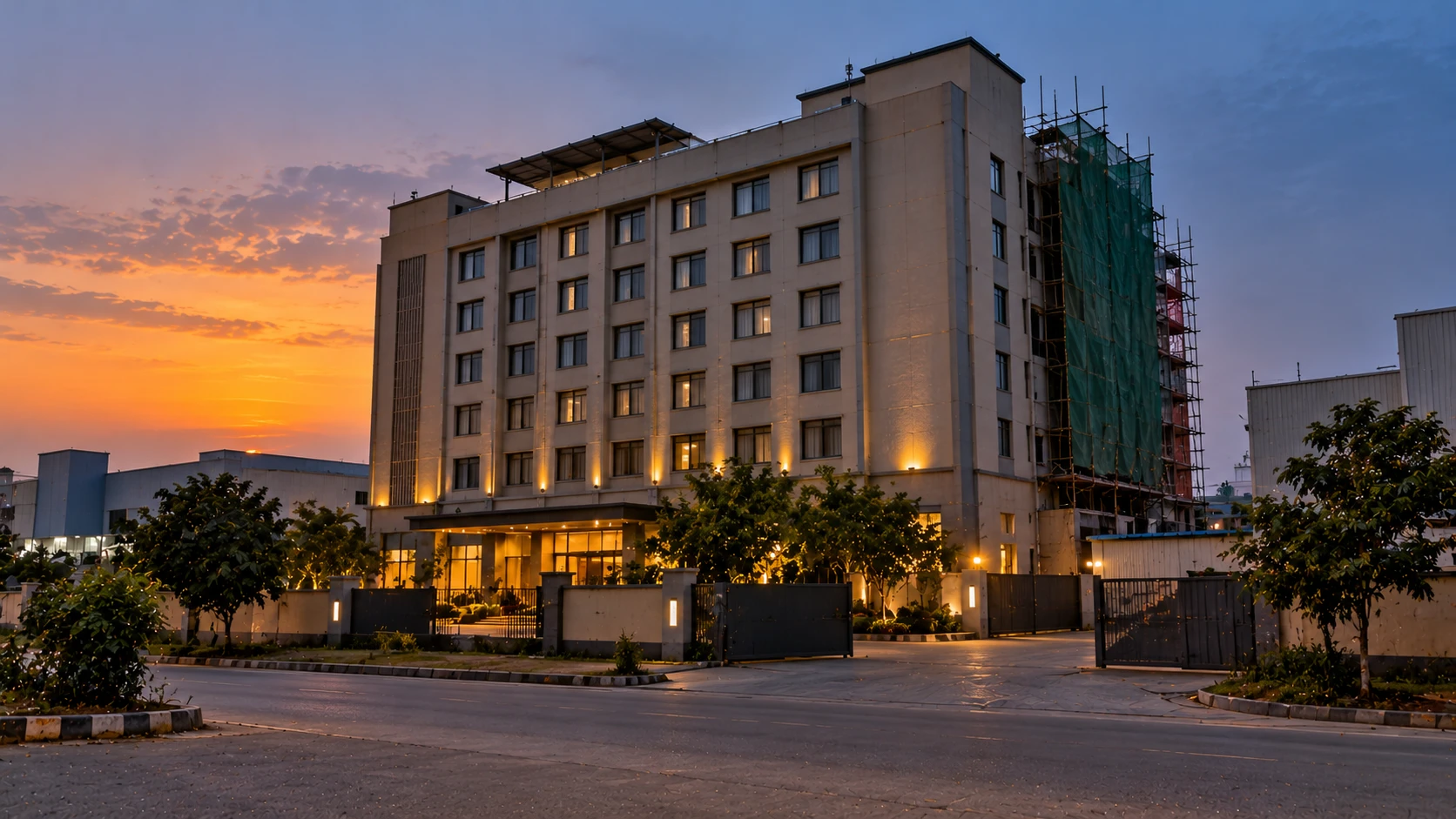
On Tuesday, 27 October 2026, the fire service was called at about 1.30 pm to the Banana Tree hotel in the Site-4 Industrial Area at Sahibabad, Ghaziabad, according to ETV Bharat. The report says the fire began on an upper floor at the rear of the building, where renovation was under way, and spread through 12 rooms. Eighteen people trapped by smoke were brought out. One team went in to rescue guests while another fought the fire from three sides, windows were broken to let the smoke out, and crews used the hotel’s own firefighting system and carried hose lines up the stairs. Nine fire tenders and a hydraulic platform from three stations were used. No casualties were reported, and the cause had not been determined. Ommcom News gives the time as about noon and the floor as the fifth, so reports differ on those. We do not know whether the guests were staying on the floor under renovation, whether the alarms went off, or whether the hotel had a fire NOC, and we do not guess. This guide takes the pattern, which is renovation in a building that is still in use, and asks what the rules say and what guests and staff can do.
In short
- A building can be occupied during repairs and alterations only if every exit and every fire protection measure is in place and kept working for the occupied part. That is what the National Building Code says in the 2005 edition we could read.
- Hot work is the usual starting point. Welding, gas cutting, grinding and torches need a permit, cleared surroundings and someone watching for long after the work ends.
- Guests can ask before they accept a room. Is any work going on, on which floor, and are both staircases open?
- Staff and contractors should never switch off alarms, block stairs or prop fire doors open for convenience.
- If there is smoke, leave by the stairs if the corridor is clear. If it is not, stay in the room, seal the door and call for help.
Why renovation makes a hotel more dangerous
Think of what a renovation floor holds. Cans of thinner and adhesive. Stacks of plywood, foam, packaging and cloth. Temporary wiring running along the floor. Doors taken off, partitions opened, ceilings cut. The staircase becomes a store room and the corridor a workshop. Meanwhile the smoke alarms in the area may be covered to stop them going off from dust, and nobody remembers to uncover them. We list these as the things to look for, from how such work is commonly done. They are not findings about the Ghaziabad hotel.
The National Fire Protection Association (NFPA) of the United States says hot work, meaning welding, cutting and anything that makes flame, sparks or heat, joins all three sides of the fire triangle. Its fact sheet lists construction materials such as wood, plastic and insulation, fuels such as paint and solvents, and simple combustibles such as rags, paper and cardboard among the fuels. It says an American study of 2014 to 2018 found about 4,580 structure fires a year involving hot work, with 22 civilian deaths and 171 civilian injuries a year. That is United States data and says nothing about India. We could not find an Indian figure for fires caused by hot work.
What the National Building Code says
The National Building Code of India is issued by the Bureau of Indian Standards. The current edition is NBC 2016, which we could not open. Updated 28 October 2026: a Bureau of Indian Standards notification in the Gazette of India dated 30 April 2026 establishes SP 7:2026 (National Building Construction Standards 2026) and withdraws SP 7:2016, the National Building Code of India 2016. Our guide to fire safety laws in India covers the change; read the rest of this page with it in mind. We read Part 4, Fire and Life Safety, of NBC 2005 from the Public.Resource.Org copy, and the clauses may be numbered or worded differently in 2016, so please check the current text. The 2005 edition says the following.
- Clause 3.4.3.1. A building or portion of it may be occupied during construction, repairs, alterations or additions only if all means of exit and fire protection measures are in place and continuously maintained for the occupied part of the building.
- Clause 3.2.7. Alterations, modifications and renovations are to be done so as to conform with the safety requirements of new buildings, and they must not bring the level of fire and life safety below what existed earlier. In the event of alteration, permission of the Authority is needed. Any addition, alteration or construction of cubicles or partitioning for a floor area exceeding 500 square metres in high-rise buildings needs the approval of the local fire authority.
- Clause 3.4.3.2. A high-rise building under construction has to be given a dry riser of at least 100 mm, drums of 2,000 litres of water with two fire buckets on each floor, and a water tank of at least 20,000 litres, all kept in good working condition.
Read the first clause slowly. It does not say that works may not go on in an occupied hotel. It says the occupied part has to keep its exits and its fire protection, throughout. That is a standard anyone can ask about. A hotel owner or manager who has just started a renovation should be able to say which staircase, which alarm zone and which sprinkler section will stay live, and who checks every morning.
Hot work, the permit and the watcher
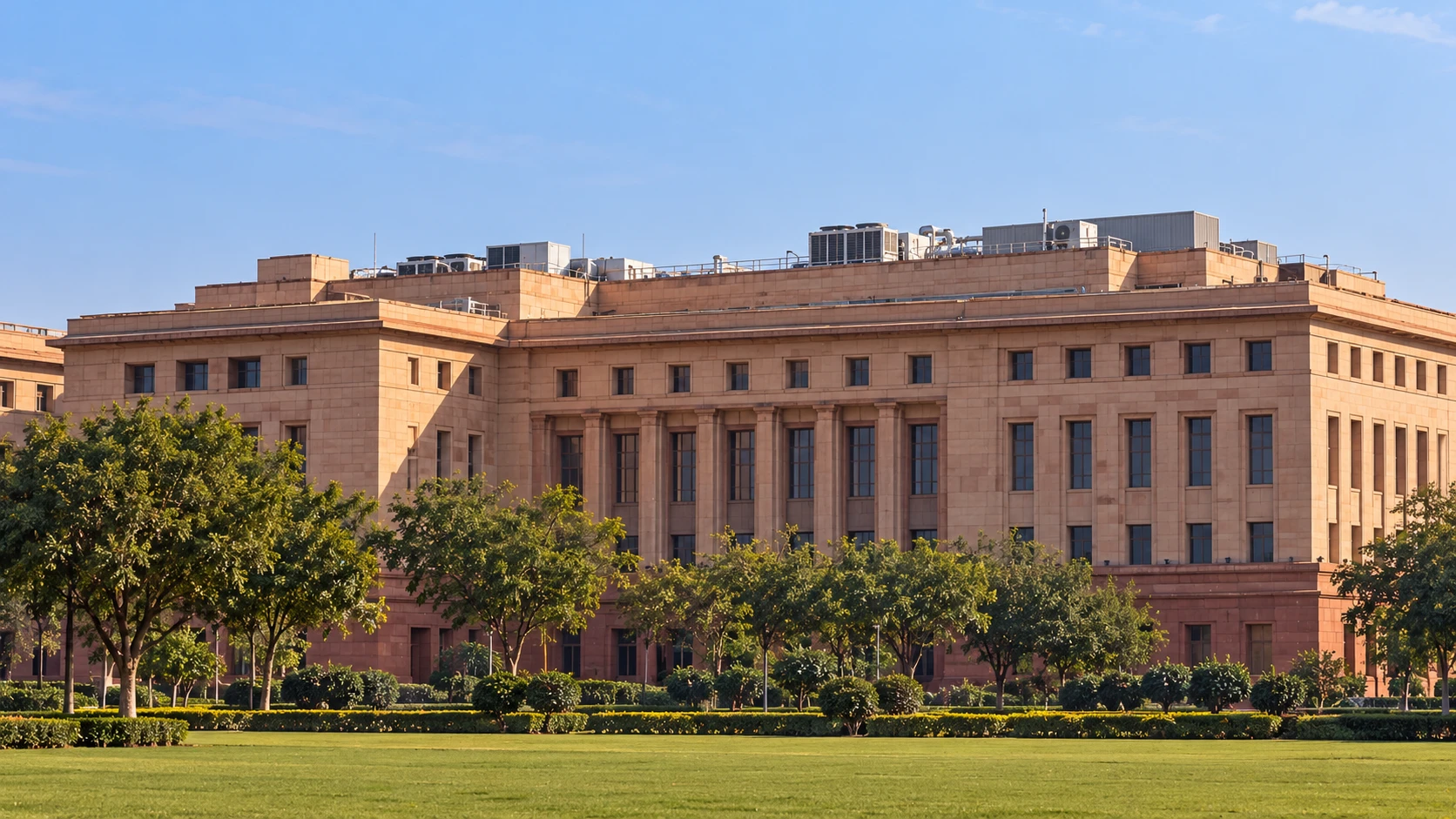
The NFPA fact sheet describes a hot work permit that helps the person who authorises the work, the operator and the fire watch recognise hazards. It speaks of clearing combustibles from a radius of 35 feet, which is 11 metres, or moving the work to an area without combustibles, using pads, blankets or curtains, and keeping the fire watch on site for at least 60 minutes after the work ends, because fires can start after the work is complete. These come from an American standard, NFPA 51B, and are not an Indian rule. We use them as a yardstick, since we did not find an Indian equivalent that we could open. In the North Block case in Delhi, a rooftop AC boiler caught fire during welding work. The point is that a fire may start from a spark that fell some distance away or into a gap. It may also start well after the person with the torch has gone for lunch.
Five checks before you accept the room
- Ask at the desk whether any work is going on in the building, and on which floor. If the answer is yes, ask for a room well away from it. Many people find it awkward to ask, but you are paying and it is a normal question.
- Walk to both staircases before you unpack. Count the doors from your room to the nearest exit so you can find it in the dark. The Hong Kong Fire Services Department advises guests to get to know the means of escape.
- Look at the stairs and the corridor. Paint tins, ladders, plastic sheets, bags of cement or locked exit doors are a warning. Do not take the room if an exit is blocked, and say so to the manager.
- Look up in the corridor and the room. A detector with a bag or cap over it, or a hose reel with its door taped shut, is something to report. This is our suggestion, not a standard.
- Read the evacuation notice on the door, and note your floor, the exits and the assembly point. If the room has no notice, ask for one. Our family fire escape plan guide and evacuation plan guide help you make one for yourself.
If the alarm goes or you smell smoke
The Hong Kong Fire Services Department page on hotel fires says that most of the time the best thing in a fire is to leave the hotel as soon as possible. It says to check the corridor first. If there is heavy smoke or abnormal heat, do not go out. If every stairway is affected, return to your room, stay low where the air is cleaner, use wet towels or sheets to seal cracks around the door, and turn off the air-conditioning. It says to signal rescuers by waving a torch and shouting, and never to use the lift. Add a call to 112 and to the front desk with your room number. That call is our addition, since the page does not mention it. We could not find an Indian official page with this detail for hotel guests.
Take your phone, your key and your shoes. Close the door behind you when you leave, since a closed door slows smoke and fire. Go down the stairs, not up. Do not go back for luggage.
What staff, managers and contractors should do
- Keep exits free. No tools, scaffold poles, cement bags or paint on the stairs or in the corridors.
- Do not isolate alarms or sprinklers without telling the fire service and having a plan, a fire watch and a date to restore them. Our guide on fire safety maintenance for building owners covers keeping systems working after approval.
- Do not keep guests on the floor under work or directly above it. If you must keep the hotel open, keep the work and the guests in separate parts with a fire-resistant separation (our suggestion) and keep a log of what is open.
- Tell the fire authority before major alterations, as NBC clause 3.2.7 (2005 edition) asks for approval in high-rise buildings above 500 square metres.
- Run a hot work permit with a watcher and a stand-by extinguisher, and walk the floor an hour after the last spark.
- Brief every night-shift employee on where work is going on, so no one has to guess in the dark.
We saw how a hotel fire goes when a building has one way out in our Malviya Nagar case, and how well a lodge evacuation can go in the Tarapith case. The Tarapith fire was in a lodge room and has no link to renovation in the reports we read.
The Indian numbers, and their limits
NCRB recorded 5,888 deaths from accidental fires in India in 2024, down from 6,891 in 2023, of which 1,012 and 1,673 respectively were put down to electrical short circuits. The tables do not say how many were in hotels or in buildings under renovation, so they give the size of the fire problem and nothing about this hazard.
What we could not confirm
- The cause of the Ghaziabad fire, the floor on which it began, the time it was reported and whether any guests were staying on the renovation floor. Reports differ.
- Whether the hotel had a fire NOC or working alarms.
- What NBC 2016 says. We read the 2005 text.
- An Indian official standard for hot work permits. The permit and fire watch figures here are American.
- An Indian official page of advice for hotel guests. The escape advice is from a Hong Kong government page.
- We found no public Instagram, Facebook or LinkedIn video of the Ghaziabad fire that we could open and match, so the videos below are from YouTube. Two are Hindi news videos about Ghaziabad.
Do this today
The next time you check in, spend two minutes. Ask whether any work is going on, walk to both stairs, count the doors and look at the notice on the back of the door. If you run a hotel or a building that is being renovated, write down which exits, alarms and sprinklers stay live, and check them every morning before the first worker enters. Checked 28 October 2026.
What needs attention
- At Sahibabad, Ghaziabad, on 27 October 2026 a fire began on an upper floor under renovation and spread through 12 rooms; 18 trapped people were rescued and no casualties were reported; the cause was not determined.
- NBC 2005 Part 4 allows occupation during repairs and alterations only if all exits and fire protection measures are in place and continuously maintained for the occupied part.
- NBC 2005 Part 4 says alterations must not lower fire and life safety below the earlier level and, in high-rise buildings, need the local fire authority's approval above 500 square metres.
- NFPA (US) guidance asks for a hot work permit, clearing combustibles from 11 metres and a fire watch of at least 60 minutes after work ends; this is American practice and not an Indian rule.
- A Hong Kong Fire Services Department page advises leaving at once if the corridor is clear, and sealing the room and signalling if smoke blocks every stair.
- NCRB recorded 5,888 deaths from accidental fires in India in 2024 (6,891 in 2023); the tables do not split by hotels or renovation.
Controls that reduce risk
- At check-in, ask whether any work is going on in the building and on which floor.
- Walk to both staircases and count the doors from your room.
- Do not accept a room if an exit is blocked, and tell the manager.
- Read the evacuation notice and save 112 on your phone.
- If you run a hotel, write down which exits, alarms and sprinklers stay live during work and check them every morning.
- Run a hot work permit and fire watch for every welding or cutting job.
Common unsafe practices
- Keeping guests on, or directly above, a floor under renovation.
- Switching off or covering smoke alarms and sprinklers during dusty work and forgetting to restore them.
- Storing paint, thinner, wood, foam or packaging on stairs or in corridors.
- Welding or cutting without a permit, a watcher or cleared surroundings.
- Propping fire doors open or locking exit doors.
- Using the lift in a fire.
- Going back for luggage.

Leave a comment