
Quick answers
What to do first if a fire starts at home?
Raise the alarm and warn others without delaying your own escape. Leave by a safe route, avoid routes affected by smoke or heat, stay out and call 112 from safety.
Can I use the lift during a building fire?
In an ordinary building fire, use the appropriate stairs rather than a lift, unless a specifically designed evacuation system and the responsible authority direct otherwise.
What to do if the fire escape route is blocked?
Move away from smoke, close a door between you and the fire if safe, signal your location and call 112. Do not jump or enter smoke to retrieve property.
What information should I give when calling 112 for a fire?
Give the full address, floor, entrance, number of people who may be inside and any known hazards. Stay available to direct responders without re-entering the building.
Escape comes before belongings
Early warning gives people time to act, but smoke and heat can make a familiar route unusable. Know the usable exits from your home or workplace, how to alert others and where to meet outside. A building’s actual layout and local fire plan determine the route; never assume that every door or stair remains safe during a fire.
When you notice fire or smoke
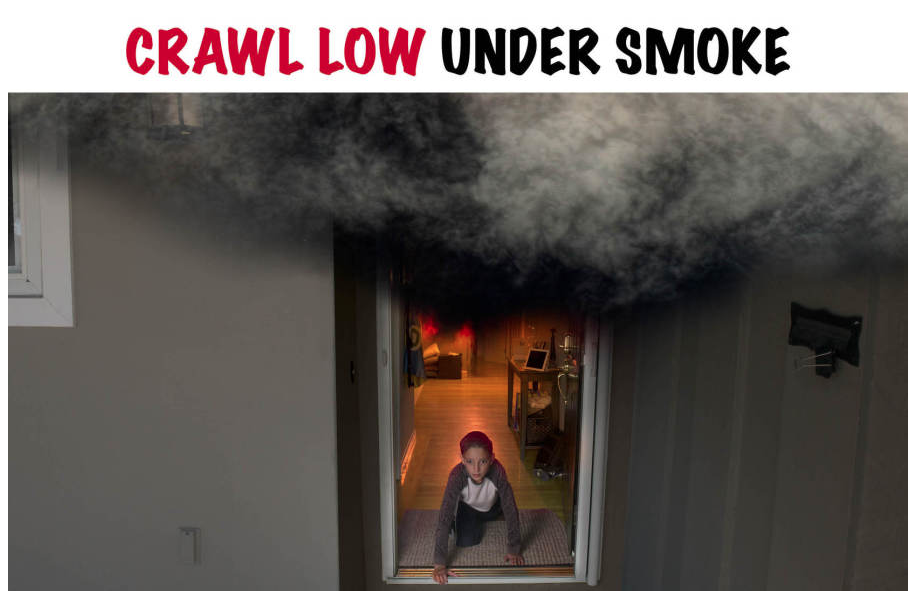
Raise the alarm and warn others without delaying your own escape. Leave by a safe route and stay out. Avoid a route affected by smoke or heat. In an ordinary building fire, use the appropriate stairs rather than a lift unless a specifically designed evacuation system and the responsible authority direct otherwise. If escape is blocked, move away from smoke, close a door between you and the fire if safe, signal your location and call 112. Do not jump or enter smoke to retrieve property.
Call from safety
India’s 112 system can dispatch fire and other emergency services. Give the full address, floor, entrance, number of people who may be inside and any known hazards. Stay available to direct responders without re-entering. Do not attempt to fight a growing fire. A portable extinguisher is for an appropriate small, early-stage fire only when the user is trained, has the right equipment and has a clear escape route.
Make the plan work for everyone
Test warning arrangements as required, maintain exits and equipment, and practise how children, visitors and people needing assistance will leave. Correct blocked routes or failed devices promptly and seek competent local advice on the applicable rules. This is general escape guidance, not certification that any particular building is safe.
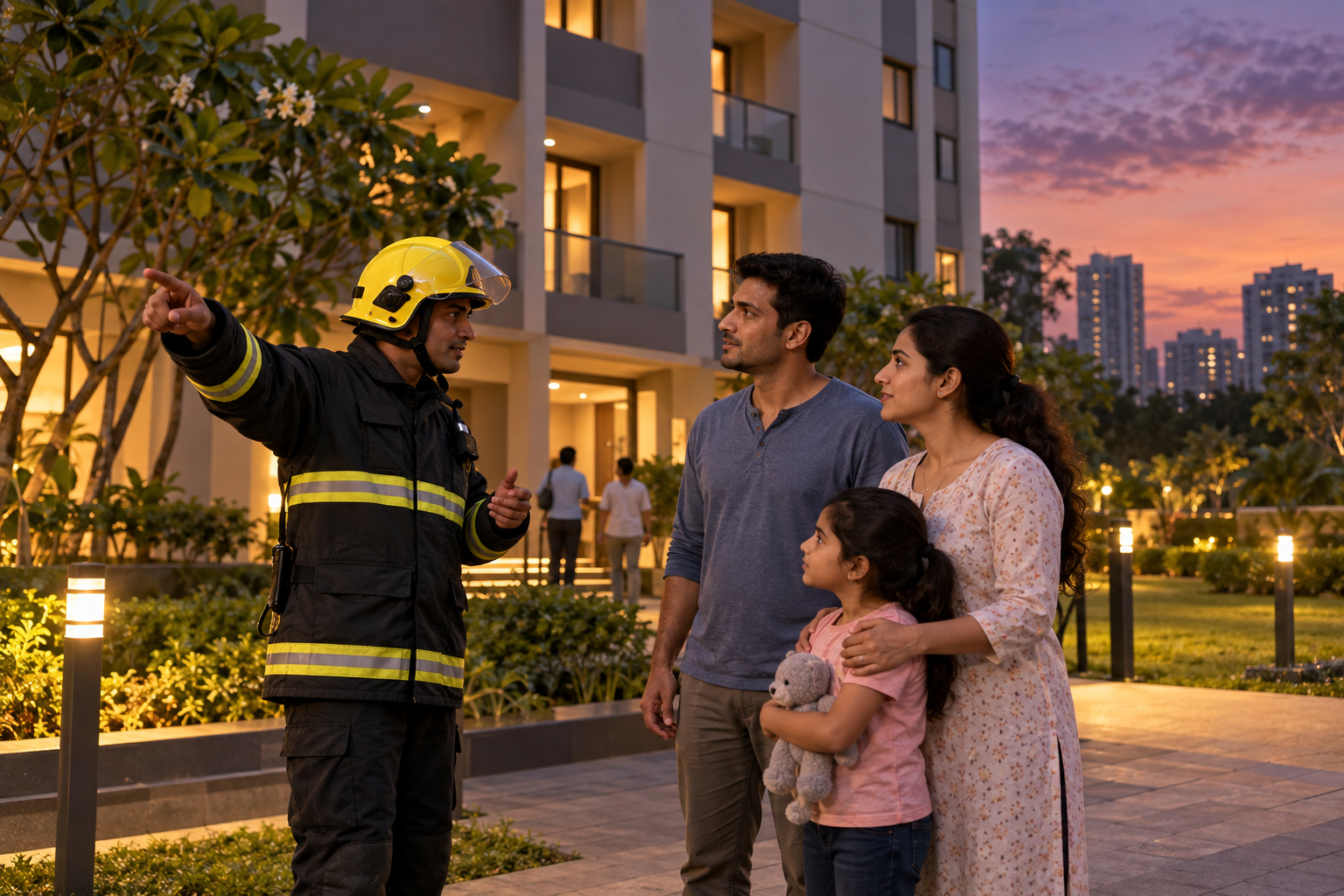
Cover note: AI-generated editorial illustration of a fictional family safely outside with a firefighter, not a real fire photograph.
Source boundaries: See the Indian fire-services escape-planning materials (including “Plan Your Escape Route”) and MHA ERSS for the 112 emergency number. Older fire leaflets may list a different emergency number; use the current Indian emergency system.
What needs attention
- Smoke and heat can make familiar routes unusable. Equipment only helps when suitable, maintained and used within training.
Controls that reduce risk
- Check detection, exits, electrical/cooking hazards and an accessible household plan; practise how everyone will leave and meet.
Common unsafe practices
- Re-entering for belongings.
- using smoke-affected exits.
- fighting a growing fire.
Leave a comment