
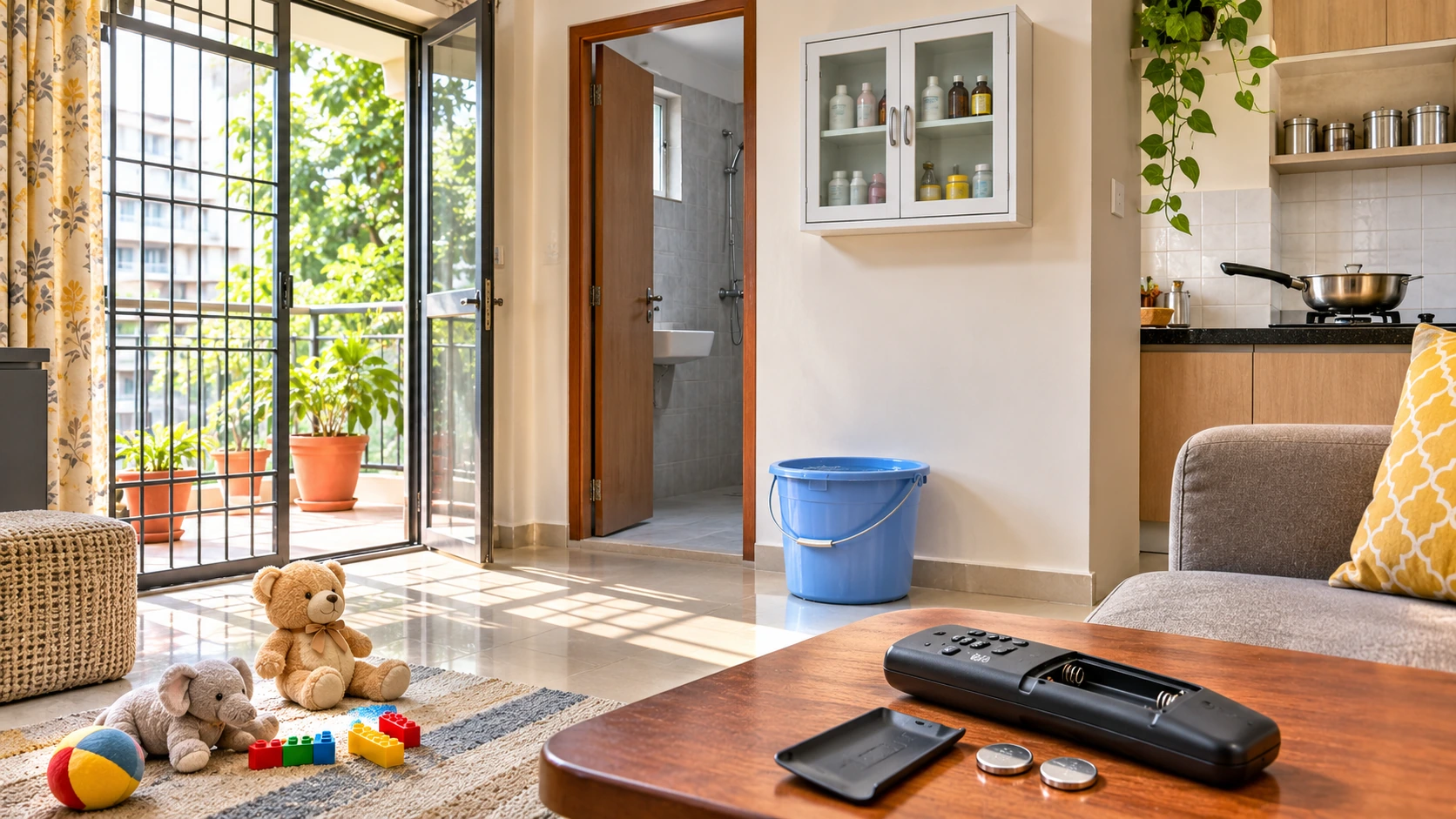
Quick answers
What should I do if my child swallows a button battery?
Call 108 or take the child to the nearest hospital emergency department straight away, even if the child looks well, and carry the battery packet or the device. A UK children's hospital says all suspected cases are assessed in emergency because a battery can damage the food pipe or windpipe.
How can a toddler drown in a bucket?
A young child who falls head first into even a small amount of water may not be able to get out, and it happens quickly and quietly. Empty buckets and tubs after use, keep bathroom doors latched high and keep drum and sump lids on.
Do window guards really help?
The Union Health Ministry's national injury strategy recommends guardrails on balconies and window guards in homes and high-rise buildings, and notes that children are at high risk of falls because of their curiosity and growing independence.
What is the leading cause of death for children aged 5 to 14 in India?
Quoting the Global Burden of Disease 2019, the health ministry's strategy gives drowning as the leading unintentional cause at 6.2 per cent of deaths in that age group, ahead of road traffic injuries at 4.52 per cent and animal contact at 4.39 per cent.
How do I stop burns in the kitchen?
Turn pan and cooker handles inwards, do not cook while holding a child, never hold hot tea near a child, keep matches and lighters out of reach and keep a bucket of water in the kitchen, as the national strategy lists.
Where should I store medicines and cleaners?
Above a child's height or behind a child-resistant lock, in their original containers. If a child may have swallowed something, call 108 or go to the nearest hospital and take the packet with you.
Are mosquito nets safe on a balcony or window?
We do not think so. A net or flimsy screen can give way if a child leans on it. This is our suggestion; the national strategy recommends proper guardrails and window guards.
Which number do I call for a child emergency at home?
108 for an ambulance, or 112, the single emergency number under which the police, fire and ambulance numbers are unified.
Most injuries to small children in an Indian home happen in the ordinary minutes of the day: a mother carrying a cup of tea, a toddler left near the bathroom door for a moment, a grandfather’s hearing-aid battery on the table. This page walks through the house room by room, with what the health ministry’s national strategy on injury prevention says and what we suggest on top of it. It is about prevention. For first aid, read our guides in the related list. Checked 10 November 2026.
In short
- Button batteries and coins: if a child may have swallowed one, call 108 or go to the nearest hospital at once, even if the child looks well. Take the packet or the device with you.
- Water: a bucket, a drum or an open sump is enough for a toddler to drown in. Empty buckets after use and keep bathroom doors latched high.
- Windows and balconies: the health ministry’s strategy recommends guardrails on balconies and window guards in homes and high-rise buildings.
- Burns: turn pan handles inwards, never hold hot tea near a child, and keep matches and lighters out of reach.
- Medicines and cleaners: put them above a child’s height or behind child-resistant locks, in their own containers.
Why the home needs the attention
The Union Health Ministry’s National Strategy for Prevention of Unintentional Injury, published through the Directorate General of Health Services, says children are at high risk of falls because of their stage of development, their curiosity and their growing independence. It quotes the Global Burden of Disease 2019 figures for India: among children aged 5 to 14, drowning is the leading cause of unintentional death at 6.2 per cent of all deaths in that age group, followed by road traffic injuries at 4.52 per cent and animal contact at 4.39 per cent. These are shares of all deaths in the age group, not a count of children. The strategy also notes that the NCRB recorded 430,504 deaths from unintentional injuries across all ages in 2022. We did not find a clean national count of home injuries to children, and we do not give one.
Windows, balconies and terraces
- Guards that hold: the strategy recommends guardrails on balconies at homes to prevent falls, and suggests laws that make residential societies and landlords fit window guards in high-rise buildings and homes. If you rent, ask the owner; if you own, fit them before the child can climb.
- Keep climbing aids away: our suggestion is to move sofas, beds, cots, stools and cartons away from windows and balcony grilles so there is nothing to step on.
- Mosquito mesh is not a guard. Our suggestion: a child leaning on a net or a flimsy screen can push it out.
- Do not leave a child alone on a terrace. The strategy also says to avoid slippery floors on balconies, which raise the chance of tripping, so mop and dry them.
- Look up. On balconies and terraces, bare or sagging wires are a second danger; see electric wires close to your house, balcony or terrace.
Buckets, tubs, drums and sumps
The strategy’s drowning section recommends physical barriers that control access to water: doorway barriers in the home, playpens, fencing a safe play area, and covers on wells and open barrels with grills. A toddler can drown in a very small amount of water, and it takes seconds and makes no noise. Our suggestions, in the same spirit:
- Empty buckets and tubs as soon as you finish with them, and turn them upside down.
- Latch the bathroom door high, and keep the lid on water drums and sumps.
- Stay within arm’s reach of a young child in a bath, even for a moment. Do not leave an older sibling to watch.
- After the age of five, drowning is the leading cause in the official figures above, so ponds, wells, canals and rivers need the same watch. See the Cuttack pond drowning and our water safety guide in the related list.
Kitchen, stove and hot water
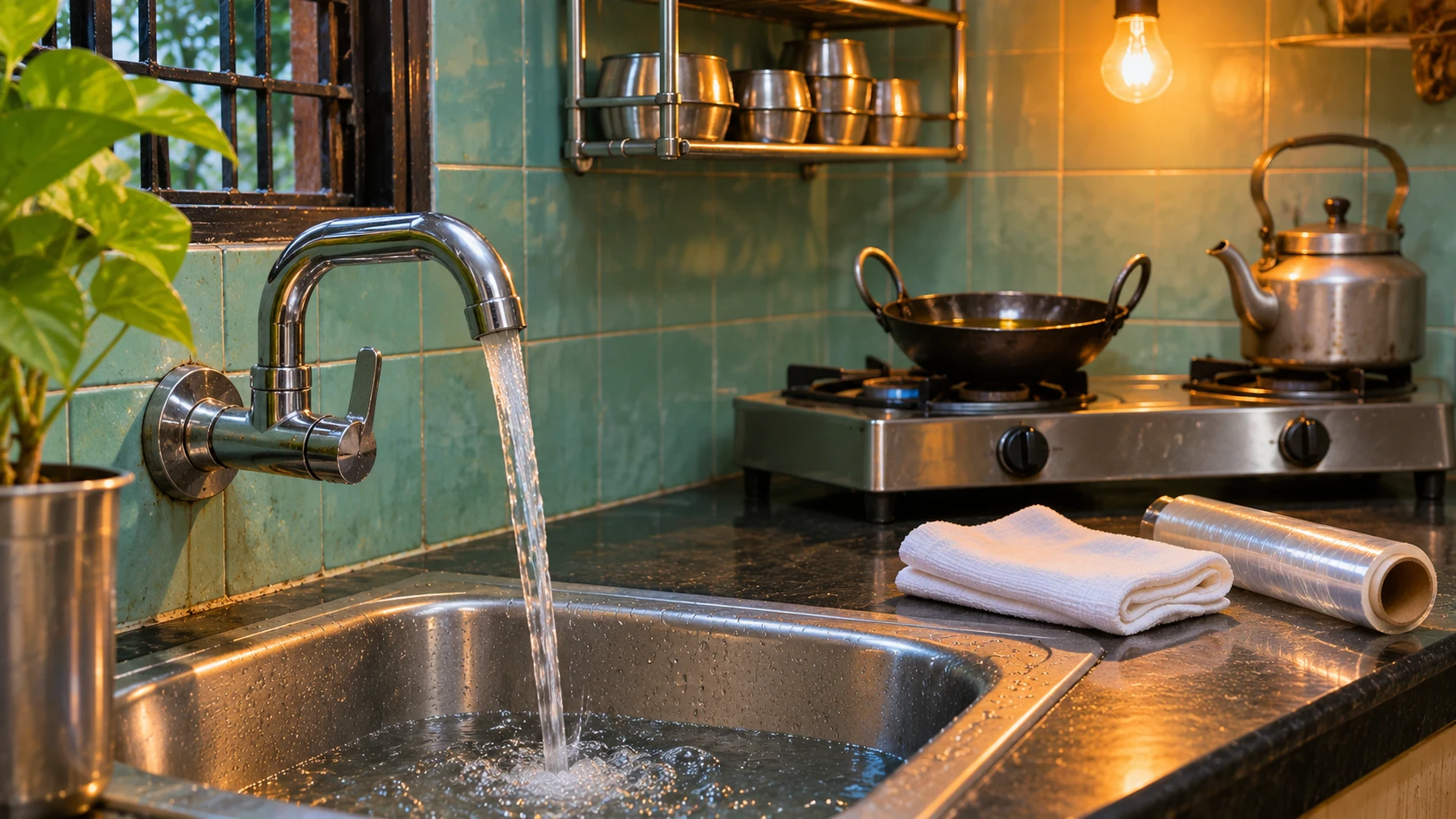
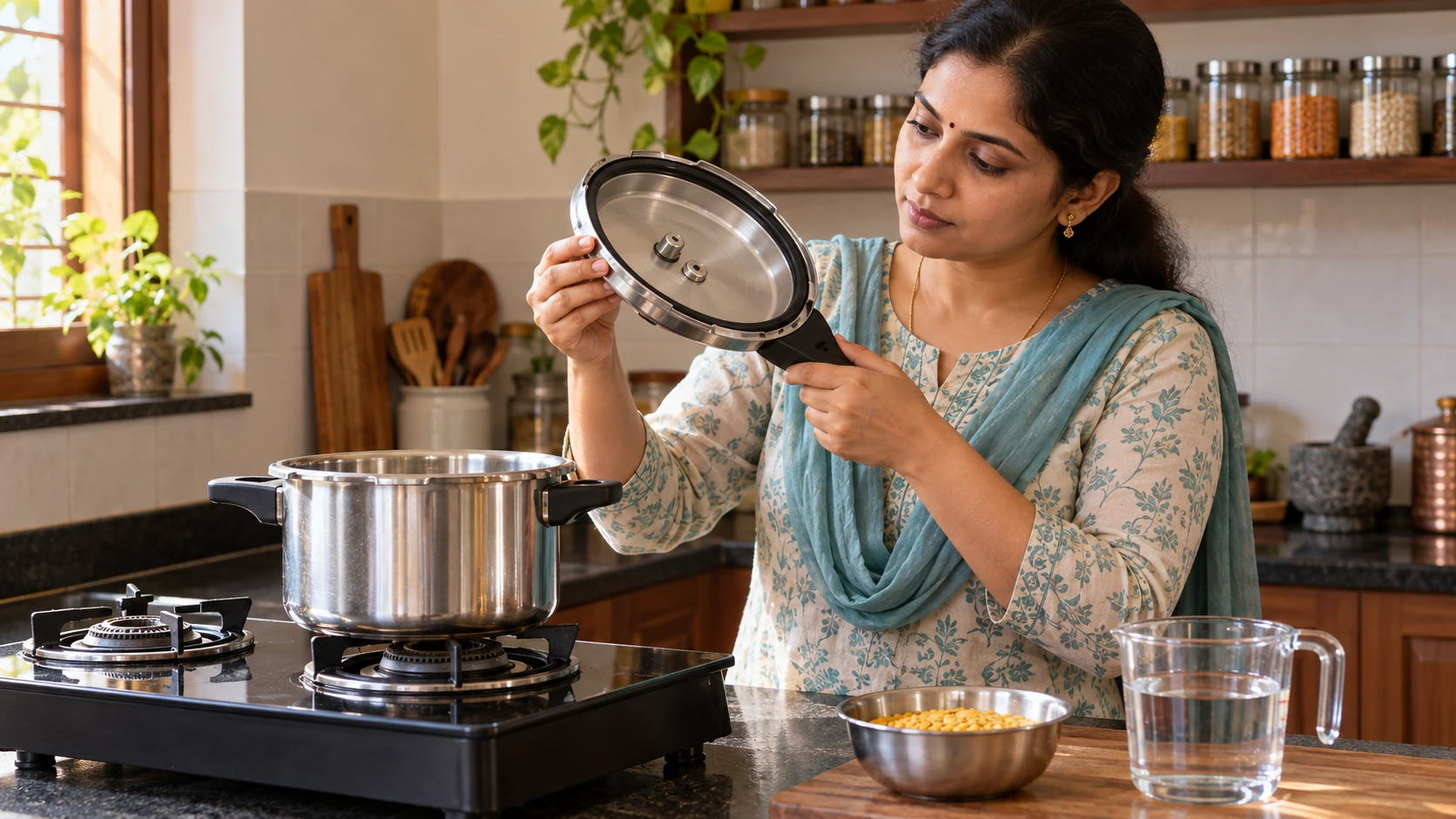
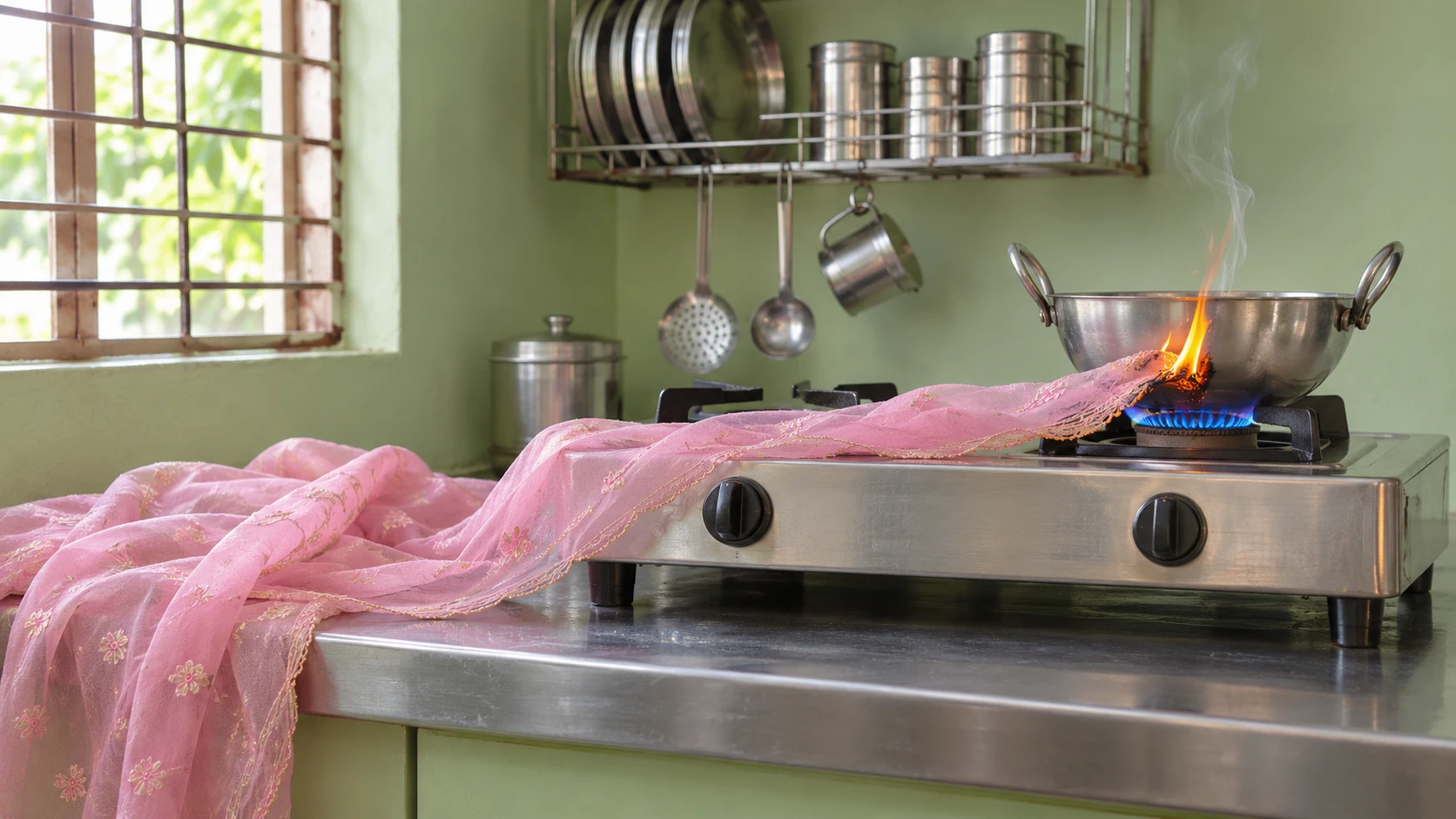
The strategy’s list of burn prevention tips, which we have shortened, includes: turn the handles of pans and pressure cookers inwards so they cannot be knocked off; avoid cooking while holding a child; never hold a cup of hot liquid near a child; keep matchsticks and lighters out of reach and sight of children; let a hot iron cool out of reach; wear no loose clothing while cooking; and keep a bucket of water in the kitchen. It also says everyone should know to stop, drop and roll if clothes catch fire. Our related guides cover burn and scald first aid, pressure cooker safety and what to do when clothes are on fire.
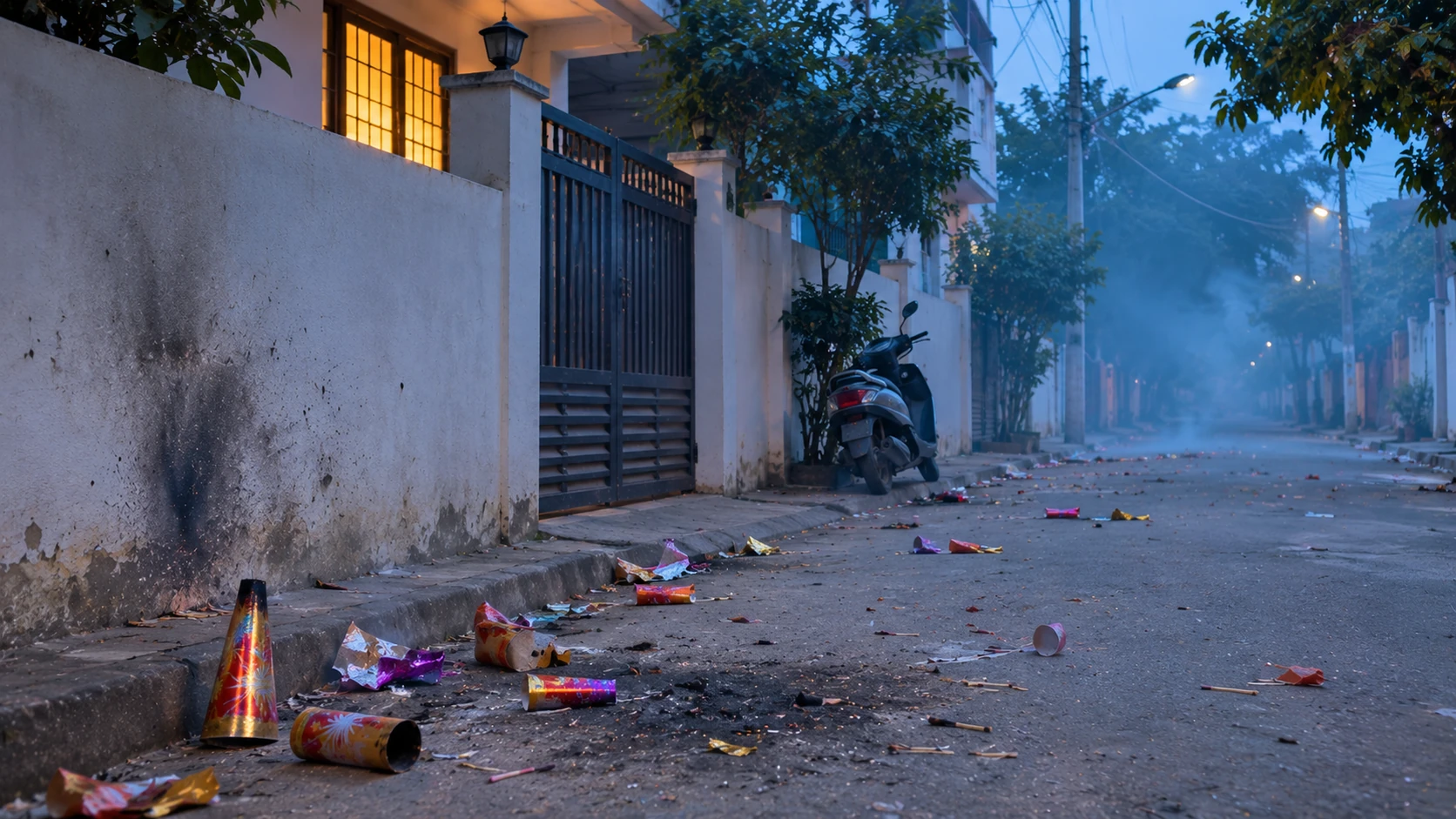
Two real cases on this site show how fast a house fire becomes a child’s emergency: the Jajpur Nalipur house fire and the Narela firecracker death. The causes in each are set out on the case pages.
Medicines, cleaners and the cupboard under the sink
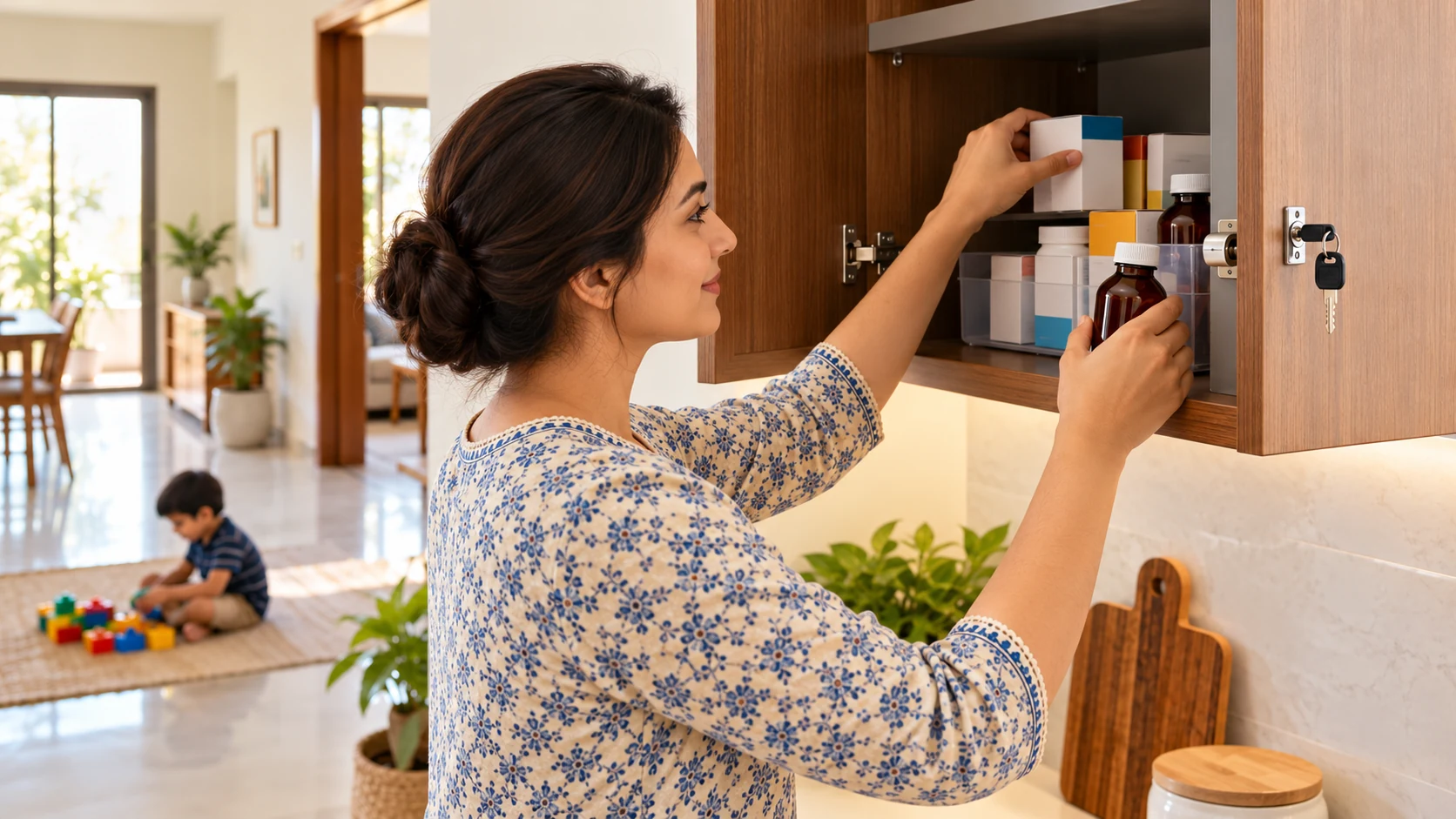
The strategy says parents should use child-resistant locks on cabinets, or keep detergents and medicines above a child’s height, and use child-resistant bottles. It also asks that parents and teachers be trained in first aid for different kinds of poisoning. Our suggestions: keep medicines in their strips or original bottles, never in a cold-drink bottle or a steel tumbler, and keep phenyl, acid and pesticide away from the floor. Our page on medicines at home has a storage routine. If a child may have swallowed anything, call 108 or go to the nearest hospital and take the packet or bottle with you. We do not give treatment steps here.
Button batteries and coins
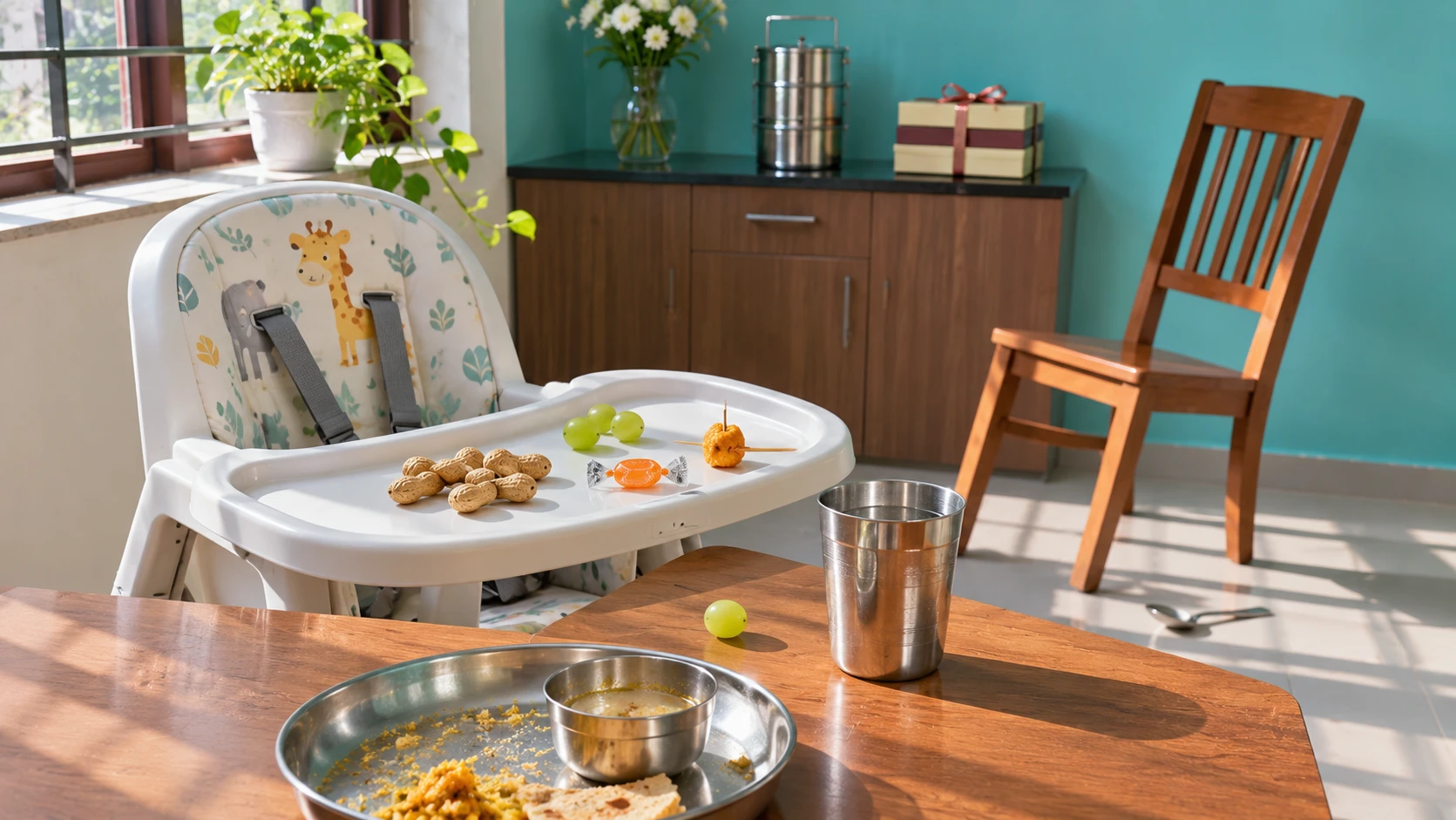
Button cells sit in remote controls, key fobs, kitchen scales, toys, musical greeting cards and hearing aids. A hospital information sheet from Cambridge University Hospitals in the UK, which we are using as foreign guidance because we could not find an Indian government page on this, lists watches, toys, games, flashing jewellery and hearing aids. It says all children who are suspected to have swallowed a button battery are assessed in the children’s emergency department, and explains that a battery can get stuck in the food pipe or the windpipe and damage its wall, which is a serious complication. So the rule is the same as for any suspected swallowing: do not wait for symptoms, and go to a hospital emergency department. Our advice for prevention is to keep spare cells in a closed box, check that battery compartments on toys and remotes are screwed shut, and throw used cells away out of reach.
What not to do
- Do not leave a young child alone near water, even for a minute.
- Do not rely on a net or screen in place of a window guard.
- Do not carry hot tea or cook while holding a child.
- Do not keep medicines, phenyl or pesticides in drink bottles or at floor level.
- Do not wait for symptoms if a child may have swallowed a battery, a coin or a medicine. Go to hospital.
What we could not confirm
We found no Indian government page written for parents on button battery ingestion, so that section rests on one foreign hospital’s information sheet. The strategy is a policy document: it sets out what governments and societies should do, and we have turned some of it into household steps, marked as our suggestions. We did not find an official count of home injuries to Indian children. The figures above are shares of deaths from Global Burden of Disease 2019 as quoted in the strategy, not counts. This page is general information, not medical advice. In an emergency call 108 or 112.
What needs attention
- Drowning is the leading cause of unintentional death among Indian children aged 5 to 14, at 6.2 per cent of deaths in the age group (GBD 2019, as quoted by the MoHFW strategy).
- The strategy recommends guardrails on balconies and window guards in homes and high-rise buildings.
- It recommends barriers, playpens and covers on wells and open barrels to control a child's access to water.
- It lists kitchen burn prevention tips such as turning pan handles inwards and never holding a hot drink near a child.
- We found no Indian government page for parents on button batteries; a UK hospital says all suspected cases are assessed in emergency.
Controls that reduce risk
- Fit or check window and balcony guards.
- Empty and turn over buckets after use.
- Move medicines and cleaners above a child's height.
- Close and screw shut every battery compartment you can find.
- Save 108 and 112 on your phone.
Common unsafe practices
- Leaving a young child alone near a bucket, tub or sump.
- Using mosquito mesh as a window guard.
- Cooking or carrying hot tea while holding a child.
- Keeping medicines or phenyl in drink bottles or at floor level.
- Waiting for symptoms after a suspected battery, coin or medicine swallowing.






Leave a comment