
Quick answers
What is a cloudburst according to IMD?
IMD says that if 10 cm of rain is received at a station in one hour, the rain event is termed a cloudburst. It adds that cloudbursts do occur on the plains, though mountain regions are more prone because of orography.
Can a cloudburst be predicted?
Not easily. IMD says it is very difficult because of the very small scale in space and time, and that nowcasting needs a dense radar network or very high-resolution weather models. So local warning signs and district alerts matter.
Can a river flood when it is not raining where I am?
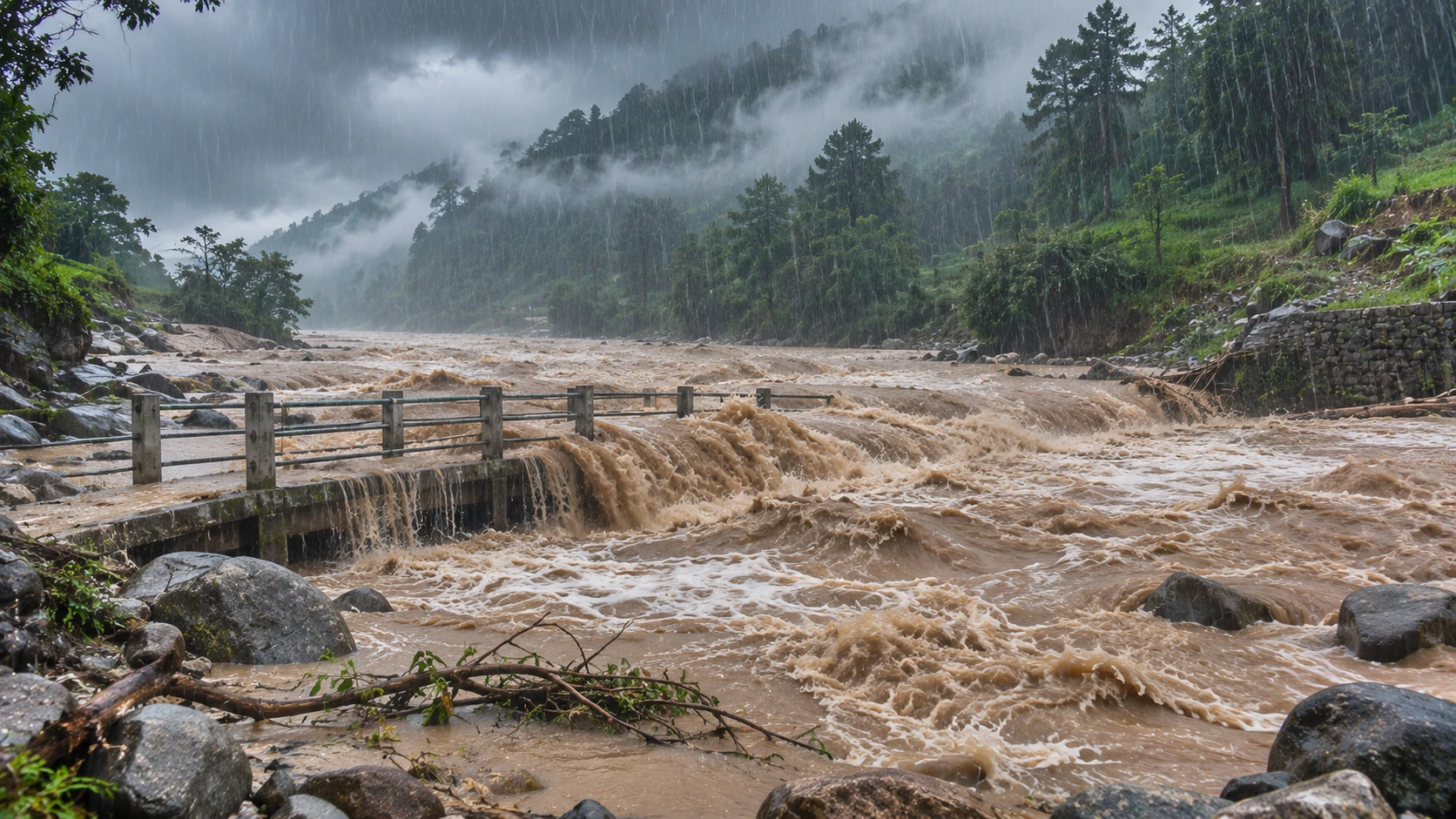
Yes. In the Nilambur case on 20 September 2026 the Kottapuzha river rose suddenly although it was not raining at the spot, after heavy rain in the forested hills upstream.
What are the warning signs of a flash flood?
Heavy rain upstream, a sudden rise in the water, and a loud roar from the stream or valley, as residents described in the Gorkha flood. If you notice any of these, leave the riverbed and banks at once and go uphill.
Is it safe to cross a shallow, fast stream?
No. IMD's flood sheet says not to walk or drive in floodwater and that two feet of moving water can wash away big cars. If you must go in, wear suitable footwear and use a stick to check the depth, but it is far better not to.
Which areas are flash flood areas?
IMD's sheet says to be aware of flash flood areas such as rivers, streams and drainage channels. Ask locals, forest staff or the disaster management office about the stretch you are visiting.
What should I carry on a monsoon trip to the hills?
A charged phone, a waterproof bag for documents, and a way to get weather updates. IMD's sheet also asks for an emergency kit with essential items, and for the safe route to the nearest shelter to be known.
Who should I call in a flash flood?
112 is the single emergency number, and 108 is the ambulance number under it (PIB). Evacuate first if officials tell you to, then call.
Every monsoon a stretch of river in the hills turns from a picnic spot into a killer in a few minutes, often when it is not even raining where people are standing. Reports call it a cloudburst, a flash flood or a sudden surge, and the words get mixed up. This page explains what the India Meteorological Department (IMD) means by a cloudburst, why it cannot be predicted well, the warning signs recorded in real cases on this site, and the official steps for flash flood areas. Checked 10 November 2026.
In short
- IMD’s definition is plain: if 10 cm of rain falls at a station in one hour, it is a cloudburst.
- It is hard to forecast. IMD says cloudbursts are very small in space and time, so monitoring them needs a dense radar network or very high-resolution models. Mountain regions are more prone because of the terrain, but cloudbursts do occur on the plains.
- A river can rise where it is not raining. Heavy rain upstream can send a surge down a dry-looking valley.
- Know the flash flood areas around you: IMD’s flood sheet lists rivers, streams and drainage channels, and says not to enter floodwater.
- Two feet of moving water can wash away a big car. Do not walk or drive through it.
What IMD calls a cloudburst
IMD’s monsoon questions and answers say: if 10 cm of rain is received at a station in one hour, the rain event is termed a cloudburst. It says such events are very difficult to predict because of their very small scale in space and time, that nowcasting, which means forecasting a few hours ahead, needs a dense radar network over the prone area or very high-resolution weather models, and that cloudbursts do occur in the plains, though mountainous regions are more prone because of orography.
A recent example is the Chennai rain of the night of 30 August 2025. IMD’s press release of 31 August reports six rain spells of over 10 cm an hour that meet the WMO and IMD definition, including 157.2 mm in one hour at Wimco Nagar between 11 pm and midnight, 137.1 mm at Korattur, 126.6 mm at Manali and 103.2 mm at New Manali Town. IMD concluded that a cloudburst occurred over the Manali area and its neighbourhood. It is a reminder that the word does not belong only to the Himalaya.
In everyday news, the word is also used loosely for any sudden, very heavy burst of rain or surge in a hill stream, even when no rain gauge has recorded 10 cm in an hour. The IMD test is about rain at a station, while what harms people is the water arriving in a narrow valley. That is why the signs on the ground matter more than the label.
Warning signs seen in real cases
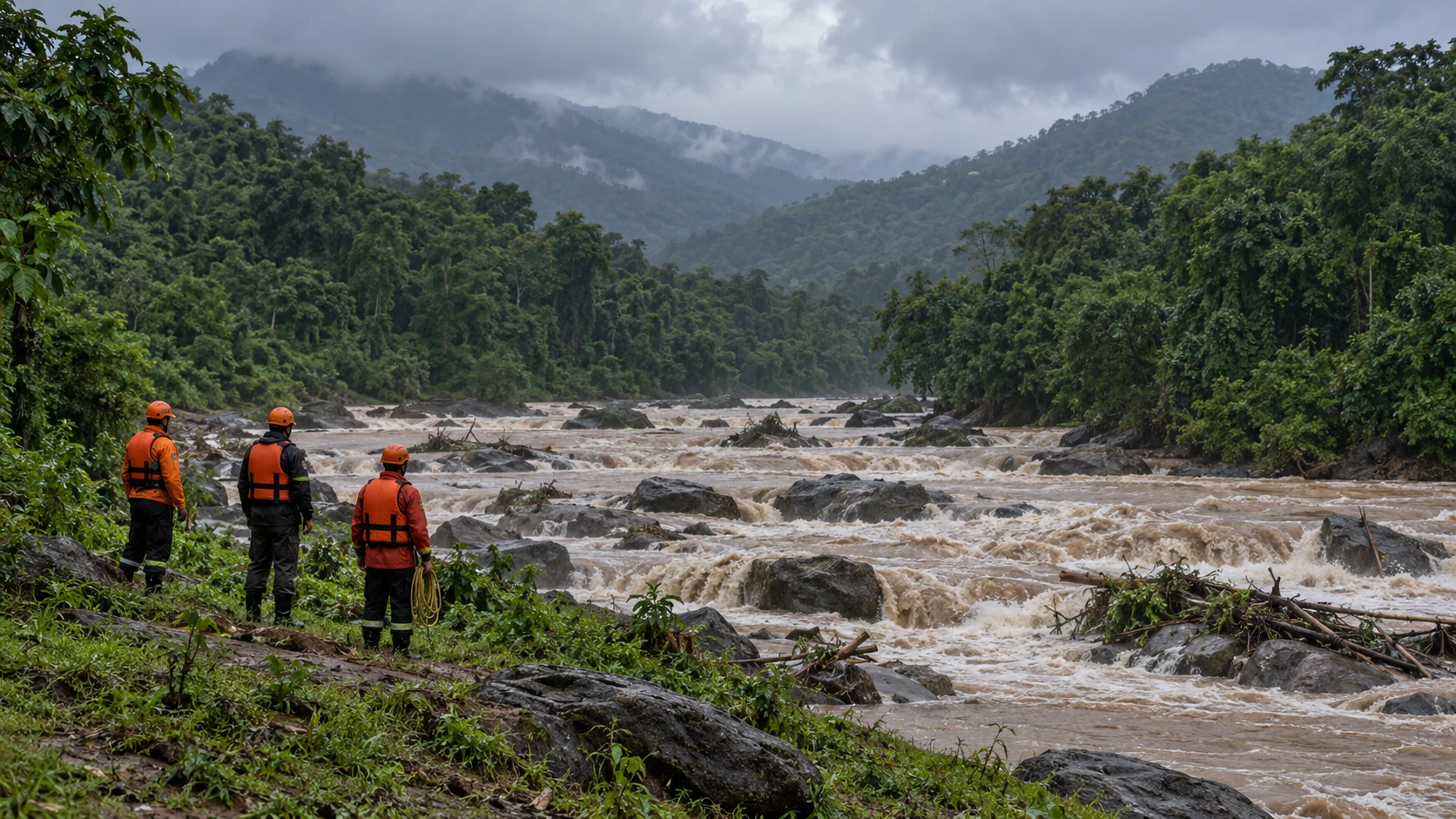
- No rain where you are. At Pookkottumpadam near Nilambur in Kerala on 20 September 2026, the Kottapuzha river rose suddenly at about 5 pm although it was not raining at the spot; heavy rain in the forested hills upstream sent the water down. Six people sitting on rocks in the river died, according to the reports in our Nilambur flash flood case study. Forest staff and local people saw the water rising and shouted warnings, which helped many visitors get out.
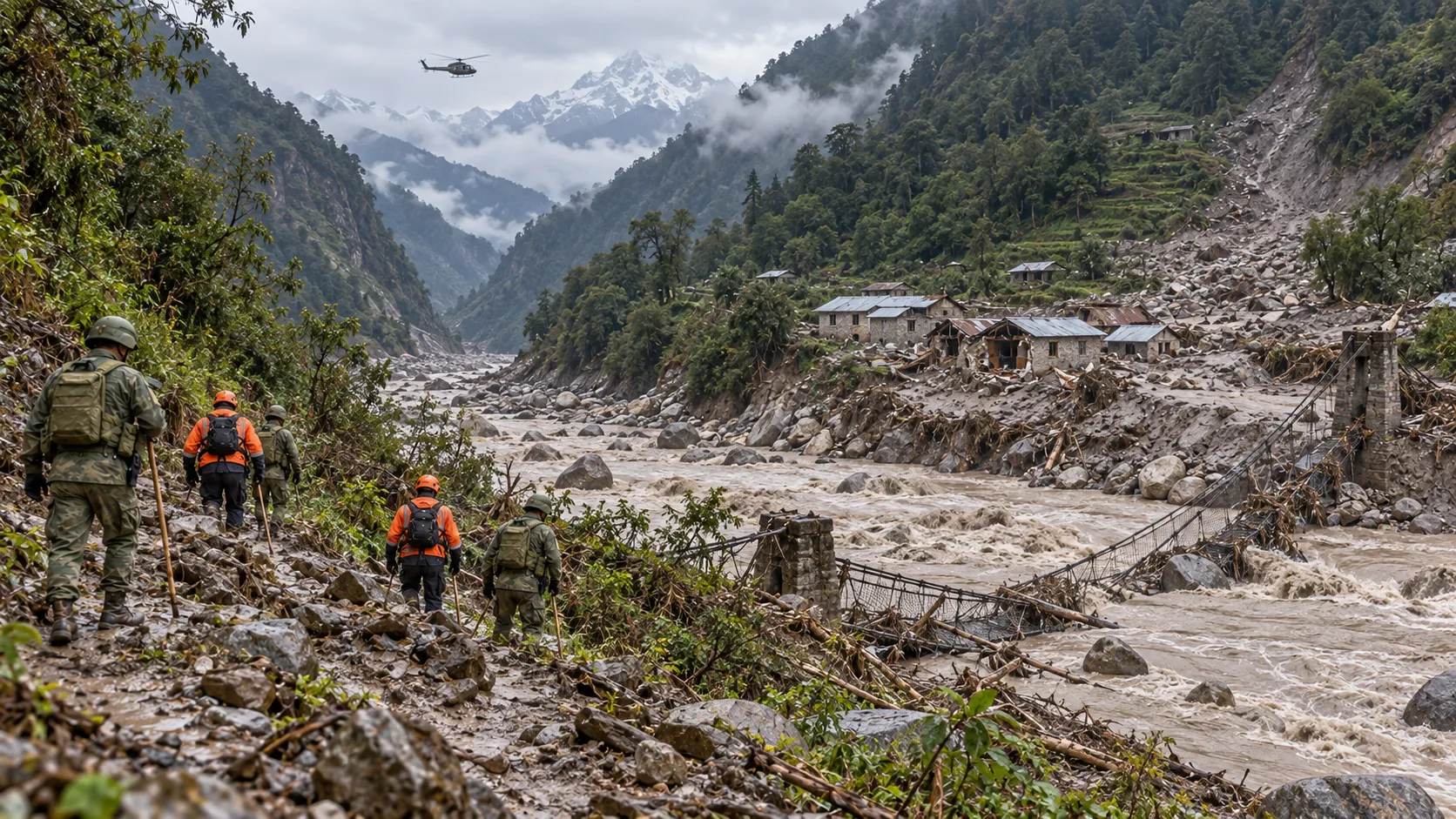
- A roar from the valley. In Gorkha, Nepal, on 11 October 2026, residents told PTI they heard a loud roar from the streams from around 4 am, before the flood came down the Budhi Gandaki. Our Gorkha flash flood case study records that an official SMS alert and local warnings helped most people reach higher ground.
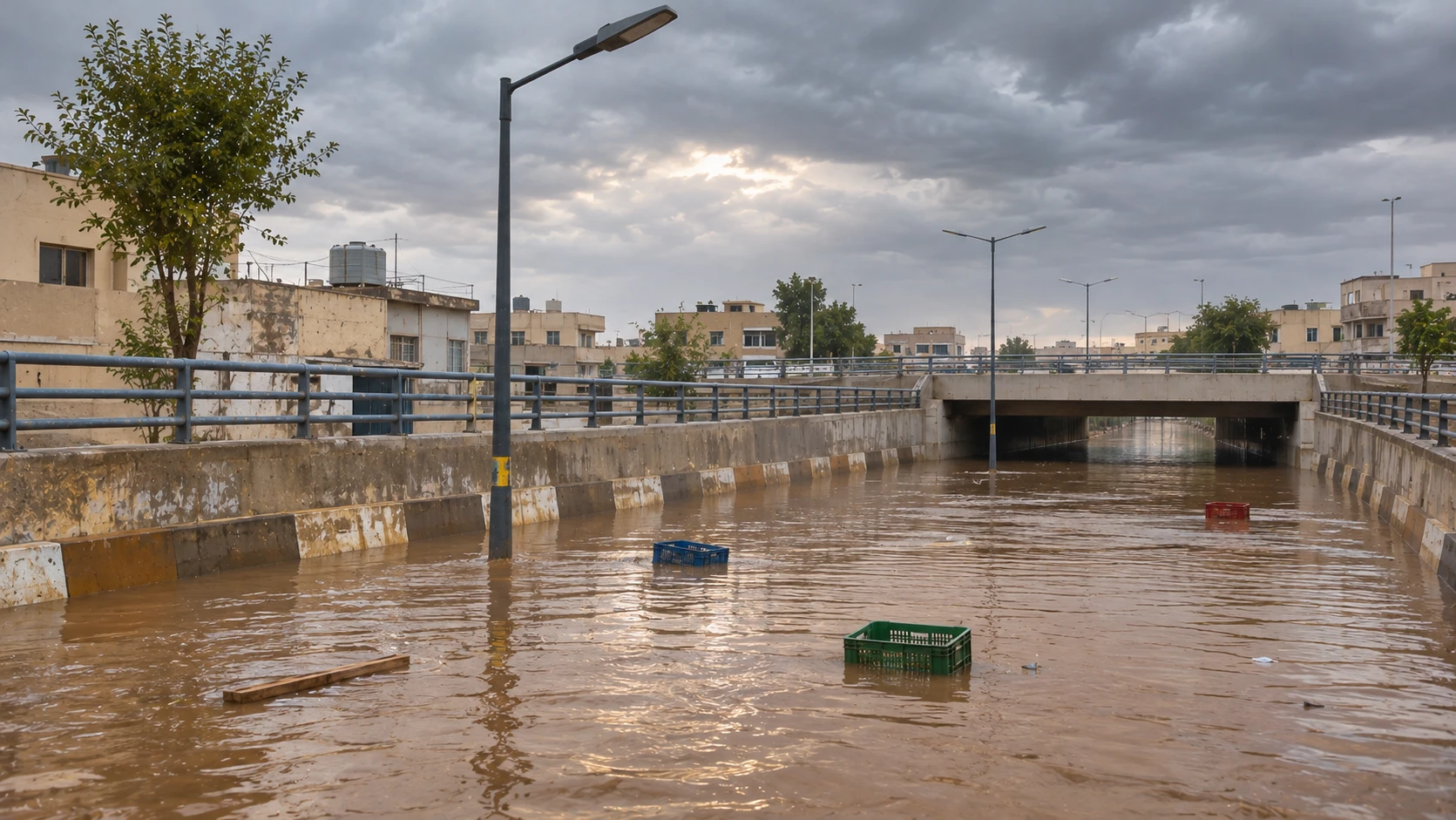
- More rain than forecast. In Erbil, Iraq, on 7 and 8 November 2026, the governor said about 80 mm of rain fell against a forecast of about 30 mm, and a child died when a family car was swept into a channel, as our Erbil flash flood case study reports. This is not a hill case, but it shows how a car in moving water is lost.
What to do before you go, or if you live near a stream
These steps are from IMD’s flood Do’s and Don’ts sheet:
- Be aware of flash flood areas such as rivers, streams and drainage channels.
- Know the safe routes to the nearest shelter or raised pucca house.
- Keep your mobile phone charged and use SMS for emergency communication.
- Listen to the radio, watch television and read newspapers for weather updates.
- Prepare an emergency kit and keep documents and valuables in waterproof bags.
- Evacuate immediately to a safe place when government officials direct you to.
Our suggestions on top of that, for a day out in the hills: check the weather outlook for the whole valley and not just your village; do not sit, bathe or wash clothes in a riverbed or on mid-stream rocks when it is cloudy upstream, even if the sky above you is clear; and ask a local or forest staff where the water rises first. The IMD district colour codes, and how to read them on a hill road, are explained in our guide to driving hill roads in red-alert rain.
If the water starts to rise
- Get out of the river and away from the banks at once, and go uphill or sideways up the slope, not along the river. This is our suggestion, based on how flash floods travel down a valley.
- Do not enter floodwater. IMD’s sheet says if you must, wear suitable footwear, and that you should not enter deep unknown water and should use a stick to check the depth.
- Do not walk or drive in the flood water. IMD notes that two feet of moving flood water can wash away big cars.
- Stay away from electric poles and fallen power lines, and from sewerage lines, gutters, drains and culverts.
- If you are told to evacuate, move to higher ground or a safe shelter, turn off power and gas, and take the emergency kit, first aid box, valuables and important documents.
- Come back only when officials say so.
After the water goes down, IMD says not to let children play in or near floodwater, not to use damaged electrical goods until they are checked, not to eat food that was in floodwater, to be careful of snakes, which are common in floods, and to drink only boiled or chlorinated water. Our guides on never driving or walking through floodwater and the longer flood checklist in the related list carry more, and landslide warning signs in hill hamlets covers the slope danger that often comes with the same rain.
What not to do
- Do not cross a flowing stream or causeway on foot, bike or in a car to save time.
- Do not sit on rocks in a river or camp on a dry riverbed in the hills in the monsoon.
- Do not wait to see the water; if you hear a roar from upstream, move.
- Do not stop to film or collect belongings.
- Do not ignore a district orange or red alert because it is dry where you stand.
The hill states have guides for Dehradun, Uttarkashi, Joshimath, Solan and Nilambur with the local emergency numbers. Call 112 or 108 for help.
What we could not confirm
IMD says cloudbursts are very difficult to predict, so we cannot give a lead time you can count on. We found no official all-India count of cloudbursts. IMD’s rule is 10 cm of rain in one hour at a station, and the area it covers is not part of the IMD text we opened. News reports, and sometimes disaster authorities, call events cloudbursts without an hourly gauge reading. We could not read NDMA’s flash flood guidance as text, so the steps come from IMD’s flood sheet. The Gorkha and Nilambur cases are from our case studies, built on news reports. This page is general information; follow your district authorities.
What needs attention
- IMD defines a cloudburst as 10 cm of rain at a station in one hour and says it is very hard to predict.
- IMD reported six spells above 10 cm an hour in Chennai on the night of 30 August 2025, up to 157.2 mm in an hour.
- At Nilambur on 20 September 2026 a river rose suddenly where it was not raining; six people on rocks in the river died.
- In Gorkha on 11 October 2026 residents heard a roar from the streams from 4 am, and an SMS alert helped most people reach higher ground.
- IMD advises not to walk or drive in floodwater because two feet of moving water can wash away big cars.
Controls that reduce risk
- Learn which streams and drains near you are flash flood areas.
- Keep a charged phone, a waterproof bag and an emergency kit ready.
- Check the weather for the whole valley before a hill trip.
- Know the safe route to the nearest shelter.
- Save 112 and 108 on your phone.
Common unsafe practices
- Sitting, bathing or washing clothes on a riverbed or rocks in a stream when it is cloudy upstream.
- Crossing a flowing stream or causeway to save time.
- Waiting to see the water before moving.
- Stopping to film or collect belongings.
- Ignoring an orange or red district alert because it is dry where you stand.


Leave a comment