

Quick answers
What should be done after a workplace fire drill is over?
Collect concise observations while the experience is fresh, decide what needs checking, assign each follow-up to a responsible person with a review date, and record how the correction was checked. A completed drill alone is not proof of readiness.
How to record useful observations after a fire drill?
Ask for direct observations: where the person was, what instruction they received and what they did. A specific note such as not hearing the announcement in a back room is more useful than a vague comment that communication was bad.
What details should a fire drill observation card include?
Note the exercise date and area, what happened in plain language, who or which role was affected, what needs verification or correction, the responsible person and review date, and how the correction was checked.
Is it okay to create smoke or block an exit to test drill improvements?
No. Do not create smoke, block an exit or trigger a real emergency call to test changes. Let the responsible safety team decide whether a document update, inspection, briefing or another planned exercise is needed.

The drill is not finished when everyone returns
A practice evacuation can reveal a confusing instruction, an unclear assembly responsibility or a route people do not understand. The useful output is a specific improvement, not simply a record that the exercise happened. Uttar Pradesh Fire Services’ guidance says drills should test the emergency action plan and lead to corrections. Official fire-service guidance.
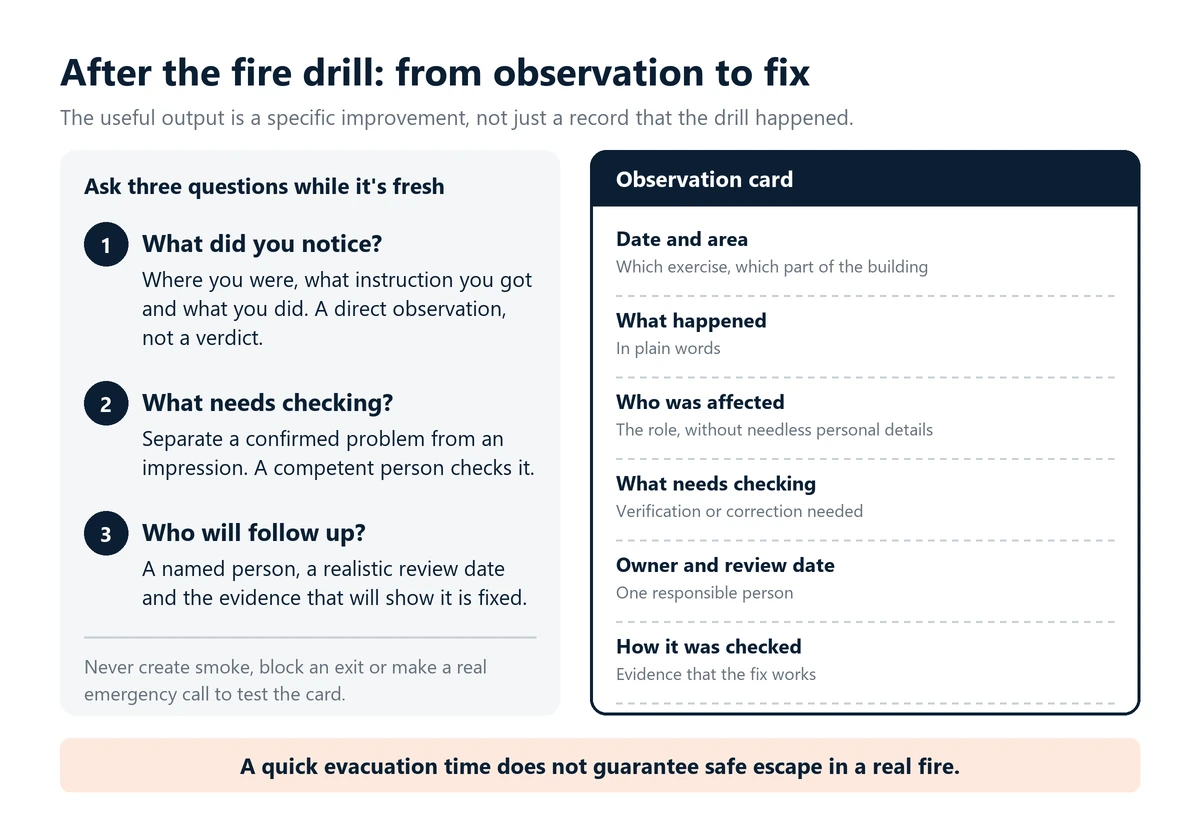
Ask three questions while the experience is fresh
What did you notice? Ask for a direct observation: where the person was, what instruction they received and what they did. “I could not hear the announcement in the back room” is more useful than “communication was bad”. The example is hypothetical, not a finding from today’s case studies.
What needs checking? Distinguish a confirmed problem from an impression. A participant’s difficulty hearing should trigger a competent check; it does not by itself diagnose a failed alarm. Ask whether a new visitor would have understood the same instruction.
Who will follow up? Name the responsible person, agree a realistic review date and specify what evidence will show the issue is resolved. Do not mark a task closed merely because a message was forwarded.
Use a small observation card
- Exercise date and area observed.
- What happened, in plain language.
- Who or which role was affected, avoiding unnecessary personal details.
- What needs verification or correction.
- Responsible person and review date.
- How the correction was checked.
This card is an editorial tool, not an official compliance form. For example, a visitor who did not know whom to report to might lead to clearer induction information and a later check with a new arrival. Do not assume a redesigned sign alone fixes every cause of confusion.
Review the whole journey
Discuss notification, the designated route, assistance arrangements and reporting at the assembly point. Delhi Fire Service tells people hearing an alarm to leave via an available exit and report to the person in charge at the assembly point. Delhi Fire Service: Do and Do not. Follow the workplace’s competent, site-specific emergency plan; this article does not choose a route or prescribe a universal drill interval.
Check the improvement, then keep the record short
Let the responsible safety team decide whether a document update, inspection, briefing or another planned exercise is needed. Do not create smoke, block an exit or trigger a real emergency call to test this card. Keep serious concerns open until the appropriate person has assessed them.
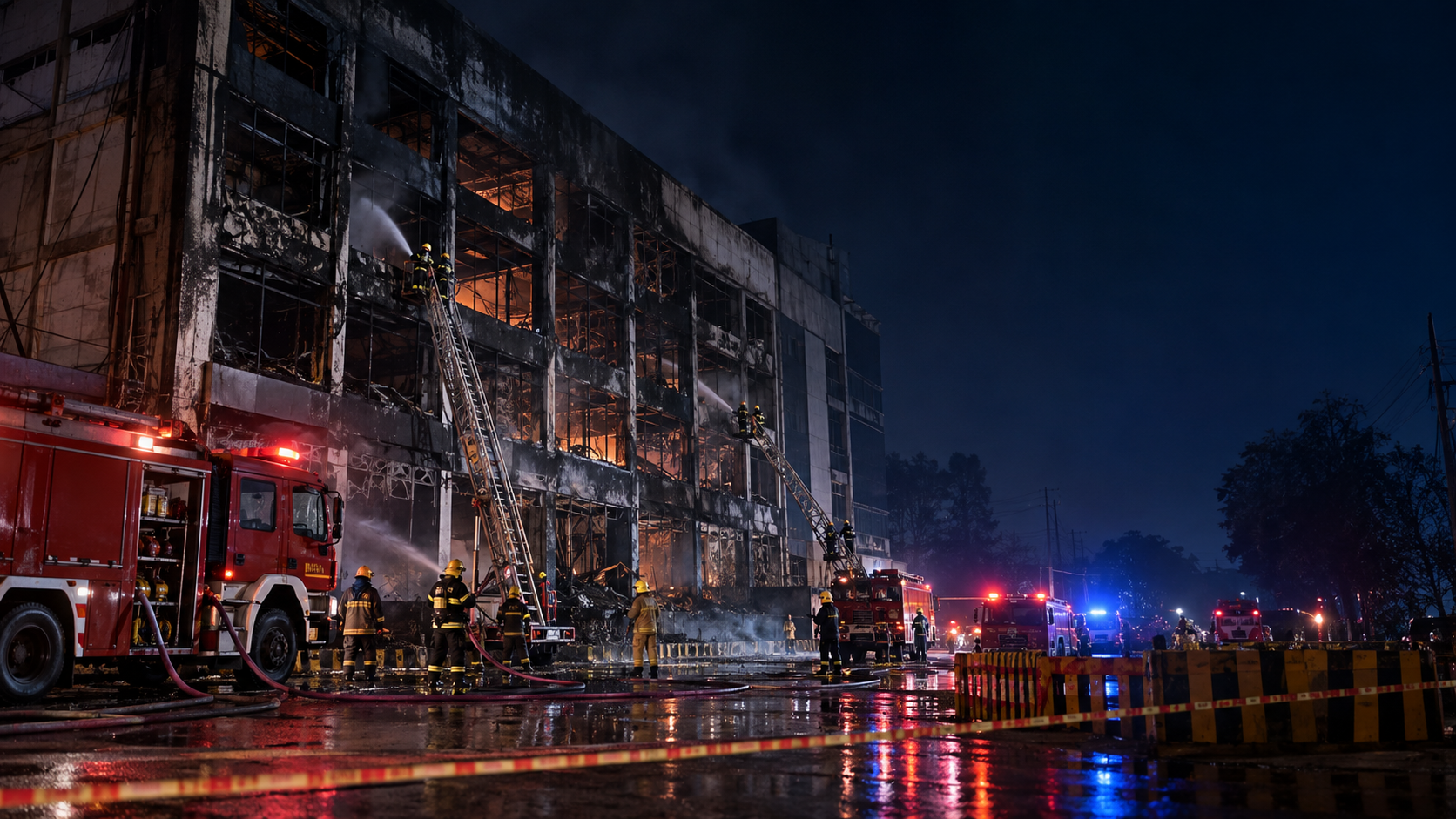
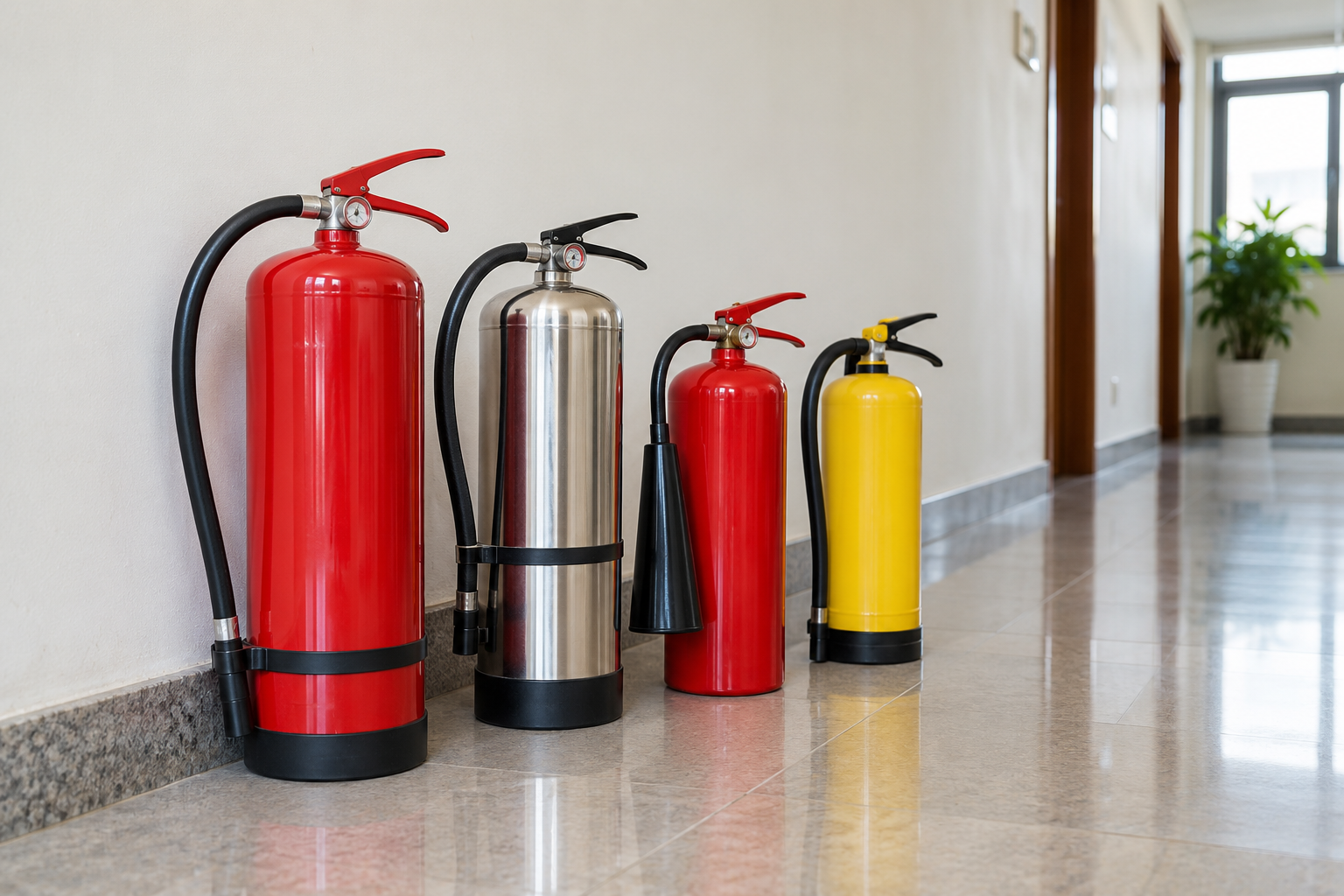
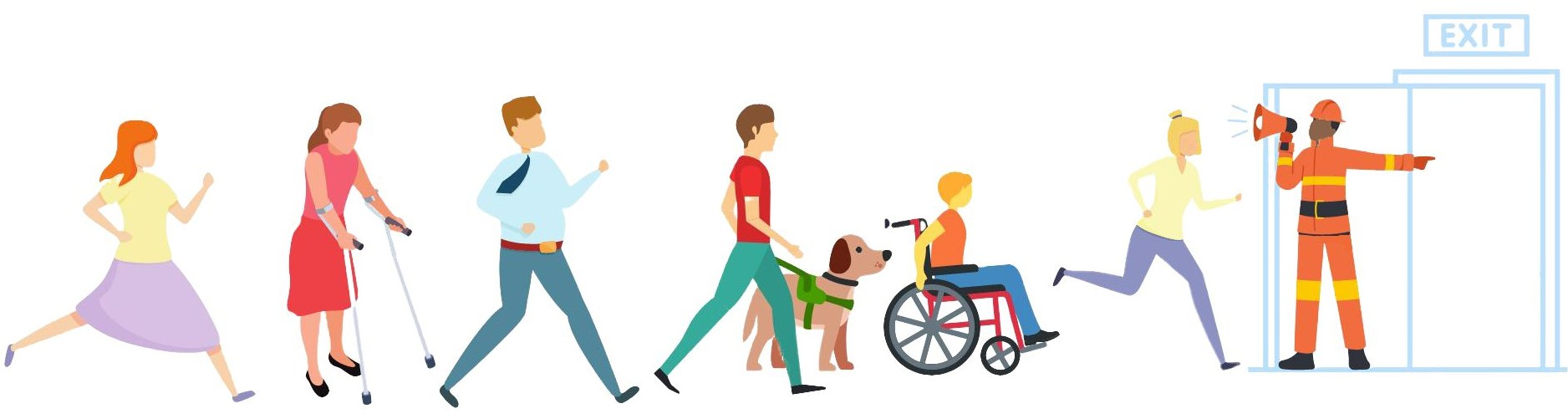
A drill result is a record of one practice under particular conditions. A quick evacuation time does not guarantee safe escape in a real fire. The supplied cover and gallery picture are AI illustrations of a fictional debrief.
What needs attention
- A useful debrief turns a specific observation into a checkable action.
- An assumption about a fault should remain distinct from an inspection finding.
Controls that reduce risk
- Collect concise observations after the drill.
- Assign each follow-up to a responsible person.
- Record how the correction was checked.
Common unsafe practices
- Treating a completed drill as proof of readiness.
- Closing a concern without checking the correction.
- Creating an unsafe simulation to test a suggestion.

Leave a comment