
Quick answers
What is the legal alcohol limit for driving in India?
30 mg of alcohol per 100 ml of blood, as quoted from section 185 of the Motor Vehicles Act in a Madras High Court judgment of 12 March 2020. It is a legal limit, not a safe amount. The World Health Organization says crash risk starts at low levels and rises significantly from 0.04 g/dl.
How many people die in drunk-driving crashes in India?
The Ministry of Road Transport and Highways told Rajya Sabha on 11 March 2026 that crashes linked to drunken driving or consumption of alcohol and drugs caused 3,204 deaths in 2024, out of 1,77,175 road deaths, or about 1.8% by our arithmetic. These are police-recorded counts.
What should I do if I see a drunk driver on the road?
Slow down, drop back and call 112 or ask a passenger to. Give the road, direction, landmark, vehicle colour and number if you can read it safely. Do not chase, overtake or confront. This is our advice; we found no official Indian reporting instruction.
Can police arrest me without a warrant for drunk driving?
According to the judgment we read, section 202 lets a police officer in uniform arrest without a warrant anyone who commits an offence under section 184 or 185 of the Motor Vehicles Act in the officer's presence. Section 203 deals with breath tests. This is general information, not legal advice.
What are the penalties for drunk driving in India?
Under section 185 as amended in 2019, the fine is Rs 10,000 for a first offence and Rs 15,000 for a second or later offence. A first offence can mean imprisonment up to six months, the fine, or both; a second or later offence can mean imprisonment up to two years, the fine, or both. The jail terms are from the older text of the section on a third-party site. Check the current Act on India Code or ask a lawyer.
What do I do if my friend wants to drive after drinking?
Take the keys kindly, offer a cab, a sober driver or a place to stay in the same breath, and ask another friend to back you up. If they drive off anyway, call 112 and give the vehicle details. That is our suggestion.
What should I do after a crash involving a drunk driver?
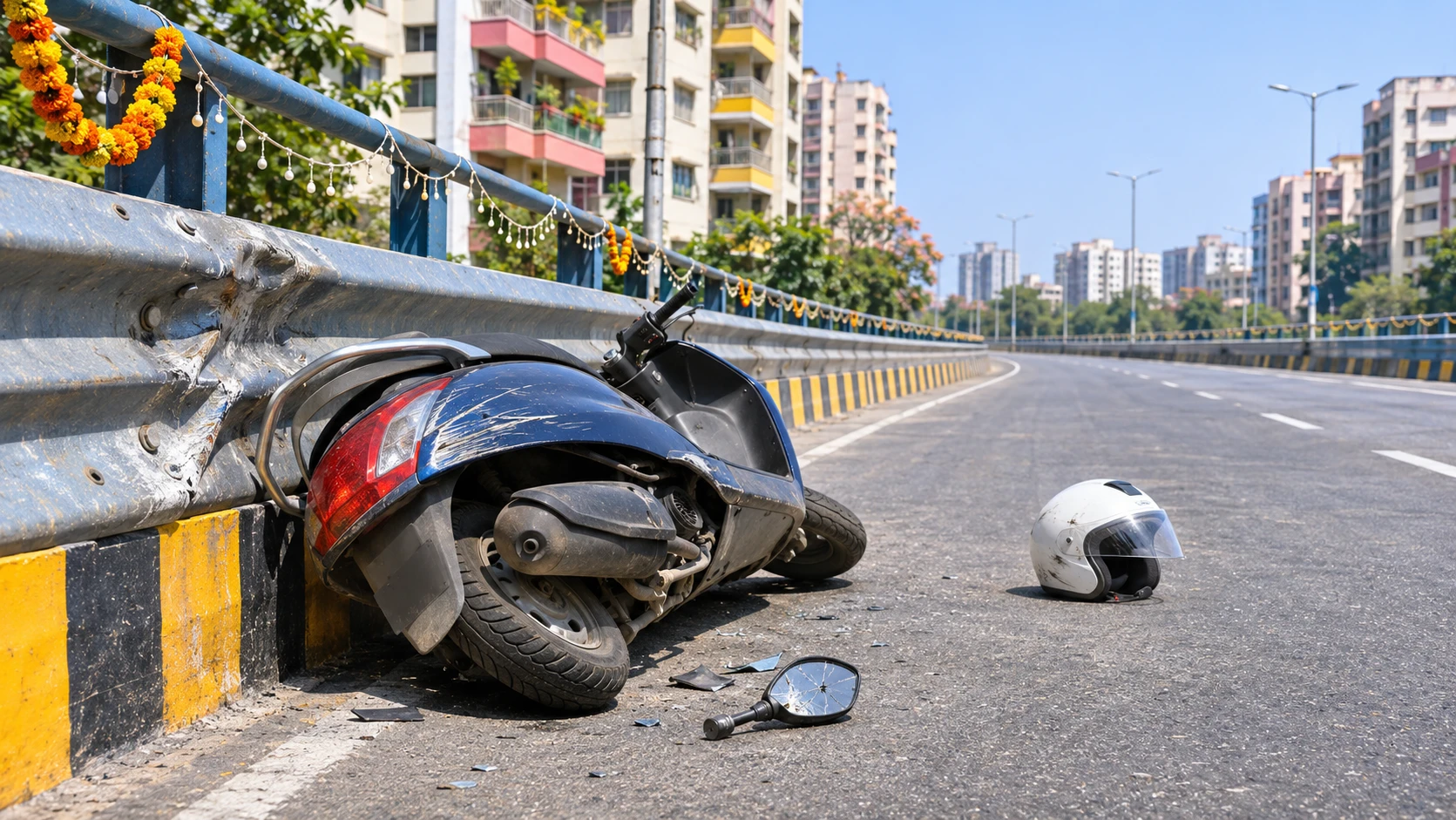
Call 108 and 112, keep your distance from the driver, help the injured only as far as you know how, and wait for the ambulance and police. Our guide for witnesses has the steps.
Does the law protect people who help after a road accident?
A Rajya Sabha reply of 11 March 2026 mentions the Rah-Veer scheme, under which state governments pay cash awards to Good Samaritans. See our guide on the Good Samaritan law for the legal protection; we did not re-open the rule text for this page.
The party ends, the keys are in someone’s hand and everyone says “I am fine, it is only ten minutes”. This page is for that moment, and for the other side of it: the car swerving in front of you on the highway at midnight. It covers how to plan the ride home before the first drink, what you can safely do if you spot a drunk driver, what a police breath test is, and what India’s own figures show. It is written for the weeks before the year-end parties, weddings and Sankranti gatherings. Checked 10 November 2026.
In short
- Decide the ride home before you drink. A sober driver, a cab or a place to stay. Take the keys of a friend who has been drinking, and do not argue about it at the car.
- If you see a drunk driver, do not chase, overtake or confront. Drop back, call 112 and give the road, direction, vehicle colour and number as best you can. This is our advice.
- In a crash, call 108 and 112, help only in ways you are trained for, and keep away from the other driver.
- A police breath test is a legal power. The Motor Vehicles Act has a section on breath tests (section 203) and a section letting a police officer in uniform arrest without a warrant for drunken driving in their presence (section 202), according to a court judgment that quotes them.
- The legal limit is 30 mg of alcohol per 100 ml of blood, as quoted in the same judgment. That is a legal line, not a safe amount. The World Health Organization says crash risk starts at low blood alcohol levels and rises significantly from 0.04 g/dl.
- The fine under section 185 is Rs 10,000 for a first offence and Rs 15,000 for a repeat, after the 2019 amendment, with jail of up to six months or two years as the older text of the section says. Check the current text before you rely on it.
- India’s police-recorded figure for 2024 is 3,204 deaths in crashes linked to drunken driving or the use of alcohol or drugs, out of 1,77,175 road deaths.
What the numbers say
The Ministry of Road Transport and Highways gave Parliament a table of road accidents and deaths by traffic violation on 11 March 2026 (Rajya Sabha Unstarred Question 2172). Its row for “drunken driving / consumption of alcohol and drug” reads:
- 2020: 8,181 accidents, 3,339 deaths.
- 2021: 9,150 accidents, 3,314 deaths.
- 2022: 10,080 accidents, 4,201 deaths.
- 2023: 9,143 accidents, 3,674 deaths.
- 2024: 8,270 accidents, 3,204 deaths.
Out of 1,77,175 road deaths in 2024, 3,204 is about 1.8% (our arithmetic). That looks small beside over-speeding, which the same table links to 1,24,522 deaths in 2024. The figure should be read as police-recorded, not as the whole truth: these are crashes where alcohol or drugs were recorded as the violation, and we could not find a source that says how many drivers are tested after a crash. Our own NCRB state-wise page and our guide on over-speeding and drunk driving deaths (see the related list) carry the same series and more context, so we do not repeat the full table here.
Getting home: plan it before the first drink
- One person is the driver and does not drink at all. Not “only one”. Agree it at the start, not at the car.
- Book the cab or the lift before you go. Late-night rides are hard to find at midnight on a festival night. Save the number of a trusted driver or a cab app in your phone.
- Stay over if you can. A sofa at the host’s place is cheaper than a fine, a crash or a funeral.
- Do not rely on time or food. We found no Indian official rule of thumb for how long alcohol stays in the blood, and do not give one. If in doubt, you are not fit to drive.
- Two-wheelers too. The law’s limit applies to a scooter or a motorcycle as well, and a rider with no helmet and no cover has the least protection if things go wrong. Our guide on driving home at night after a wedding or family function has a fuller plan for families.
- Taking someone’s keys. Say it kindly, offer an alternative in the same breath, and ask a friend to stand with you. If they still drive off, you can call 112 from where you stand and give the vehicle details. That is our suggestion.
If you see a drunk driver
- Slow down and drop back. Do not try to block the car, race it or flash your lights to scare it. A driver who is not in control can react in any way.
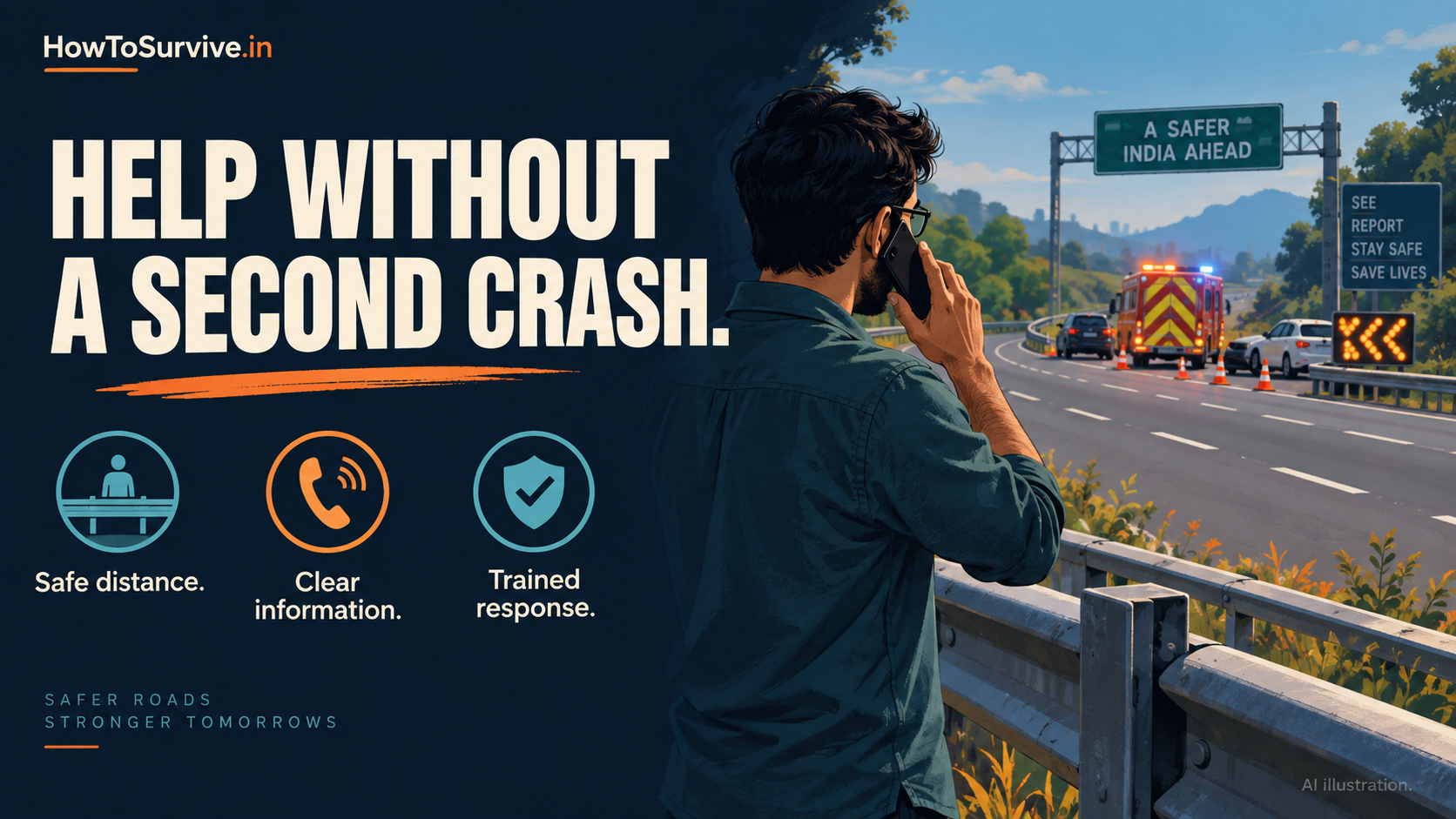
- Call 112, or ask a passenger to. Say the road or expressway name, your direction, the nearest landmark or kilometre marker, the vehicle’s colour, type and number if you can read it safely, and what you saw (swerving, wrong side, stopping at a green light). 112 is the single emergency number; see our emergency numbers guide and how to call 112, 101 or 108.
- Do not use your phone while driving. Pull over to call, or let a passenger do it.
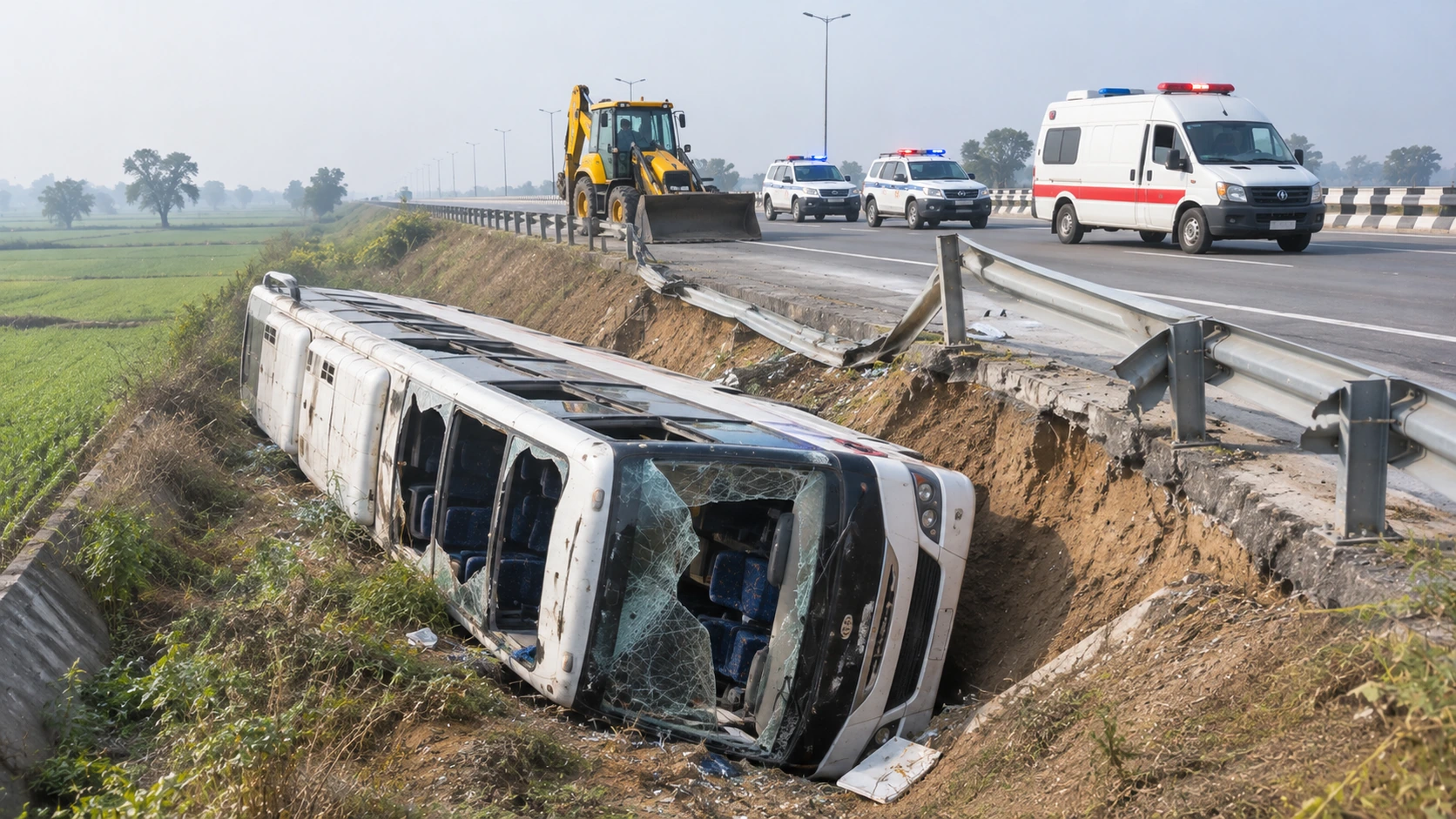
- If it is a taxi, bus or truck driver and you are a passenger, tell the conductor or the person in charge, ask to get off in a safe place, and call 112. In the Padrauna case of October 2026, police said a breath-analyser test found the roadways bus driver drunk after a bus ran through a stretch of the town and one person died; see the case below. In the Lucknow-Agra Expressway bus overturn of November 2026, passengers alleged the driver and conductor had been drinking, which officials had not confirmed.
- If you are a pedestrian or a rider, get off the road to a safe spot and let the car pass. Do not stand in its path.
If there is a crash
- Call 108 and 112 first. Say where you are and how many people are hurt.
- Keep a safe distance from the other driver. Do not argue or take the keys by force. Let the police deal with the driver.
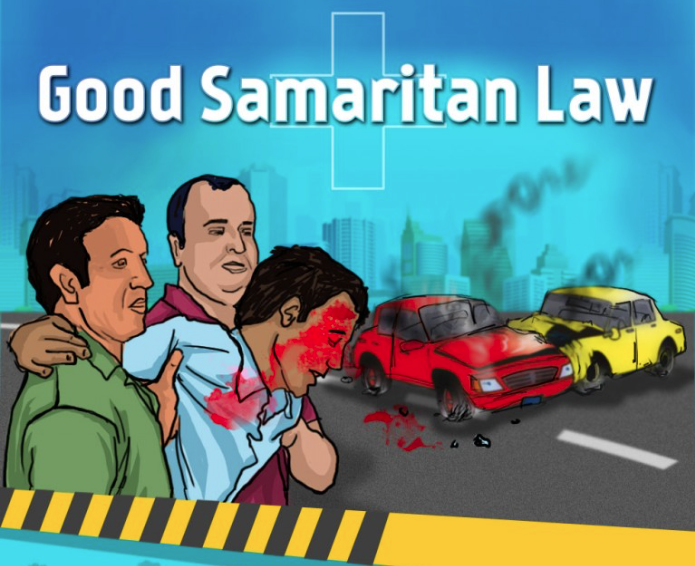
- Help the injured only as far as you know how. Our guide for witnesses, what to do at a road accident in India, has the steps. A Rajya Sabha reply of 11 March 2026 on the Rah-Veer scheme says state governments pay cash awards to Good Samaritans; the reply gives no amounts and says the Union Government keeps no data on how long payments take. Our page on the Good Samaritan law for bystanders (see the related list) explains the legal protection for bystanders.
- Do not move the injured unnecessarily, and do not give food or drink. Stay till the ambulance comes.
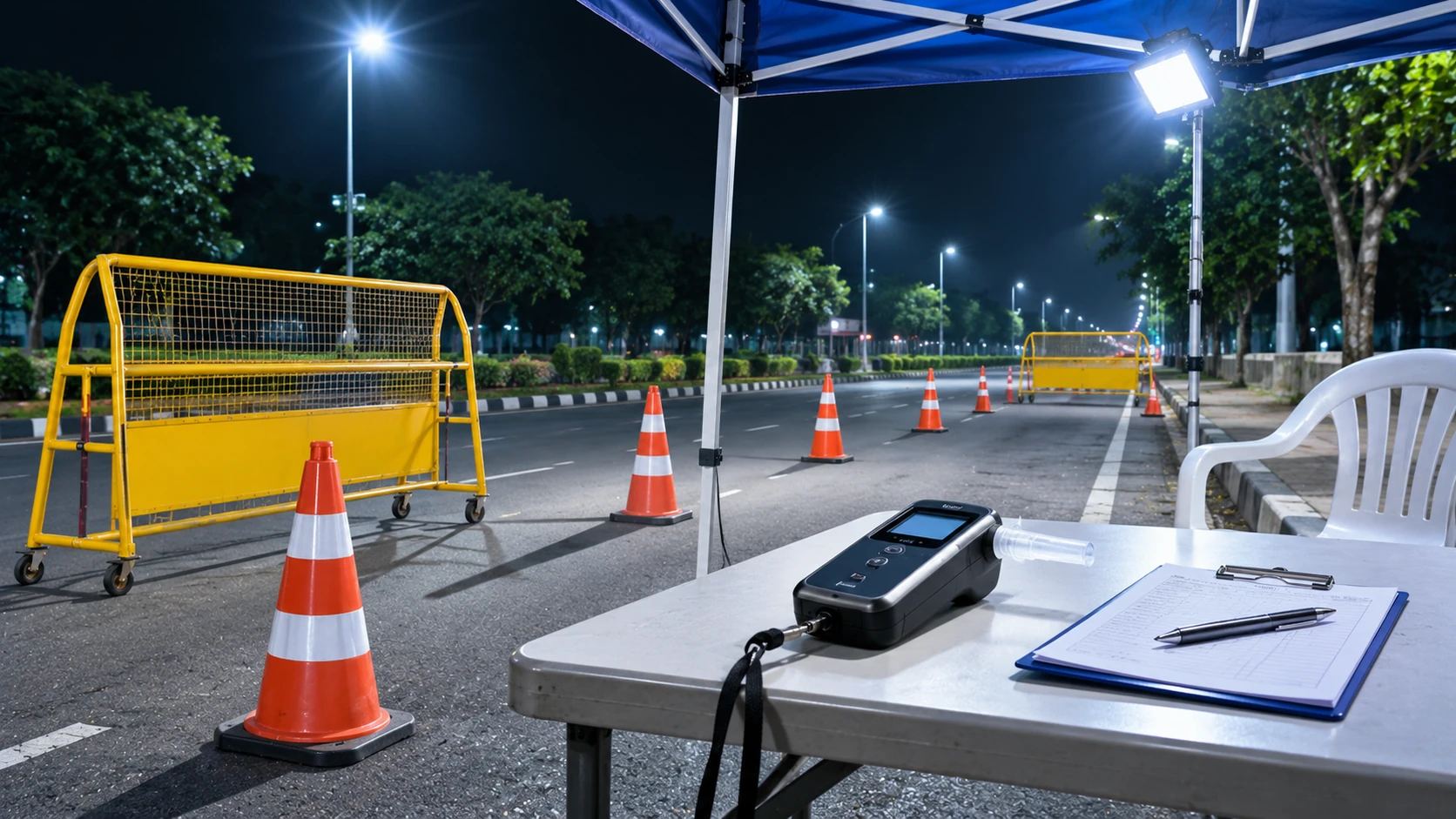
What a police breath test is, and what to expect
These are general facts from a court judgment and the 2019 Amendment Act, not legal advice. We read the judgment of the Madras High Court of 12 March 2020 on a legal-judgments site and the amended fines in the Gazette text of the 2019 Act. We did not read the Act on India Code.
- The offence. Section 185 of the Motor Vehicles Act, 1988, makes it an offence to drive or attempt to drive with alcohol in the blood exceeding 30 mg per 100 ml, detected in a breath analyser test or in any other test, including a laboratory test. It also covers driving under the influence of a drug to such an extent as to be incapable of exercising proper control over the vehicle.
- The test. Section 203 is headed “Breath tests”. The judgment directs police to arrest drunken drivers under section 202 and to conduct breath tests under section 203.
- The arrest. Section 202 lets a police officer in uniform arrest without a warrant anyone who commits an offence under section 184 or 185 in that officer’s presence.
- Penalties. Section 185 as amended by the Motor Vehicles (Amendment) Act, 2019 (Gazette of India, 9 August 2019) carries a fine of Rs 10,000 for a first offence and Rs 15,000 for a second or later offence. The Amendment Act removed the old condition that a second offence must fall within three years of the first. The jail terms are not in the Amendment Act. They come from the older text of the section, which we read on a third-party legal website and not on India Code: imprisonment up to six months, the fine, or both, for a first offence, and up to two years, the fine, or both, for a second or later offence. Check the current text on India Code or ask a lawyer before you rely on it.
- At a checkpoint, stop where told, keep your licence, registration and insurance papers ready, speak calmly and do not argue with the officer. If you are arrested, ask for a lawyer. That is our suggestion, not a quoted rule.
What not to do
- Do not drive after drinking, even for a short distance, and do not ride pillion with a drunk rider.
- Do not chase, block or overtake a suspected drunk driver.
- Do not film instead of calling 112.
- Do not let a friend drive because “he handles it well”.
- Do not argue with police or touch the breath-test device; speak to a lawyer afterwards if you have a complaint.
- Do not assume a night of sleep makes you fit to drive in the morning; we found no official rule on this.
Do these this week
- Agree on a sober driver or a cab for every party, wedding or trip on your calendar.
- Save 112, 108 and a trusted driver’s number on your phone.
- Tell your teenagers and young drivers the plan, and that you will pick them up, no questions asked.
- Look at the checkpoint routes and parking plans of your city police before a big night.
- Read our pages on over-speeding and drunk driving deaths (see the related list), driving in fog and getting out of a car in water.
What we could not confirm
We could not open the Motor Vehicles Act on India Code or MoRTH’s own page, so we could not check the current consolidated text. The fines under section 185 come from the Gazette text of the 2019 Amendment Act. The jail terms come from the older text of the section on a third-party legal website, and the 30 mg limit and the points on sections 202 and 203 come from the court judgment. These may not match the current text. We found no Indian official page on how to report a drunk driver, so the advice to call 112 is our suggestion based on 112 being the single emergency number. We found no official figure on how many drivers are tested after a crash, and no figure on the share of festival nights. The 3,204 figure counts crashes where alcohol or drugs were recorded as the violation; it is not a count of every crash in which someone had been drinking. We found no Instagram, Facebook or LinkedIn clip we could check; the one video below is a YouTube news report. We did not watch it in full and its Hindi speech was not reviewed. This page is general information, not legal advice.
What needs attention
- MoRTH's table shows 3,339, 3,314, 4,201, 3,674 and 3,204 deaths linked to drunken driving or alcohol or drugs in 2020 to 2024.
- In 2024 that was about 1.8% of 1,77,175 road deaths; over-speeding was linked to 1,24,522 deaths in the same table.
- The legal limit quoted in a Madras High Court judgment is 30 mg per 100 ml of blood; WHO says risk rises significantly from 0.04 g/dl.
- Section 185 as amended in 2019 carries a fine of Rs 10,000 for a first offence and Rs 15,000 for a second or later offence (Gazette of India, 9 August 2019).
- Section 202 allows arrest without a warrant for an offence under section 184 or 185 in the officer's presence; section 203 provides for breath tests (as quoted).
- We found no Indian official page on how to report a drunk driver, and no figure on how many drivers are tested after a crash.
Controls that reduce risk
- Name a sober driver or book the cab before the first drink.
- Take a friend's keys kindly and offer an alternative.
- If you see a drunk driver, drop back and call 112.
- After a crash, call 108 and 112 and help only as far as you know how.
- Save 112, 108 and a trusted driver's number.
Common unsafe practices
- Driving after drinking, even a short distance, or riding pillion with a drunk rider.
- Chasing, blocking or overtaking a suspected drunk driver.
- Filming instead of calling 112.
- Letting a friend drive because he handles it well.
- Arguing with police at a checkpoint.
- Assuming one night's sleep makes you fit to drive in the morning.

Leave a comment