

Quick answers
How do I make a Lohri bonfire safely?
Light it in the open on bare ground or a bed of sand, away from walls, stored cloth, hay, vehicles and low wires. Keep it small, light it with matches and never with petrol or kerosene, keep a bucket of water and a bucket of sand beside it, and keep one adult watching. This is our advice, based on MoHFW's firecracker guidelines and news reports.
Is it safe to light a bonfire on a rooftop?
It is riskier. The Tribune reported that a fire in an Amritsar building on Lohri night 2026 may have started from sparks of a rooftop bonfire, though no conclusive evidence had been established. If you must use a roof, keep it clear of any shop, stock or godown below, keep sparks away from anything that burns and have water ready.
What should children wear at a bonfire?
Close-fitting cotton clothes. MoHFW's firecracker guidelines say to avoid fancy synthetic clothes, especially for women and children, because they catch fire easily, and to tie a dupatta or chunni snugly behind the back. Keep children at arm's length from the fire with an adult in charge.
What if someone's clothes catch fire at a bonfire?
The person must not run. Stop, drop and roll, or smother the flames with a heavy cotton blanket and then remove it at once. Cool the burn under cool running water and call 112 or 108 for a serious burn. Our guide on clothes on fire has the steps.
Why is sleeping with an angithi dangerous?
Coal and charcoal fires give off carbon monoxide, which has no colour or smell and can kill sleeping people before they feel unwell. Delhi Fire Service's director advised keeping a window or door slightly open. We would not sleep in a closed room with one lit.
What are the signs of carbon monoxide poisoning?
Headache, dizziness, feeling sick, weakness, tiredness, confusion, chest or muscle pain and shortness of breath, according to the NHS. Symptoms can ease once you leave the room. If several people feel unwell together at home, suspect CO.
What should I do if I think someone has carbon monoxide poisoning?
Switch off the appliance if it is safe, get everyone into fresh air, do not go back inside and call 112 or 108. AIIMS New Delhi's poisons centre lists a toll-free number, 1800 116 117, open 24 hours.
Who do I call if a bonfire fire spreads to a building?
Get everyone out and call 101 for the fire brigade or 112, the single emergency number. Say the lane, a landmark and whether anyone is trapped. Do not go back inside.
Lohri night is about the fire. Families stand round it, throw in til, rewri and popcorn, sing and go home late. Most years nothing goes wrong. In January 2026, at least one Lohri night ended with two people dead in Amritsar after a fire in a four-storey building where a bonfire had reportedly been lit on the roof earlier that evening. And in the weeks around Lohri and Makar Sankranti, the quieter winter fire, the angithi in a closed room, is the one that kills people in their sleep. This page covers both, in plain steps, for a courtyard, a rooftop or a flat. Checked 10 November 2026.
In short
- Light the bonfire in the open, on bare ground or sand, well away from walls, awnings, stored cloth, hay, parked vehicles and low wires. Not on a rooftop that sits over a shop or stock, and not in a lane the fire brigade cannot enter.
- Never use petrol, kerosene or spirit to start it. Keep a bucket of water and a bucket of sand beside it, and one adult whose only job is to watch it.
- Dress for a fire. MoHFW’s firecracker guidelines tell people to avoid fancy synthetic clothes, especially for women and children, and to tie a dupatta snugly behind the back. The same logic applies at a bonfire. Keep children at arm’s length from it.
- If clothes catch fire, do not run. Stop, drop and roll, or smother with a heavy cotton blanket. Our guide on clothes on fire has the steps, and burn first aid covers what to do next.
- Put it out properly at the end, and never leave it burning unattended or let it smoulder under a roof.
- An angithi, sigri or coal or charcoal stove does not belong in a closed room, and nobody sleeps beside one. Carbon monoxide has no smell. If someone is dizzy or drowsy, get everyone into fresh air first, then call 112 or 108.
What has been reported
We treat these as reports. None of the causes is proved in court.
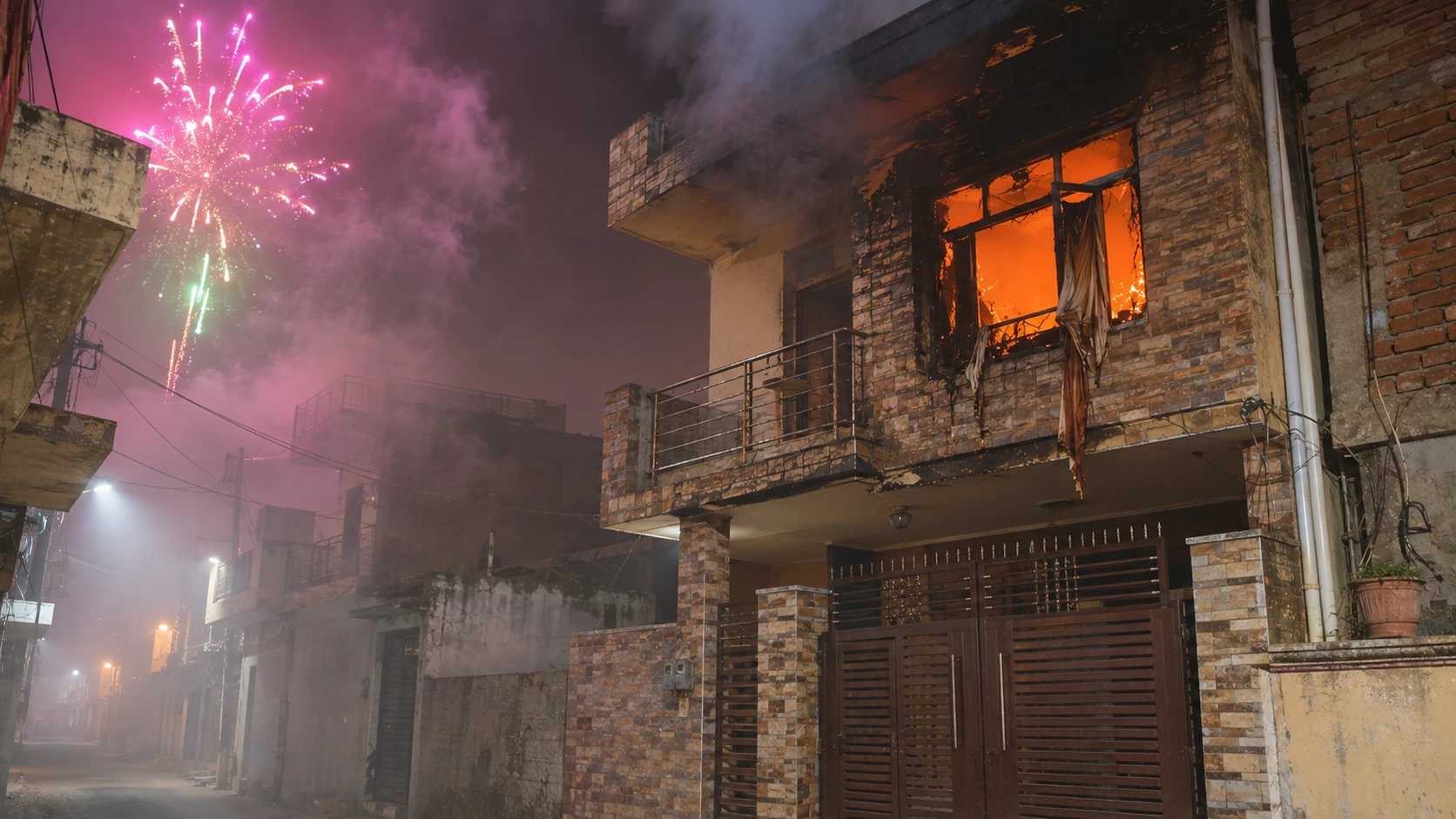
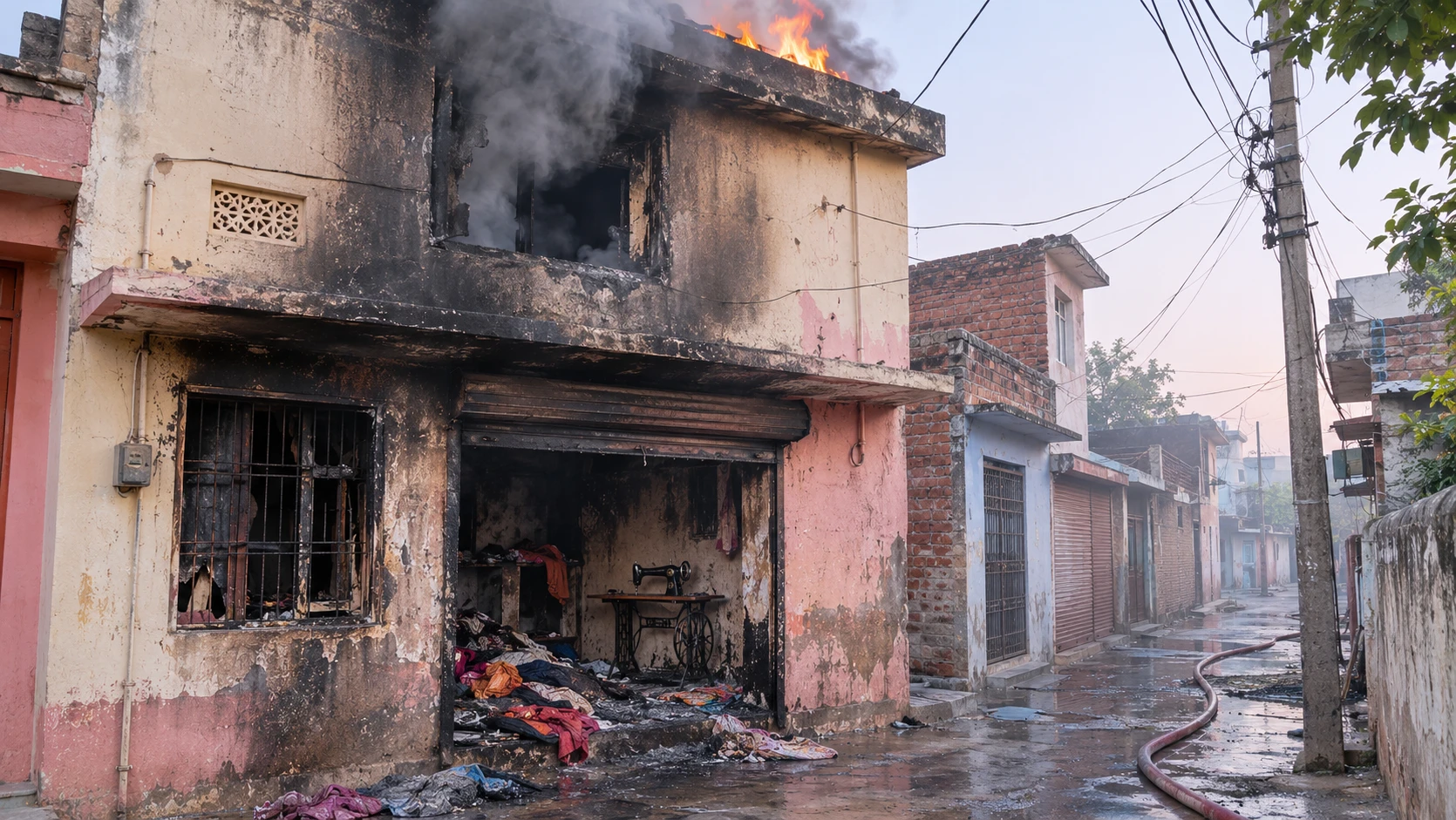
- Amritsar, Lohri night, January 2026. The Tribune reported on 15 January 2026 that a fire broke out suddenly in a four-storey building in Chuhar Gali near Paragdas Chowk, under B Division police station. An 85-year-old man and his 32-year-old daughter, who was differently abled, died; she reportedly died of asphyxia from heavy smoke, and both were unable to move because of age and disability. Other family members escaped to the roof and were rescued by neighbours. Witnesses said the family sold religious cloth coverings and kept a large stock in the basement, and that a Lohri bonfire had been lit on the rooftop earlier that night. Preliminary information suggested sparks from the bonfire may have caused the fire, but the paper said no conclusive evidence had been established. Seven fire engines were sent, and the narrow lanes slowed the response. The report does not give a cause from police or the fire department.
- A village near Amritsar, Lohri 2024. Free Press Journal reported on 14 January 2024 that a sudden blast came from a bonfire while a family sat around it at home. Nobody was hurt, though clothes were singed. A family member put it down to heat pressure after wood was burnt directly on a cemented floor with no sand beneath, and urged people to spread sand or soil under a fire. That is his explanation, not an expert finding.
- Delhi, January 2024. IANS reported on 30 January 2024 that 15 people had died in Delhi that month after inhaling angithi smoke, and quoted Delhi Fire Service’s director as saying that brazier-related casualties passed 20 when nearby Delhi-NCR areas were included. The report does not say who counted the 15 or from which date.
We found no national count of bonfire injuries or angithi deaths, and do not give one. The older Indian cases of coal or charcoal fires in closed rooms that we have already written up are in our guide on generators, geysers and angithis.
Before you light the bonfire
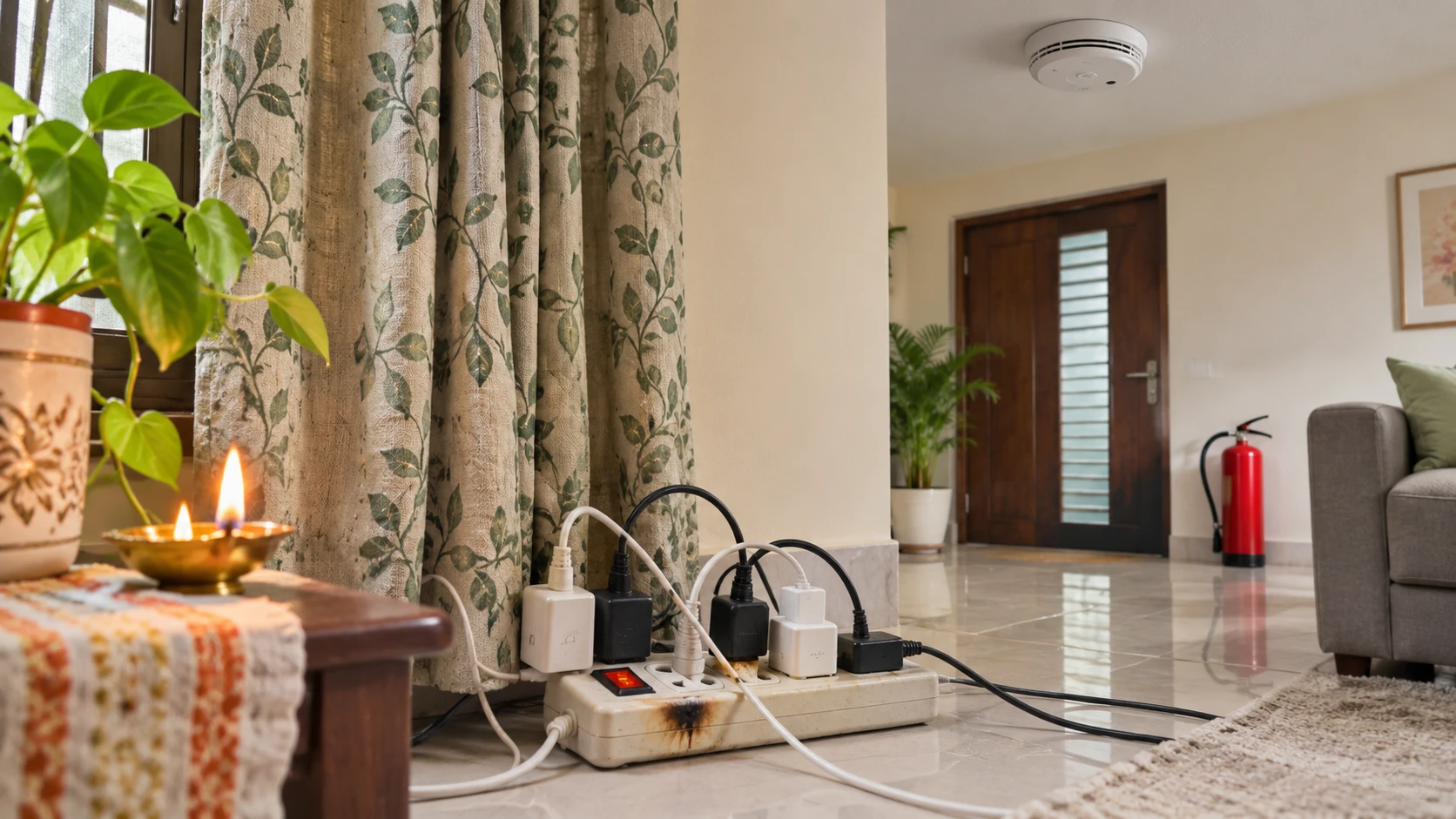
- Pick the spot. Open ground, a wide courtyard or a park is better than a rooftop, a balcony or a lane. Look up for wires and branches, and look around for anything that burns: stored cloth, wood, hay, plastic chairs, awnings, vehicles. The Amritsar report is a reminder that what is below the roof matters. Keep a rooftop fire away from any shop or godown beneath. This is our advice, not an official rule.
- Prepare the ground. Clear dry leaves and grass. Spread a layer of sand or soil under and round the fire, as the family near Amritsar suggested. Do not burn wood straight on a cement or tiled floor. Mark a ring with bricks or stones.
- Keep it small. A fire that gives enough warmth for the group does not need to be tall. Add wood in small pieces and do not pile it above shoulder height.
- Light it with matches or a small flame, never with petrol, kerosene, spirit or a sprayed liquid. Do not throw crackers, sprays, plastic or bottles in. Crackers and aerosols can burst.
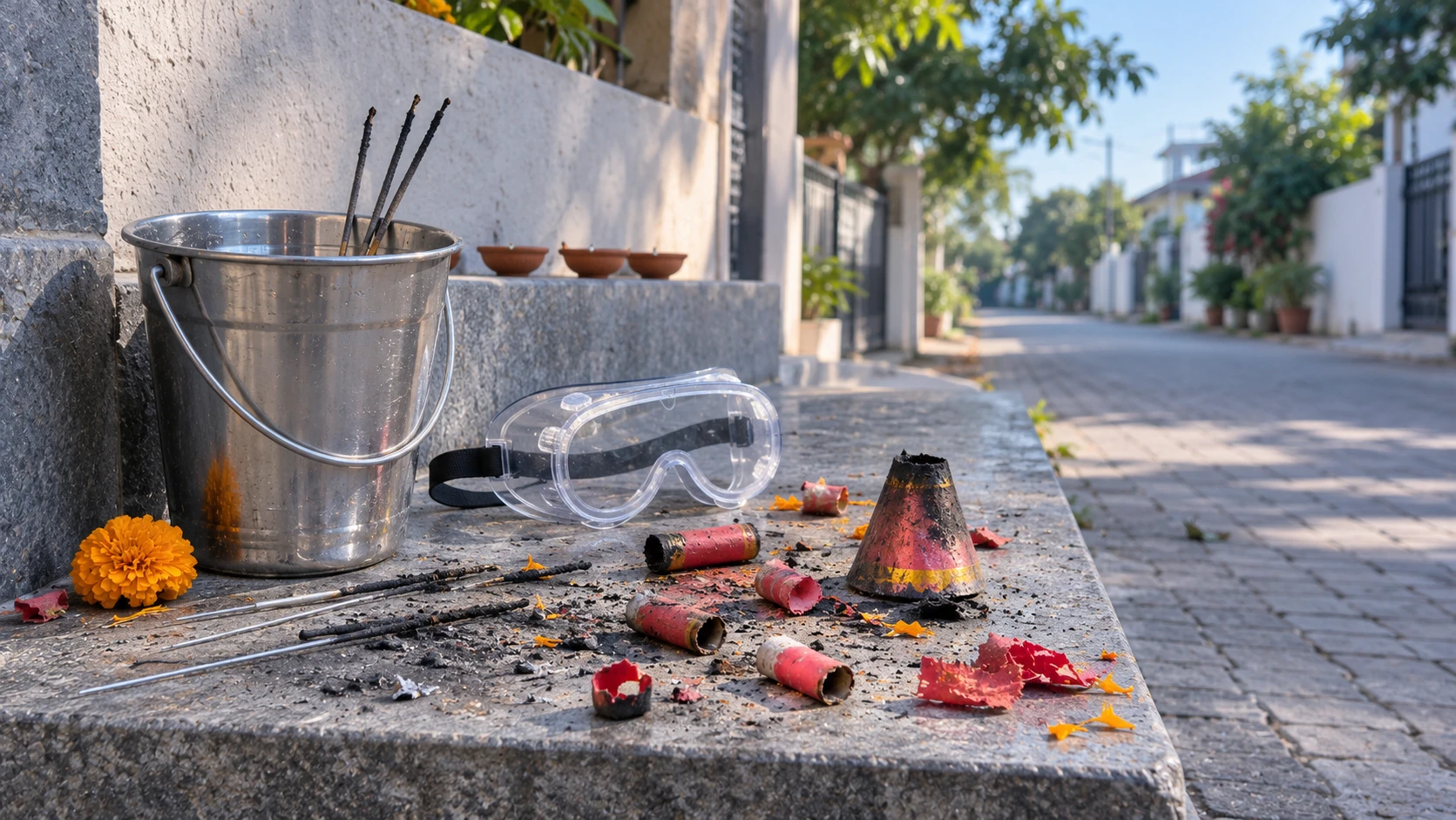
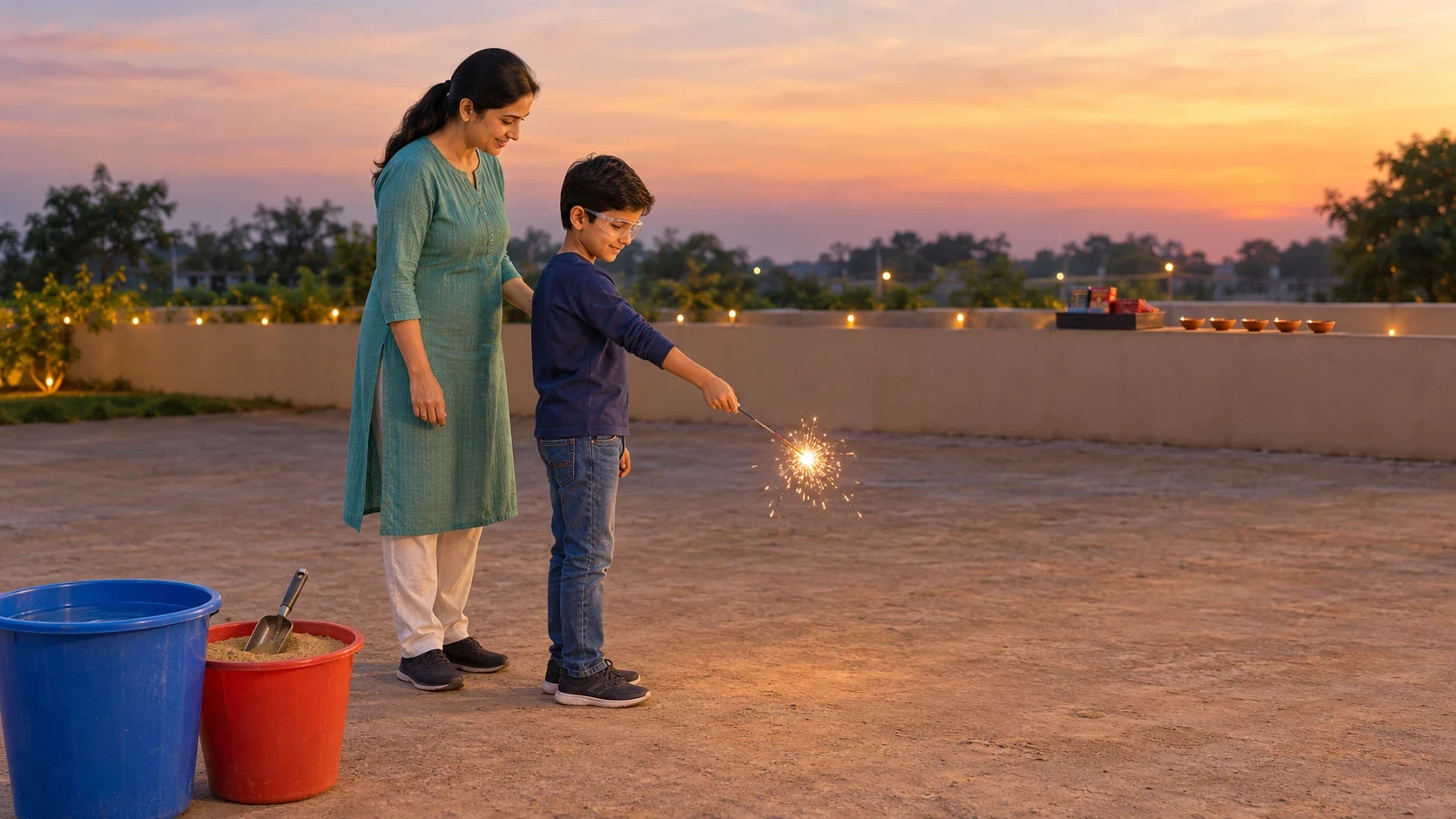
- Keep water and sand ready. MoHFW’s firecracker guidelines say to keep a bucket of water or sand ready when lighting fireworks; we apply the same to a bonfire.
- Know the numbers. 101 reaches the fire brigade and 112 is the single emergency number; see our fire brigade number guide. Check that a fire engine can reach your lane. Our guide on keeping rescue access clear explains why parked vehicles and carts matter.
Around the fire: clothes, children and who stands where
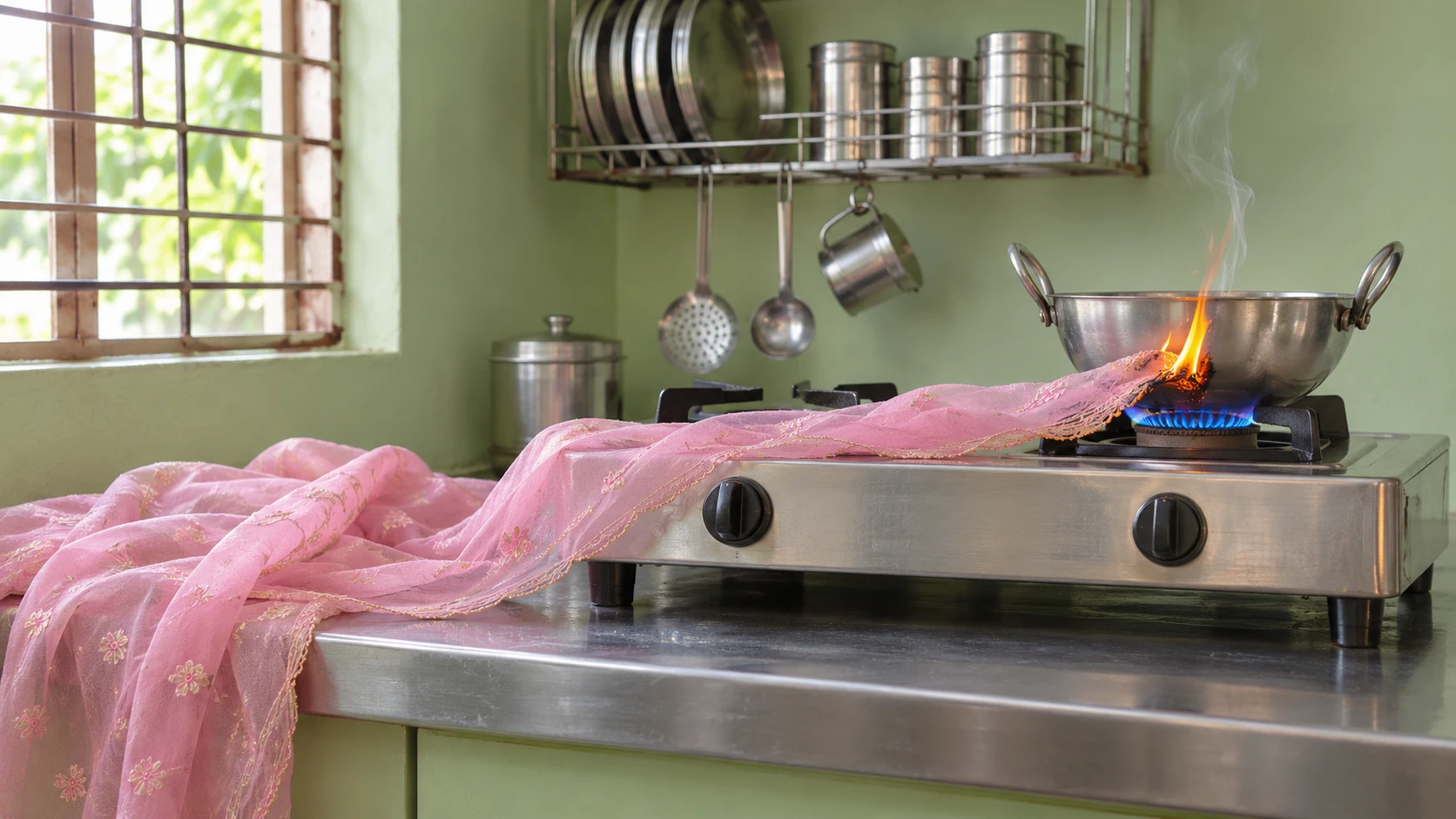
- Wear cotton, tuck and tie. MoHFW’s 2026 firecracker guidelines say to avoid fancy synthetic clothes, especially for women and children, because they catch fire easily, to avoid very loose, free-flowing clothes such as a ghagra near fire, and to tie a dupatta or chunni snugly behind the back. They do not mention bonfires, so this is the same idea applied to a Lohri fire. Pin up shawls and pallus, and keep woollen or synthetic jackets with loose hanging ends away from the flames.
- Stand at arm’s length or more. Nobody leans over the fire, steps over it or jumps across it. Children stay in a ring held back by an adult.
- Never leave children alone near it, and keep older people on stable chairs rather than low stools at the edge.
- One sober adult in charge. That person does not hand out food and does not leave until the fire is out.
- Smoke goes where wind goes. If someone has asthma or a chest problem, seat them upwind. Our page on asthma and allergy attacks in cold weather lists the signs of trouble.
If something goes wrong
- Clothes on fire. The person must not run. Stop, drop to the ground, cover the face with the hands and roll, or lay them down and smother the flames with a heavy cotton blanket and then take the blanket away at once. Cool the burn under cool running water. See our full guide on clothes on fire.
- A burn. Cool it, do not put anything on it, and call 112 or 108 for burns on the face, hands or feet, a large burn or any burn on a child. See burn and scald first aid.
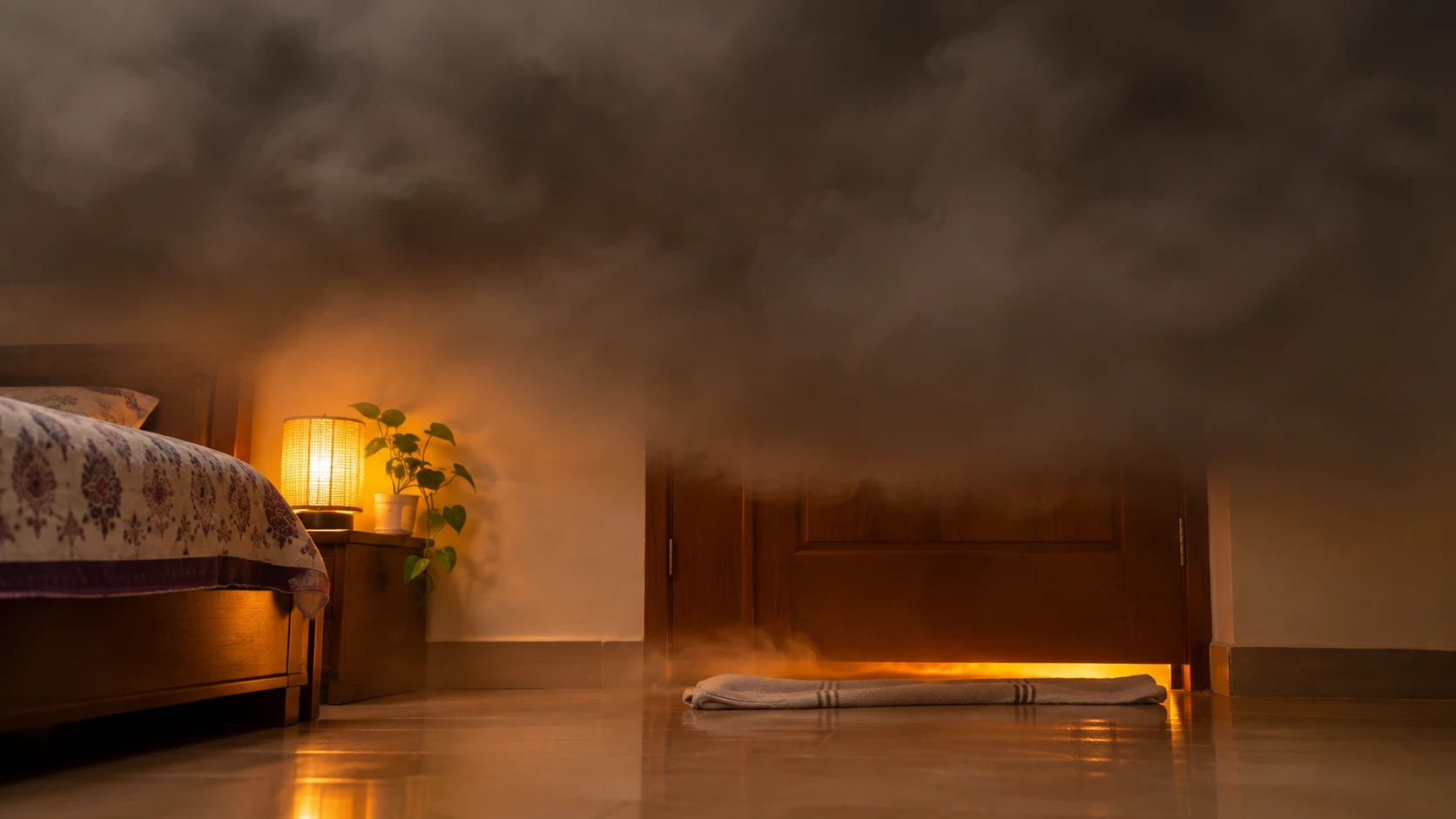
- A fire spreading to a building. Get everyone out and stay out, call 101 or 112 and say the lane and a landmark. Do not go back for people or things. If you are stuck, our guide on being in a smoke-filled room has the steps.
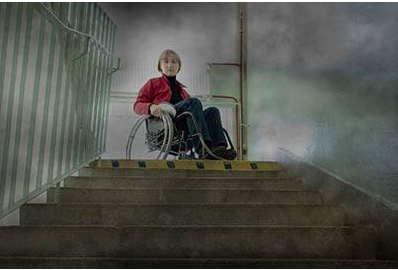
- Someone cannot move. Plan, before the night, who will help any older, sick or disabled family member leave. In the Amritsar report, the two who died were unable to move. Our guide on evacuating people with disabilities (see the related list) has the basics.
Angithi, sigri and charcoal: the quiet winter fire
A coal or charcoal fire gives off carbon monoxide (CO), a colourless, odourless gas. Sleeping people can die without ever feeling unwell. Our guide on generators, geysers and angithis has the CDC and NHS detail. Here is the short version for a cold night.
- Not in a closed room. Do not burn coal, charcoal or wood in a room with the door shut, and do not sleep in a room where one is burning, even if it looks like it has gone out. We would take it out into an open space or put it out with water before bedtime. That is our advice.
- Air and water. Delhi Fire Service’s director advised, as reported in January 2024, keeping a window or door slightly open because burning fuel in a closed room uses up oxygen and produces CO. The same report says he also suggested a bucket or large pan of water near the angithi. We found no official source saying water removes carbon monoxide, so do not rely on it. Fresh air from an open window or door is what matters; that is our advice.
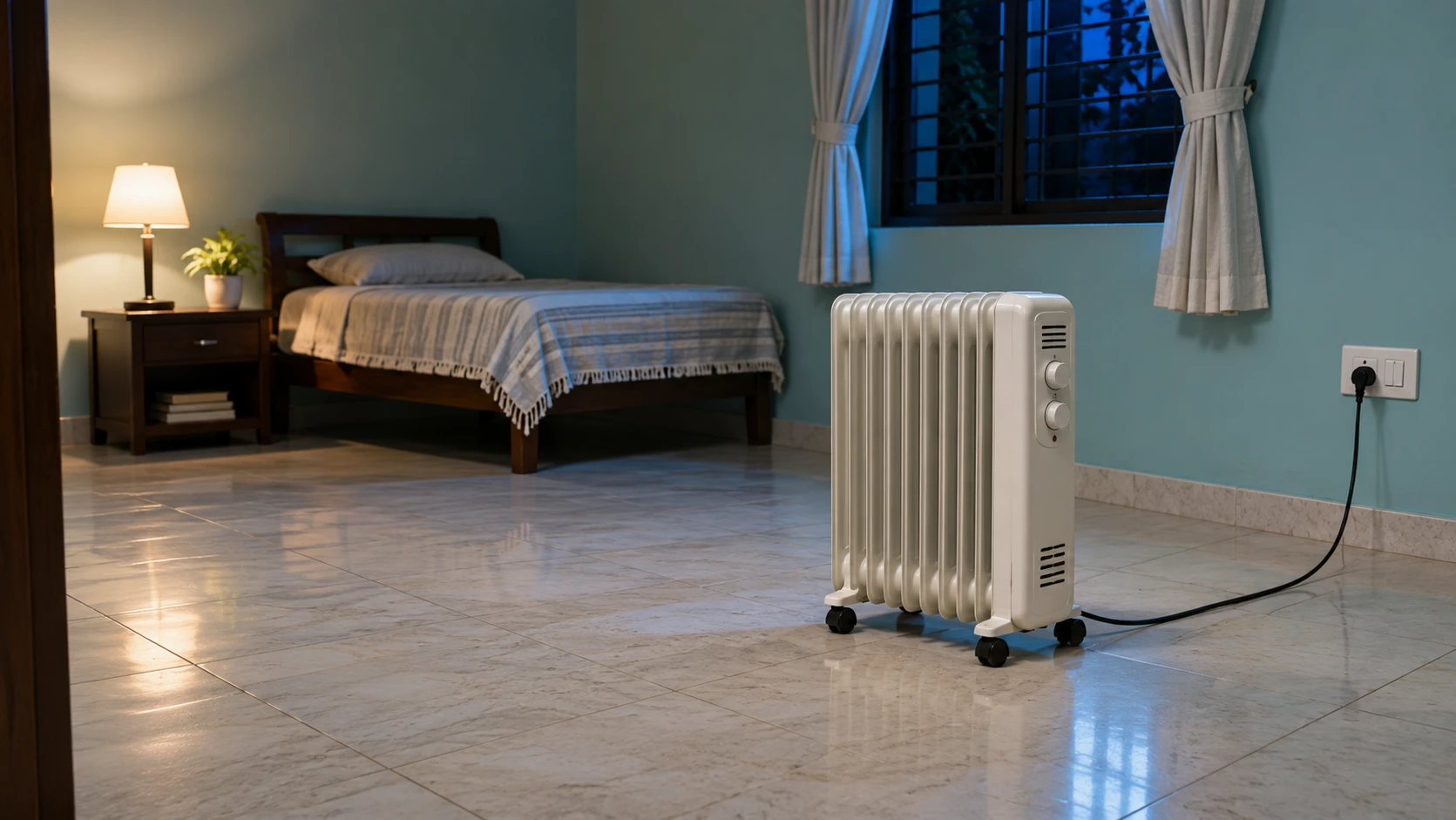
- Heaters and bedding. The same advice was to keep heaters away from bedding, since a quilt can fall onto a heater while people sleep. Our page on room heater and blower safety has distances and night use.
- Know the signs. The NHS lists headache, dizziness, feeling sick, weakness, tiredness, confusion, chest or muscle pain and shortness of breath. Symptoms can ease once you leave the room. If several people at home feel unwell together, suspect CO.
- If you suspect CO, switch off the appliance if it is safe to do so, get everyone into fresh air, do not go back inside, and get medical help. The NHS says to call emergency services for trouble breathing, sudden confusion, loss of consciousness, weakness or chest pain. In India, call 112 or 108.
- Poison information. AIIMS New Delhi’s National Poisons Information Centre lists a toll-free number, 1800 116 117, open 24 hours a day, and says not to wait for the person to look sick and not to treat them yourself. It also advises taking the person to the nearest healthcare facility.
What not to do
- Do not light a bonfire with petrol, kerosene or spirit, and do not throw crackers, aerosols or plastic in.
- Do not burn wood straight on a cement or tiled floor, or under a roof edge or an awning.
- Do not let children run, jump or lean over the fire, and do not let anyone in loose synthetic clothes stand close.
- Do not leave the fire burning when you go in, and do not carry glowing coal into a bedroom.
- Do not sleep in a closed room with an angithi, a charcoal stove or a heater running.
- Do not treat a person who has breathed smoke or CO by giving them food or home remedies; get them to fresh air and call for help.
Do these before Lohri
- Walk your courtyard or roof and decide where the fire goes and where the buckets stand.
- Put a bucket of sand and a bucket of water in place, and a heavy cotton blanket where everyone can reach it.
- Decide who will help a family member who cannot move.
- Save 101, 112 and 108 on every phone, and the poison centre number if you use an angithi.
- Read our pages on home fire safety and Diwali safety, crackers and burns first aid, which cover the same kinds of burns.
What we could not confirm
We found no Indian government text written for Lohri bonfires, so the bonfire steps are common-sense advice built on MoHFW’s firecracker guidelines (which cover clothing and a bucket of water or sand but do not mention bonfires), the two news reports above and our own judgement. The cause of the Amritsar fire is not established; the sparks explanation is a preliminary report from witnesses. The family’s explanation of the village blast was not checked by an expert. The IANS figure of 15 deaths has no named source. The suggestion of water near the angithi appears only in the IANS report, and we found no official source for it. We found no Indian official first aid card for CO poisoning, so those steps follow the NHS page (reviewed December 2025) and the AIIMS centre’s advice. We did not watch the videos below in full. This page is general information, not a fire audit.
What needs attention
- The Tribune reported that the Amritsar Lohri-night fire may have started from sparks of a rooftop bonfire, but no conclusive evidence had been established.
- In the same report, the two who died were unable to move because of age and disability, and narrow lanes slowed seven fire engines.
- A family near Amritsar attributed a bonfire blast in January 2024 to burning wood on a cement floor with no sand beneath; this is a lay explanation.
- IANS reported 15 deaths in Delhi in January 2024 from angithi smoke, with no named source for the count.
- MoHFW's firecracker guidelines cover synthetic clothing, dupattas and buckets of water or sand but do not mention bonfires.
- We found no Indian government text written for Lohri bonfires.
Controls that reduce risk
- Pick an open spot, spread sand, keep water and sand buckets and a cotton blanket ready.
- Wear cotton, tie the dupatta, keep children at arm's length.
- Decide who helps family members who cannot move.
- Take the angithi out or put it out before sleeping.
- Save 101, 112 and 108, and the poison centre number.
Common unsafe practices
- Using petrol, kerosene or spirit to start the fire.
- Burning wood on a cement or tiled floor, or under an awning or roof edge.
- Letting children run, jump or lean over the fire.
- Wearing loose synthetic clothes or an untied dupatta near flames.
- Leaving the fire smouldering or unattended.
- Sleeping in a closed room with an angithi or charcoal fire.



Leave a comment