

Quick answers
What should I do if I see a fallen wire after a cyclone?
Stop, step back and keep others away. Do not touch the wire or anything touching it. Call 112 and your electricity company (1912 for APEPDCL in Andhra Pradesh) and give the exact location. Treat the wire as live even if the street has no power.
Is it safe to walk through floodwater after a cyclone?
Not near poles, transformers, street lights or fallen lines. Water can carry current from a broken wire and you cannot see it. NDMA's flood guidance says not to touch electrical equipment when wet or standing in water and not to walk through moving water.
How far should I stay from a fallen power line?
We found no Indian official figure. The Better Health Channel in Victoria, Australia, says more than 8 to 10 metres, and to stay away from anything touching the line. In a narrow lane, that may mean leaving it.
Can I switch on the mains after the water goes down?
Our suggestion is to keep the main switch off until the water has gone and a licensed electrician has checked the wiring and earth connection. NDMA's flood guidance asks people to turn off utilities at the main switches before evacuating.
What should I do if someone is shocked in water?
Do not step into the water. Call 112 and the electricity company so the supply is cut, and call 108. Once the power is certainly off, start CPR if the person is not breathing normally and you are trained.
Who do I call in Andhra Pradesh?
APEPDCL asks consumers to report electrical emergencies on 1912 or to the district control room. The State disaster helplines printed by The Hindu on 27 October 2026 were 1070, 112 and 1800 425 0101.
Did Cyclone Arnab kill anyone through live wires?
The Hindu reported on 27 October 2026 that a 65-year-old man died at Mangalapalem, Visakhapatnam, after he allegedly touched live wires that had fallen into water. A live blog the next morning quoted the Chief Minister saying no loss of life had been reported so far. The final toll was not known when we checked.
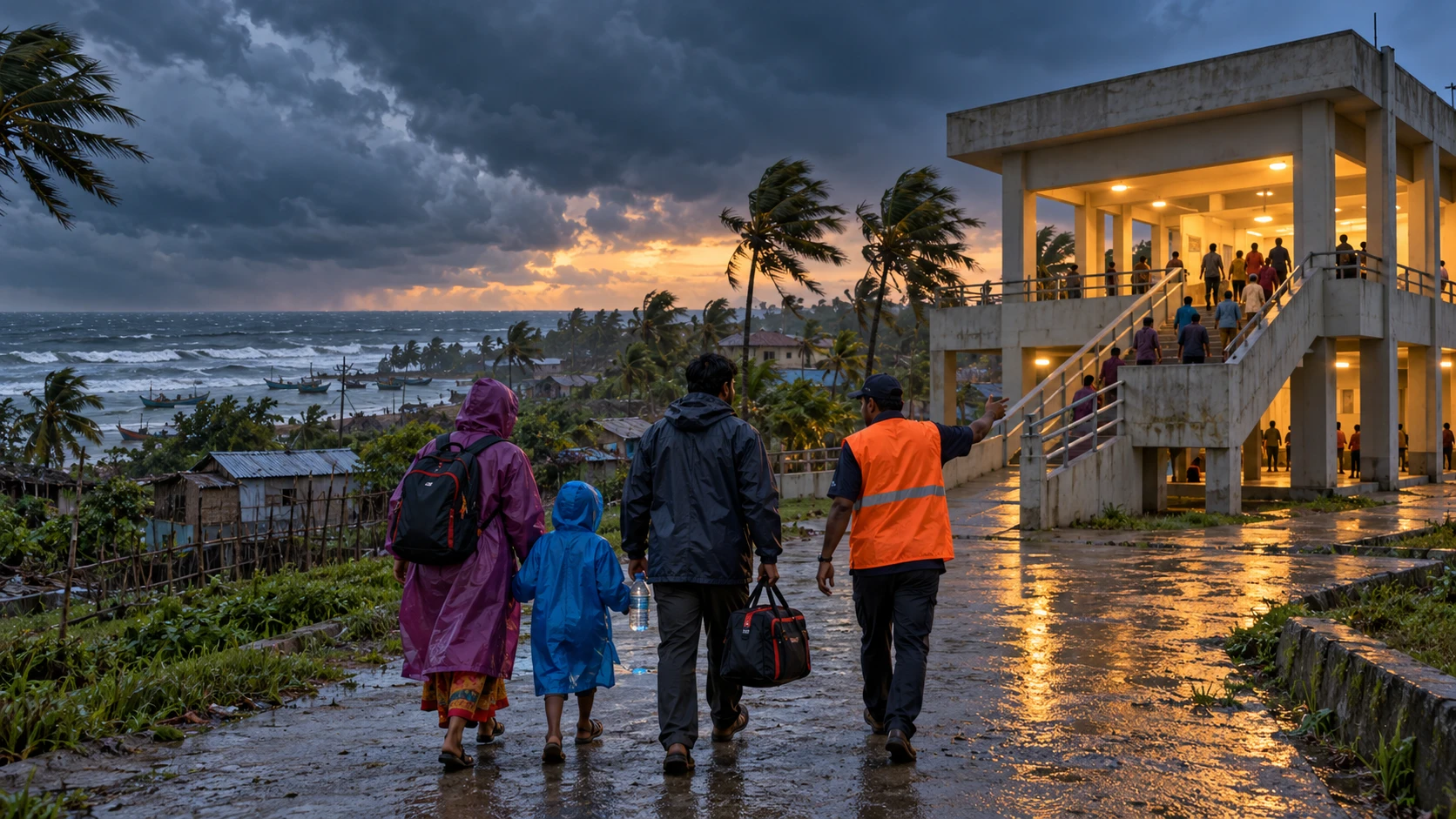
The wind drops, the sky brightens a little, and people step out to look. That is the moment this guide is about. On the night of 27 October 2026, The Hindu reported that a 65-year-old man died at Mangalapalem in Visakhapatnam after he allegedly came into contact with live electrical wires that had snapped and fallen into water, while Cyclone Arnab was bringing very heavy rain to the northern coastal districts of Andhra Pradesh. By the next morning, the live reporting we read quoted the Chief Minister saying no loss of life had been reported so far in the State. The two accounts do not match, and we do not know which count will stand once the final figures come in. We also do not know how that wire came down or whether the line was still switched on. What we can say is that a broken wire in standing water is an ordinary hazard after any big storm, and it kills quietly.
In short
- Treat every wire that is down, sagging, tangled in a tree or lying in water as live. A still wire is not a dead wire.
- Do not walk, wade or drive through water near a pole, transformer, street light or fallen line. Water carries current, and you cannot see where it is coming from.
- Do not touch anyone or anything that is touching a fallen wire. That includes a person, a metal gate, a vehicle, a fence and a wet branch.
- Keep people back and call for the supply to be cut. Call 112 and your electricity company. In Andhra Pradesh the company helpline is 1912.
- Indoors, keep the main switch off until the water has gone and a licensed electrician has checked the wiring.
Why the danger is highest after the storm
During a cyclone most families are indoors, doors shut. Afterwards they come out to clear the road, check on the neighbours, look at the sea or look for a shop. That is also when poles are leaning, wires are hanging across lanes and every low spot is full of muddy water. Before landfall, the State had readied 8,400 personnel for electricity disruptions and planned for up to 15,000 power poles to collapse, the Chief Minister said in figures reported by The Hindu on 27 October. A utility does not plan for numbers like that unless it expects lines to come down. Early reports on 28 October spoke of power lines snapped at several places in Kakinada, and the NDRF said it was clearing uprooted trees and electricity poles in Yanam.
NDMA’s cyclone do’s and don’ts, as circulated to States and Union Territories, say what a household can do. Indoors, switch off the electrical mains and the gas connection. Outdoors, watch out for broken electric poles and wires. After the cyclone, strictly avoid loose and dangling wires from lamp posts. We read a copy of that circular on the Puducherry revenue department’s site, and it carries no date. Our own cyclone safety guide covers warnings and evacuation, and the floodwater guide covers roads.
What to do when you see a wire down
- Stop where you are and step back. Do not go closer to look. If you are in water, turn around and leave by the way you came, taking small steps if you must.
- Do not touch it, move it or push it aside. A bamboo pole or a plastic pipe is not safe either, especially when wet. APEPDCL’s own safety page says to stay away from a fallen wire and not to touch anyone or anything that is touching one.
- Keep others away. Children, cattle, a passing two-wheeler. Stand at a distance and warn people. Do not try to mark the spot by walking up to it.
- Call 112 and the electricity company. Give the nearest landmark, the pole number if you can read it from where you are, and say clearly that a wire is down in water or on a road. For Andhra Pradesh, APEPDCL asks consumers to report outages and electrical emergencies on 1912 or to the district control room. The State disaster helplines printed by The Hindu on 27 October were 1070, 112 and 1800 425 0101.
- Do not trust the darkness. A street may have had no power for hours, and the supply can still come back without a warning. That is our reading of how supply restoration works, not a figure from a regulation, and it is the reason to wait for the company to say a line is dead.
How far is far enough
We could not find an Indian official page that gives a safe distance from a fallen line, and we have not made one up. The Better Health Channel, run by the Victorian government in Australia, says all fallen powerlines should be treated as live and to stay more than 8 to 10 metres away, and to stay away from anything touching the line, such as water, vehicles or metal fences. Take that as a rough yardstick from another country, not an Indian rule. In a narrow lane that distance may mean leaving the lane altogether.
Floodwater is the part you cannot see
NDMA’s flood do’s and don’ts, in a flyer from Sphere India that says it follows NDMA guidelines, tell people to disconnect electrical appliances before evacuating, to turn off utilities at the main switches, and not to touch electrical equipment while wet or standing in water. They also say not to walk through moving water, and not to drive into flooded areas. After a cyclone the same rules apply, with a snapped wire as the extra risk. So avoid wading near poles, transformers and street lights, and keep clear of metal grilles, railings and gates that a wire may be leaning on. If you have to cross a flooded stretch because you are being evacuated, follow the rescue team’s route and do not take a shortcut along a line of poles.
If someone is shocked in water or by a line
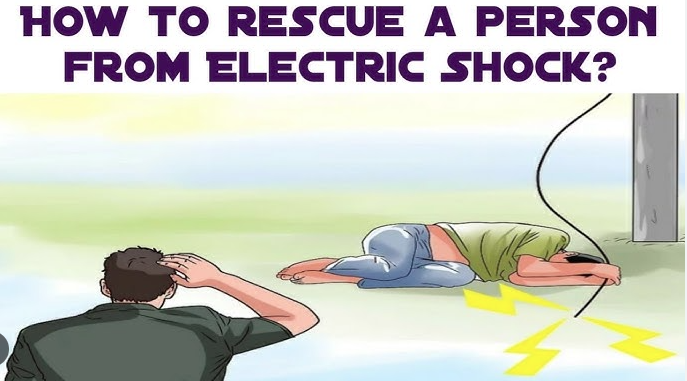
Do not step into the water to reach them. If you cannot be sure the supply is off, you can become the second casualty. Call 112 and the electricity company, ask for the supply to be cut, and call 108 for an ambulance. Once the power is certainly off, check for breathing and start CPR if you are trained and the person is not breathing normally. Cool any burns under running water for 20 minutes. These steps follow the first aid page of the Better Health Channel, which we opened on 28 October 2026. Our first aid guide and the guide to wires near your house cover the same ground, and our emergency numbers guide lists the numbers.
Inside your home after the water goes
- Keep the main switch off if water has entered the house, even if the street supply is back. Do not switch anything on with wet hands or while standing in water.
- Do not use a switch, fan, fridge or pump that has been under water. Our suggestion is to have a licensed electrician check the wiring and the earth connection first. The returning-after-a-flood guide has the full checklist.
- Look at the wire coming into the house. If the service line has come down or the meter box has been in water, call the company and leave it alone.
- Drinking water comes next. See our note on safe water during floods.
What a lane, a society or a village can do
One person should stand guard at a safe distance from a fallen wire until the crew comes. Ask neighbours to pass the message along. Shopkeepers can keep shutters down near leaning poles. A school or shelter in charge can walk the surrounding lane before letting children out. Write down the pole number and the time of your call, and call again if the line is not attended. None of this replaces the lineman, but it keeps people out of reach until he arrives.
What we could not confirm
- The final death toll for Cyclone Arnab. The Hindu reported one death on 27 October and the Chief Minister was quoted on the morning of 28 October saying none had been reported so far.
- How the wire at Mangalapalem came down, and whether it was live. The report says the man allegedly touched it.
- An Indian official safe distance from a fallen line. The 8 to 10 metre figure is from a health page in Australia.
- Whether any power restoration figures have been released. We do not quote any.
- We found no public Instagram, Facebook or LinkedIn video we could match to a live wire hazard in this cyclone, so the videos below are from YouTube.
Do this today
If you live on a coast that gets cyclones, tell everyone at home one rule. After the storm, no wire is safe and no water near a pole is safe. Save 112, 108 and your electricity company’s helpline on every phone in the house. Checked 28 October 2026.
What needs attention
- Reporting on Cyclone Arnab included one reported death from a live wire in water in Visakhapatnam, and a separate statement that no loss of life had been reported so far; the counts do not match and the final toll is not known.
- NDMA's cyclone do's and don'ts ask people to switch off mains indoors, watch for broken electric poles and wires outdoors, and avoid loose and dangling wires after the cyclone.
- NDMA's flood do's and don'ts, as reproduced by Sphere India, say not to touch electrical equipment when wet or standing in water and to turn off utilities at the main switches.
- No Indian official safe distance from a fallen line was found; an Australian state health page says more than 8 to 10 metres.
- NCRB recorded 15,861 electrocution deaths in India in 2024, up from 13,835 in 2023; the figures are not split by cause.
- Cyclones themselves caused far fewer recorded deaths than electrocution in NCRB's tables (18 in 2024 and 2 in 2023), though the tables do not say how many electrocutions followed storms.
Controls that reduce risk
- Teach everyone at home the rule: after a storm, no wire is safe and no water near a pole is safe.
- Save 112, 108 and your electricity company's helpline on every phone.
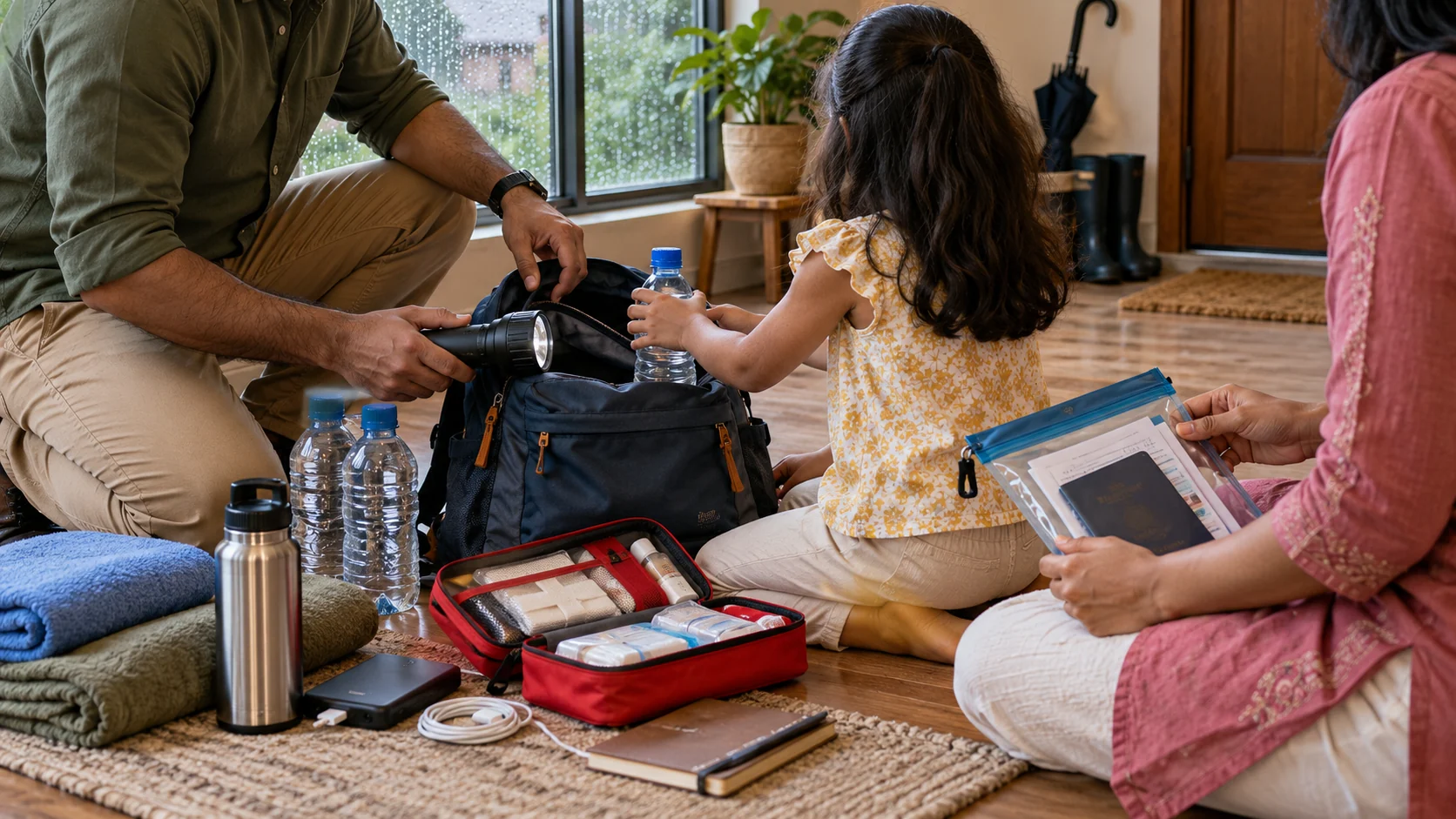
- Switch off the main switch before a cyclone arrives, as NDMA advises.
- After the storm, report any wire down or pole leaning with the pole number or landmark.
- Have a licensed electrician check the wiring before switching on after a flood (our suggestion).
- Walk your lane or society and tell neighbours the same rule.
Common unsafe practices
- Walking or wading through water near a pole, transformer or street light.
- Touching a person, gate or fence that is touching a fallen wire.
- Moving a wire or a branch off it with a stick or a pipe.
- Assuming a wire is dead because the street has had no light for hours.
- Driving over a fallen wire.
- Switching things on at home with wet hands, or restoring the main switch while water is still in the house.


Leave a comment