
Quick answers
What is the full form of PASS in fire safety?
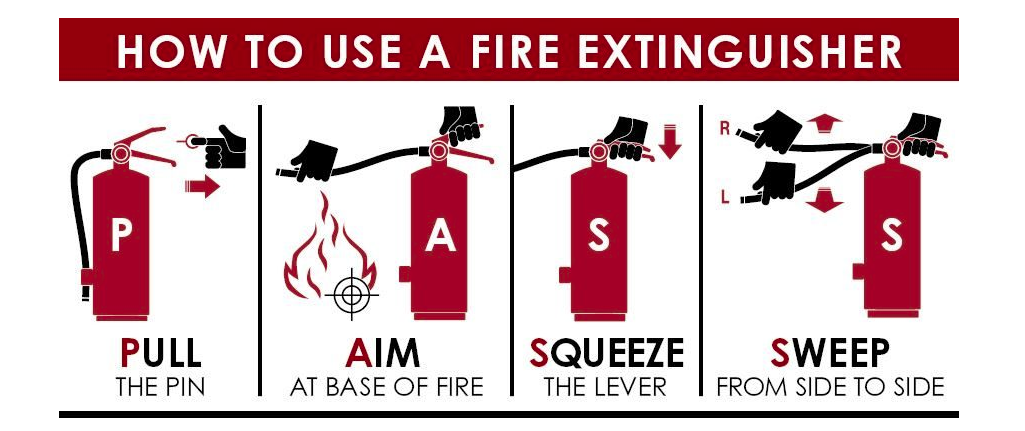
For a fire extinguisher, PASS is Pull, Aim, Squeeze, Sweep: pull the pin, aim low at the base of the fire, squeeze the handle and sweep side to side. For a firefighter's device, PASS is the Personal Alert Safety System. Use the extinguisher method only on a small fire and leave if it grows.
What is the full form of SCBA? Is SCABA the same?
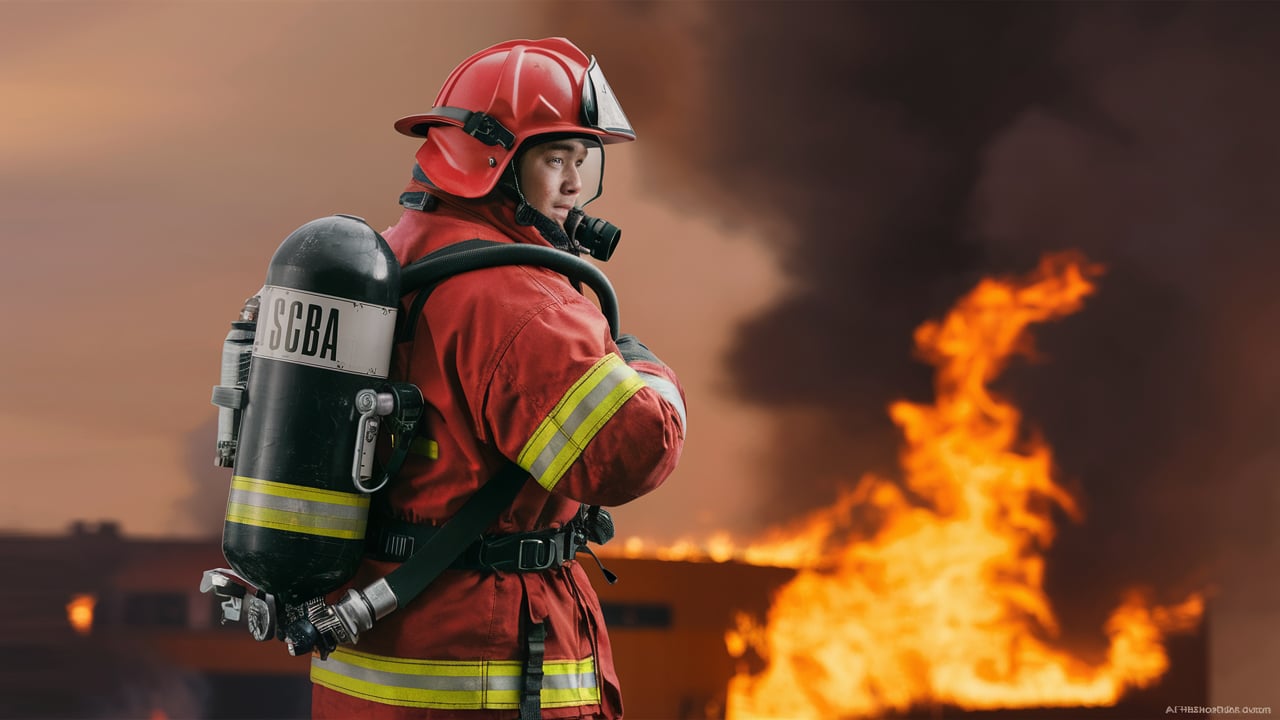
SCBA is Self-Contained Breathing Apparatus, a respirator with its own compressed air for firefighters and rescue crews. SCABA is a common misspelling of SCBA, and the full form is the same.
What is the full form of SDMA?
SDMA is the State Disaster Management Authority. Section 14 of the Disaster Management Act, 2005 requires every state to set one up, with the Chief Minister as chairperson.
What is the difference between NDRF and SDRF?
NDRF is the National Disaster Response Force, constituted under section 44 of the Act. SDRF can mean the State Disaster Response Fund, a relief fund under section 48, or in news the State Disaster Response Force, a state's own rescue unit. Read the context.
What is the difference between NBC and NBCS?
NBC is the National Building Code of India, whose Part 4 covers fire and life safety. In its latest revision the BIS publication is titled National Building Construction Standards (NBCS), with Part F on fire and life safety. Its opening note says it is guidance and the state's own fire act and byelaws apply.
What is the full form of HPT in fire extinguishers?
HPT is the hydrostatic pressure test. IS 2190:2010 calls it the hydraulic pressure test and sets a 3 year gap for water, foam, dry powder and clean-agent types and 5 years for carbon dioxide. Confirm the current edition with your supplier.
What is ERSS and why does it matter?
ERSS is the Emergency Response Support System, the Ministry of Home Affairs' system behind the single emergency number 112, which passes calls to the police, fire, health and other helplines. Save 112 in your phone.
What is the difference between an MCB and an RCCB?
An MCB is a miniature circuit breaker for over-current protection. An RCCB is a residual current circuit breaker, which IS 12640 says is intended principally for protection against shock and has no overcurrent protection built in. They do different jobs, so a home needs both or a combined device.
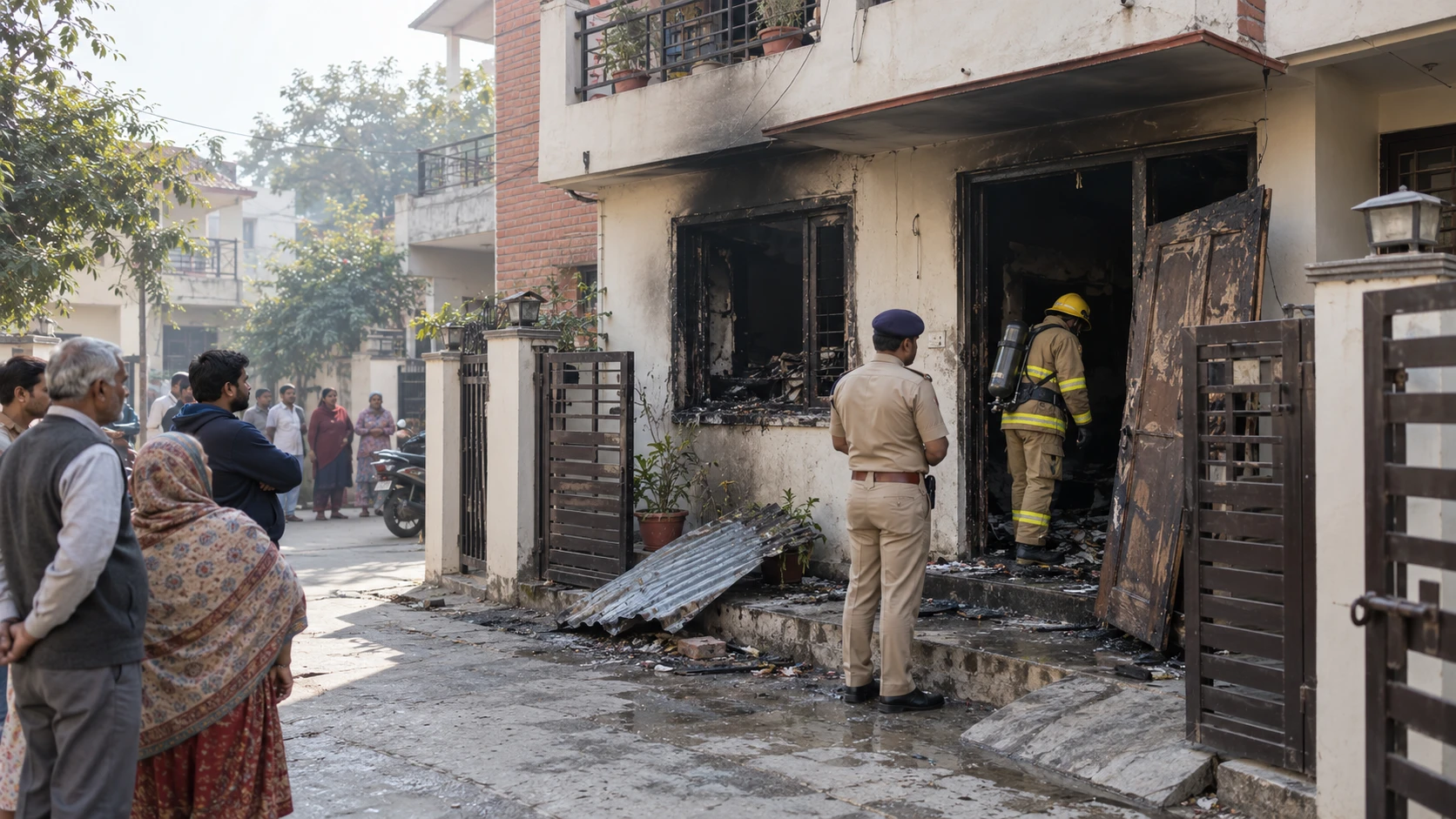
You read “NDRF teams rushed to the spot” in the morning paper, hear “SCBA sets were used” on the news, and your building society circular says “keep PASS in mind”. Most of us nod and move on. This page puts the full form of each short form in one place, says what it means in a line, and tells you why it matters to a home or a workplace. We checked each one against an official page or a published standard we could open, and we say plainly where we could not. Checked 3 November 2026.
In short
- PASS means two different things. For an extinguisher it is Pull, Aim, Squeeze, Sweep. For a firefighter it is the Personal Alert Safety System.
- SCBA is Self-Contained Breathing Apparatus, the air cylinder and mask crews wear into smoke. If you searched “SCABA”, this is what you meant.
- SDMA is the State Disaster Management Authority, headed by the Chief Minister. NDMA is the national one, headed by the Prime Minister.
- NDRF is the National Disaster Response Force. SDRF can mean a state response force or a state relief fund, so read the context.
- In an emergency, the short forms do not matter. Get out and call 112 (or 101 for the fire brigade).
Quick answers
| Short form | Full form |
|---|---|
| PASS (extinguisher) | Pull, Aim, Squeeze, Sweep |
| PASS (firefighter device) | Personal Alert Safety System |
| SCBA | Self-Contained Breathing Apparatus |
| SDMA | State Disaster Management Authority |
| NDMA | National Disaster Management Authority |
| NDRF | National Disaster Response Force |
| SDRF | State Disaster Response Force (in news), or State Disaster Response Fund (in the law) |
| NBC / NBCS | National Building Code of India / National Building Construction Standards |
| HPT | Hydrostatic (hydraulic) pressure test |
| ERSS | Emergency Response Support System (the system behind 112) |
Extinguishers, breathing gear and protective kit
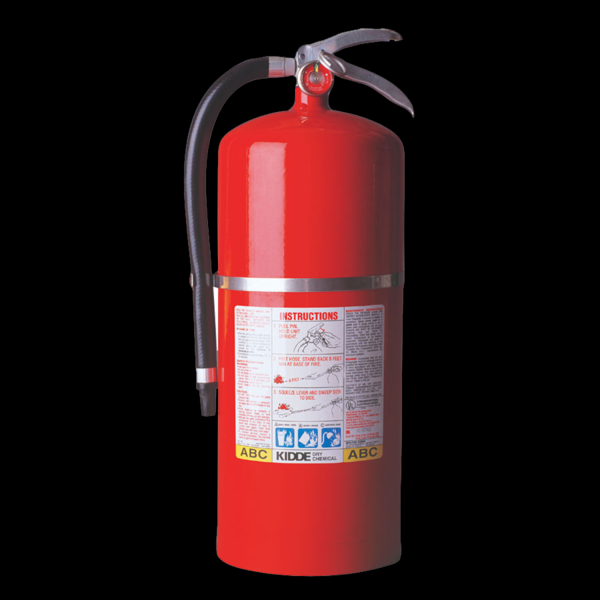
- PASS (fire extinguisher) stands for Pull, Aim, Squeeze, Sweep. Pull the pin, which also breaks the tamper seal. Aim low at the base of the fire. Squeeze the handle. Sweep side to side until the fire looks out. Most people have never held an extinguisher, and knowing when not to use one matters more. OSHA says to leave at once if the extinguisher is empty and the fire is not out, or if the fire has grown past its first stage, and the US Fire Administration says to use one only if the fire is small, others are alerted, someone has called for help, you are safe from the smoke and you have a clear way out. Our full guide is on the PASS method.
- RACE is Rescue, Activate the alarm, Confine the fire by closing doors, and Evacuate or Extinguish. It is a workplace training rule from OSHA’s US laboratory guidance, not an Indian rule, so your own building’s fire plan decides the order you follow. It is useful as a reminder that closing a door and raising the alarm come before any fight with the fire.
- PASS (firefighter device) is the Personal Alert Safety System. NFPA 1982 describes it as a system that lets emergency responders signal for help if they get lost, disoriented, trapped, injured or run out of breathing air. It is a different thing from the extinguisher method, which is why searches for “PASS full form in fire” get mixed answers. You will not carry one at home; you will hear about it when a firefighter is in trouble.
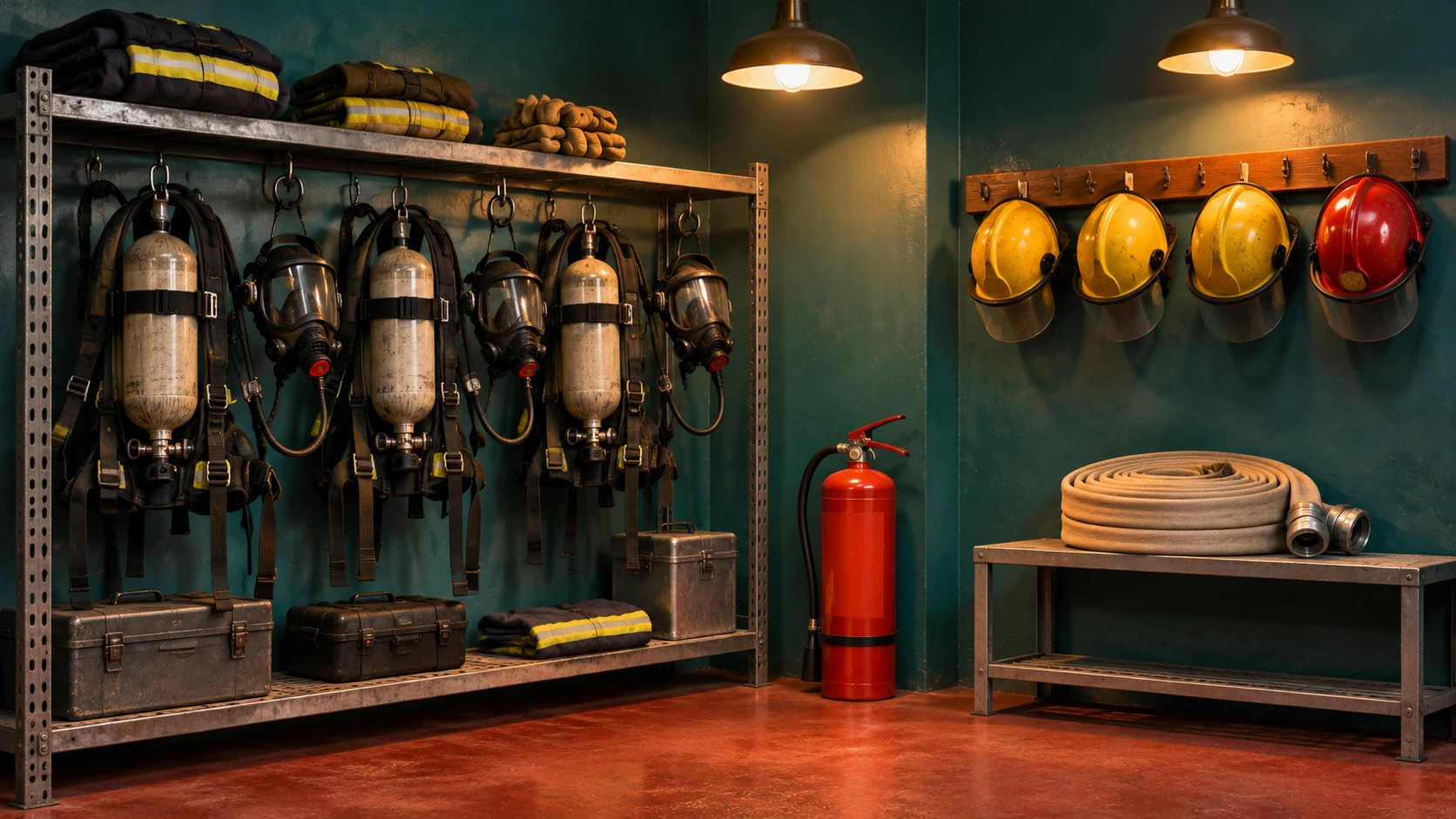
- SCBA is Self-Contained Breathing Apparatus. It is a respirator that carries its own compressed air, and NIOSH describes the open-circuit type as a tight-fitting full-face mask fed from compressed air cylinders. It is meant for entering and escaping from oxygen-deficient or dangerous atmospheres. This is why trained crews can go into smoke and you cannot. A wet cloth is no substitute, and nobody untrained should go back in. See our guide to the SCBA, its parts and safe use. A note on spelling: “SCABA” is a common slip for SCBA. The full form is the same.
- IDLH is Immediately Dangerous to Life or Health. OSHA defines it, in the wording NIOSH quotes, as an atmosphere with a toxic, corrosive or asphyxiant substance that poses an immediate threat to life, would cause irreversible or delayed health effects, or would stop a person escaping. It is the condition SCBA is built for. If someone is inside such air, call the fire brigade and stay out.
- ABC (dry powder) refers to extinguisher powder rated for fire classes A, B and C. The BIS code of practice IS 2190:2010 rates dry powder as suitable for classes A, B and C. If you are buying for a home or shop, read the label on the cylinder, and see our note on choosing an extinguisher for your home.
- HPT is the hydrostatic pressure test, which IS 2190:2010 calls the hydraulic pressure test. The shell is filled and pressurised, held for 2.5 minutes, and checked for leaks or distortion. The standard sets the gap by type: 3 years for water, foam, dry powder and clean-agent extinguishers (test pressure 35 kg/cm²) and 5 years for carbon dioxide (250 kg/cm²), and it asks premises to test at least one-third of their extinguishers every year. It also gives a working life from the date of manufacture, 10 years for most types and 15 for carbon dioxide. A cylinder that looks full and freshly painted can still be weak, which is the point of the test. Details are in our guide to the HPT of fire extinguishers.
- PPE is Personal Protective Equipment. OSHA calls it equipment worn to minimise exposure to hazards that cause serious workplace injuries and illnesses, and lists gloves, safety glasses and shoes, earplugs or muffs, hard hats, respirators and coveralls. PPE is the last layer, not the first, and it only works if it fits and is worn. Our posts cover PPE for firefighting and what Indian employers must provide.
Buildings, standards and paperwork
- NBC is the National Building Code of India. Its Part 4 is Fire and Life Safety, and the 2016 revision of that Part is the one most people quote. Think of it as the technical yardstick for exits, staircases, alarms and fire protection. Read our summary of what it says in NBC 2016 on fire safety.
- NBCS is National Building Construction Standards. In its latest revision the BIS publication has been renamed, and Part F covers Fire and Life Safety. The copy we read is headed 2026. Its own opening note says fire services are a State subject and that the Part is only for guidance and referral by state governments and local authorities. So the law that binds your building is your state’s fire act or building byelaws. We explain this in fire safety laws in India.
- BIS is the Bureau of Indian Standards, India’s national standards body, set up under the BIS Act, 2016. It publishes the IS numbers you see on extinguishers, switches and helmets, and it runs the Standard Mark scheme. BIS’s own site lists an ISI Mark scheme, and the Act defines a Standard Mark as the mark the Bureau specifies to show conformity to an Indian Standard. A mark on a product is only as good as the licence behind it. We did not test any product and we do not vouch for any brand.
- NOC is a no objection certificate; in fire matters it is the fire department’s clearance for a building. The Delhi Fire Service lists it as the Fire Safety Certificate (FSC/NOC) and says it is needed for buildings covered by rule 27 of the Delhi Fire Service Rules, 2010 and bye-law 2.8 of the UBBL 2016. The NBCS note says state fire departments are one of the agencies that issue it and that each state sets its own norms. The rules, the buildings covered and the process differ by state, and a certificate on the wall is not proof that the exits work. See how a fire NOC application works.
The emergency number
- ERSS is the Emergency Response Support System, the Ministry of Home Affairs’ project behind the single emergency number 112. The ministry says calls arrive over several channels at a state control room and are passed on to the police, health, fire, disaster, women, children or railway helpline as needed. 112 is the number to remember. The ministry’s page says the upgrade to ERSS 2.0 is under way and lists the states done so far, so check how it works in your own state. Our guides: emergency numbers in India, how to speak to the operator and the fire brigade number.
Disaster management bodies
- MHA is the Ministry of Home Affairs. It is the central ministry behind the NDRF and the disaster response fund guidelines, and it runs ERSS 112. When you see “Centre approves funds”, this is usually the ministry meant.
- NDMA is the National Disaster Management Authority, set up under the Disaster Management Act, 2005. Section 3 makes the Prime Minister its chairperson, and section 6 gives it the job of laying down policies, plans and guidelines for disaster management. In practice it sets the national rulebook that states and districts are meant to follow.
- SDMA is the State Disaster Management Authority. Under section 14 of the Act every state sets one up, with the Chief Minister as chairperson (in Delhi the Lieutenant Governor chairs it, with the Chief Minister as vice-chairperson). This is the body behind your state’s disaster plan. Our note on SDMAs and what they must do is in the related list below.
- DDMA is the District Disaster Management Authority. Section 25 puts the Collector, District Magistrate or Deputy Commissioner in the chair, with an elected representative of the local authority as co-chair. Section 30 calls it the district planning, coordinating and implementing body. So the district office is where local response is planned and coordinated.
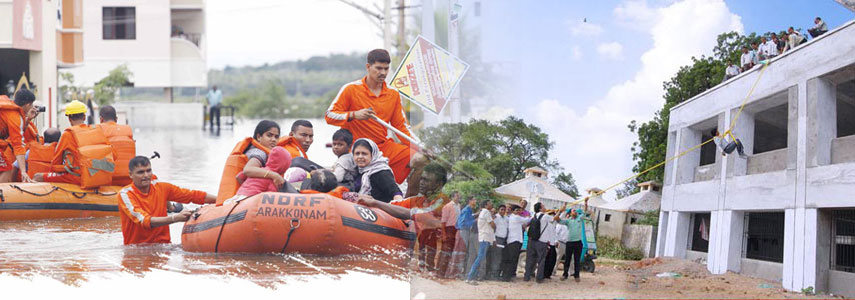
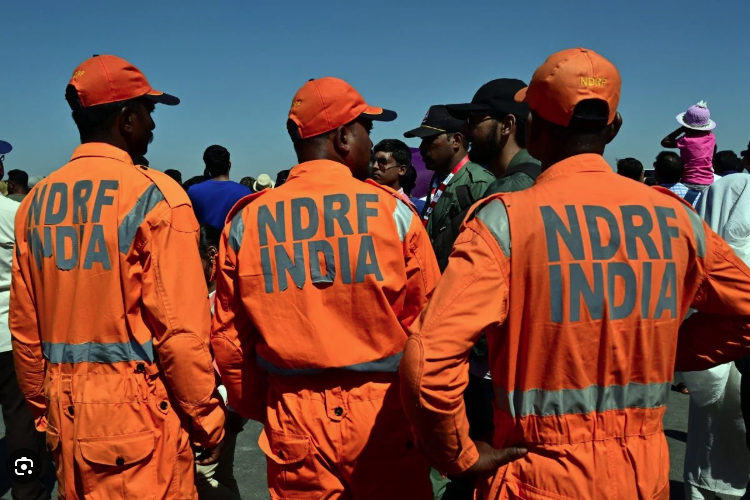
- NDRF is the National Disaster Response Force, constituted under section 44 of the Act for specialist response to a threatening disaster situation or disaster. The NDRF’s own site says it began in 2006 with 8 battalions and now has 16, drawn from the BSF, CISF, CRPF, ITBP, SSB and Assam Rifles, each of 1,149 personnel with 18 search and rescue teams of 47 members. It is the specialist force you see at floods, collapses and cyclones, but 16 battalions cannot be everywhere, so local response comes first.
- SDRF has two meanings, which is why it confuses people. In the Disaster Management Act (section 48) and the Ministry of Home Affairs guidelines it is the State Disaster Response Fund, money kept for immediate relief after cyclone, flood, fire, earthquake, landslide and similar events. In news about rescue teams it usually means the State Disaster Response Force, a state’s own trained unit; the Maharashtra SDMA says its SDRF is modelled on the NDRF and began with two companies in 2014. “SDRF released” and “SDRF rescued” are about money in one case and people in the other.
- NIDM is the National Institute of Disaster Management, which section 42 of the Act provides for. It is mostly of interest to those who train officials, but you will see its name on guidance documents.
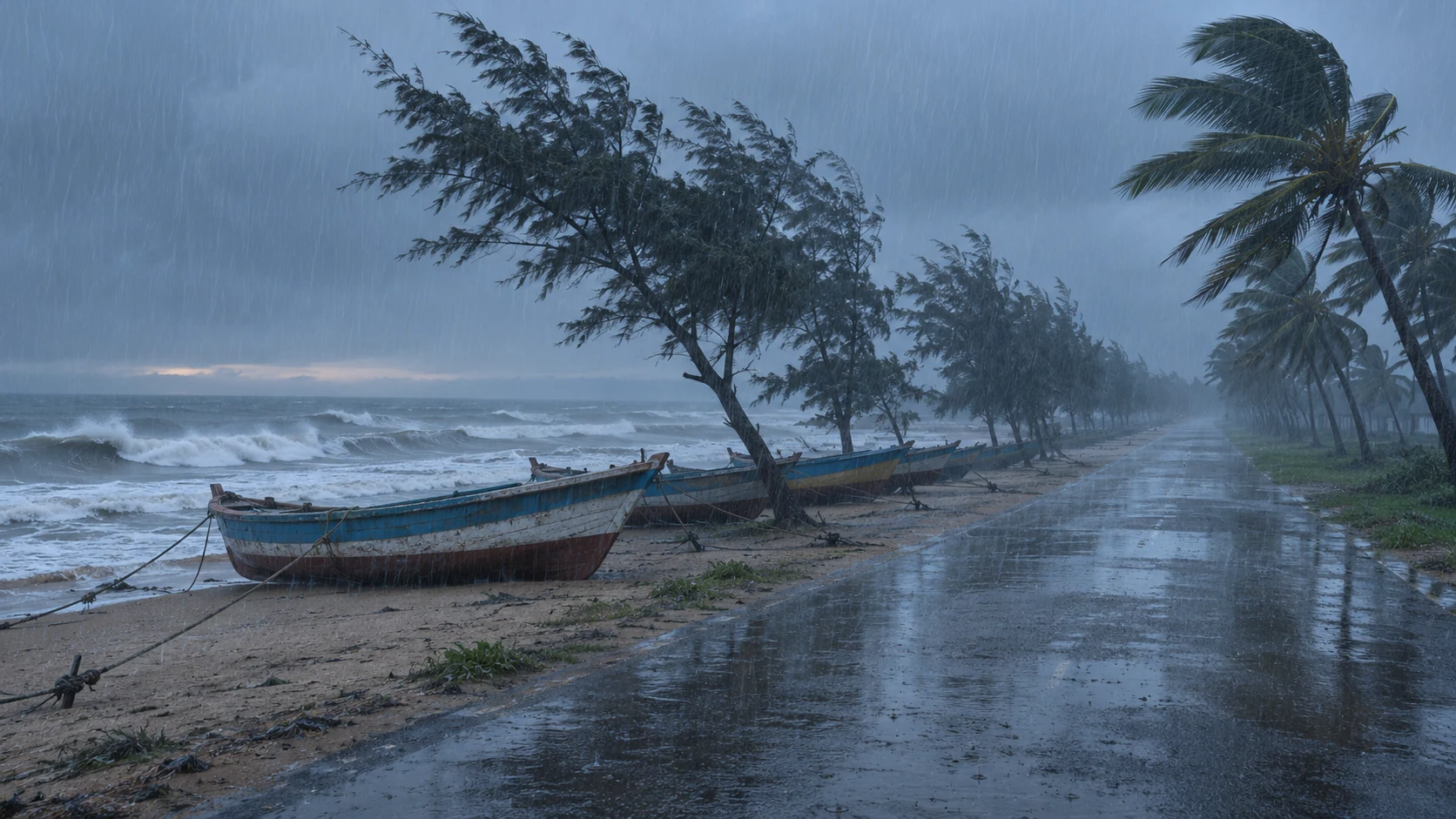
- IMD is the India Meteorological Department, which carries the Ministry of Earth Sciences name on its site and publishes cyclone information, bulletins and warnings. Check it, or your state’s alerts, when a storm is forecast. See our cyclone safety guide and natural disaster preparedness guide.
Gas and electricity at home
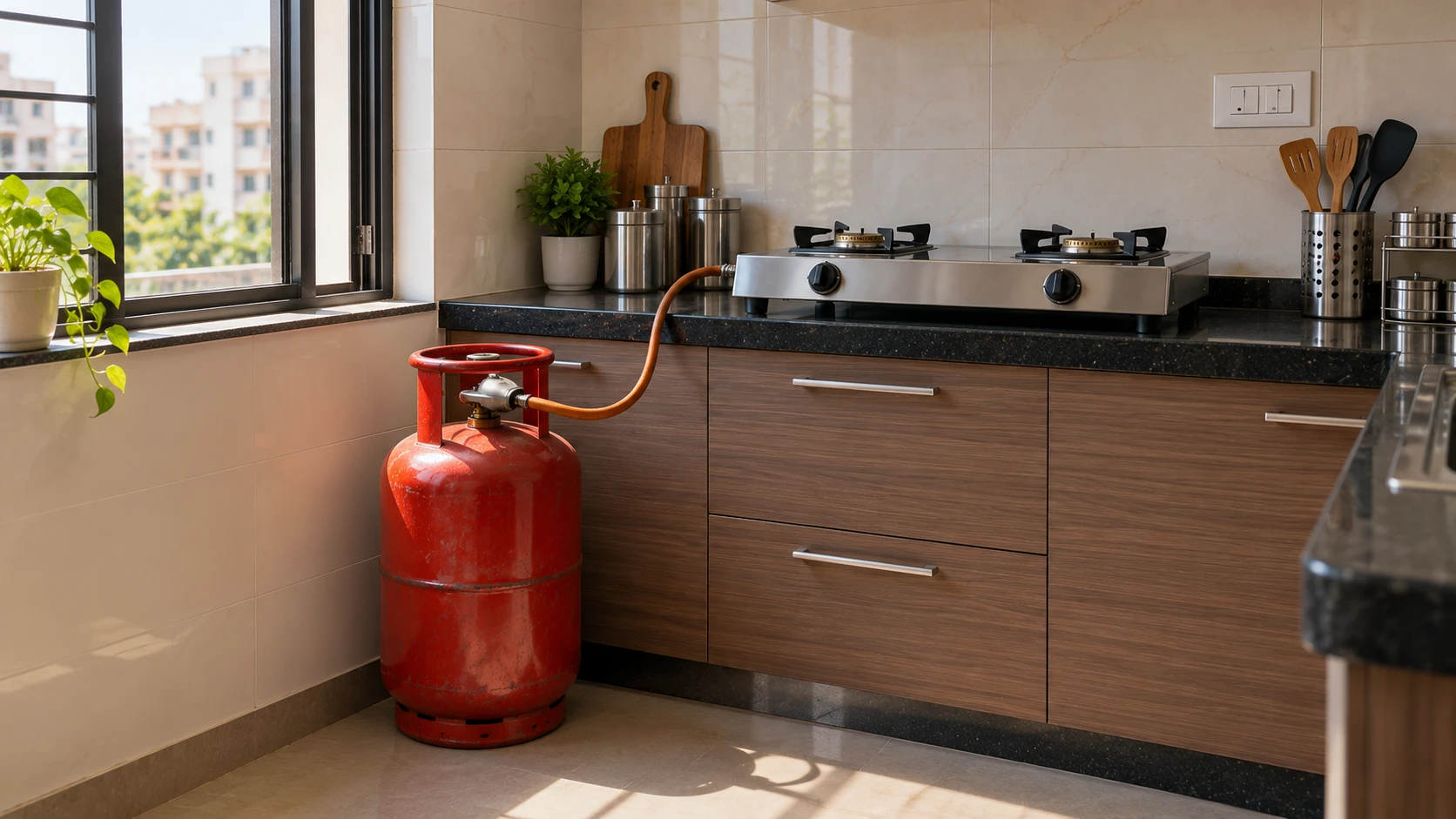
- LPG is liquefied petroleum gas. The Petroleum and Natural Gas Regulatory Board’s FAQ says it is mainly propane and butane and is supplied as a liquid in cylinders. Most Indian kitchens run on it, and a leak near a flame is dangerous. Read what to do right now in a gas leak.
- PNG is piped natural gas, mainly methane, supplied through a pipeline instead of a cylinder. The same board’s FAQ draws this difference with LPG. It is a different supply from the cylinder, so the leak response differs; our LPG leak guide covers cylinders.
- CNG is compressed natural gas. The PNGRB Act describes it as natural gas used as a vehicle fuel, typically compressed to 200 to 250 bars while it stays a gas. If you drive a CNG car, you are carrying high-pressure cylinders. Our note on car fires in EV, CNG and petrol cars covers the first 30 seconds.
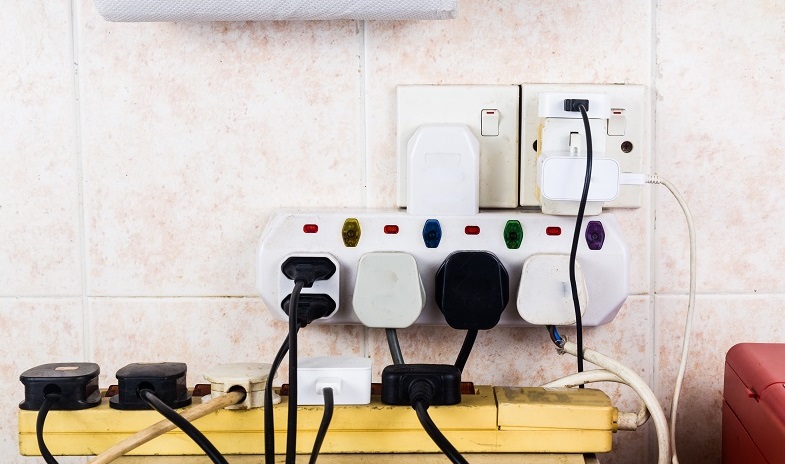
- MCB is the miniature circuit breaker. BIS’s testing scheme for IS 8828:1996 covers circuit breakers for over-current protection in households and similar installations, and refers to them as miniature air-break circuit breakers. It is the switch that trips on overload. We did not open a current edition of the standard, so check the label on yours.
- RCCB is the residual current circuit breaker. IS 12640 (Part 1), adopted from the IEC standard, covers residual current operated circuit-breakers for household and similar uses, up to 440 V and 125 A, “intended principally for protection against shock-hazard”, and without overcurrent protection built in. It is not a replacement for an MCB: the two do different jobs. See our guide to electrical safety at home, MCB versus RCCB is in the related list below.
Mix-ups to watch for
- PASS twice. An extinguisher method and a firefighter’s alarm share the letters and nothing else.
- SDRF twice. A fund in the law, a force in the headlines.
- NBC and NBCS. The code was renamed standards in its latest revision. People still say NBC.
- FIRE is not an abbreviation. Searches for “fire full form” are asking for words like PASS or RACE, not the word itself.
What we could not confirm
- The spelled-out words “no objection certificate”. The Delhi Fire Service and the BIS note use only the short form NOC, so the expansion is standard usage rather than a quoted official phrase.
- Whether IS 2190:2010 and IS 8828:1996 are the latest editions. We read the 2010 code of practice and a BIS testing-scheme note; ask your supplier or a fire consultant to confirm current amendments before you rely on a test interval.
- How far ERSS 112 now covers every state. The ministry’s page is not dated and says upgrades are under way.
- The NDMA’s own website pages for NDMA and SDMA. We read the Act itself, from the Ministry of Home Affairs’ disaster management portal.
- Whether the videos below explain these terms in detail. We did not watch them in full.
Do this today
Save 112 and 101 in your phone. Find the extinguisher in your building, read its label and check its test or refill date. Ask your society or office who your fire consultant is, and whether the fire NOC is current. Then share this page with one person who reads news about floods or fires and has never been told what NDRF and SDRF stand for. If a related question keeps coming up at home, what to do when trapped in smoke and factory fire exits are good next reads.
What needs attention
- PASS and SDRF are the two short forms most likely to be misread, because each has two real meanings.
- SCABA is a spelling slip; the equipment is the SCBA.
- The Disaster Management Act sets a clear ladder: National Authority under the Prime Minister, State Authority under the Chief Minister, District Authority under the Collector.
- The NDRF is a specialist force of 16 battalions, so local and state response comes first.
- Fire services are a State subject; NBCS Part F is guidance and the binding rules are state fire acts and byelaws.
- An RCCB protects against shock and is not a replacement for an MCB.
- The IS 2190:2010 test and life limits show that an extinguisher can be too old or too weak even when it looks fine.
Controls that reduce risk
- Save 112 and 101 in your phone.
- Read the label on your extinguisher and note its test or refill date.
- Ask your society or employer whether the fire NOC is current.
- Look at the electrical panel and learn which switch is the MCB and which the RCCB.
- Share the NDRF and SDRF difference with someone who follows the news.
Common unsafe practices
- Using PASS on a fire that is already large or while the room is filling with smoke.
- Assuming the firefighter's PASS device and the extinguisher PASS method are the same thing.
- Reading SDRF as always meaning rescue teams.
- Treating a fire NOC on the wall as proof that exits and equipment work.
- Assuming an RCCB also protects against overload.
- Searching for SCABA and not realising it is the SCBA page you need.
- Going back into smoke because a wet cloth feels like protection.




Leave a comment