
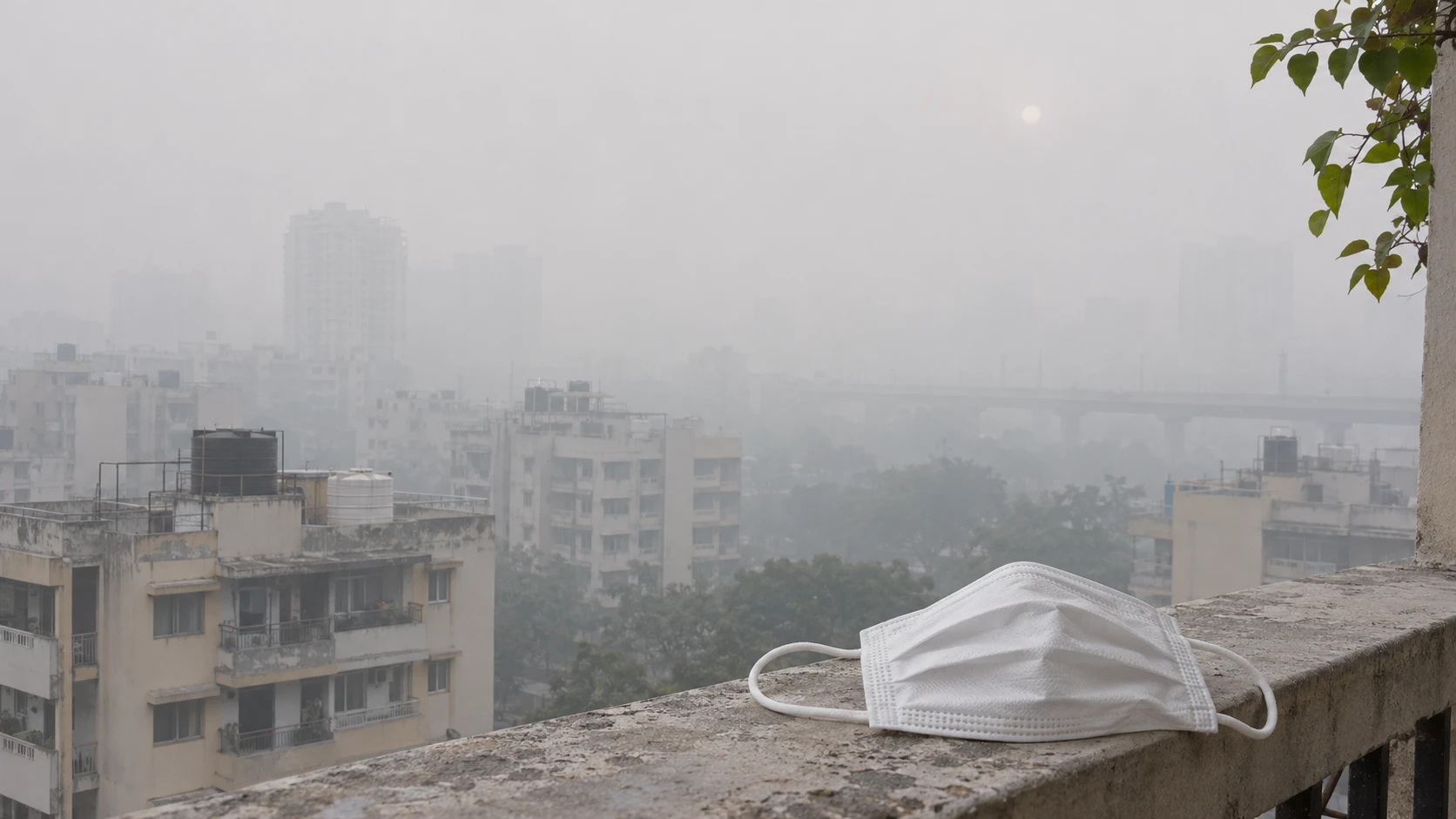
Quick answers
Do N95 masks protect against air pollution?
Yes, if they fit. The National Centre for Disease Control says a close-fitted N95 or N99 mask protects against fine particles, PM2.5 and PM10, but only when there are no gaps around the nose and cheeks and the mask is not pulled down. Its clinic guidance says masks may help provided the exposure is short, so staying indoors on bad days matters more than the mask.
At what AQI should I wear a mask?
The NCDC table suggests a mask or cloth over the nose from the Moderate band (101 to 200) for the general public, and a close-fitted N95 or N99 mask from Very Poor (301 and above). Vulnerable people, such as children, older adults and people with lung or heart disease, are advised to cover the nose with a mask from the Satisfactory band. From Poor upwards we would use a fitted N95 and not a cloth.
Is an N95 mask the same as a dust mask?
No. The NCDC says paper masks, handkerchiefs, scarves and cloth are not effective in poor to severe air pollution. An N95 is a tight-fitting respirator that filters fine particles. In India the BIS standard for filtering half masks is IS 9473:2002, graded FFP1, FFP2 and FFP3. Buy a mask whose packaging says which standard it meets.
Is a wet cloth or a handkerchief enough?
The NCDC's mask page says cloth, scarves and handkerchiefs are not effective when air pollution is poor to severe. In the Moderate band its table still allows a cloth over the nose. When the air is poor or worse, cut down your time outdoors and use a fitted N95 if you must go out.
Should I open the windows when the AQI is poor?
The NCDC clinic guidance says not to open doors and windows in the morning and late evening on poor to severe days. If you must ventilate, do it between 12 noon and 4 pm. Cook with the window open or the exhaust fan on, and keep windows shut at peak traffic hours if you live near a busy road.
Does an air purifier help, and which kind is safe?
The NCDC says to follow the maker's guidelines, ask an expert about suitability, placement and room size, and clean or replace filters as instructed. It says to avoid purifiers that work by generating ozone, because they add pollution inside the room. Use the air conditioner on the re-circulate setting if you run one.
How often should I replace an N95 mask?
The NCDC handbook says a disposable N95 should be discarded after one day of heavy use or when it becomes dirty or wet. A mask that is damp, bent or has loose straps no longer seals properly.
Who is most at risk from smog?
Older people, children under 5, pregnant women and people with existing medical conditions, according to the NCDC. It also lists outdoor workers such as traffic police, construction workers, brick kiln workers and farmers. People in these groups should follow the stricter advice for each AQI band and see a doctor early if they have chest pain, wheezing or breathlessness.
Which website or app shows the AQI in India?
CPCB's air quality portal is airquality.cpcb.gov.in. The NCDC handbook for ASHA workers also points to ews.tropmet.res.in and mausam.imd.gov.in, and to the SAMEER and SAFAR mobile apps. Stations in one city can read differently on the same day, so use the one nearest your home or workplace.
From about this time every year the sky over much of north India turns the colour of weak tea, and the same questions are typed into Google. Does an N95 mask really help? At what AQI should I wear one? Should I open the windows? This page answers them from what India’s own health authorities and the Central Pollution Control Board (CPCB) have published. It does not give today’s AQI, because that changes by the hour and by the monitor, so look up your own city’s figure on the day you read this. Checked 4 November 2026.
In short
- The scale. CPCB’s index runs from 0 to 500 in six bands: Good (0 to 50), Satisfactory (51 to 100), Moderate (101 to 200), Poor (201 to 300), Very Poor (301 to 400) and Severe (401 to 500). The overall number is the worst of the readings for the individual pollutants, and CPCB’s method works it out only when at least three pollutants are being monitored, one of them PM2.5 or PM10.
- The mask. The Ministry of Health’s National Centre for Disease Control (NCDC) says a close-fitted N95 or N99 mask protects against the fine particles, PM2.5 and PM10, and that paper masks, handkerchiefs, scarves and cloth are not effective when the air is poor to severe.
- A mask is the last layer. The NCDC’s own clinic guidance says N95 or N99 masks may help provided the period of exposure is short. Fewer hours outdoors does more.
- On poor to severe days, stay indoors where you can, skip the morning and late-evening walk, and do not burn anything inside the house, including candles, mosquito coils, wood or charcoal.
- Windows. The NCDC guidance is not to open doors and windows in the morning and late evening on poor to severe days; if you must air the house, do it between 12 noon and 4 pm.
- Most at risk: children under 5, older people, pregnant women, people with lung or heart disease, and anyone who works outdoors for long hours.
What each AQI band means
CPCB’s 2014 report on the National Air Quality Index, drawn up with medical experts and IIT Kanpur, gives the plain-language health statement for each band. The NCDC’s handbook for ASHA workers then gives the advice. We have put the two side by side, in the order they appear in the NCDC table.
- Good (0 to 50). CPCB: minimal impact. NCDC: no special precautions.
- Satisfactory (51 to 100). CPCB: may cause minor breathing discomfort to sensitive people. NCDC: nothing special for most people; vulnerable people should cover the nose with a face mask, cloth or scarf when going out and avoid long physical exertion.
- Moderate (101 to 200). CPCB: may cause breathing discomfort to people with lung disease such as asthma, and discomfort to people with heart disease, children and older adults. NCDC: use a mask or cloth over the nose and avoid long physical exertion; vulnerable people should also take frequent water breaks.
- Poor (201 to 300). CPCB: may cause breathing discomfort to people on prolonged exposure, and discomfort to people with heart disease on short exposure. NCDC: avoid outdoor exertion if possible and take water breaks. Vulnerable people should avoid heavy exertion outside and, if they work in a closed space such as a shop or office, keep external doors and windows closed while making sure there is still enough ventilation.
- Very Poor (301 to 400). CPCB: may cause respiratory illness on prolonged exposure, more so in people with lung and heart disease. NCDC: avoid outdoor physical activity, avoid extra sources of pollution indoors such as burning, candles and tobacco, and use a close-fitted N95 or N99 mask when going out. Vulnerable people should stay indoors as much as possible and keep activity low.
- Severe (401 to 500). CPCB: may cause respiratory effects even in healthy people, and serious effects in people with lung or heart disease, even during light activity. NCDC: avoid outdoor activity, wear a close-fitted N95 or N99 when going out, drink plenty of water. Vulnerable people should stay in, always use the mask when stepping out, and go out only if it is urgent.
One thing to know about the NCDC table: it allows a cloth over the nose in the Moderate and Poor bands, yet the same handbook’s mask page says cloth is not effective in poor to severe air. We would follow the stricter line. From Poor upwards, a cloth is not a substitute for a fitted N95. If you do not have one, spend less time outside. That last sentence is our reading, not a quoted rule.
Does an N95 mask actually work?
It can, if it fits. The NCDC handbook says an N95 or N99 protects against fine particulate matter, the most harmful part of air pollution, and also against dust and allergens, particularly for people with asthma or COPD. It must sit over the mouth and nose with no gaps between mask and skin, and it must not be pulled down below the nose or mouth. A disposable N95 should be thrown away after one day of heavy use, or sooner if it gets dirty or wet.
- Beards and stubble break the seal. So do gaps at the nose and cheeks. Our page on respirators, fit testing and limits explains the seal check.
- N95 is an American rating. The Indian standard for filtering half masks is IS 9473:2002 from the Bureau of Indian Standards, which grades them FFP1, FFP2 and FFP3; FFP1 is for solid particles only. No official Indian table equates the two systems, so this page uses the NCDC’s own words, N95 or N99, and suggests buying a mask whose packaging names the standard it meets.
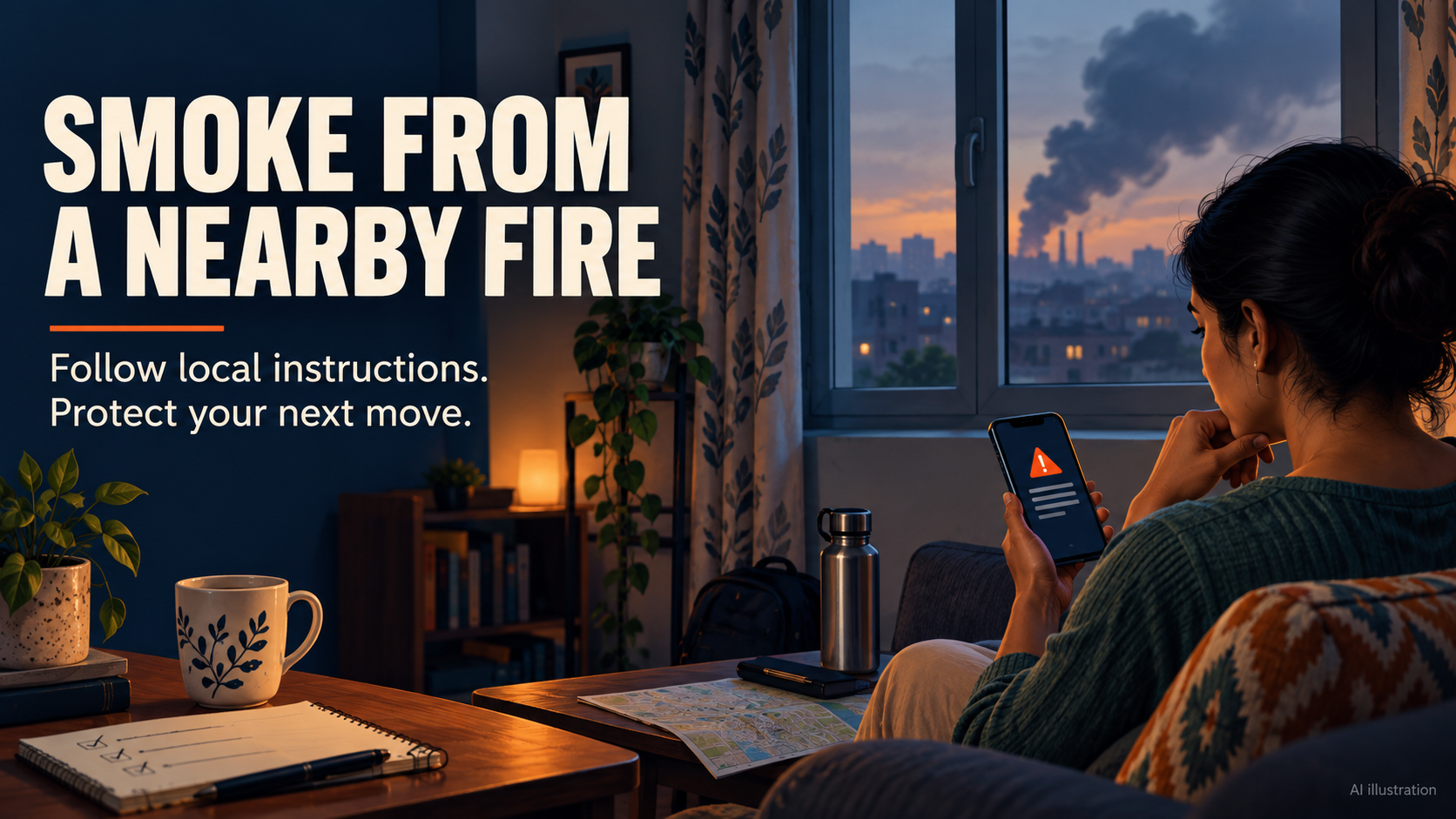
- A mask filters particles. It does not remove gases. If the smoke is from a nearby fire and not from the usual winter haze, read our page on smoke from a nearby fire.
- A tight mask makes breathing harder. If you have a lung or heart condition, or you feel dizzy or breathless in it, ask your doctor before you use one for long. The sources reviewed give no Indian official mask guidance for small children, so keep them indoors on poor to severe days and ask a doctor.
Inside the house
The NCDC points out that closed indoor spaces can hold pollution in. Its handbook says that in 2019 cooking with poor-quality fuels on traditional stoves caused about 38 lakh premature deaths worldwide and 6 lakh in India. That is household air pollution, a different problem from the outdoor haze, but it shows why the air inside matters too. What the guidance says to do:
- Do not add smoke. No candles, tobacco, mosquito coils, burning plastic or rubber, and no wood, coal or charcoal burnt for warmth in a closed room. The NCDC clinic note adds that an anghiti in a closed room can be fatal through carbon monoxide; see our carbon monoxide page. For gas and electric room heaters, see our room heater and blower safety checklist.
- Cook with ventilation. Open a window or switch on the exhaust fan while cooking. Cleaner fuels such as LPG are recommended over wood or dung.
- Clean without raising dust. The NCDC advises wet mopping instead of sweeping or vacuuming.
- Windows and traffic. If your house is close to a busy road, keep the windows closed during peak traffic hours.
- Air purifier. The NCDC says to follow the maker’s guidelines, get expert advice on suitability, placement and the area it can cover, and clean or replace filters as instructed. It specifically says not to use a purifier that works by generating ozone, because it increases pollution inside the room.
- Air conditioner. In a building or vehicle, use it on the re-circulate setting so it does not draw in outside air.
Outside: walks, exercise and the commute
- The NCDC advises avoiding outdoor morning and late-evening walks, runs, jogs and exercise, and rescheduling outdoor activity by the AQI, staying indoors on poor to severe days.
- Stay away from heavy traffic, construction sites and factories where you can.
- CPCB’s 2014 report says that on very poor and severe days people should minimise travel, use public transport or carpool, avoid idling, and keep diesel generator use to a minimum. Servicing your vehicle and getting the PUC check done are on the same list.
- If you work outdoors, as traffic police, construction and brick kiln workers and farmers do, the NCDC lists your work as a risk. Ask your employer for a fitted N95 and breaks in cleaner air.
Who needs to be most careful, and what to watch for
The NCDC handbook names older people, children under 5, pregnant women and people with existing medical conditions as the most vulnerable. Symptoms it lists include chest pain, coughing and wheezing, shortness of breath, a running nose, red and irritated eyes, headache and giddiness, and irritation of the skin. It says to see the nearest health facility if you have such problems on exposure to polluted air, and to keep your medicines within reach. If someone is struggling to breathe, do not wait: call 112 or 108. For an asthma attack or a severe allergic reaction, see our guide to what to do in an asthma attack or allergic reaction. If someone stops breathing, see our guide to basic first aid and CPR.
Where to check the AQI
CPCB runs the national air quality portal at airquality.cpcb.gov.in. The NCDC handbook also points readers to ews.tropmet.res.in and mausam.imd.gov.in for the index, and to the SAMEER and SAFAR mobile apps for regular updates. Different stations in one city often read differently on the same day, so use the one nearest your home or workplace. These are our directions to the sources; we have not copied any figure from them.
What is not confirmed
CPCB’s own website did not load during the check, so its 2014 AQI report was read from a copy on the OpenCity open-data portal. The report says CPCB may review the breakpoints every three years, and no later revision appears in the sources reviewed, so check the CPCB portal if the bands look different. The sources reviewed give no Indian official guidance on masks for small children, or on valved masks. The two videos below are official, short and general: title, publisher and length were checked but the videos were not watched in full, and the NCDC clip is in Hindi.
What needs attention
- CPCB's AQI has six bands from Good (0 to 50) to Severe (401 to 500) and is set by the worst pollutant.
- The NCDC advises a close-fitted N95 or N99 for going out in Very Poor and Severe air and says cloth and paper masks are not effective in poor to severe air.
- The NCDC clinic note says N95 or N99 masks may help provided the period of exposure is short.
- Indoor measures matter: no burning, ventilate with care, wet mop, ozone-free purifiers, AC on re-circulate.
- The NCDC table allows a cloth in the Moderate and Poor bands but its mask page says cloth is not effective in poor to severe air; we follow the stricter line.
Controls that reduce risk
- Find your nearest AQI station and check it each morning.
- Keep one fitted N95 or N99 mask per adult, and a spare.
- Plan indoor exercise for poor to severe days.
- Cook with the window open or the exhaust on.
- Keep medicines for asthma, heart conditions and allergies within reach.
Common unsafe practices
- Wearing a handkerchief or a loose paper mask and treating it as protection on a Severe day.
- Pulling the mask down under the nose, or wearing one that gaps at the cheeks.
- Reusing a damp or dirty N95 for days.
- Going for the usual morning or late-evening walk on a poor day.
- Burning candles, coils, wood or charcoal in a closed room.
- Using an ozone-generating purifier.
- Opening windows at the worst hours.




Leave a comment