Sleeper Bus Safety in India: How to Get Out Fast in a Crash or Fire
Before a night bus leaves, find the emergency door, the roof hatches and the hammer at your berth, keep the aisle clear and keep…
Read guide →
Life-Safety Intelligence for IndiaSimple, verified guidance to help you prevent emergencies and respond with confidence.


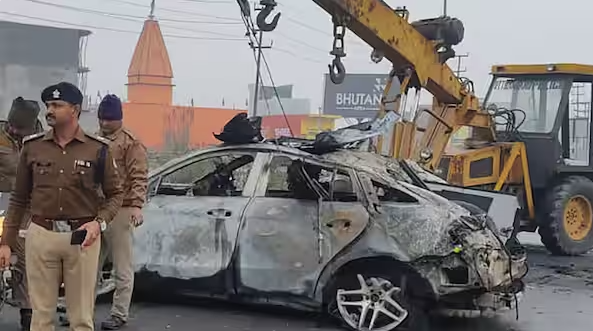
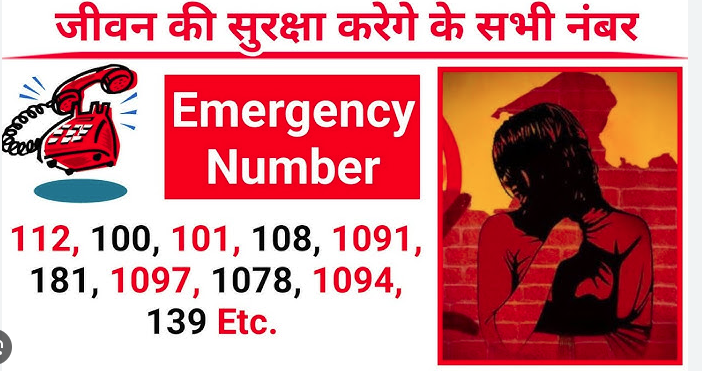
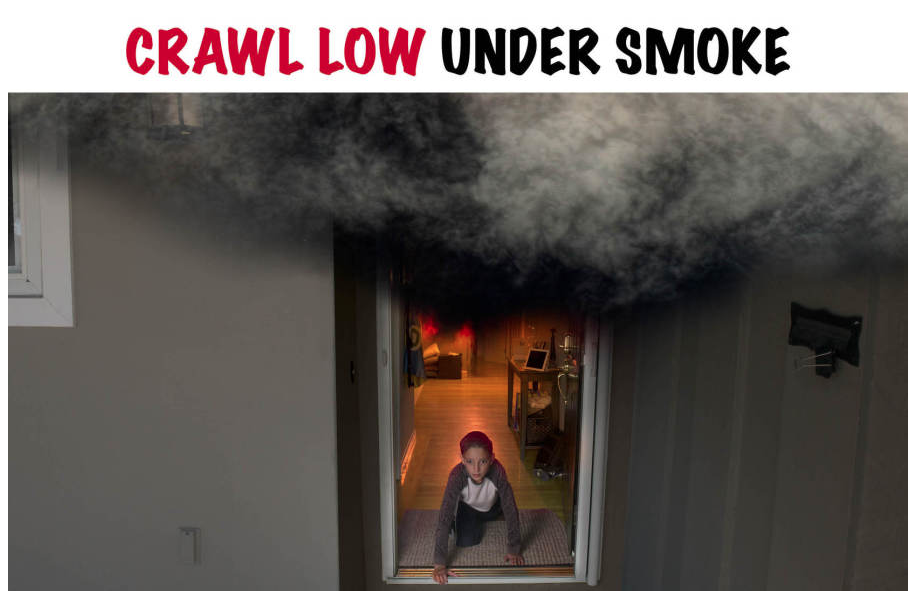
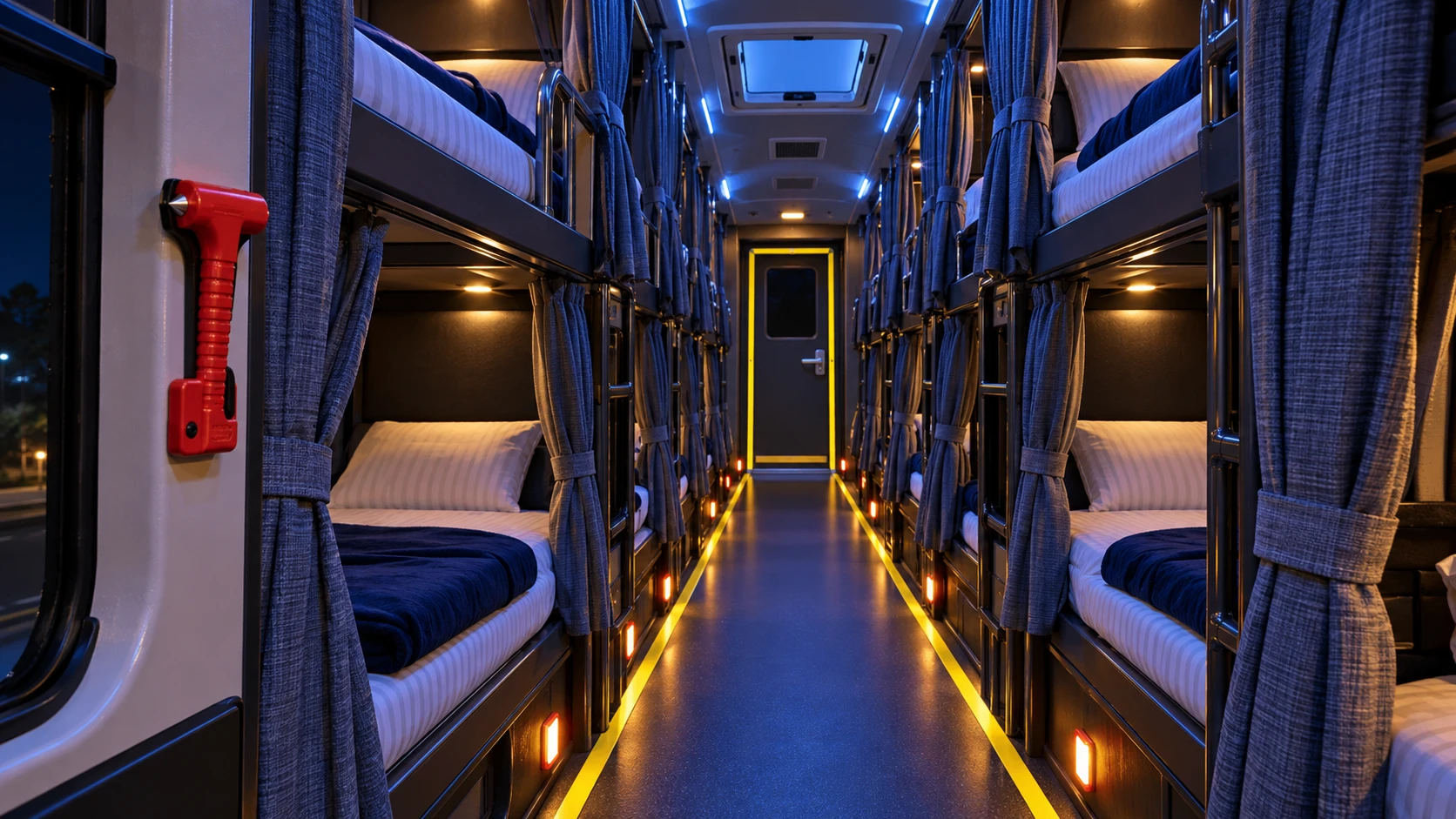
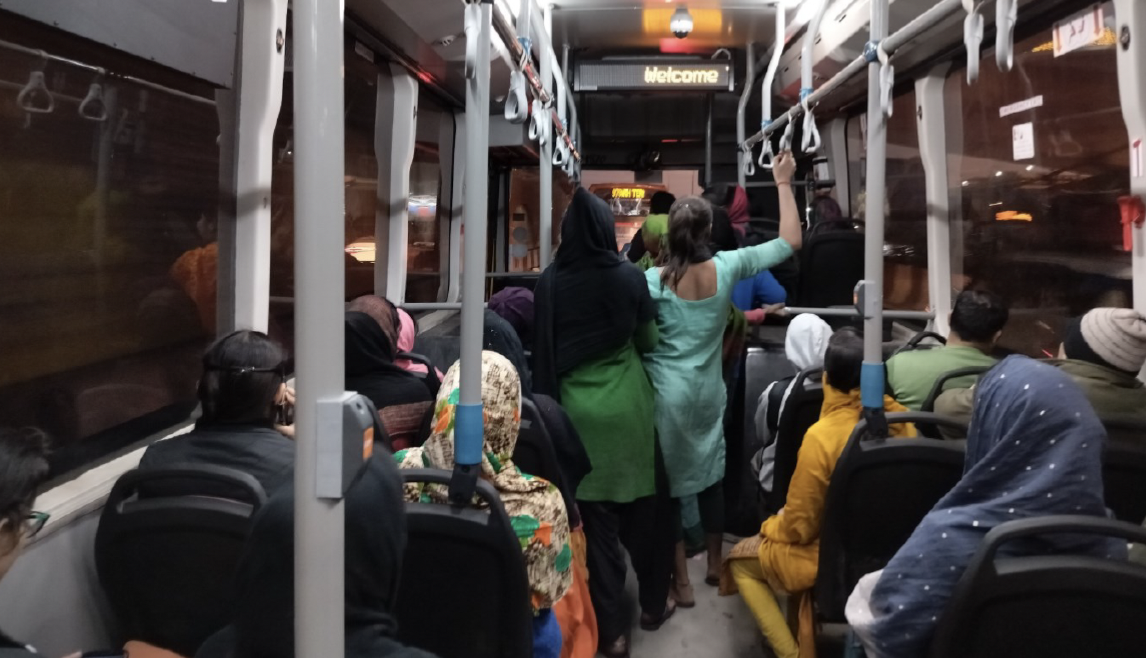
Before a night bus leaves, find the emergency door, the roof hatches and the hammer at your berth, keep the aisle clear and keep shoes, phone and ID within reach. In a crash or fire, wake everyone, stay low under the smoke, use the nearest working exit or break a side window, help children and the elderly out, never go back for bags, move well off the road and call 112, 101 or 108.
October 16, 2026 · Practical safety guideRead the Guide →
Before a night bus leaves, find the emergency door, the roof hatches and the hammer at your berth, keep the aisle clear and keep…
Read guide →
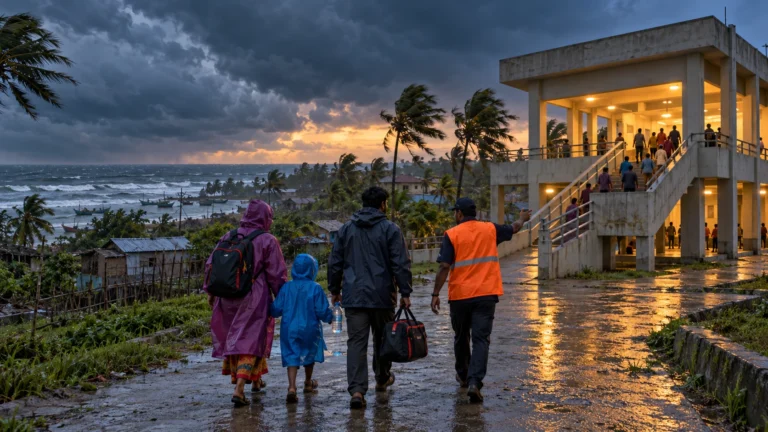
At the first sign of smoke or a burning smell, stop safely, switch off, get everyone out with children first, move at least 30…
Read guide →
Buy only an ISI-marked cooker, check the vent, gasket and safety valve before every use, never fill beyond two-thirds (half for dal, rice and…
Read guide →
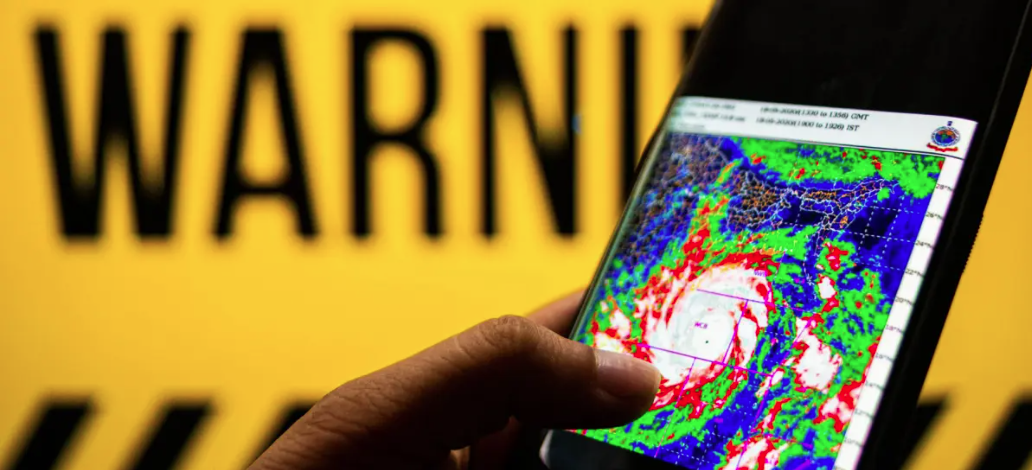
Know IMD's four-stage cyclone warnings, keep official alerts switched on, and prepare a kit and secure your home before the season. Leave early for…
Read guide →
Buy only legal green crackers from a licensed shop, check your state or district order for 2026 hours, and light one cracker at a…
Read guide →
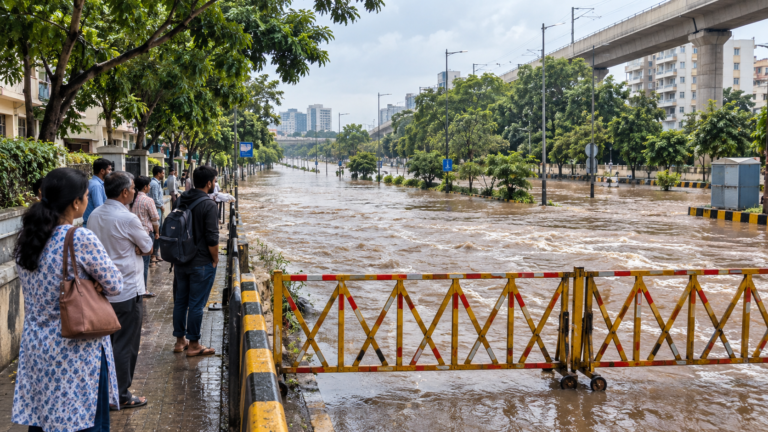
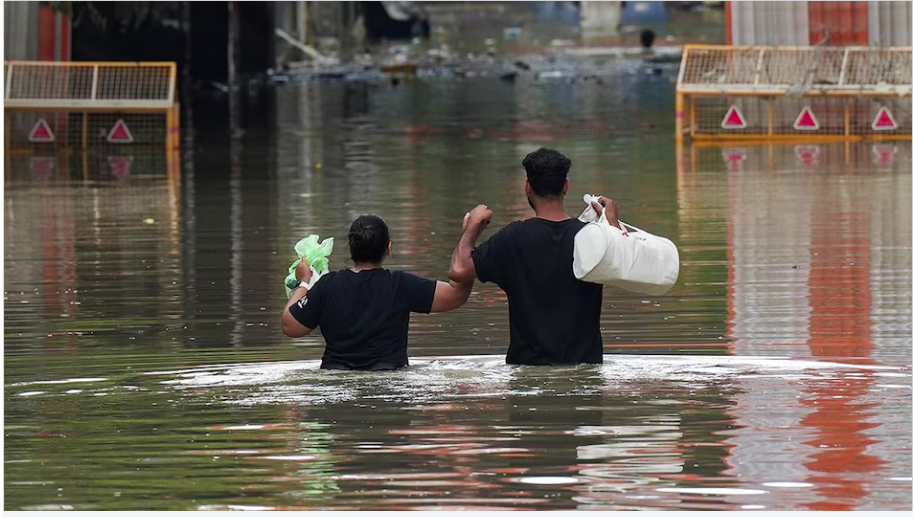
Official Indian disaster guidance emphasises early evacuation when directed, avoiding floodwater on foot or by vehicle, staying clear of electrical hazards and using safe…
Read guide →
Most food poisoning at home comes from small slips: a shared board for raw meat and salad, food left out too long, or doubtful…
Read guide →
Keep medicines in their own labelled packs and somewhere children cannot reach. If someone may have swallowed the wrong thing, keep the pack, do…
Read guide →
Lithium batteries are safer to fly with when they are protected, carried correctly and reported early if they overheat or smoke. Check the airline's…
Read guide →
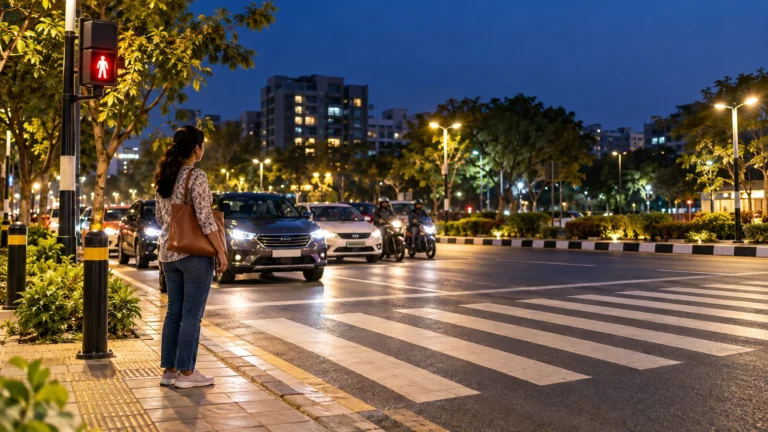
After dark, give yourself more time to see traffic and for drivers to see you. A route, visibility and crossing plan is more reliable…
Read guide →
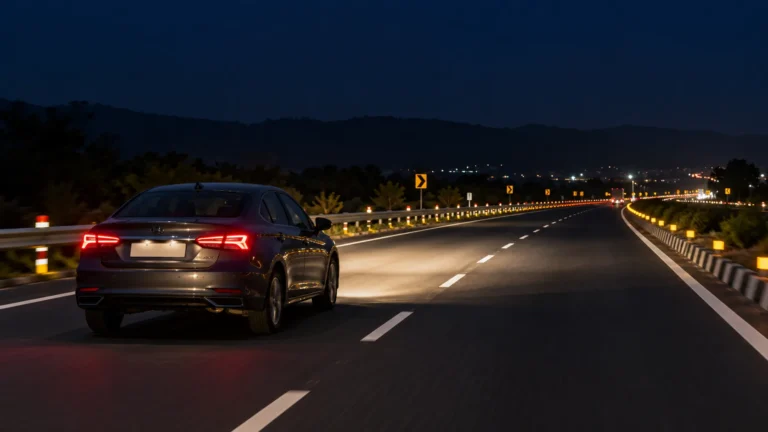
Night driving reduces visibility and response time. A simple pre-drive, on-road and breakdown plan can reduce avoidable risk.
Read guide →
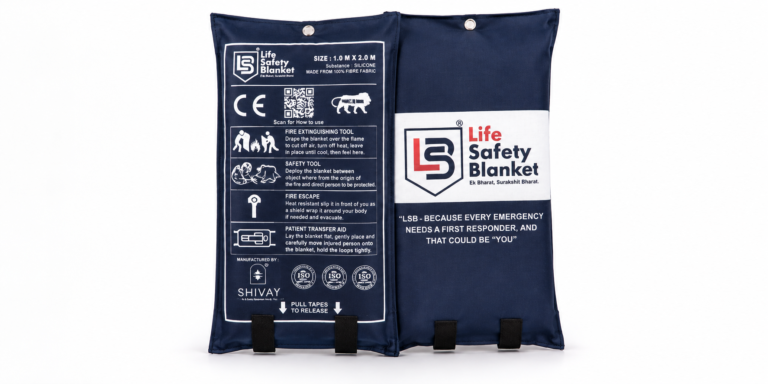
The Life Safety Blanket is a fire-resistant blanket. Like any fire blanket, its main job is to smother a small fire, such as a…
Read guide →
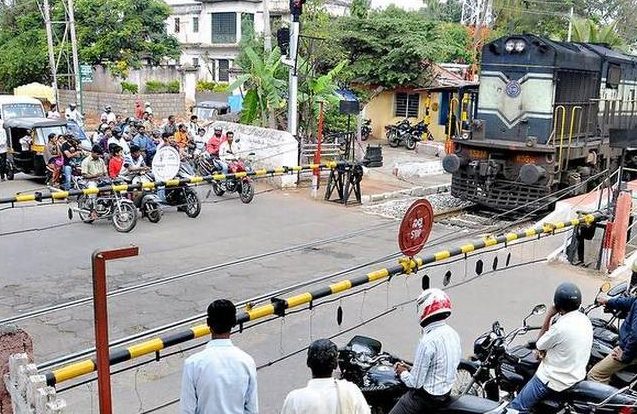
Wait at a closed railway level crossing, obey signals and staff, cross only by an authorised clear route, and evacuate and report a vehicle…
Read guide →
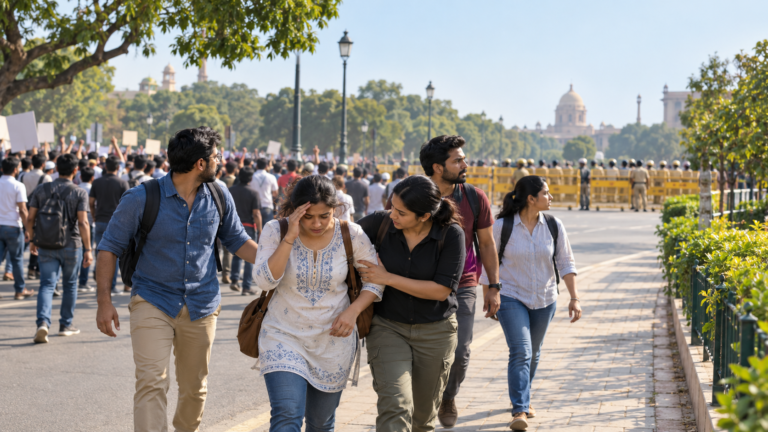
A simple, India-wide guide for protesters and passers-by: prepare an exit, avoid crowd pressure, get help for injuries, and understand basic rights if police…
Read guide →
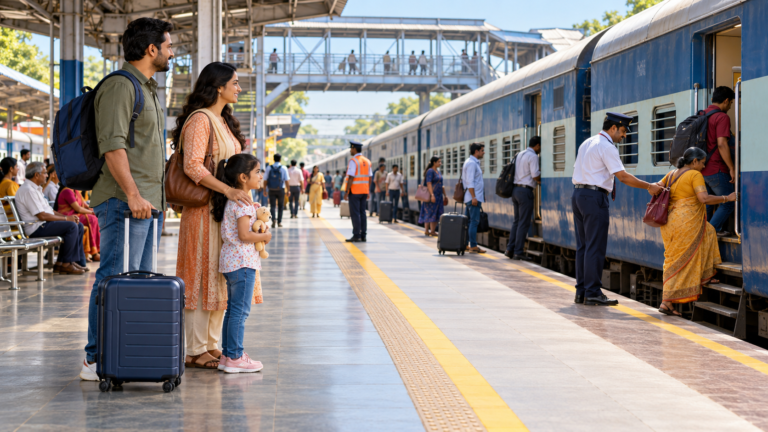
Use designated crossings, wait back from platform edges, never board a moving train, and ask station staff for help rather than entering the tracks.
Read guide →
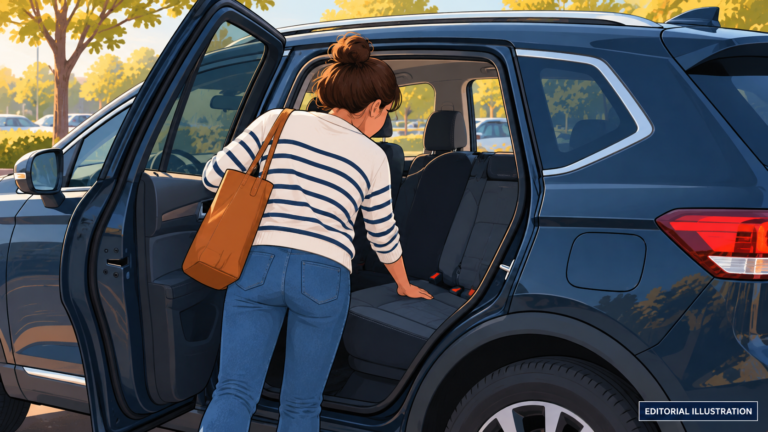
Never leave a child alone in a parked car. Check the entire car before locking, confirm every caregiver handover, lock unused vehicles, and call…
Read guide →
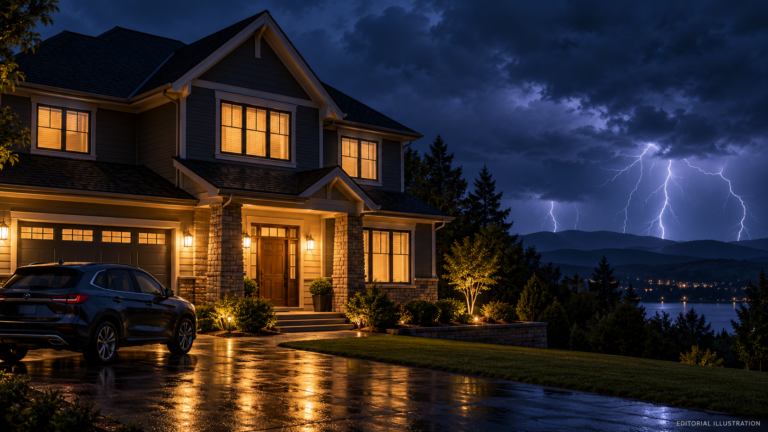
When thunder starts, go to a substantial building or closed hard-top vehicle; avoid unsafe open shelters, wait at least 30 minutes after the last…
Read guide →
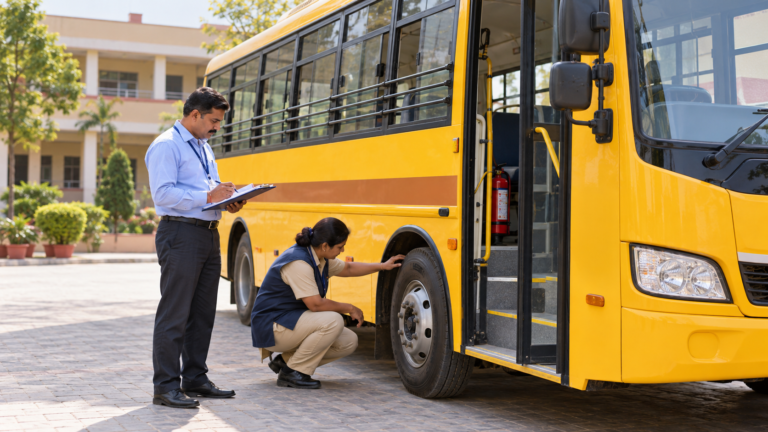
Record an observable concern, protect the child from immediate risk, tell the school transport lead in writing and confirm inspection and correction.
Read guide →
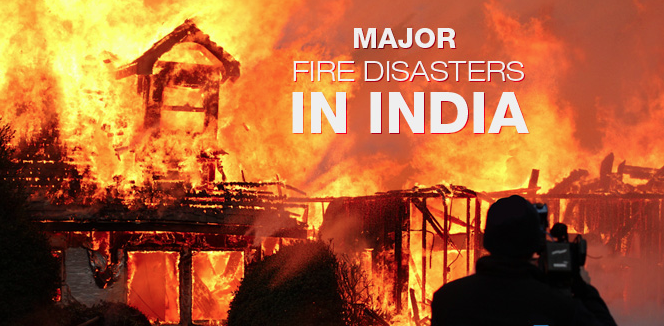
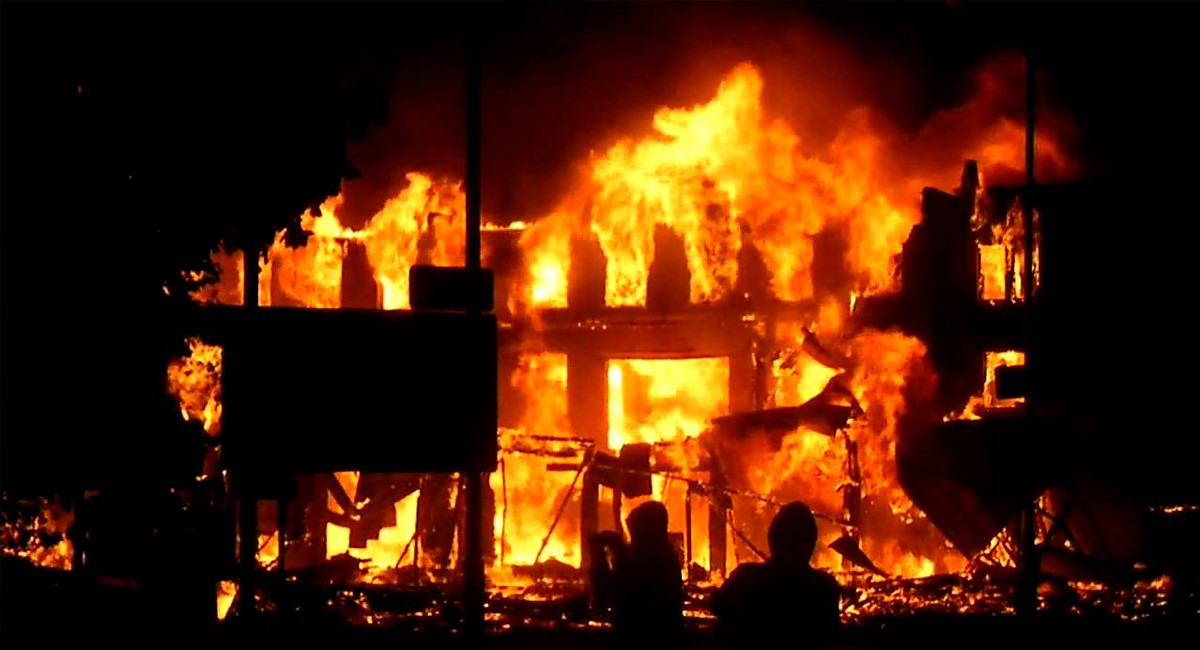
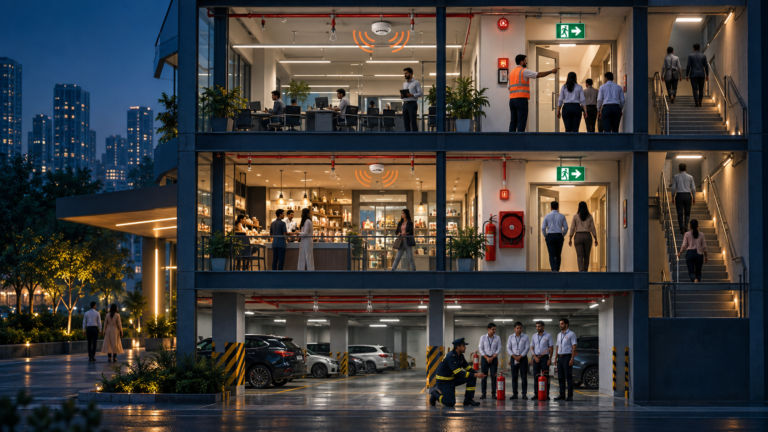
Representative image Three documented Indian building fires show why usable exits, early warning and building oversight matter. A table below lists some of the deadliest fires…
Read guide →
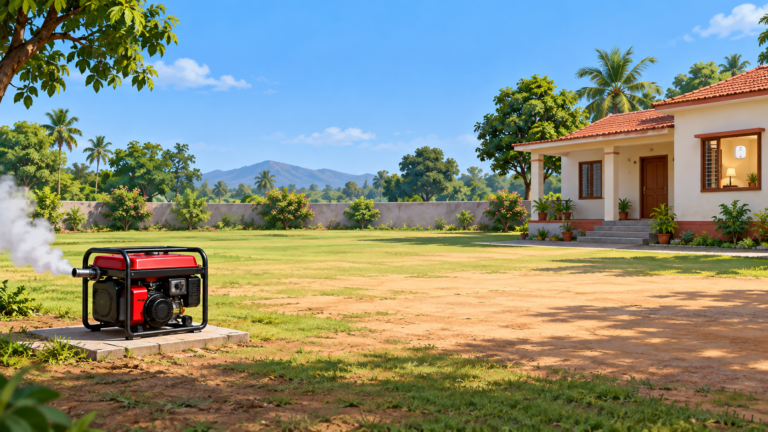
Run a fuel generator outdoors only, at least 20 feet (about 6 metres) from doors, windows and vents, with the exhaust pointing away. Keep…
Read guide →

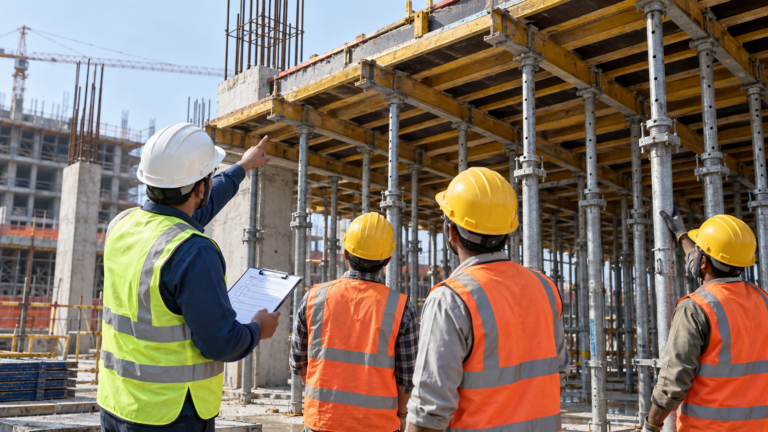
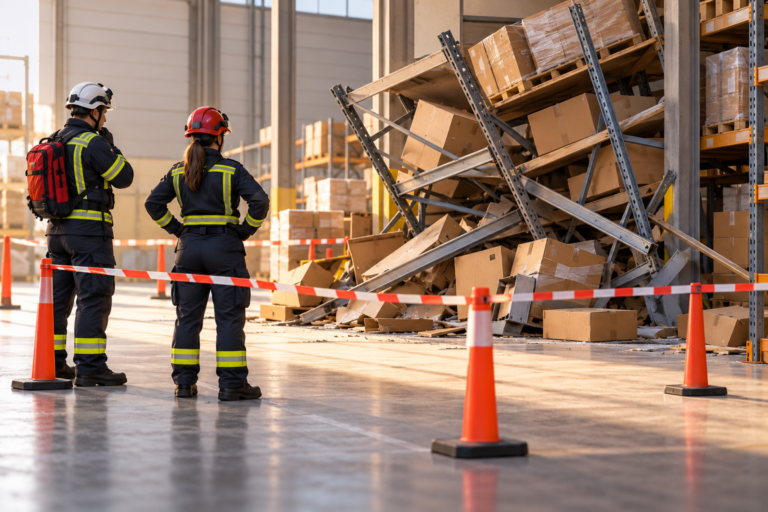
Formwork and shores carry wet concrete, steel, workers and equipment until the structure can hold itself up, and they can collapse during erection, during…
Read guide →
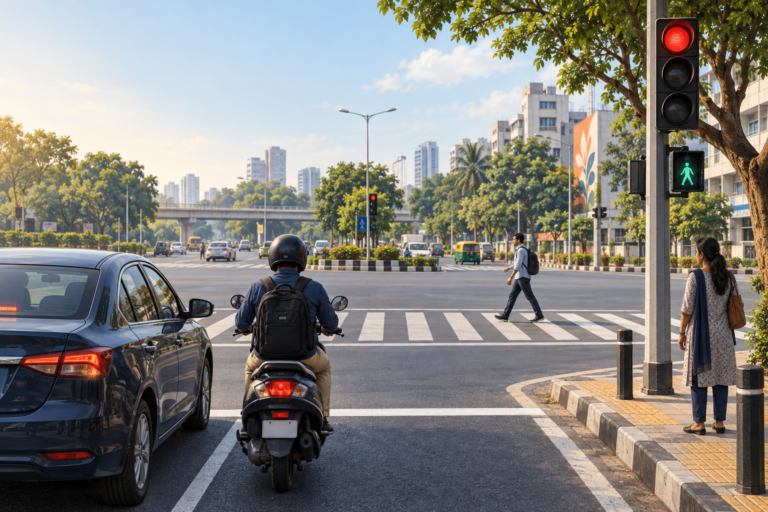
Stop before the line, keep the zebra crossing clear, and check for people and vehicles before moving—even on green and even without police presence.
Read guide →
A familiar name, profile or voice does not verify an urgent request. Pause, contact the person through a known route, check the recipient and…
Read guide →
End the call, verify independently, contact the bank and 1930 immediately if money moved, report at cybercrime.gov.in and preserve evidence. A video caller cannot…
Read guide →
A passenger can reduce distraction, ask for a safer pace and plan another way home. This guide explains how to raise a concern calmly,…
Read guide →
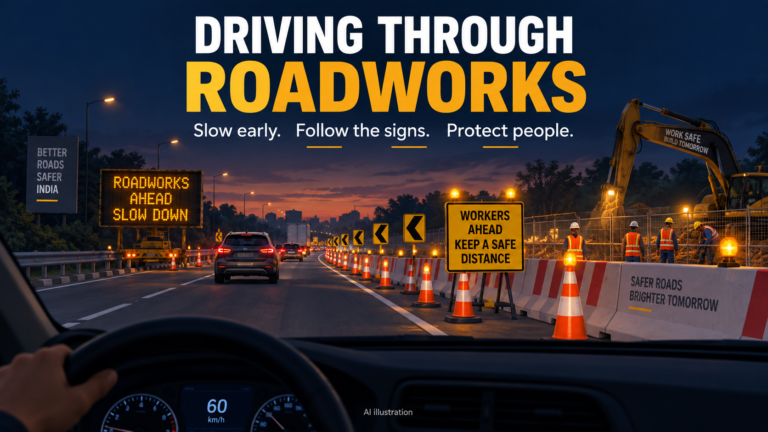
Read temporary signs early, follow the permitted route, reduce speed for conditions and allow space for sudden stops. Keep the phone out of use…
Read guide →
A practical guide for homes, offices and journeys in India: identify the device, check damage and recalls, choose a suitable charging place, and know…
Read guide →
Plan a supervised visit to an authorised immersion site, keep spectators out of the water-entry area and prepare a clear emergency handover. A practical…
Read guide →
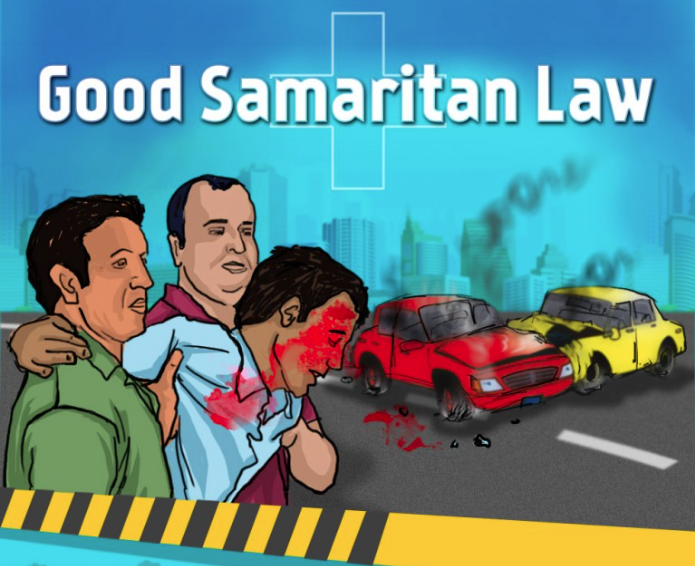
How to call from safety, give useful information, understand bystander protections and hand over to responders without creating a second emergency.
Read guide →
A practical Indian household guide to checking alerts, assisting others, understanding mask limits and following evacuation or shelter instructions during an outside fire.
Read guide →
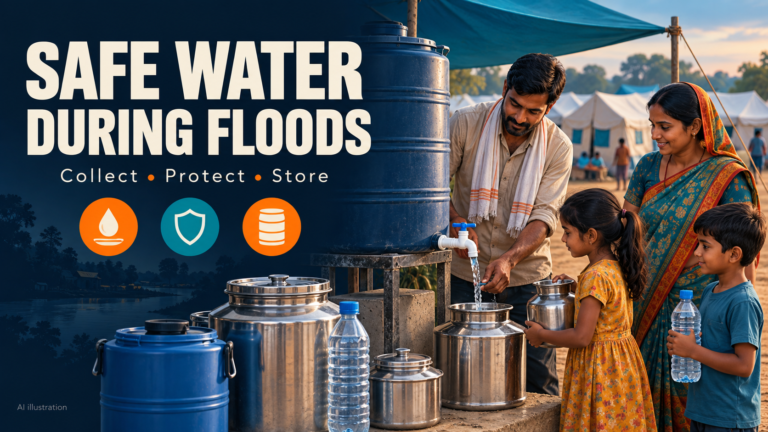
A practical guide to choosing a safe source, collecting water, protecting each refill and recognising when local health advice or professional help is needed…
Read guide →
Turn an unfamiliar escape route into a short household discussion, with unresolved questions taken to the building manager.
Read guide →
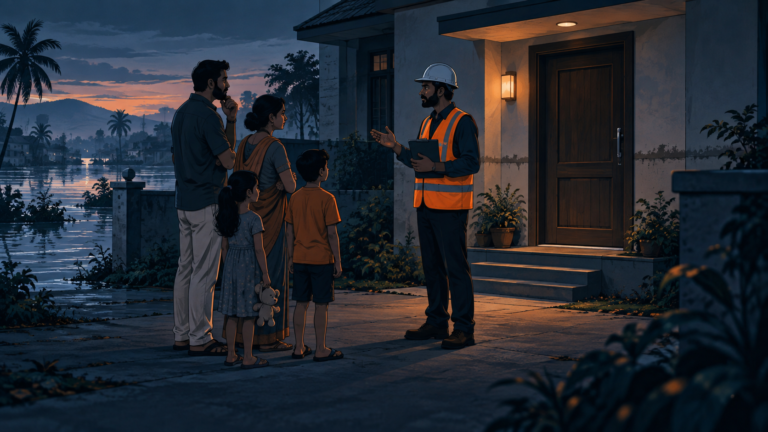
A practical household guide to keeping return instructions, electrical checks and water advice separate before resuming normal use.
Read guide →
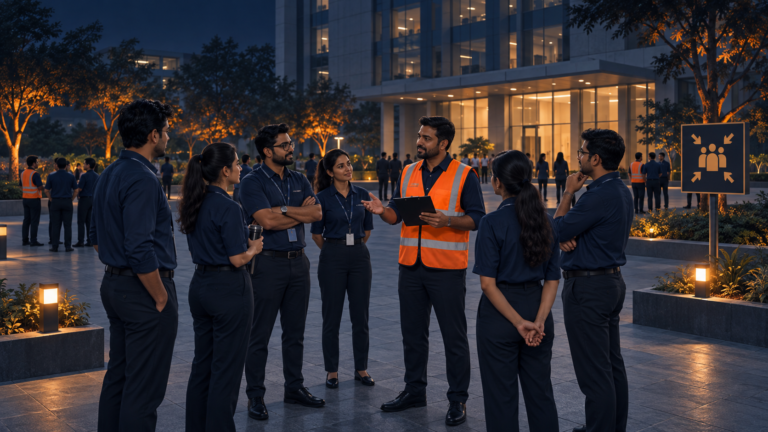
A practical debrief card for recording what a workplace drill revealed, deciding who will act and checking that the change works.
Read guide →
A practical organiser’s check for shared journeys, covering passenger arrangements and questions to settle before departure.
Read guide →
A household relocation plan that goes beyond packing: where to go, who needs help and how to confirm everyone arrived.
Read guide →
A practical record for tenants and building managers to report a concern, assign follow-up and retain the professional’s response.
Read guide →
A simple address-and-observation card to practise clear emergency reporting at home, without making a test call.
Read guide →
Questions about building records and professional review for students choosing accommodation.
Read guide →
Simple arrangements for residents and building managers to preserve emergency access.
Read guide →
Select eye and face protection for the assessed hazard; know when to stop work and how to respond to an eye injury. Eyewear does…
Read guide →
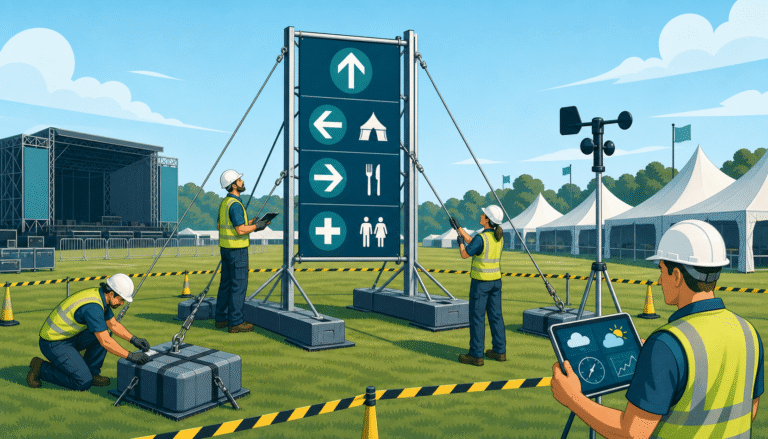
A practical control system for temporary event signs exposed to wind: competent design, site and ground checks, specified anchors or ballast, live weather monitoring,…
Read guide →
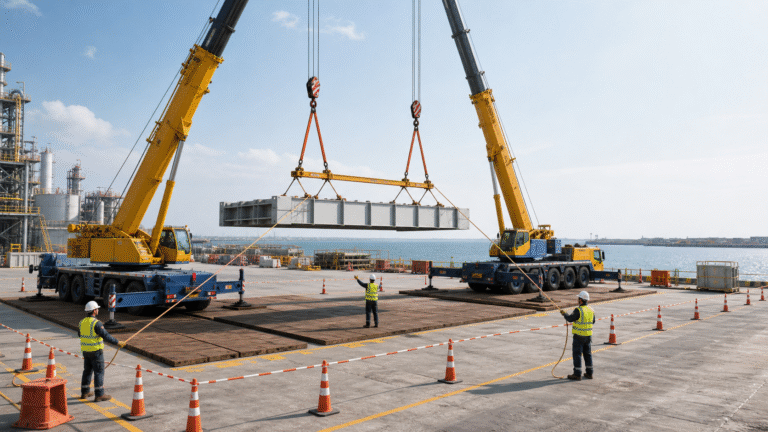
When two cranes share one load, the weight on each hook keeps changing as the load tilts, turns or moves. So a tandem lift…
Read guide →
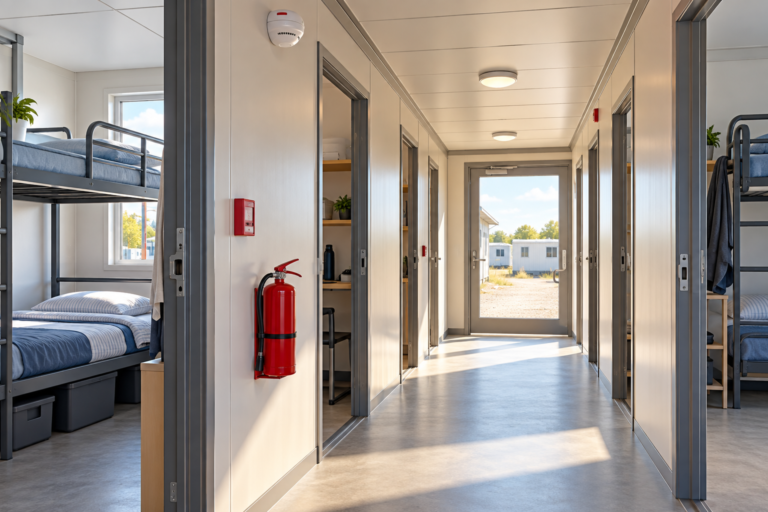
Temporary housing still needs a suitable occupancy assessment, detection, safe cooking/electrical arrangements, usable exits and a plan that works at night.
Read guide →
A crush injury may be serious without visible bleeding. Check scene safety, call 112, remove the crushing force promptly only when safe and physically…
Read guide →
Fire compliance has value only when the building's actual risks, exits, alarms, maintenance and responder access work in practice.
Read guide →
Coping well does not mean pretending a crisis is easy. A simple routine, staying in touch with people you trust and getting help on…
Read guide →
Review whether device use is displacing sleep, work, study or relationships; set practical boundaries without labelling all heavy screen use a disorder.
Read guide →
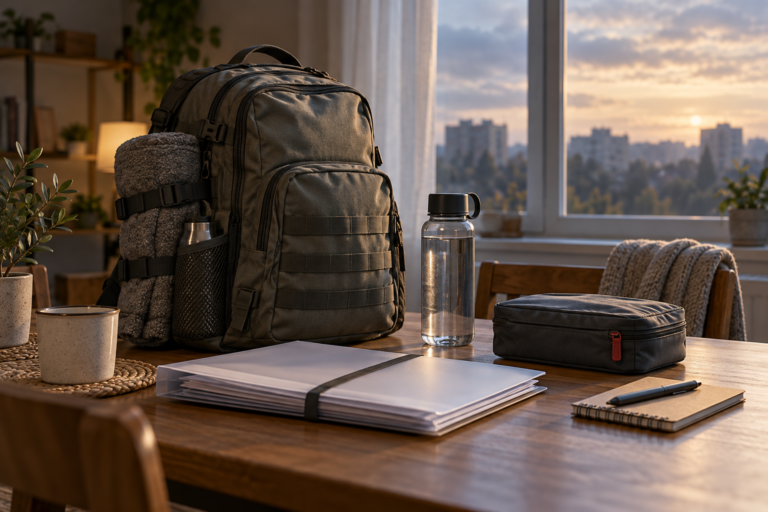
Plan household contact, documents, medicines and a safe response to verified local instructions; conditions can change rapidly.
Read guide →
Tell someone your route before departure. If lost, communicate your location, protect yourself from exposure and generally stay put unless remaining would be dangerous.
Read guide →
Dangerous crowd pressure is a design and management problem, not simply a failure of individual behaviour. Identify congestion early and use a less crowded…
Read guide →
Make a separate plan for heat, floods, smoke and power cuts, and act on current local alerts. One emergency plan does not fit every…
Read guide →
Loneliness affects health, and it can get better with small, regular contact that feels right and some support. It is not automatically a psychiatric…
Read guide →
When an institution's demand or process feels unsafe or unfair, record facts, use the applicable complaint route and protect wellbeing; rights and remedies depend…
Read guide →
If someone talks about harming themselves or suddenly cannot keep themselves safe, take it seriously. Stay with them if it is safe, get urgent…
Read guide →
After a breakup, hold on to basic routines and reach out to people you trust. The pain can be serious without every breakup being…
Read guide →
A financial crisis calls for a written picture of cash, essential expenses and debts. Prioritise immediate needs, contact verified lenders early, keep records, avoid…
Read guide →
Prepare before shaking; during shaking, protect yourself according to where you are; afterwards, expect damaged structures and follow official updates.
Read guide →
Possible heart-attack warning signs need urgent assessment. In India call 112 immediately for persistent or recurring chest discomfort, unexplained shortness of breath or concerning…
Read guide →
If you are in a collision, or stop at one, the first job is to avoid a second crash. Switch on the hazard lights,…
Read guide →
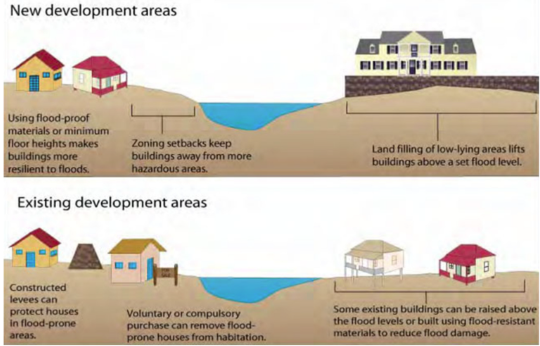
Follow local flood warnings, leave before routes close, and do not walk or drive through moving water. Do not go into dangerous water to…
Read guide →
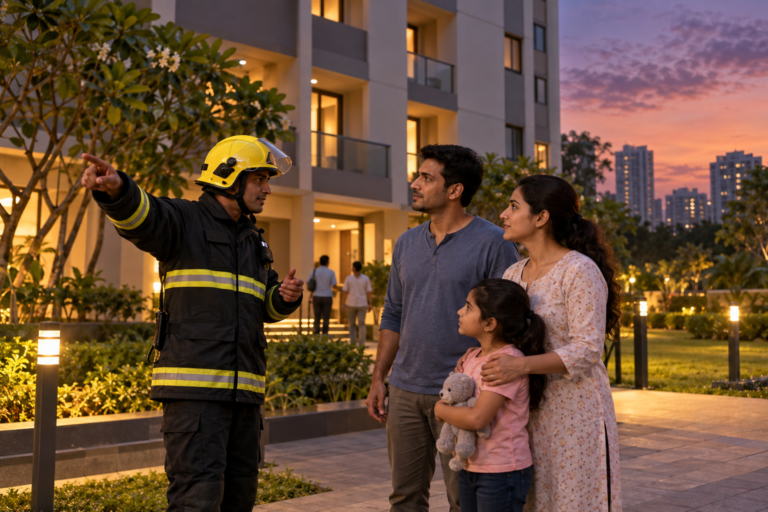
Early warning and prompt escape matter more than property protection. Alert others, leave by a safe route, stay out and call 112.
Read guide →
Building-fire outcomes depend on the actual occupancy, construction, compartmentation, detection, exits, maintenance and response—not one national “failure” cause.
Read guide →
Check the original alert, date, location and latest correction before sharing a disaster claim; distinguish provisional reports from confirmed information.
Read guide →
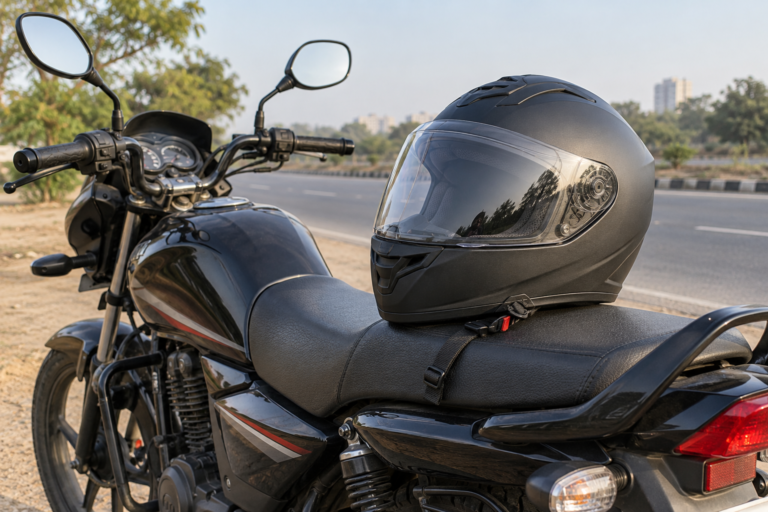
A certified, well-fitting and securely fastened helmet lowers head-injury risk but cannot make unsafe speed, roads or riding harmless.
Read guide →
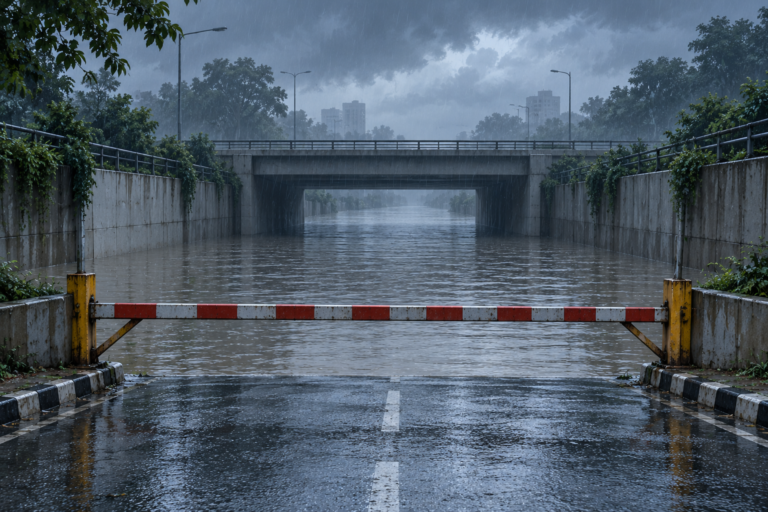
If water is flowing over a road or footpath, you cannot judge it by how it looks or by the size of your vehicle.…
Read guide →
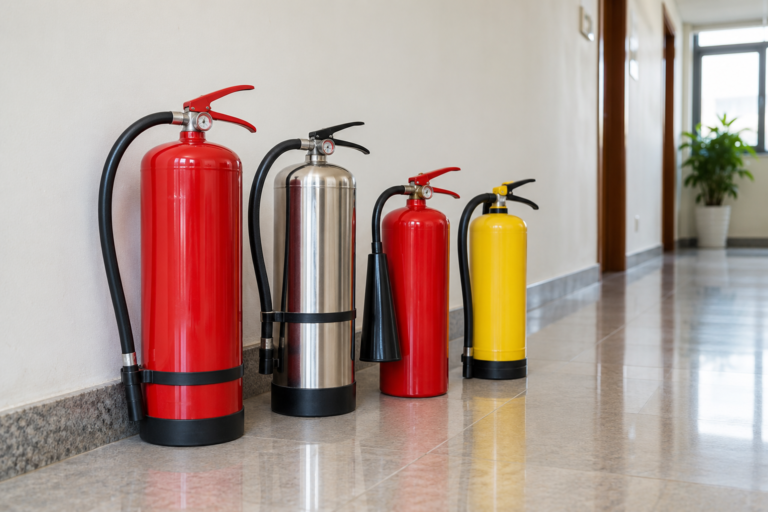
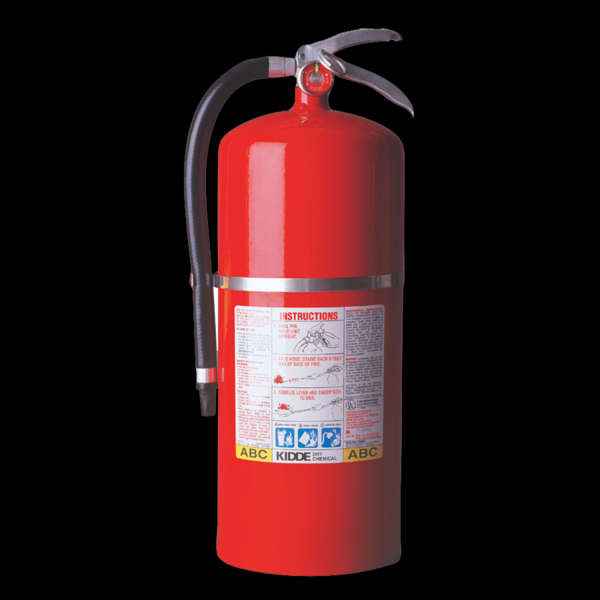
Choose an extinguisher by what is burning: BIS classifies fires as A (solids), B (liquids), C (gases), D (metals) and F (cooking oil), and…
Read guide →
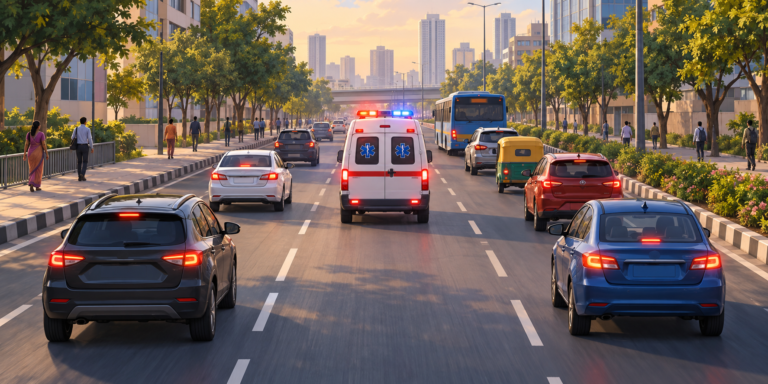
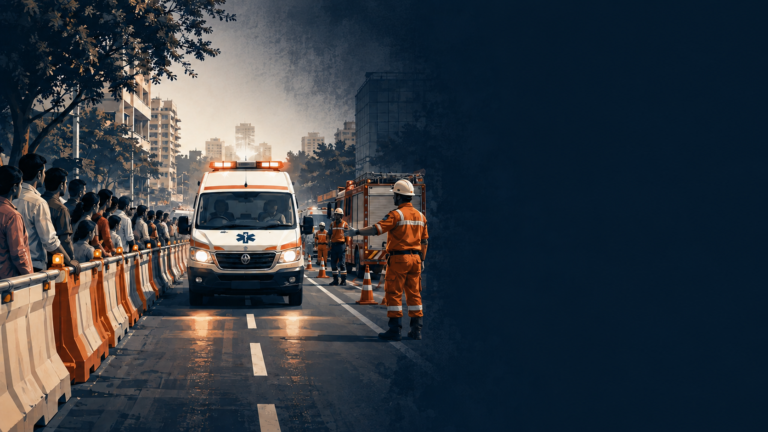
A safe guide to giving an ambulance or fire-service vehicle passage in India, with Motor Vehicles Act section 194E and no unsupported national yielding…
Read guide →
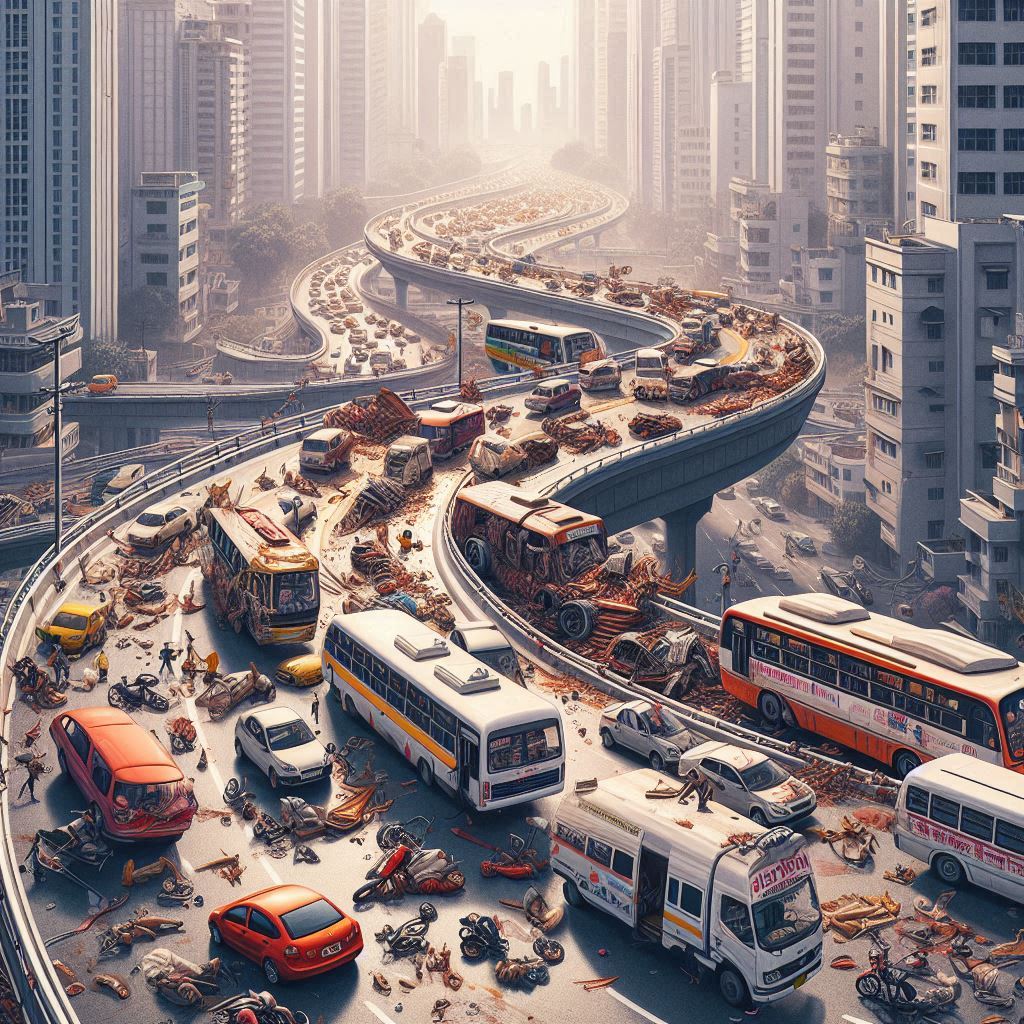
Representative image In 2023, 1,72,890 people were killed on India's roads (MoRTH), and NCRB recorded 5,888 fire deaths in 2024. Most of these deaths have causes…
Read guide →
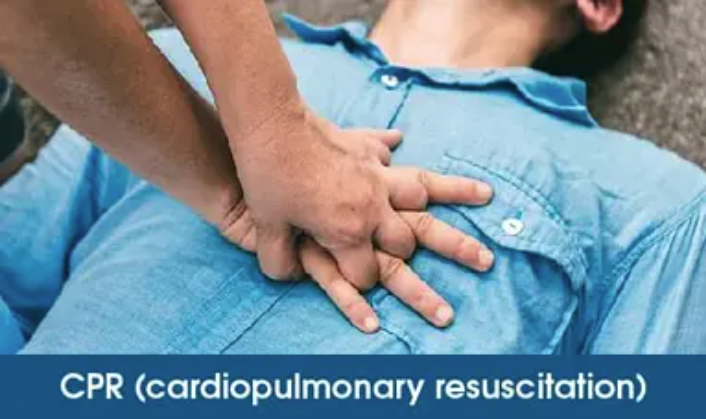
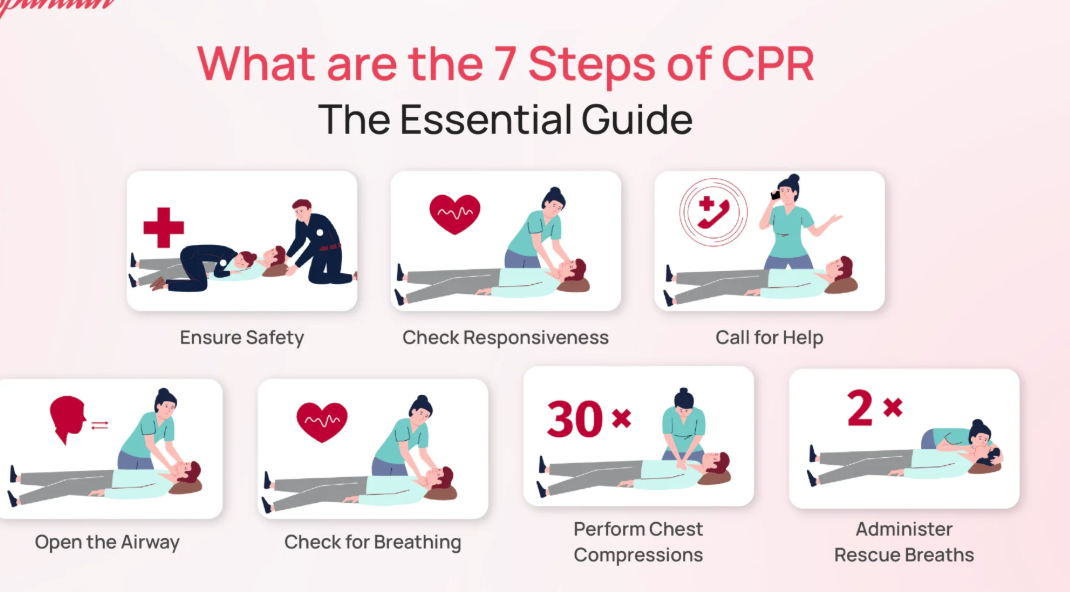
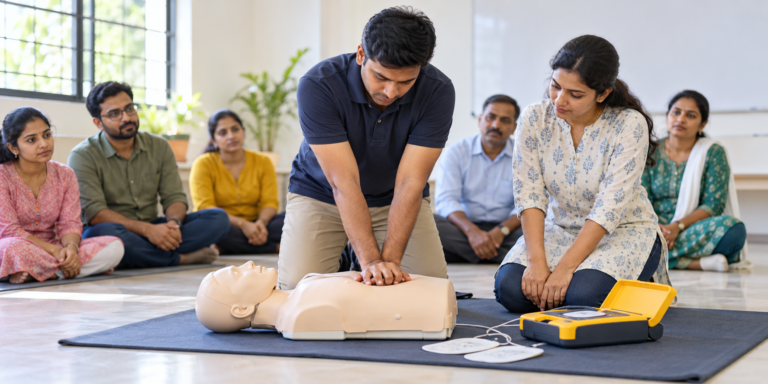
Representative image CPR does not bring someone back on the spot. It keeps blood moving to the brain until an ambulance or a defibrillator arrives. In…
Read guide →
Illustration People who jump from burning buildings are usually trapped by heat and smoke with no other way out. They are not simply panicking. This…
Read guide →
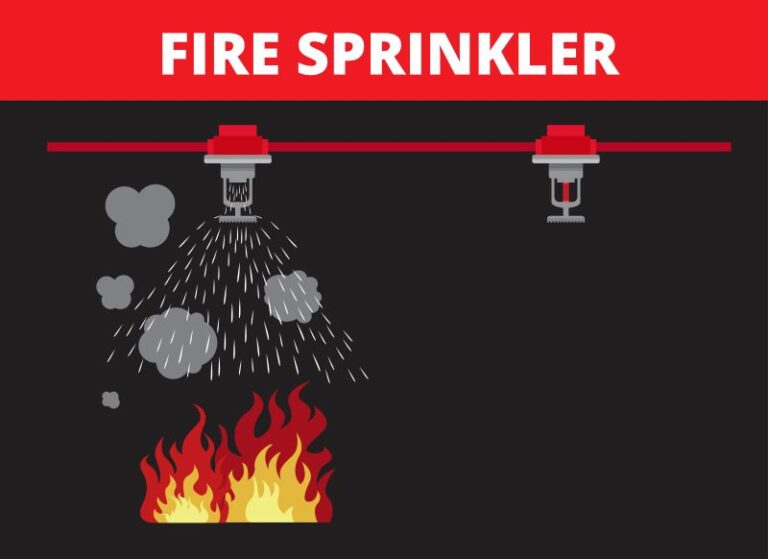
A single sprinkler head activating (representative image) Sprinklers do not make fires worse. Only the heads heated by the fire open, and in US fires large enough to set them off,…
Read guide →
Representative image NCRB recorded 4,67,857 accidental deaths in India in 2024, about one every 67 seconds, and faster first help could have saved some of them.…
Read guide →
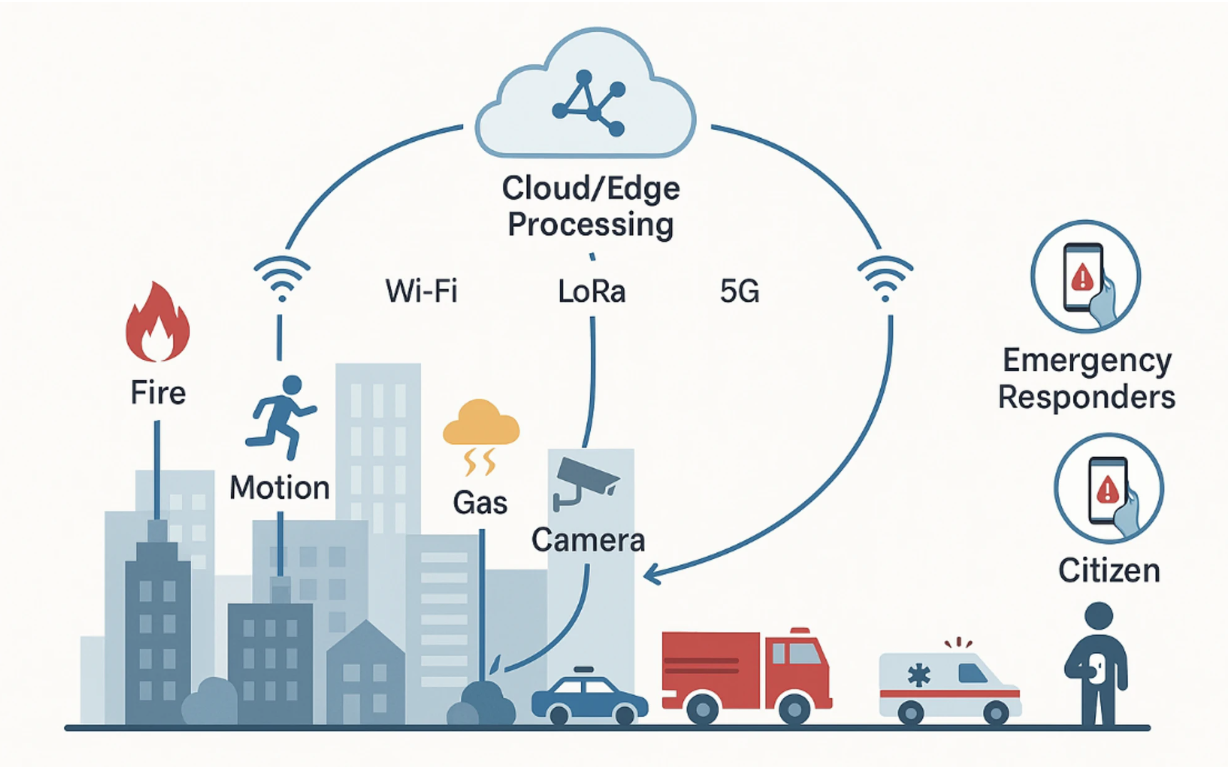
Research figure — shown for illustration All 100 Smart Cities now have an Integrated Command and Control Centre, with over 84,000 CCTV cameras, 1,884 emergency call boxes and 3,000 public…
Read guide →
Representative image After the 2018 Kerala floods, a UN-led assessment put recovery needs at about ₹31,000 crore, far more than relief payments can cover. India publishes…
Read guide →
Representative image In 2023, 1,72,890 people were killed in road accidents in India (MoRTH), and many bystanders still hesitate to help for fear of the police…
Read guide →
Representative image Every Indian state must have a State Disaster Management Authority under the Disaster Management Act, 2005, chaired by the Chief Minister and responsible for…
Read guide →
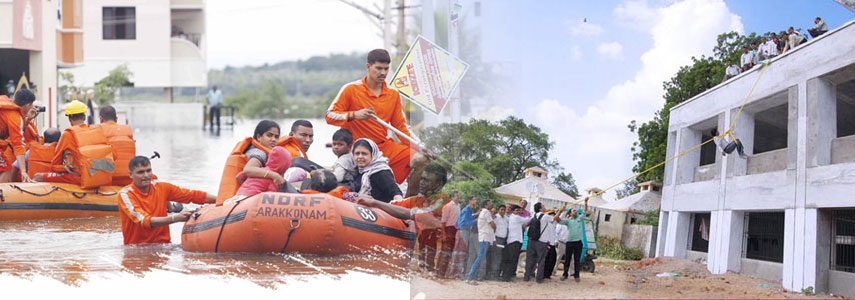
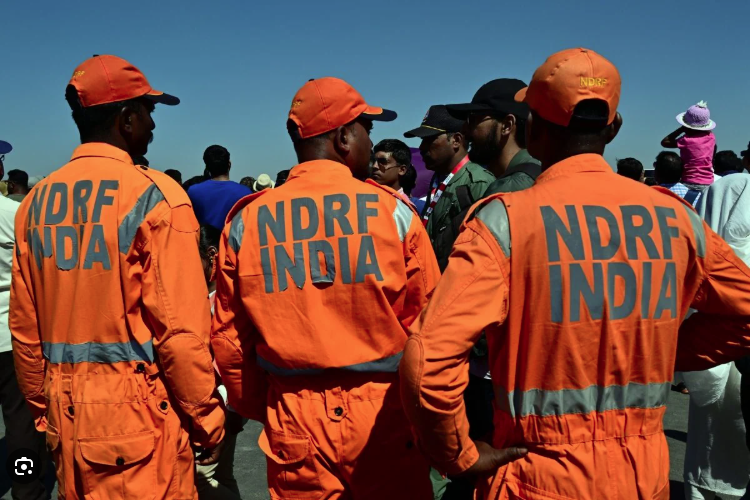
Representative image The National Disaster Response Force has grown from 8 to 16 battalions since 2006, with a sanctioned strength of 18,556. It has carried out…
Read guide →
Representative image India does not publish an official state-wise ranking of police emergency response times. The 112 Emergency Response Support System connects callers to police, fire…
Read guide →
Representative image India had 3,377 fire stations against 8,559 required, the Home Ministry told the Rajya Sabha in June 2019, a gap of about 60%. No…
Read guide →
Representative image In 2024, NCRB recorded 5,888 fire deaths in India, 60.4% of them in homes, along with 15,861 deaths from electrocution and 26,437 from falls.…
Read guide →
Representative image Many urban floods, fires and building collapses in India start with planning failures: lakes and drains built over, illegal floors, blocked fire access and…
Read guide →
Representative image In 2024, NCRB recorded 18,718 accidental deaths of children under 14 and 59,051 of people aged 60 and above. Drowning killed 5,760 children, and…
Read guide →
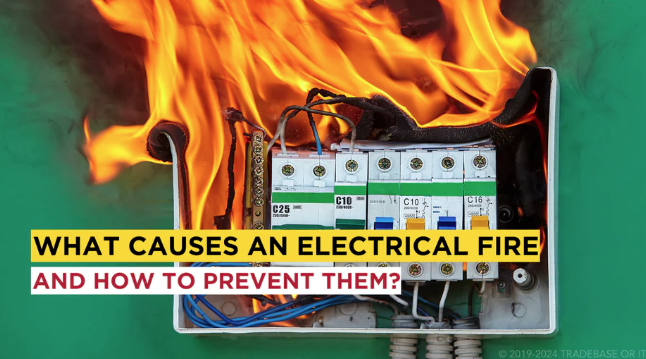
Representative image In 2024, electrical short circuits caused 1,042 fires that killed 1,012 people in India, and another 15,861 people died of electrocution, up about 15%…
Read guide →
Representative image The Uphaar Cinema fire in Delhi (13 June 1997) killed 59 people, who died of suffocation after illegal changes, extra seats and a closed…
Read guide →
Representative image India has no official count of its high-rise buildings or of how many meet fire norms. NCRB recorded 3,555 fire deaths in homes and…
Read guide →
Representative image In India's registered factories, 1,131 workers were killed and 3,251 injured in 2024 (Labour Ministry, Lok Sabha), and worldwide nearly 3 million people die…
Read guide →
Representative image In 2024, NCRB recorded 22,413 deaths on railway tracks and premises, 1,888 at railway crossings and 5,848 from falls from vehicles. Two cases show…
Read guide →
Representative image India has about 14.71 lakh schools (UDISE+ 2024-25), but no official figure shows how many hold regular fire drills. NCRB recorded few fire deaths…
Read guide →
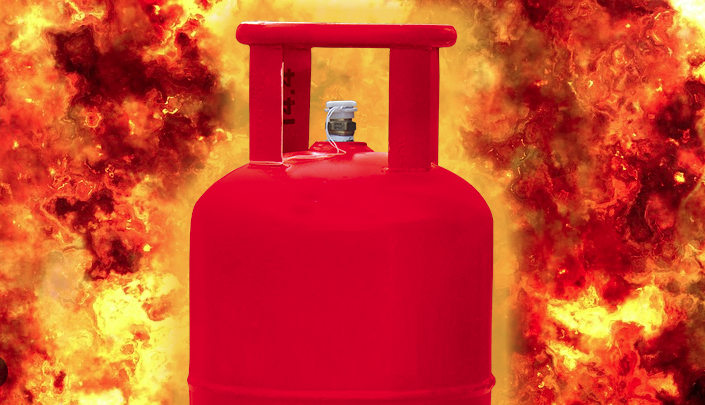
Representative image Cooking gas cylinder or stove bursts caused 1,355 fires and killed 1,389 people in India in 2024, and another 160 died in domestic gas…
Read guide →
Representative image Most people who die in fires in India die at home. In 2024, 3,555 of the 5,888 fire-accident deaths (60.4%) were in residential buildings,…
Read guide →
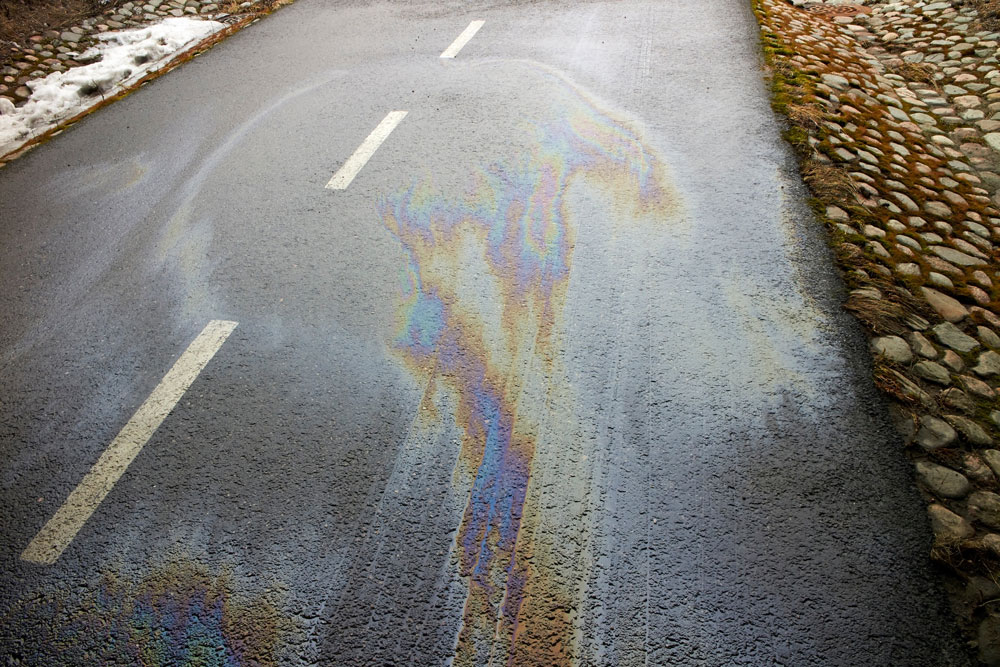
Oil on a road surface (representative image) Traffic accidents killed 1,99,443 people in India in 2024 (NCRB), and some of those crashes involve tankers carrying fuel, gas or chemicals. Spills from…
Read guide →
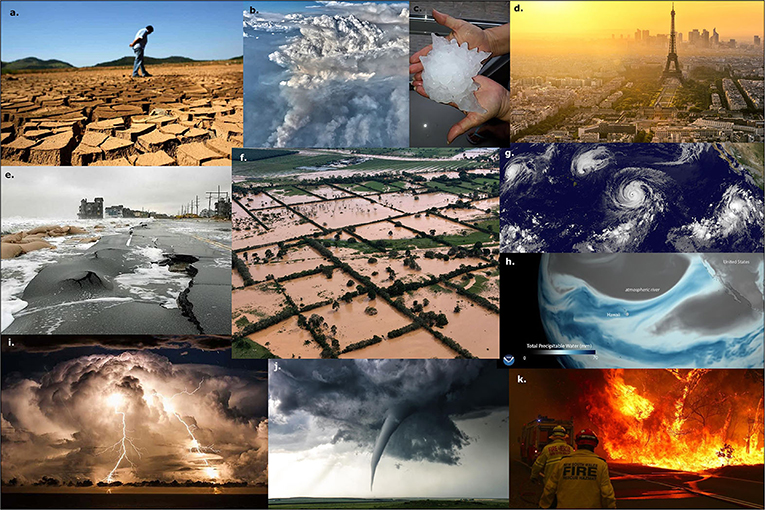
Representative image Extreme weather is now part of everyday life in India. Between January and September 2024 the country had extreme weather on 255 of 274…
Read guide →
Representative image Industrial accidents harm more than people. At Baghjan in Assam, an oil well blowout that began on 27 May 2020 sat about 300 metres…
Read guide →
Representative image Floods mix sewage, chemicals and waste into wells, handpumps and tanks, and WHO lists cholera, typhoid and other water-borne diseases among the main flood…
Read guide →
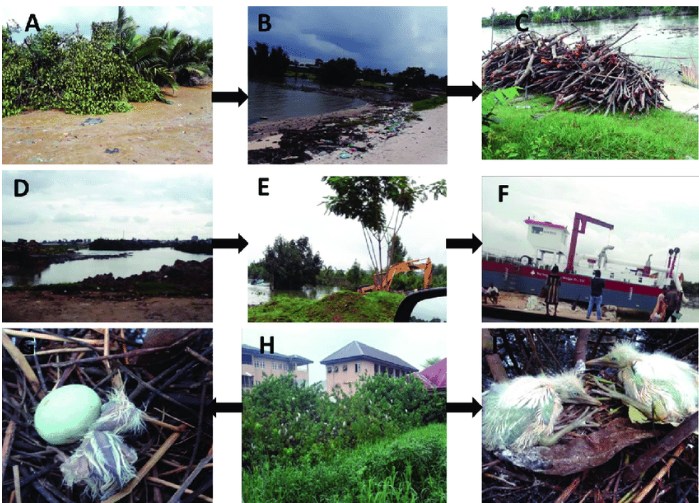
Representative image How floods, fires and cyclones push wild animals towards people in India, and how to stay safe. Kaziranga is the clearest example: every monsoon…
Read guide →
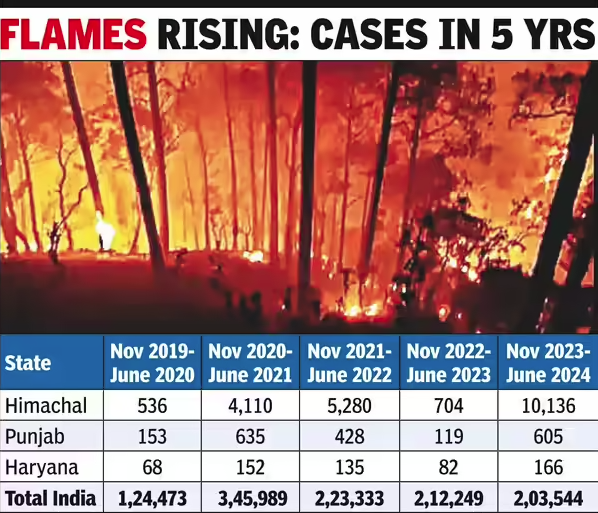
Representative image How forest fires in Uttarakhand and Himachal Pradesh are tracked: FSI satellite alerts, Uttarakhand's daily fire report (657 incidents, about 593 hectares and 2…
Read guide →
Representative image What large industrial fires do to the air around them, using verified Indian incidents: the 2020 Vizag styrene leak, the 2022 Mundka and Nandesari…
Read guide →
Representative image Large urban and industrial fires in India are also environmental emergencies, the post argues: smoke, toxic residues and contaminated firefighting run-off can harm air,…
Read guide →
Representative image A practical guide for Indian parents and teachers on teaching children safety without scaring them: what to cover at home, school, on the road…
Read guide →
Representative image Persons with disabilities die in disasters two to four times more often than others (UNDRR), and most have no evacuation plan. This guide covers…
Read guide →
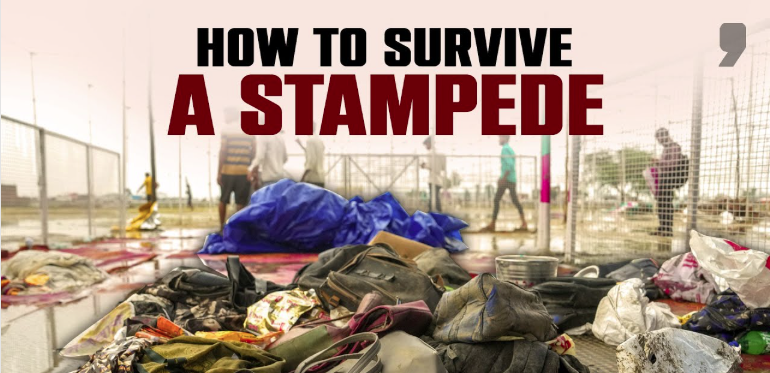
Representative image Crowd crushes killed 147 people in India in 2024 (NCRB); the Hathras satsang crush on 2 July alone killed 121. Most victims cannot breathe…
Read guide →
Representative image Drowning killed 40,044 people in India in 2024 (NCRB), most of them after falling into a water body. This guide explains how to spot…
Read guide →
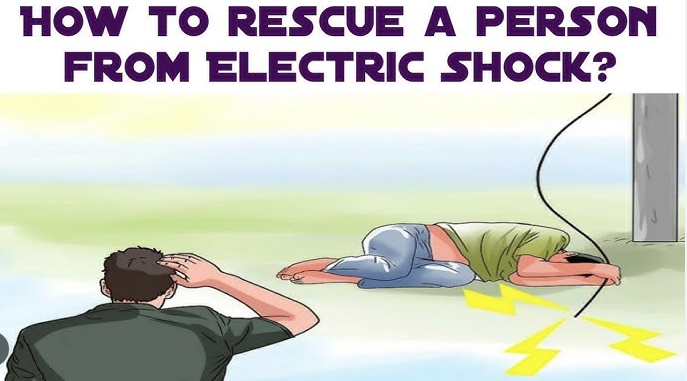
Representative image If someone gets an electric shock, do not touch them until the power is off. Switch off at the plug, switch or main breaker,…
Read guide →
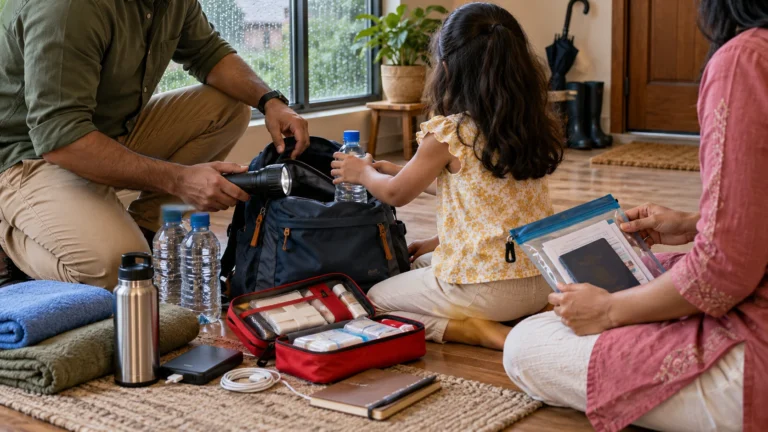
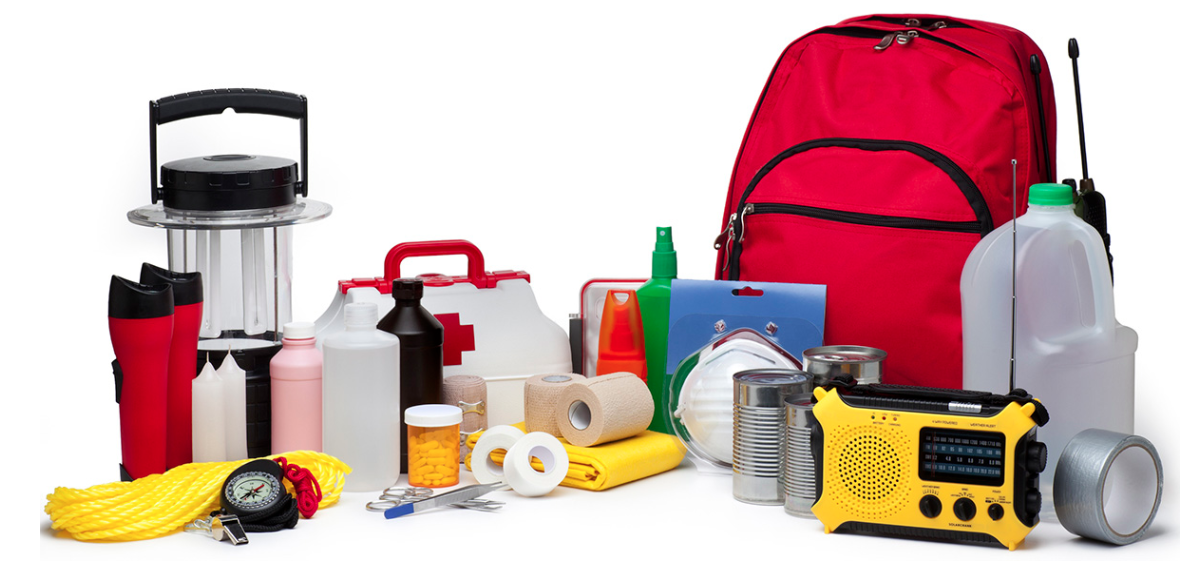
Representative image A home emergency kit lets your family leave quickly and manage on its own for the first three days of a flood, fire or…
Read guide →
Representative image A plain guide to CPR for anyone in India: when to start (unresponsive and not breathing normally), how to do hands-only CPR, rescue breaths…
Read guide →
Check scene safety, call 112 early, start adult CPR when unresponsive and not breathing normally, apply direct pressure to severe bleeding and cool a…
Read guide →
Representative image Six Indian disasters from 2019 to 2024, from the Surat Takshashila fire to the Morbi bridge collapse and the Rajkot game zone fire, show…
Read guide →
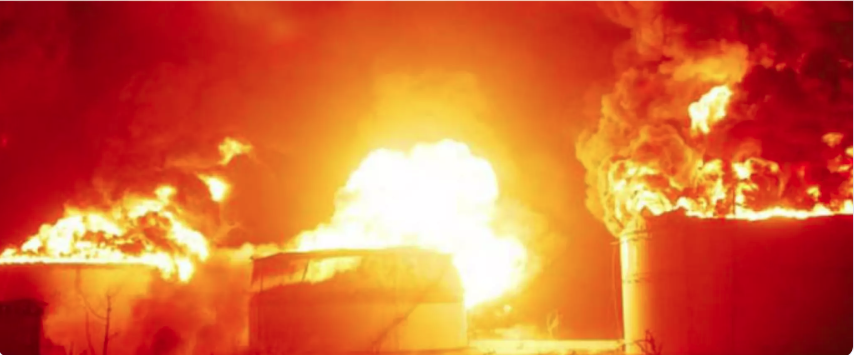
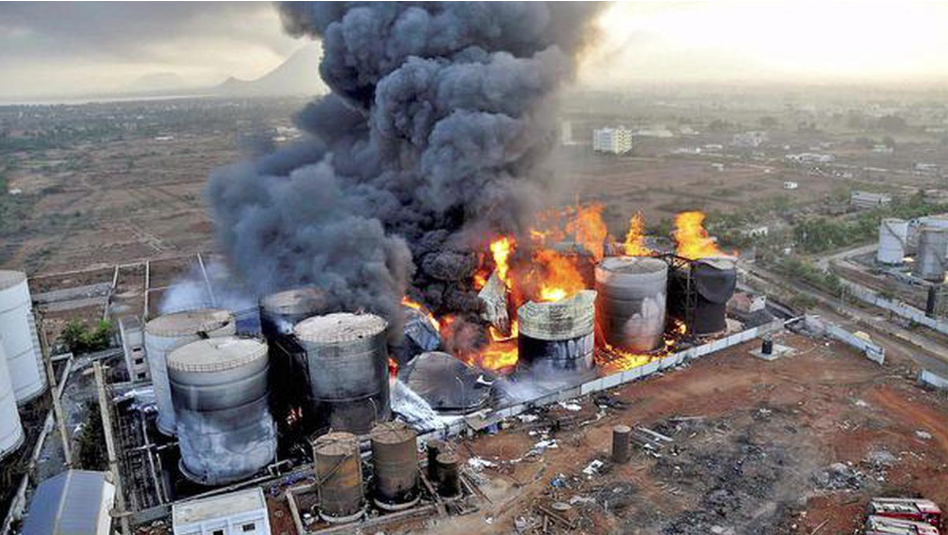
Representative image Fires at oil depots, terminals, refineries and fuel pumps usually start small, with a leak, vapour, a static spark or overfilling, and grow when…
Read guide →
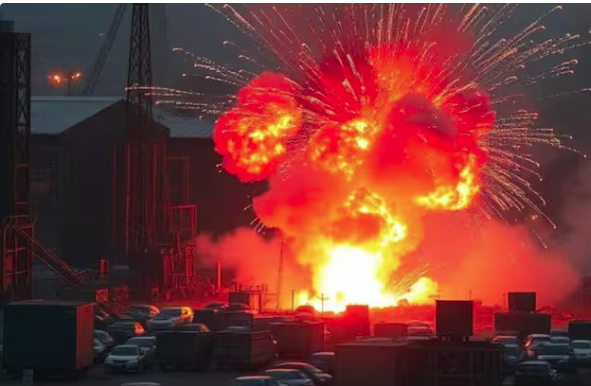
Representative image Four well-reported firecracker blasts, at Achankulam (2021), Rengapalayam (2023), Harda (2024) and Deesa (2025), killed 67 people. This post explains what caused them, from…
Read guide →
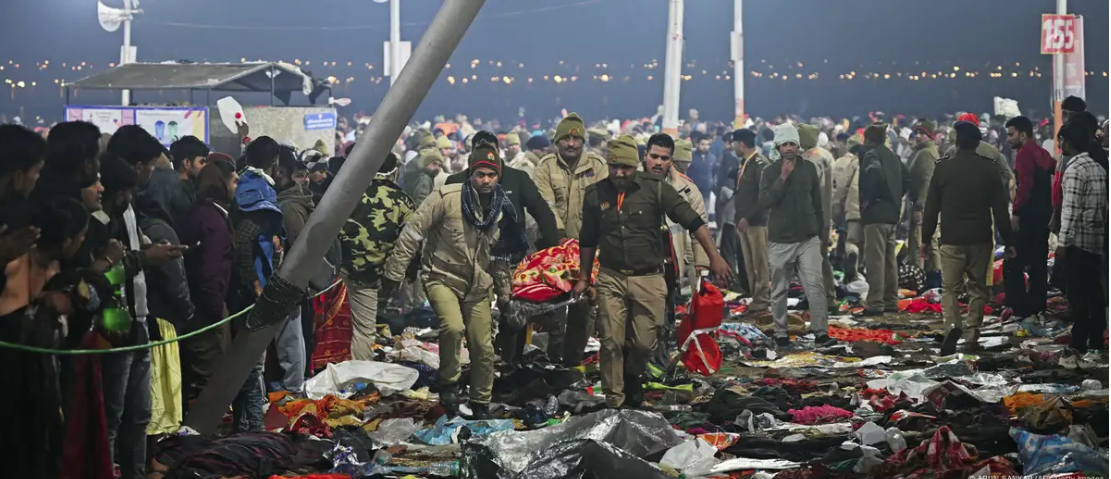
Representative image Four crushes at Vaishno Devi (2022), Hathras (2024), Tirupati (2025) and the Maha Kumbh (2025) killed at least 169 people, and NDMA says most…
Read guide →
Representative image NCRB recorded 6,891 fire-accident deaths in 2023, and in 2024 six in ten fire deaths were in residential buildings. Using verified fires in Surat,…
Read guide →
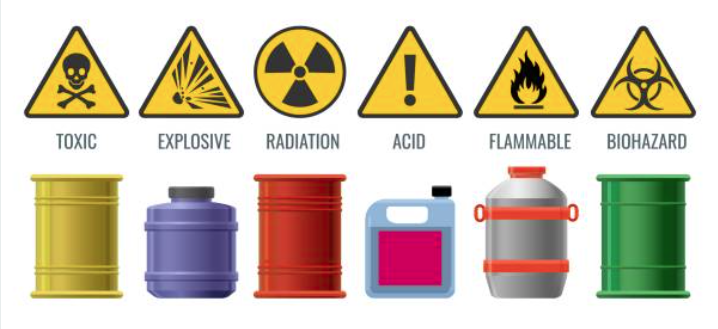
Representative image India is the world's sixth-largest chemical producer, yet there is no public count of chemical storage accidents. Using verified cases from Visakhapatnam (2020), Surat…
Read guide →
Representative image Accidents in India's registered factories killed 3,331 workers between 2018 and 2020 (DGFASLI data via NHRC), and 1,017 in 2022. Using verified blasts at…
Read guide →
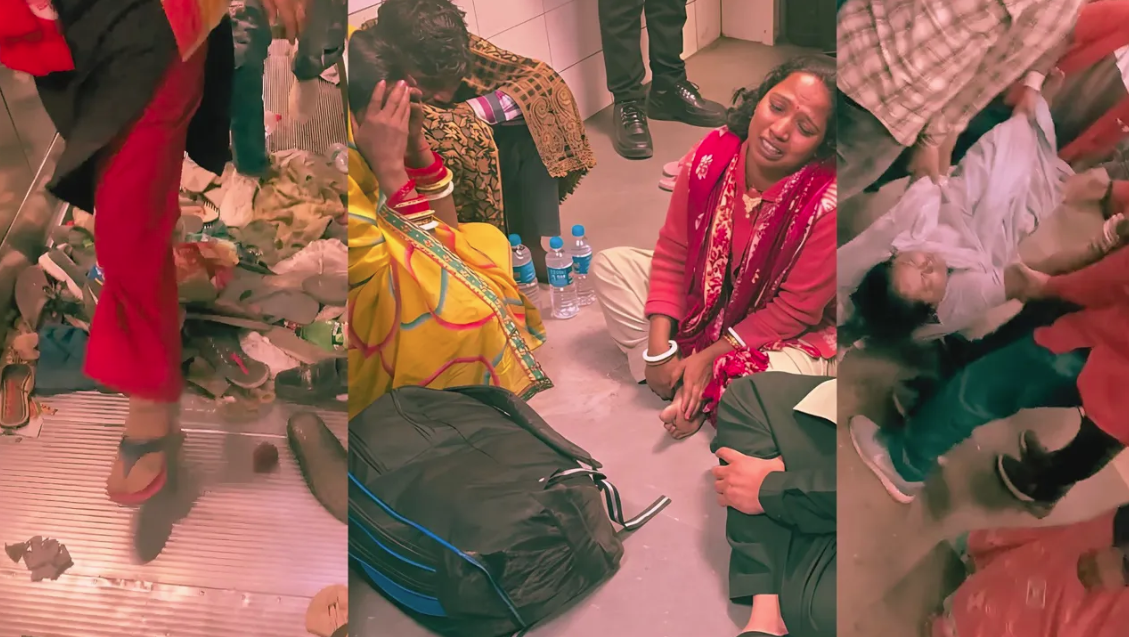
Representative image Two of India's worst recent railway station crushes, Elphinstone Road in Mumbai (2017, 23 dead) and New Delhi (2025, at least 18 dead), both…
Read guide →
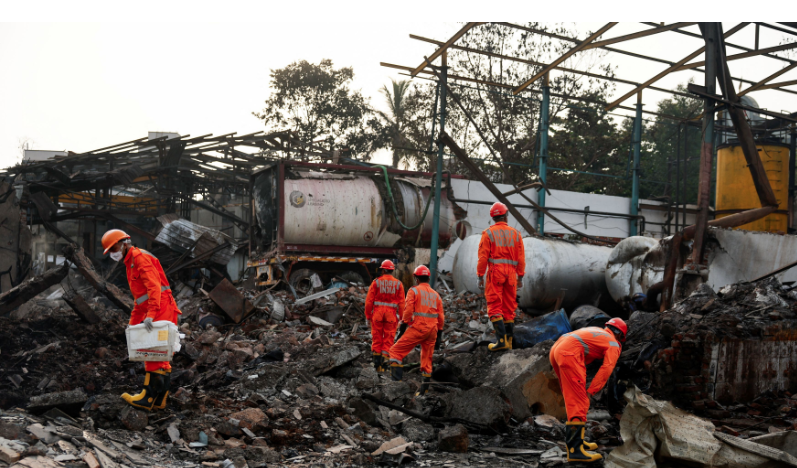
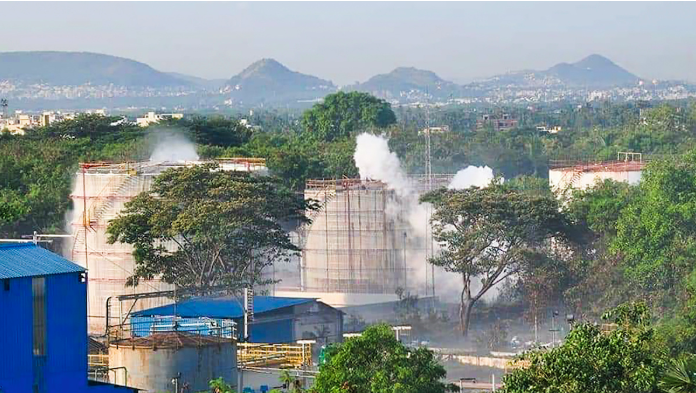
Representative image Since the 2020 LG Polymers styrene leak in Visakhapatnam killed 12 people, verified gas and fume incidents in Surat (2022), Vadodara (2022) and Ludhiana…
Read guide →
Representative image Official DGFASLI records show 5,308 deaths in factories registered under the Factories Act between 2019 and 2023, with Gujarat reporting the most (1,124). Machinery,…
Read guide →
Representative image India's weather and disaster agencies issue warnings for cyclones, floods, heatwaves, lightning, landslides and tsunamis, and evacuations before Cyclone Fani (2019) and Cyclone Biparjoy…
Read guide →
Representative image Choking, burns, drowning, fever with fits, poisoning and falls are the child emergencies Indian families should prepare for. Babies and children need different CPR…
Read guide →
Representative image India has no official ranking of how well each state responds to disasters, and the earlier self-made ranking on this page has been withdrawn…
Read guide →
Representative image States and UTs reported 2,849 deaths from floods, heavy rain, landslides and cyclones in 2023-24 and 2,979 in 2024-25, with houses damaged rising from…
Read guide →
Representative image NCRB recorded 1,70,746 suicides in India in 2024, about one every three minutes, with daily wage earners, homemakers and young adults most affected. Warning…
Read guide →
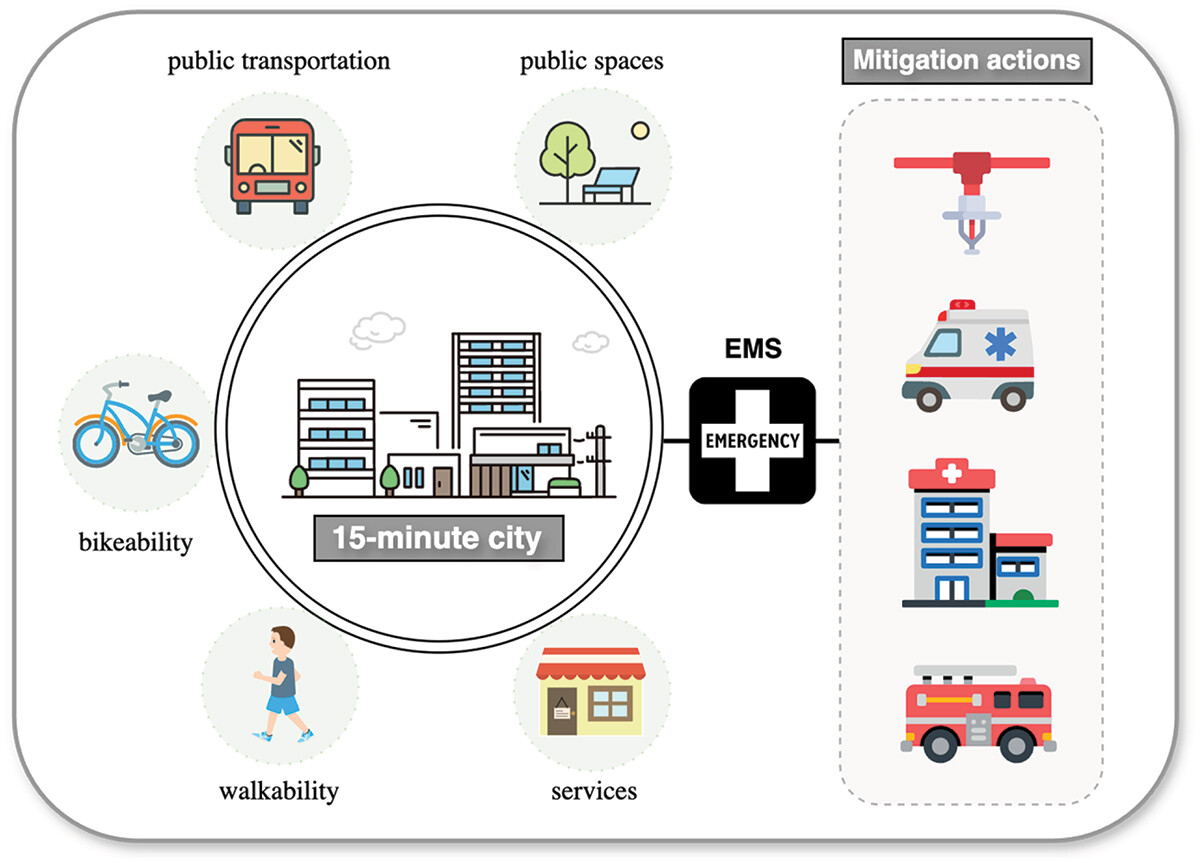
Representative image India's 53 mega cities recorded 69,378 accidental deaths in 2024, a rate of 43.2 per lakh against 33.3 nationally (NCRB). Floods, fires, heat, building…
Read guide →
Representative image Most workplaces in India are not ready for a fire, gas leak or cardiac arrest. NCRB recorded 5,888 fire-accident deaths in 2024, and fires…
Read guide →
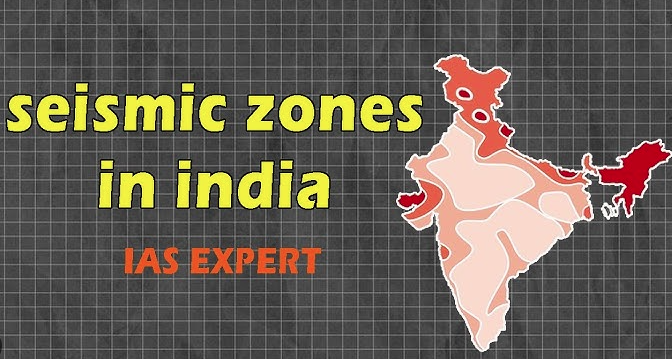
Representative image About 59% of India's land is prone to earthquakes (Ministry of Earth Sciences, 2022). Under the BIS zone map, about 11% is in Zone…
Read guide →
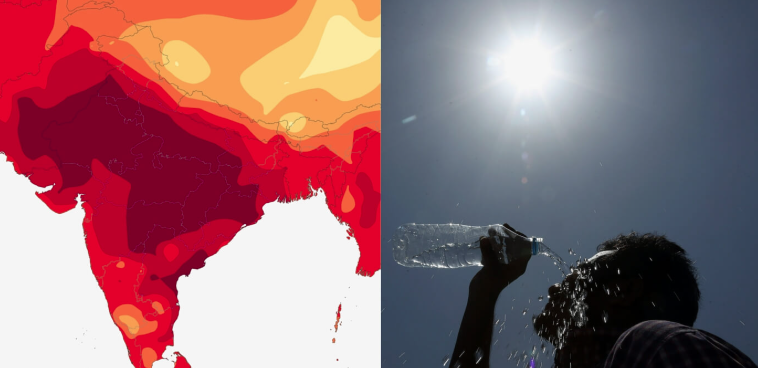
Representative image NCRB recorded 5,544 heat or sun-stroke deaths in India from 2019 to 2024, with 2024, India's warmest year since 1901, more than doubling to…
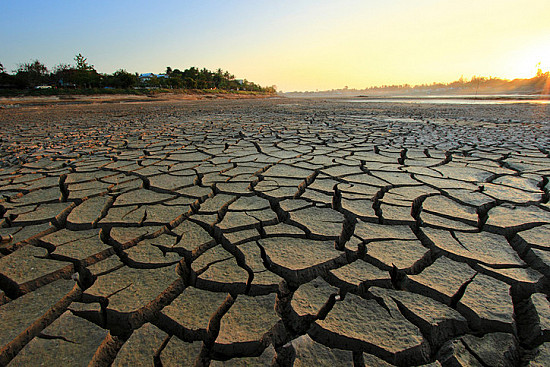
Read guide →Drought is a health emergency as well as a farm crisis: it brings heat illness, unsafe water, hunger and mental distress. About 68% of…
Read guide →
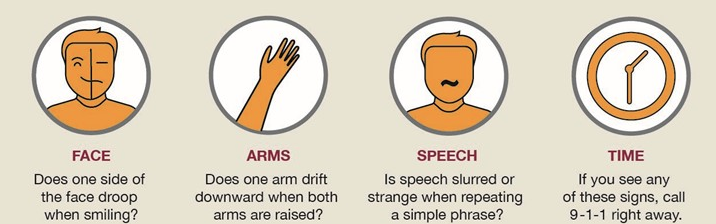
Representative image Stroke killed about 6.99 lakh people in India in 2019, 7.4% of all deaths (ICMR-backed India State-Level Disease Burden Initiative). Survival and recovery depend…
Read guide →
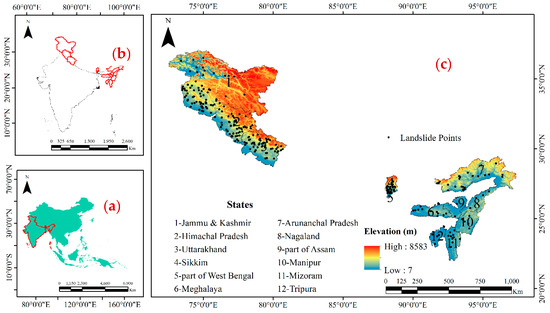
Research figure (Applied Sciences journal) — shown for illustration ISRO's Landslide Atlas of India (2023) maps about 80,000 landslides from 1998 to 2022 across 17 states and two UTs in the Himalayas and…
Read guide →
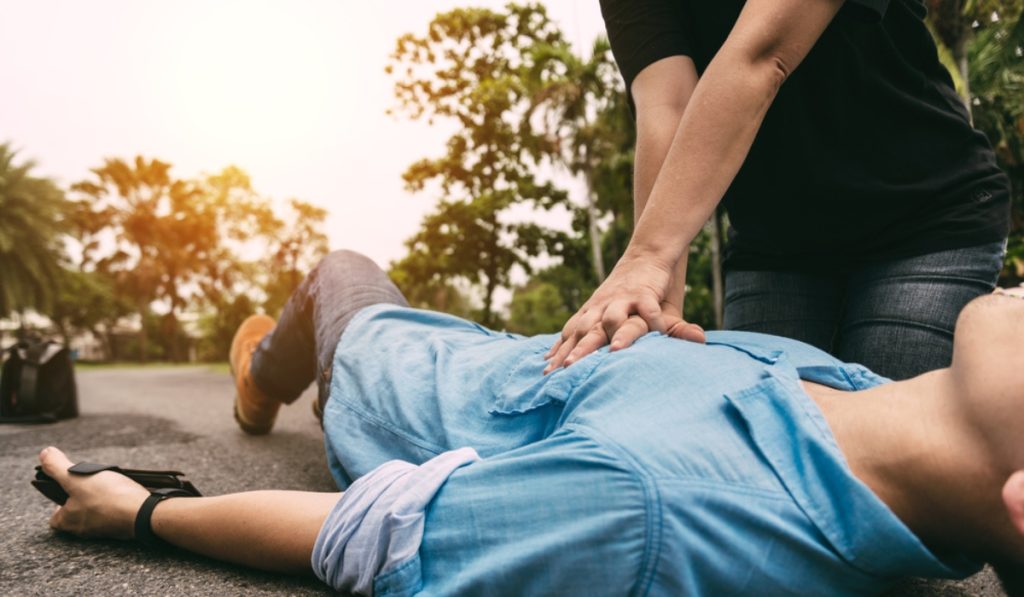
Bystander CPR (representative image) In a cardiac arrest, the people nearby decide whether the person lives. In one South Indian hospital study only 9.8% of victims got CPR…
Read guide →
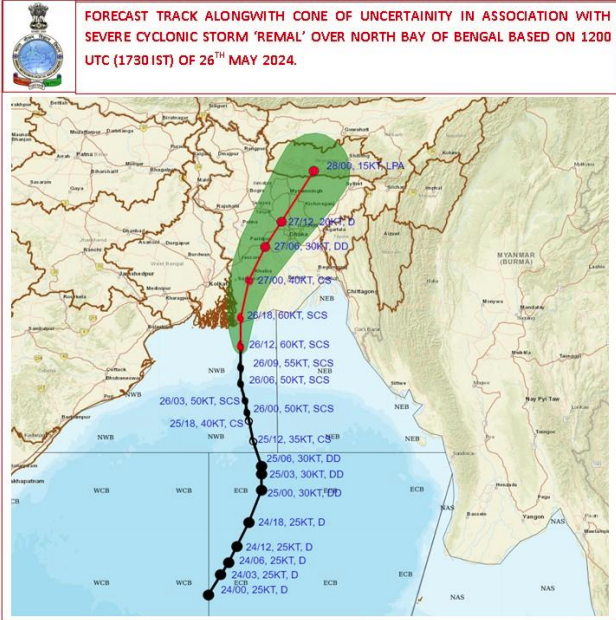
Representative image IMD reported 35 named cyclonic storms over the north Indian Ocean from 2019 to 2025, 25 of them severe or stronger; 22 formed on…
Read guide →
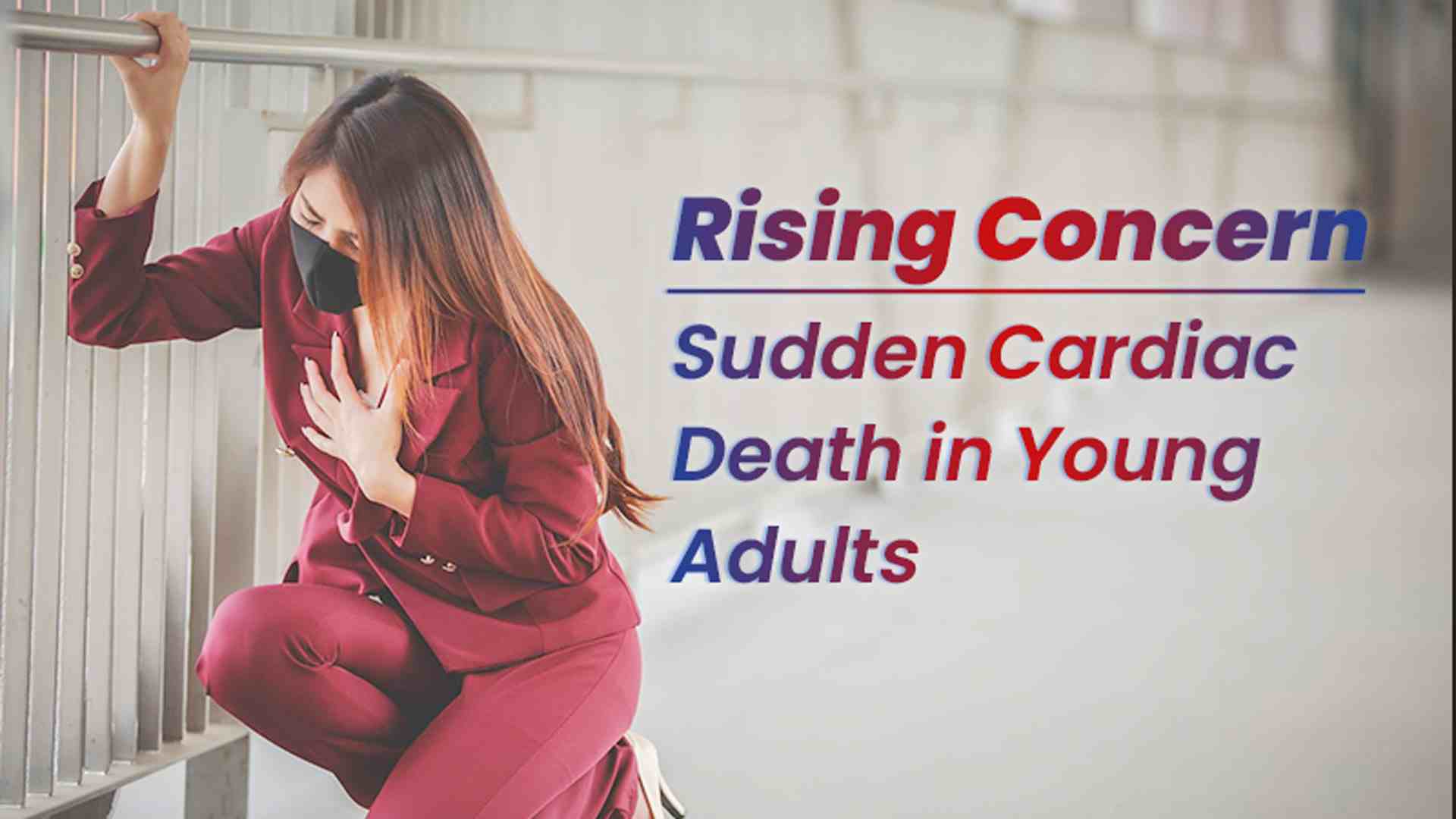
Representative image NCRB recorded 38,599 sudden heart-attack deaths in India in 2024, and 15,574 of them (about 40%) were people aged 18 to 44, roughly 43…
Read guide →
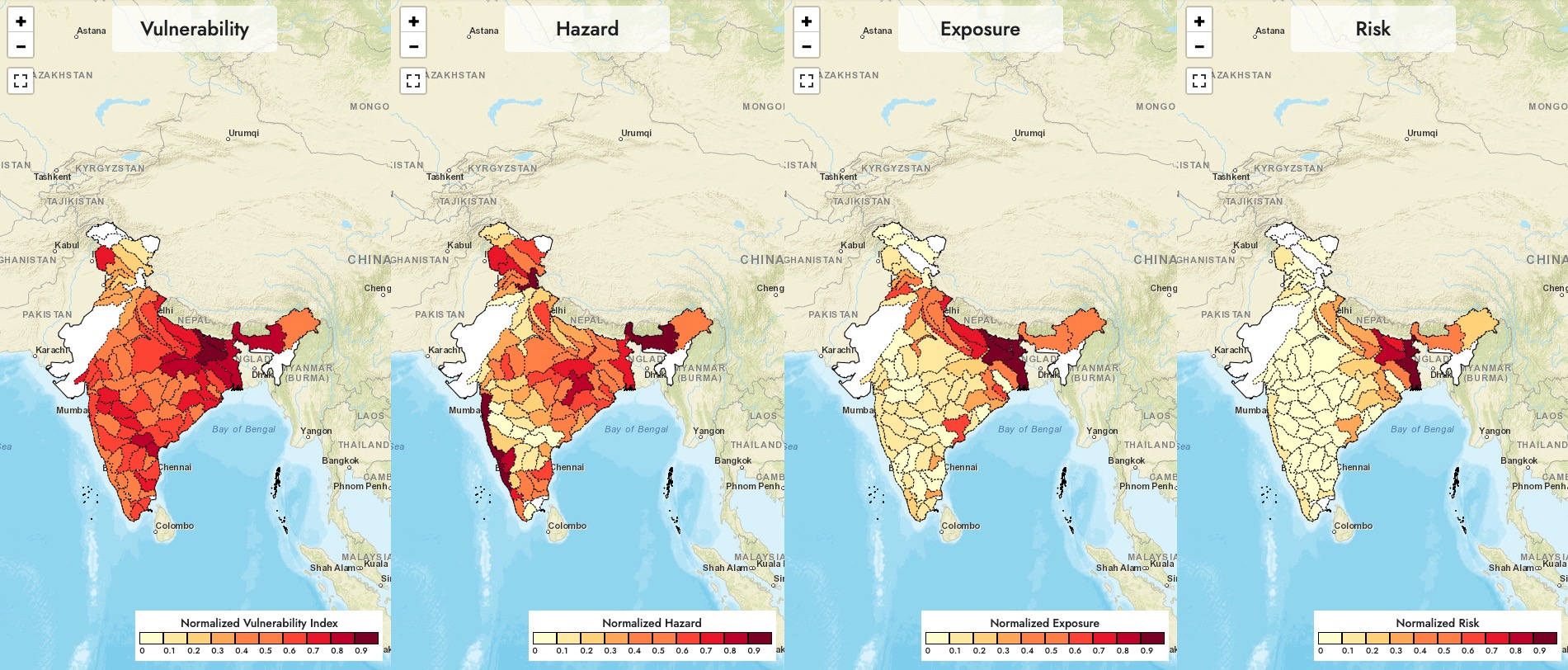
Representative image India's flood risk is concentrated but widespread. A Central Water Commission satellite study found 21.213 million hectares, about 6% of India, was flooded at…
Read guide →
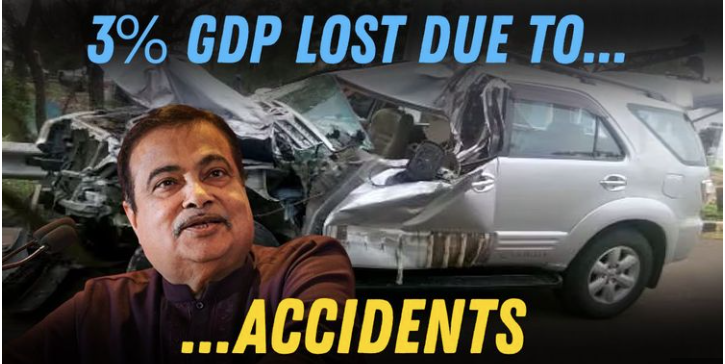
Representative image Road crashes cost India an estimated 3.14% of GDP a year, according to a 2021 World Bank study; a MoRTH-commissioned study using only police…
Read guide →
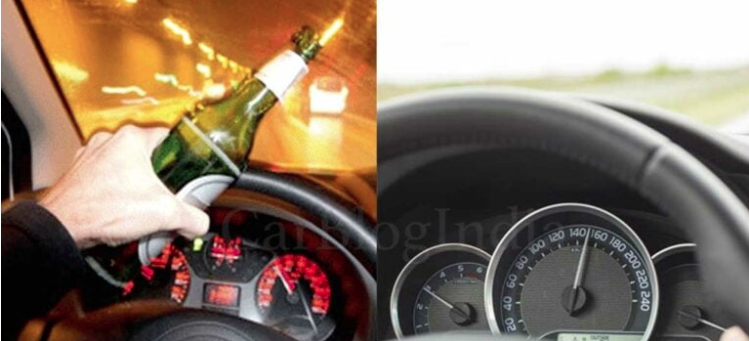
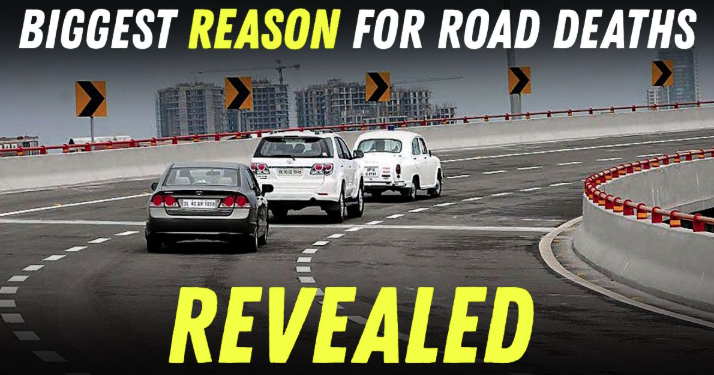
Representative image Over-speeding is linked to about seven in ten road deaths in India. MoRTH figures show 8,10,911 road deaths from 2020 to 2024, with deaths…
Read guide →
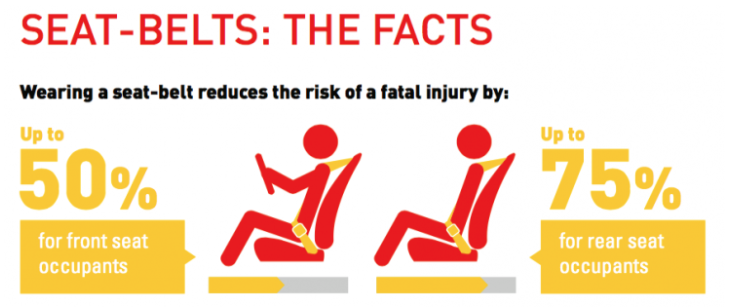
Representative image In 2023, 54,568 people killed on India's roads were not wearing a helmet and 16,025 were not wearing a seat belt (MoRTH), including more…
Read guide →
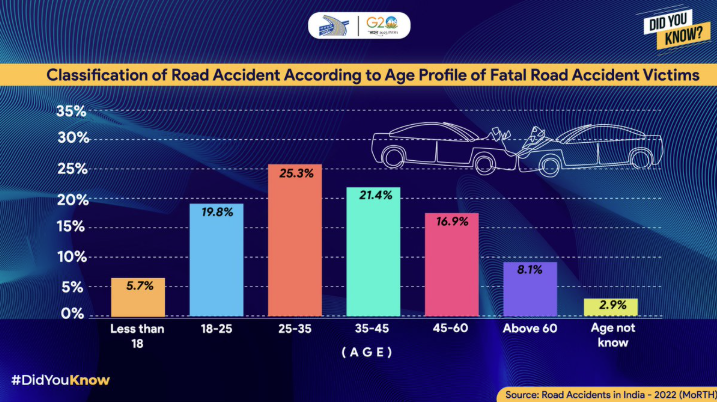
Representative image Young adults carry the heaviest share of India's road deaths: in 2023, 66.4% of the 1,72,890 people killed were aged 18 to 45, and…
Read guide →
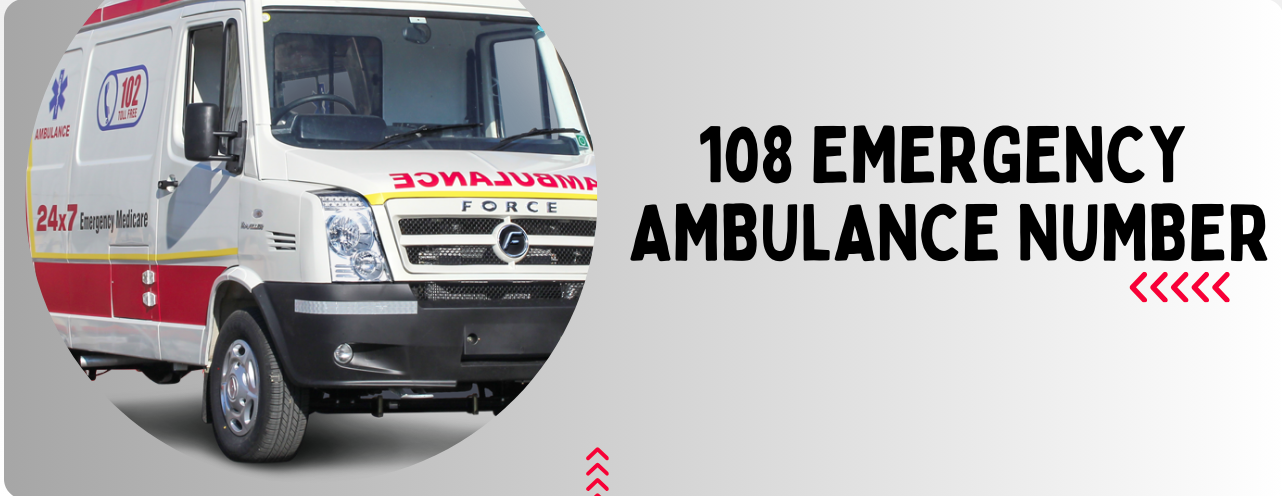
Representative image India's 108 ambulance service began in Andhra Pradesh in 2005 and now runs in 35 states and UTs with about 11,000 ambulances (2024). It…
Read guide →
Official 2020–2024 state counts show where reported road losses were numerous. They do not identify particular road hotspots or personal journey risk.
Read guide →
Representative image India's road crashes are unusually deadly: 1,77,175 people died in 4,87,707 crashes in 2024, about 36 deaths for every 100 crashes (MoRTH). Many of…
Read guide →
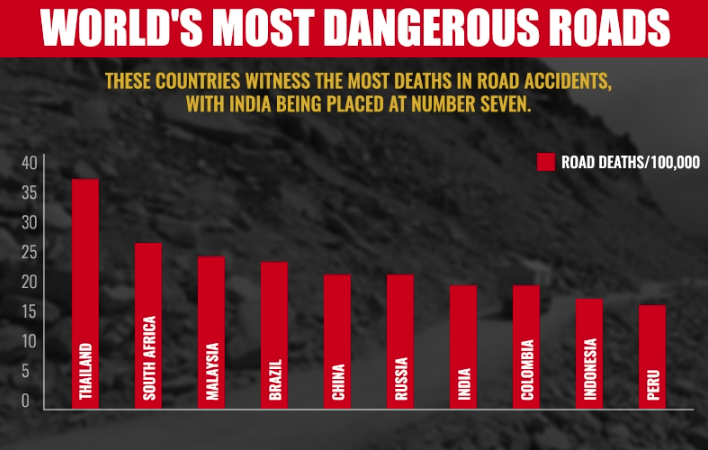
Representative image On WHO's like-for-like estimates for 2021, India lost about 14.6 people per lakh population on its roads, five to six times the rate in…
Read guide →
Representative image India recorded 1,77,175 road-accident deaths in 2024 (MoRTH figures given to Parliament), about one every three minutes, and deaths have risen every year since…
Read guide →
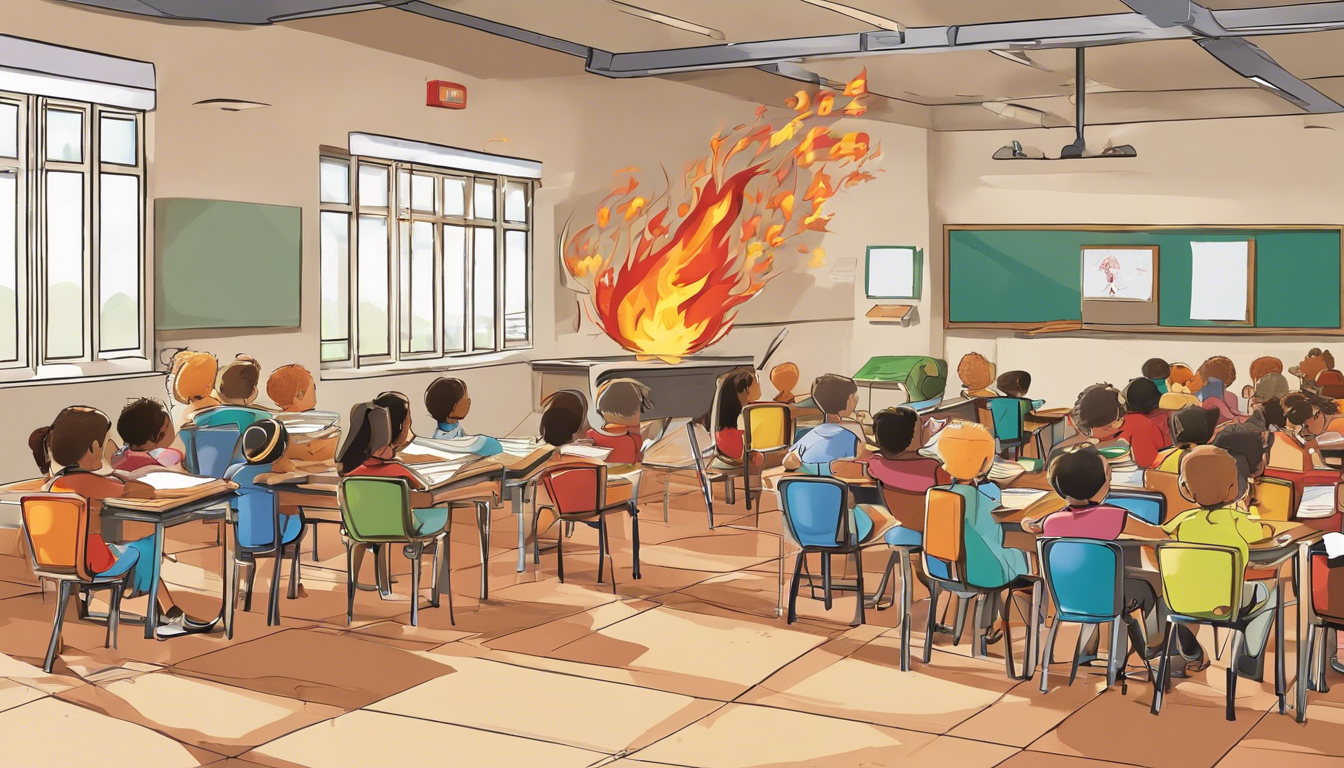
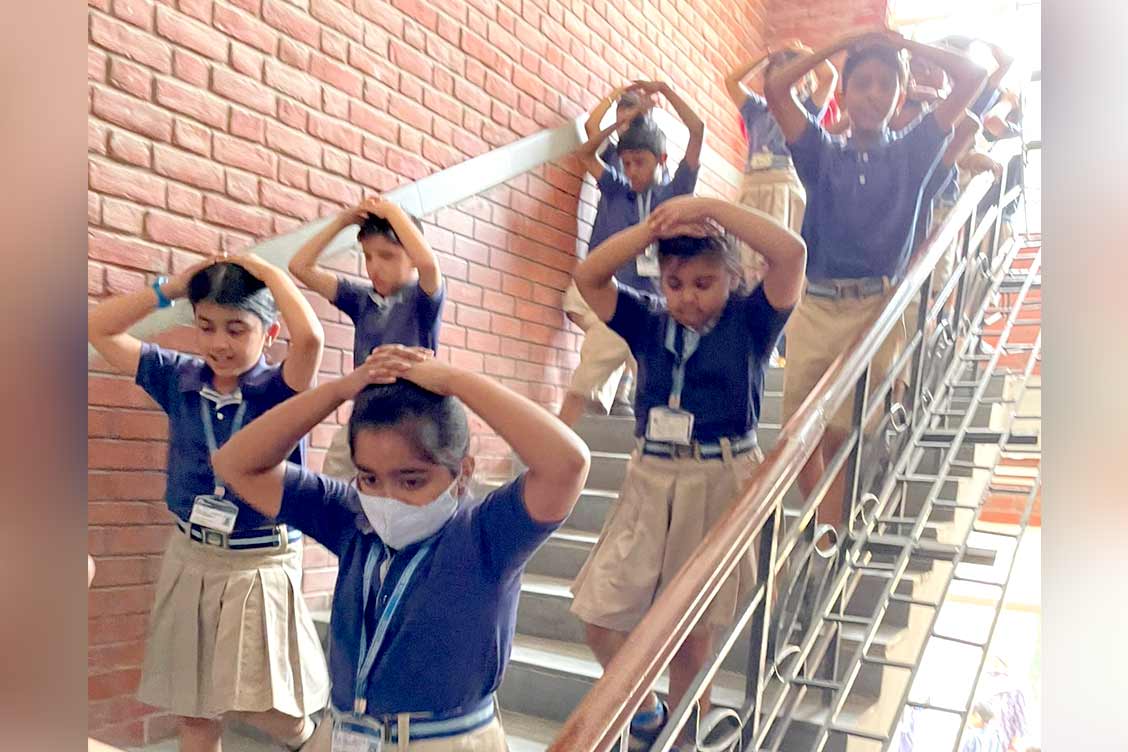
Representative image Most Indians have never practised getting out of a burning building, and that is why panic, locked exits and smoke kill so many. At…
Read guide →
Representative image Gujarat runs more than 200 GIDC industrial estates, many handling chemicals and solvents. The state government told the Assembly in 2024 that 714 workers…
Read guide →
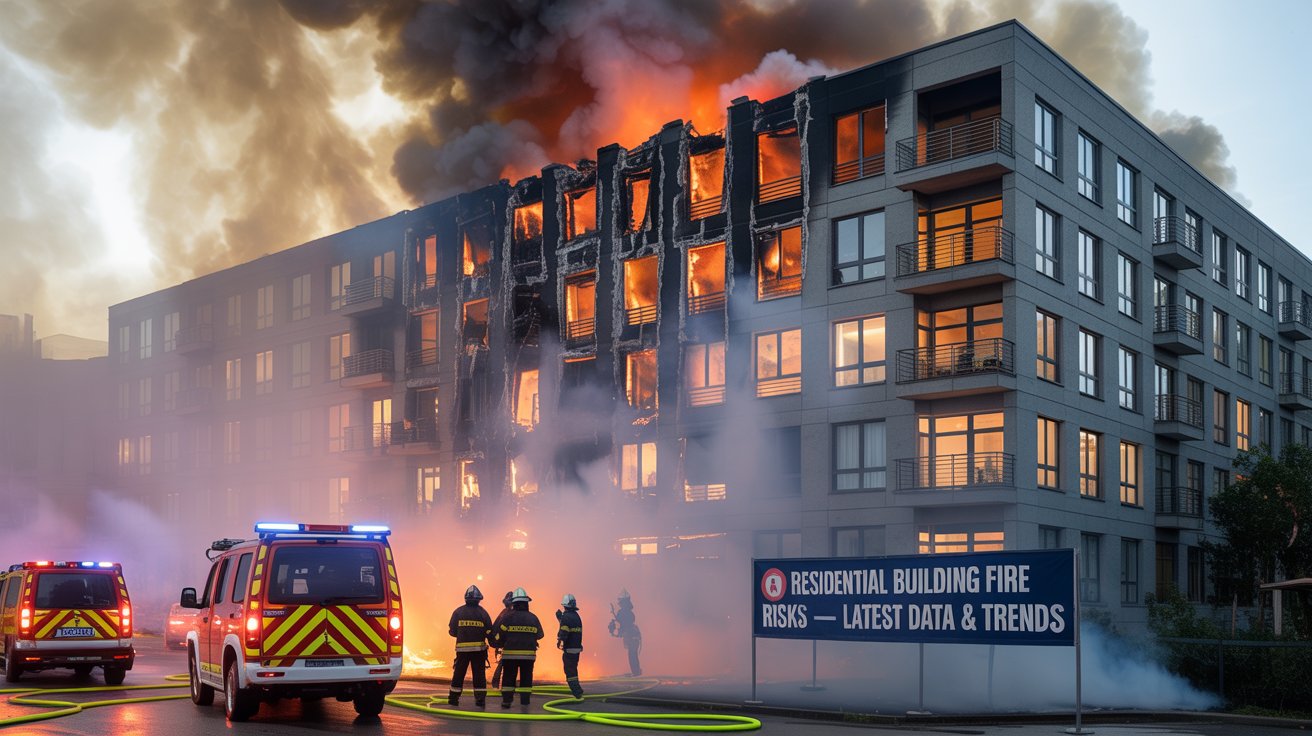
AI-generated editorial illustration; not an incident photograph. Most fire deaths in India happen at home. NCRB data for 2024 records 5,888 fire-accident deaths, and 3,555 of them (60.4%) were in residential…
Read guide →
AI-generated editorial illustration; not an incident photograph. A Fire NOC shows that a building passed a fire check at one point in time. It does not guarantee that exits are open…
Read guide →
Representative image In June 2019 the government told the Rajya Sabha that India had 3,377 fire stations against 8,559 required, fewer than 40% of the need.…
Read guide →
Representative image India has no official national count of hospital-fire deaths, but the worst cases are well documented: AMRI Kolkata (2011, 92 in later court reporting),…
Read guide →
Representative image Electrical short circuits caused 1,042 fire accidents and 1,012 deaths in India in 2024, about one in six fire deaths, and 1,673 deaths in…
Read guide →
Representative image India has about 14.72 lakh schools and 24.8 crore students, but no reliable national figure shows how many schools, colleges or coaching centres meet…
Read guide →
Representative image NCRB recorded 5,888 deaths in 5,971 fire accidents in India in 2024, and 6,891 deaths in 2023; it does not separate urban and rural…
Read guide →
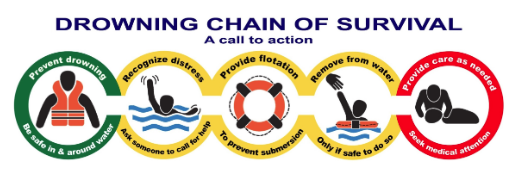
Representative image Most drowning victims can be saved by someone who stays on dry land. Reach, throw or row before you ever go in, and call…
Read guide →
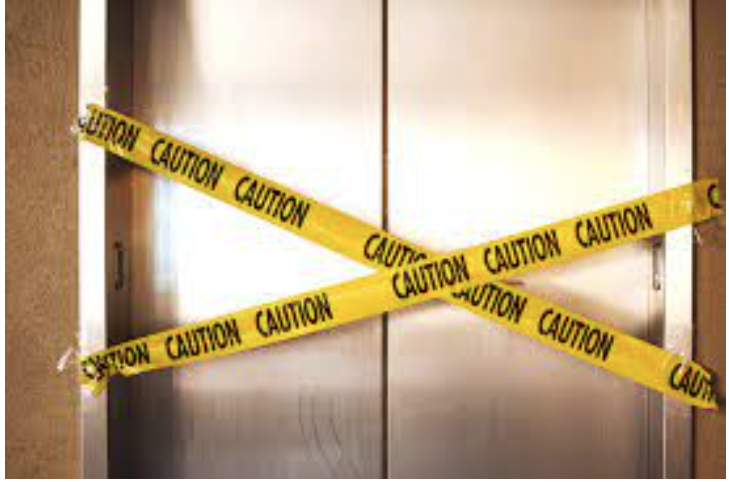
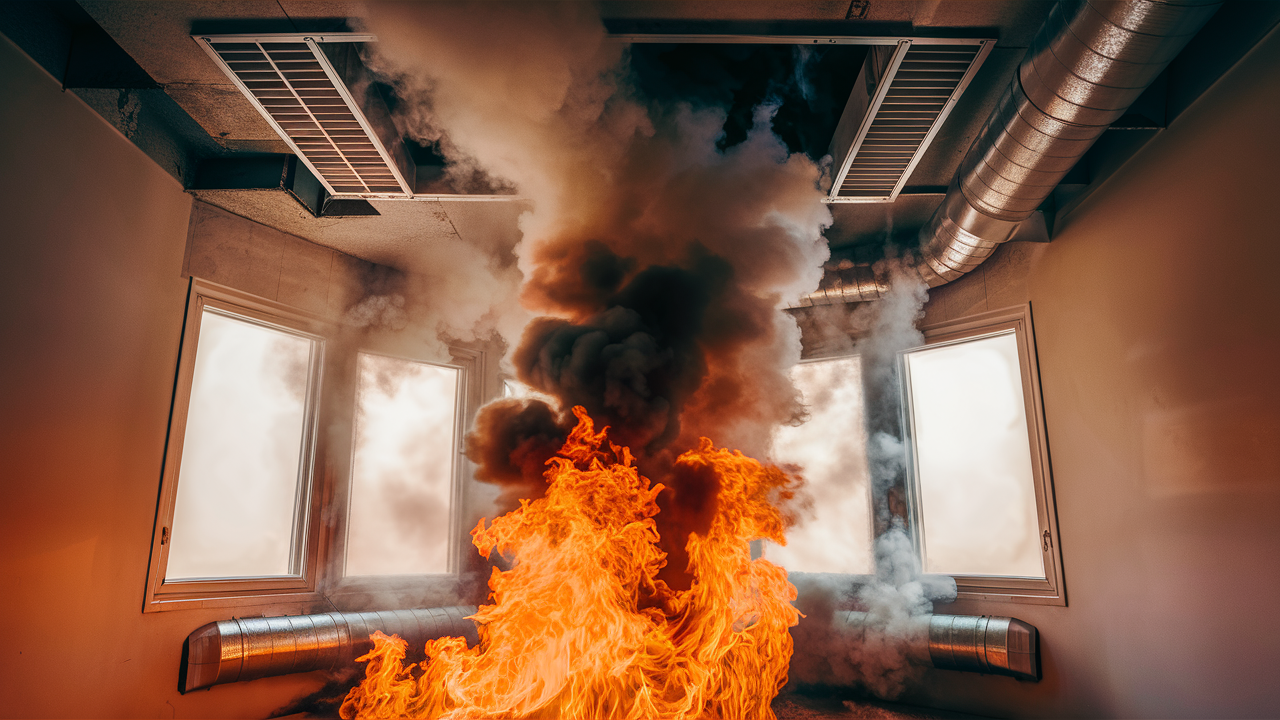
Representative image How to Survive a Lift Fire or Power Failure is rebuilt as practical India-facing guidance connecting prevention, correct equipment, early warning, clear escape, 112…
Read guide →
Representative image In the minutes before an ambulance reaches a road crash, simple first aid can keep someone alive. Make the scene safe, call 112 or…
Read guide →
Representative image How to Call 112, 101 or 108 During an Emergency is rebuilt as practical India-facing guidance connecting prevention, correct equipment, early warning, clear escape,…
Read guide →
Representative image How to Escape a Smoke-Filled Room is rebuilt as practical India-facing guidance connecting prevention, correct equipment, early warning, clear escape, 112 activation and documented…
Read guide →
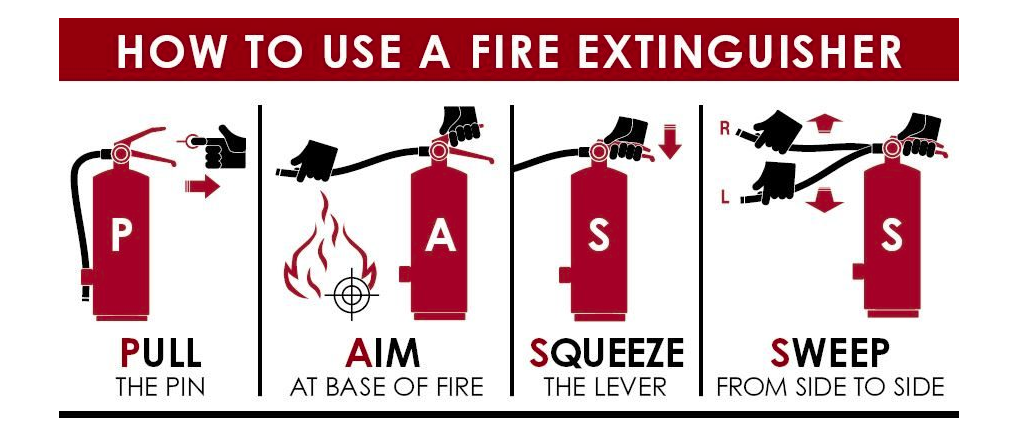
Representative image How to Use a Fire Extinguisher – The PASS Method is rebuilt as practical India-facing guidance connecting prevention, correct equipment, early warning, clear escape,…
Read guide →
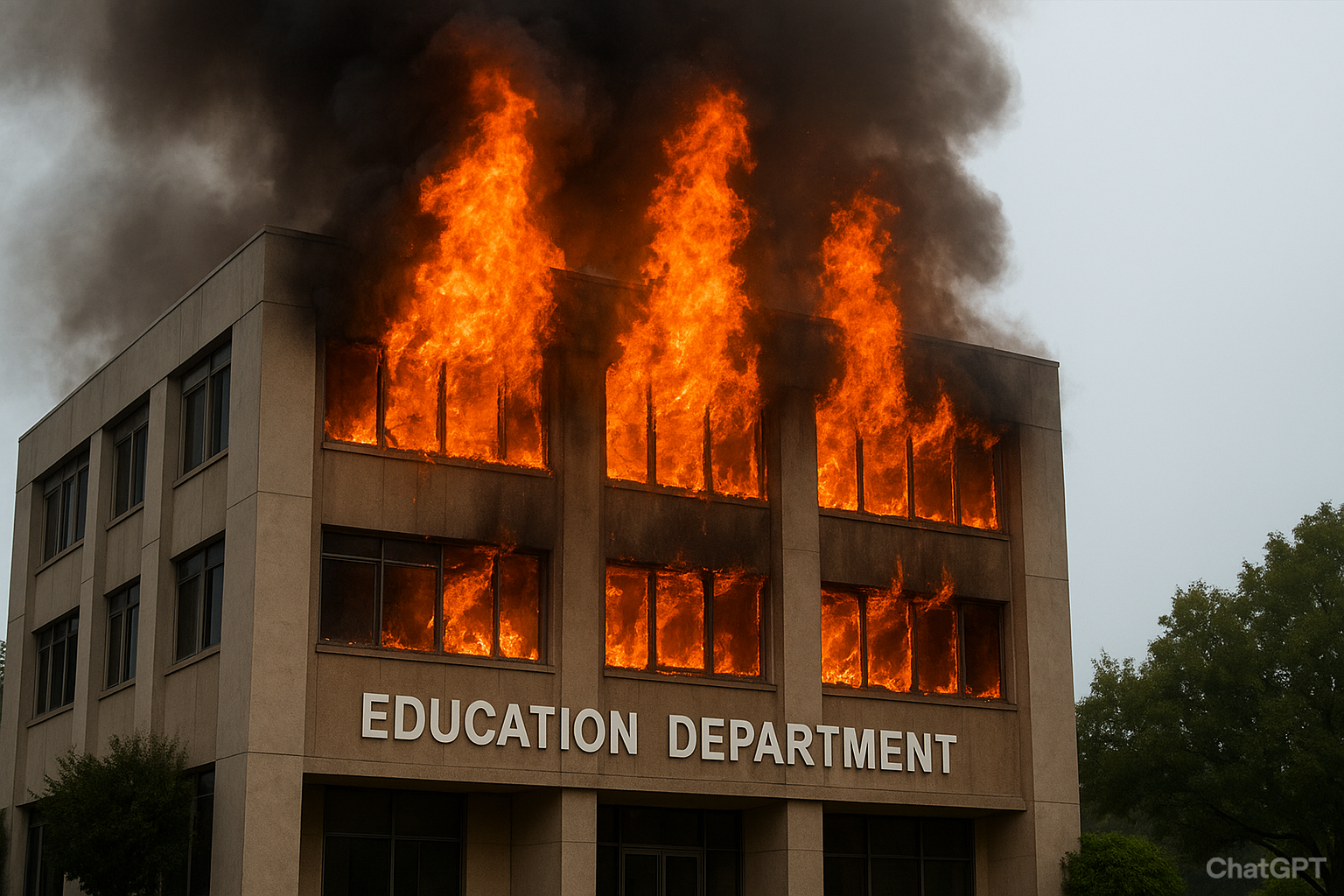
AI-generated illustration, not an incident photograph On a visit to the Uttar Pradesh Education Department building, our team observed a fire protection system that did not appear to work, broken…
Read guide →
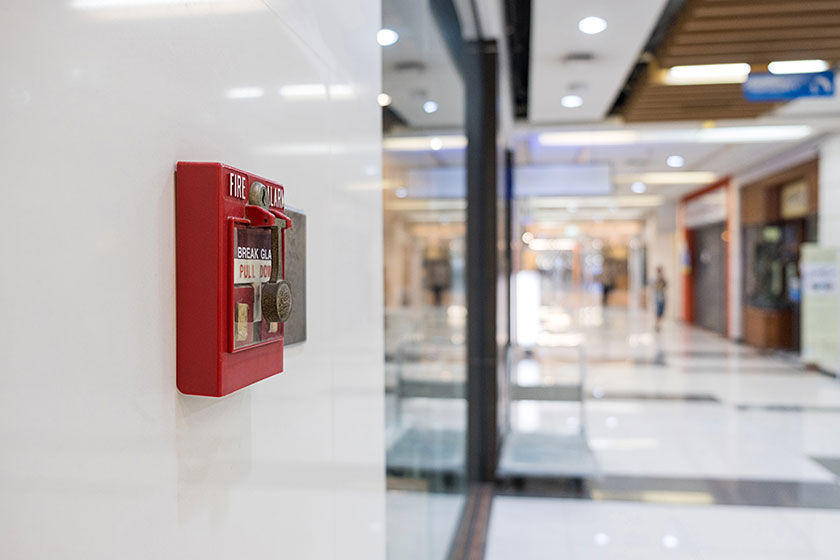
Fire alarm on the wall of a shopping mall (representative image) From Temples to Malls: Why India’s Public Spaces Aren’t Safe is rebuilt as practical India-facing guidance connecting prevention, correct equipment, early warning, clear escape,…
Read guide →
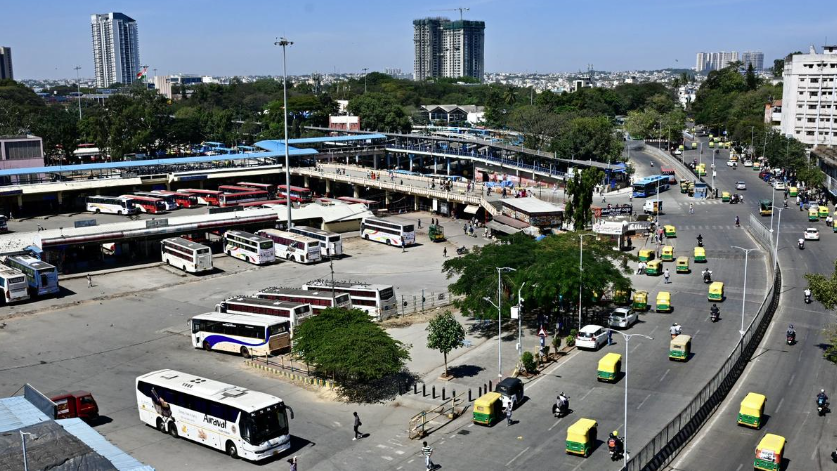
Representative image The author reports finding fire-safety systems out of action at Indian travel hubs: a missing or non-functional hydrant at a Shimla bus station, a…
Read guide →
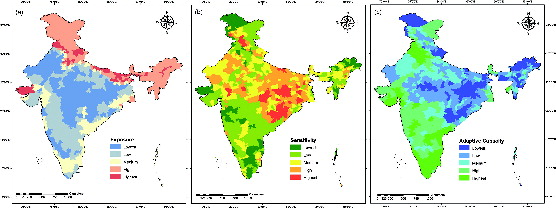
Research figure (Geomatics, Natural Hazards and Risk journal) — shown for illustration Most of India is exposed to at least one natural hazard. NIDM says almost 58.6% of the land is prone to earthquakes, over 40…
Read guide →
Representative image The often-quoted '3% of GDP' loss is the government's estimate for road crashes alone: about 3.14% of GDP, from a road ministry study adjusted…
Read guide →
Representative image NCRB recorded 5,888 deaths in 5,971 fire accidents in India in 2024. It does not split fire deaths by city and village, but 60.4%…
Read guide →
Representative image The author reports finding disabled fire-safety systems during recent travel through Indian airports: capped smoke detectors and sprinklers at Ahmedabad and Mumbai, a locked…
Read guide →
The Motor Vehicles Act defines the 'golden hour' as the hour after a traumatic injury when prompt medical care has the best chance of…
Read guide →
As on 31 December 2018, India had 54,239 fire personnel against 5,57,123 required, a shortfall of about 90%, and 3,377 fire stations against 8,559…
Read guide →
There is no official national count of hospital-fire deaths in India, but individual fires show the risk: 92 deaths at AMRI Kolkata (2011, later…
Read guide →
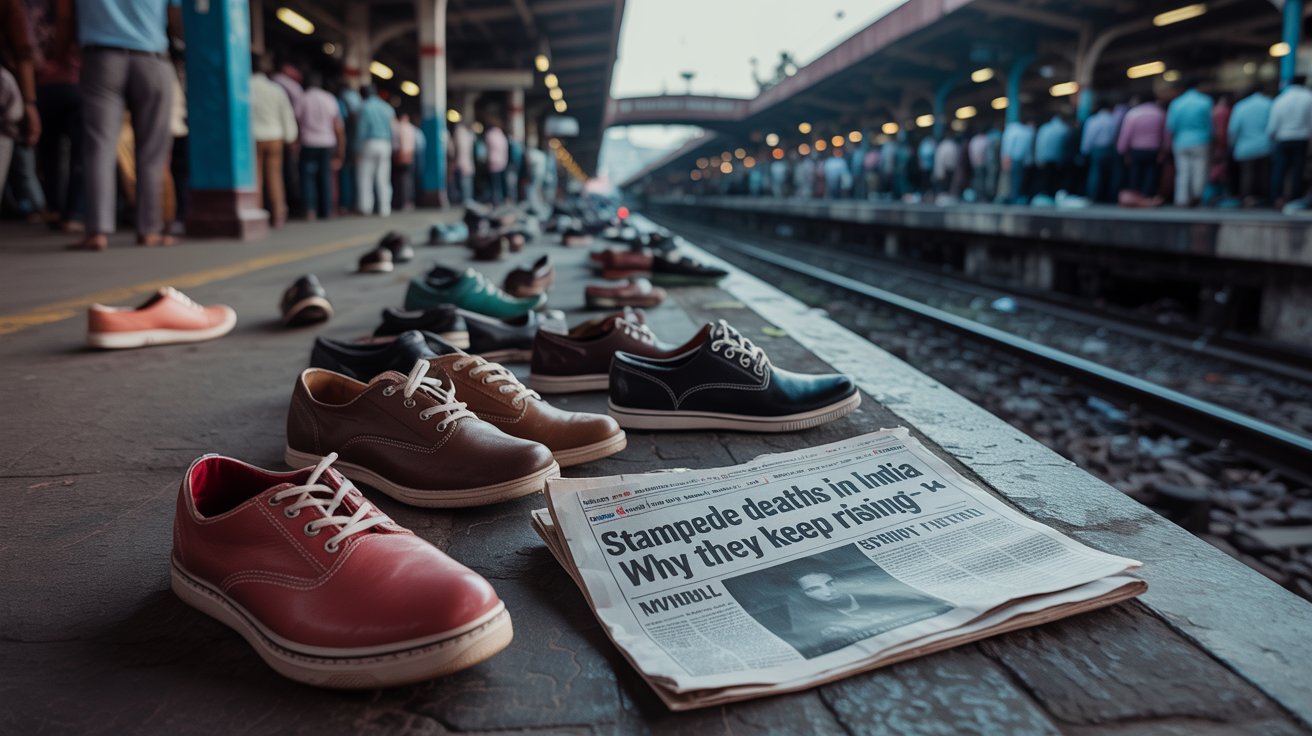
AI-generated editorial illustration; not an incident photograph. Stampede deaths in India do not rise steadily; they come in sudden spikes. NCRB data analysed by Factly shows 3,074 stampede deaths between 2001…
Read guide →
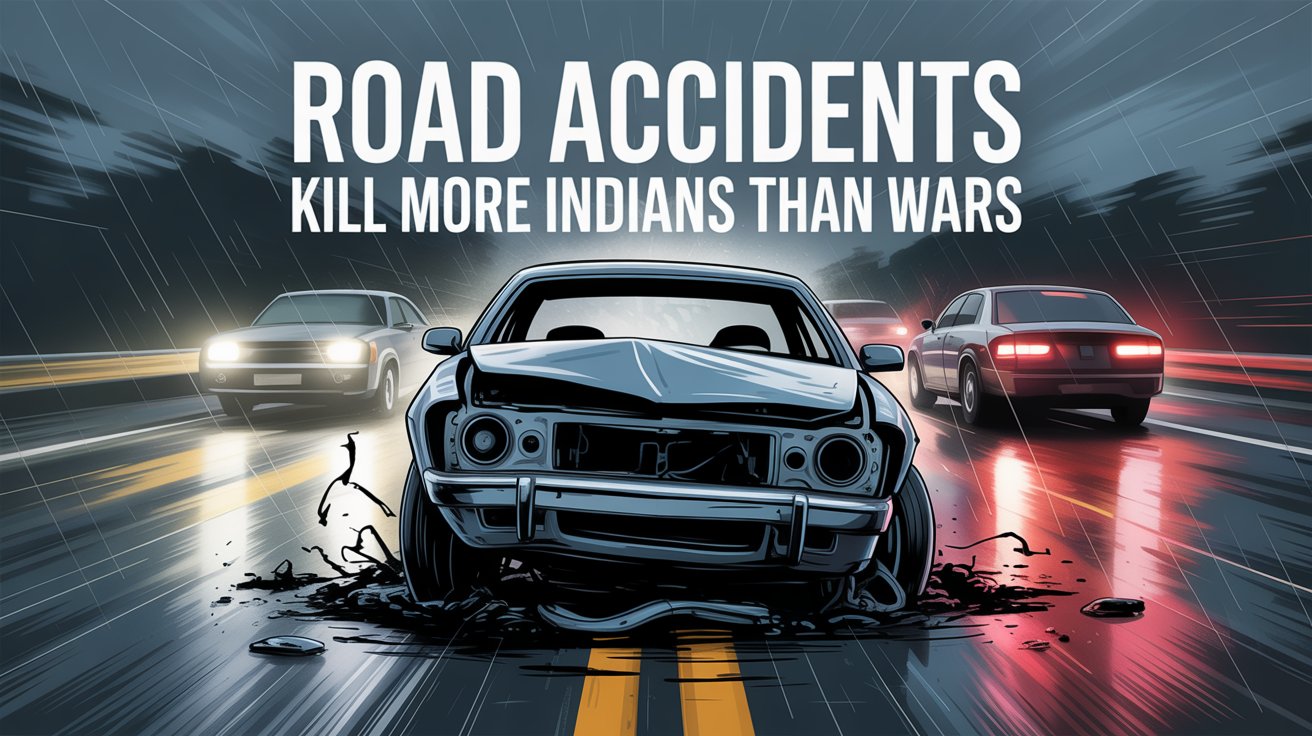
AI-generated editorial illustration; not an incident photograph. Road crashes killed 1,72,890 people in India in 2023, about one every three minutes, according to the Ministry of Road Transport and Highways. Over-speeding…
Read guide →
Fire kills thousands of people in India every year, and most of them die at home. NCRB data for 2024 records 5,888 fire-accident deaths,…
Read guide →
In September 2025 the Supreme Court accepted, in a cheating case, that under the National Building Code 2016 an educational building below 15 metres…
Read guide →
Forest and hill fires in India are mostly started by people and spread fast in dry, hot weather. Pune's fire department registered 54 forest…
Read guide →
A Fire NOC shows that a building was approved at one point in time; it does not prove that its fire pump, alarms, sprinklers…
Read guide →
A corrected buyer-and-user guide to portable fire extinguishers in India: understand the fire rating, verify applicable BIS conformity, maintain the unit and know when…
Read guide →
Representative image The Unseen Risk: How Gujarat's Industries Are Playing with Fire—and Lives is rebuilt as practical India-facing guidance connecting prevention, correct equipment, early warning, clear…
Read guide →
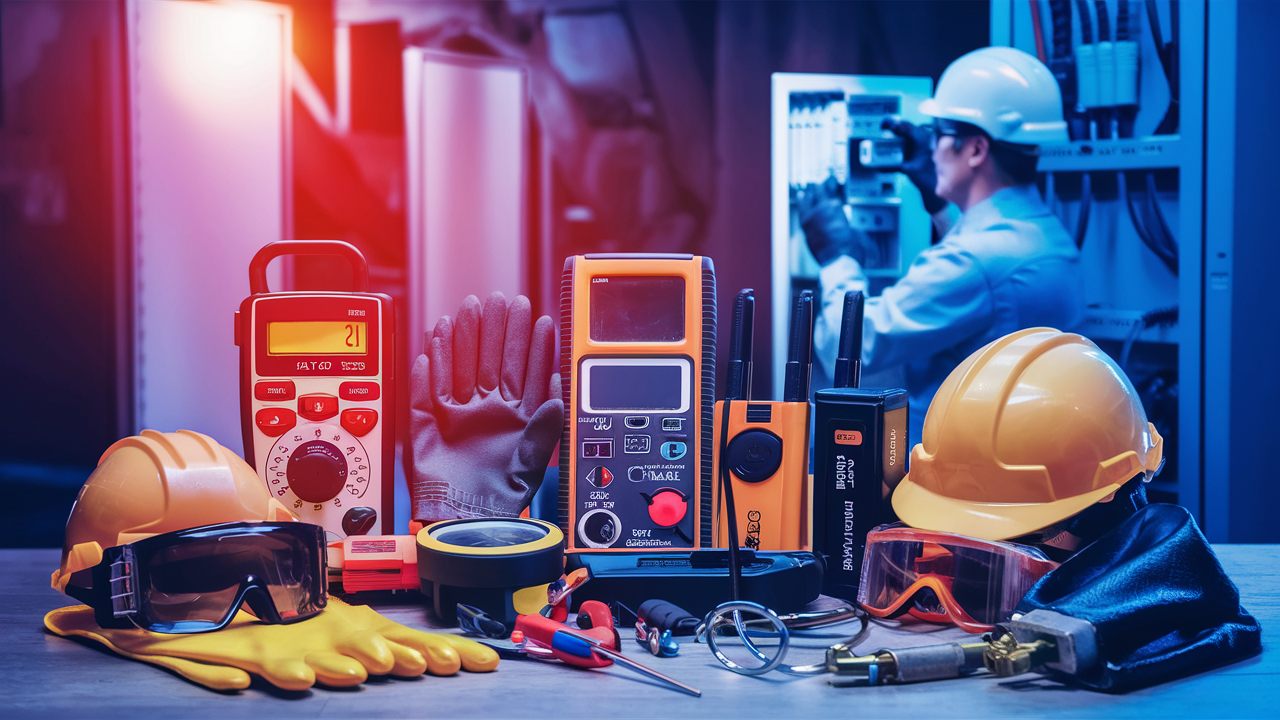
Representative image Electrical work in India kills thousands of people every year; the NCRB recorded 15,861 electrocution deaths in 2024. Insulated gloves and tools, a face…
Read guide →
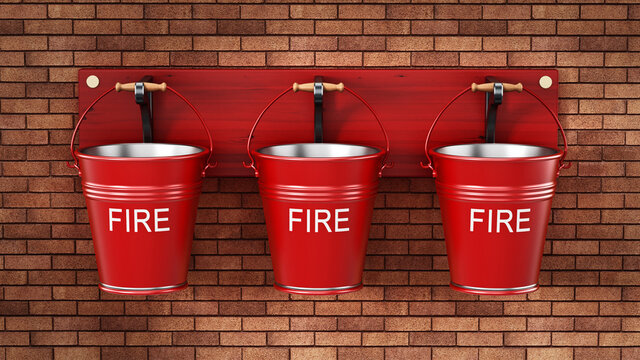
Representative image A fire bucket is the simplest firefighting tool there is, and it is useful only on a small fire in the first minute. Use…
Read guide →
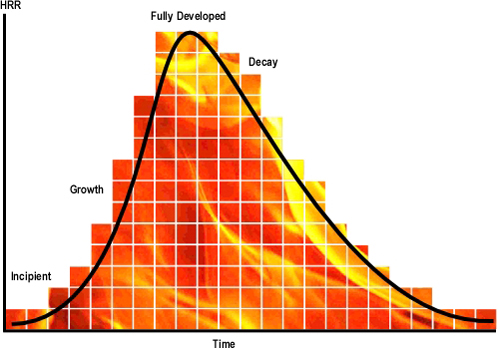
Basic fire development curve How a fire behaves depends on its fuel (the type, how much there is and how dry it is), the weather (heat, humidity and…
Read guide →
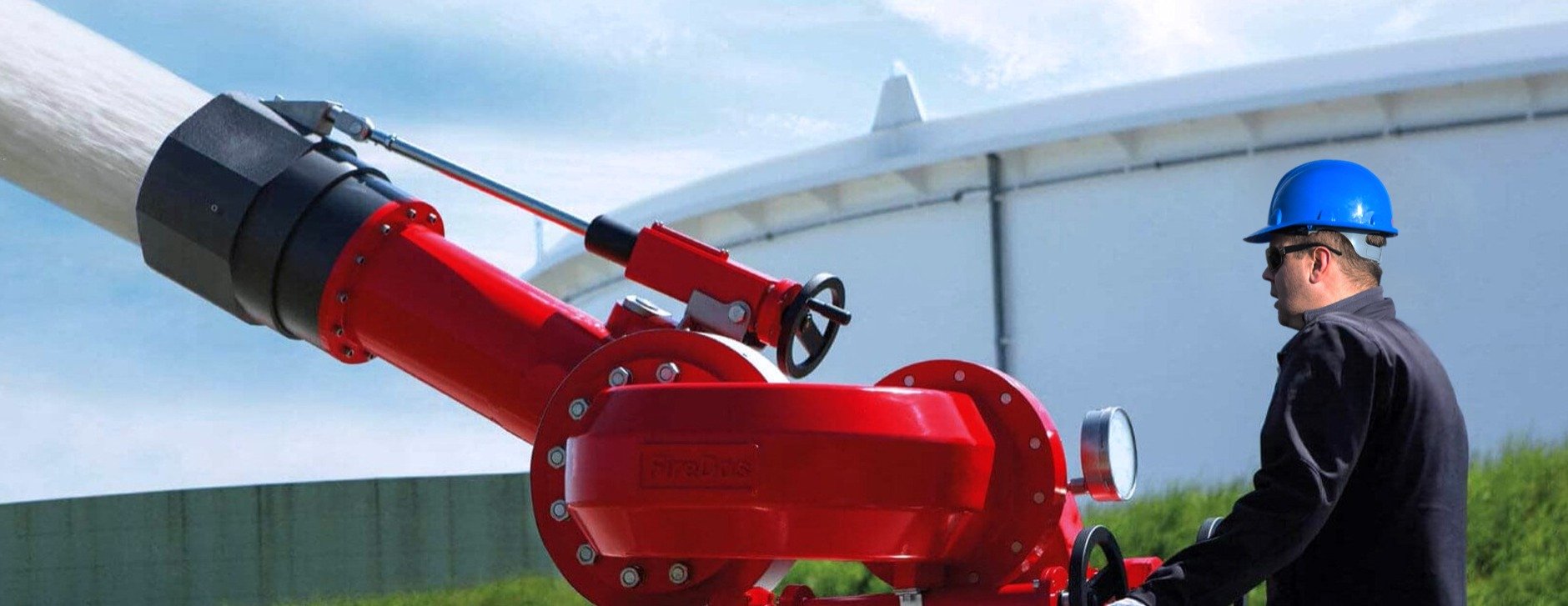
Representative image A foam monitor is a large, swivel-mounted nozzle that throws water or foam solution a long distance, so crews can fight big flammable-liquid fires…
Read guide →
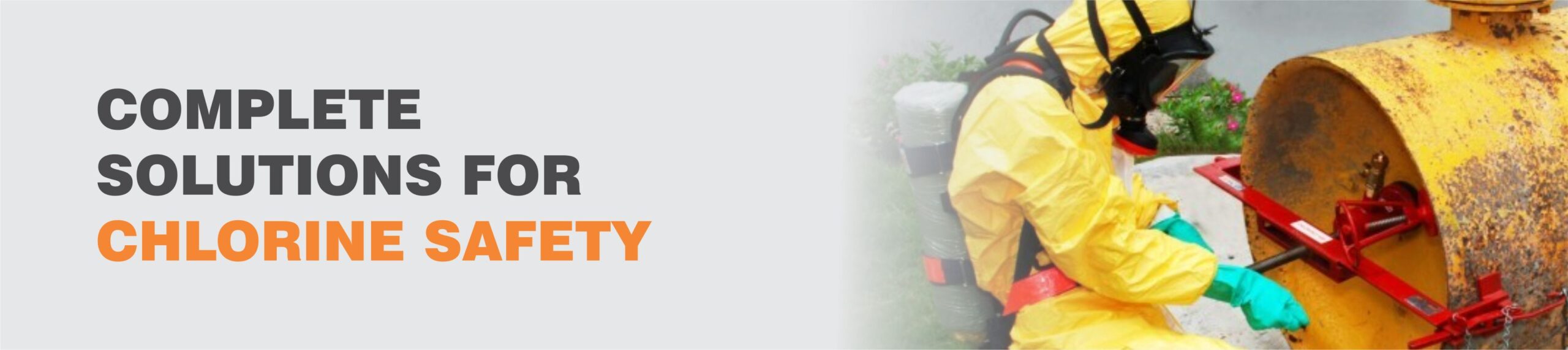
Chlorine safety (representative image) Chlorine Safety: Essential Guidelines for Handling and Storage is rebuilt as practical India-facing guidance connecting prevention, correct equipment, early warning, clear escape, 112 activation…
Read guide →
Representative image In most building fires, smoke kills more people than flames. Good ventilation keeps smoke, heat and toxic gases away from staircases and escape routes,…
Read guide →
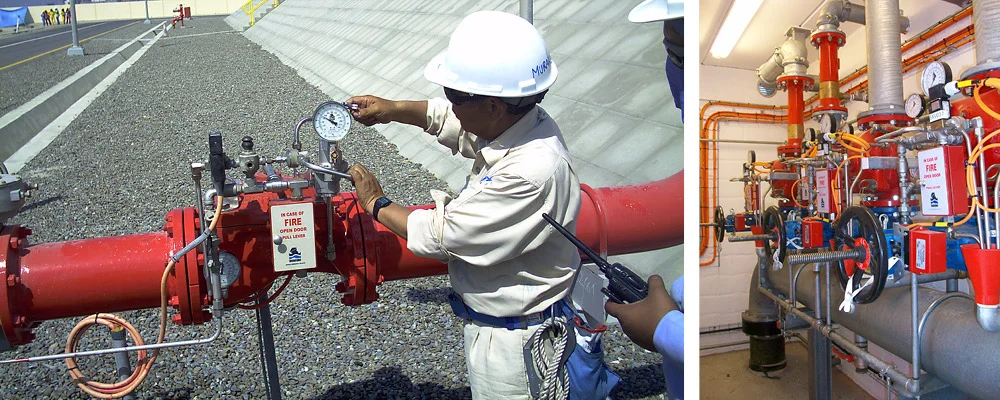
Solenoid valves (representative image) A deluge valve holds water back from a network of open nozzles until a detection system, or a person at the manual release, opens…
Read guide →
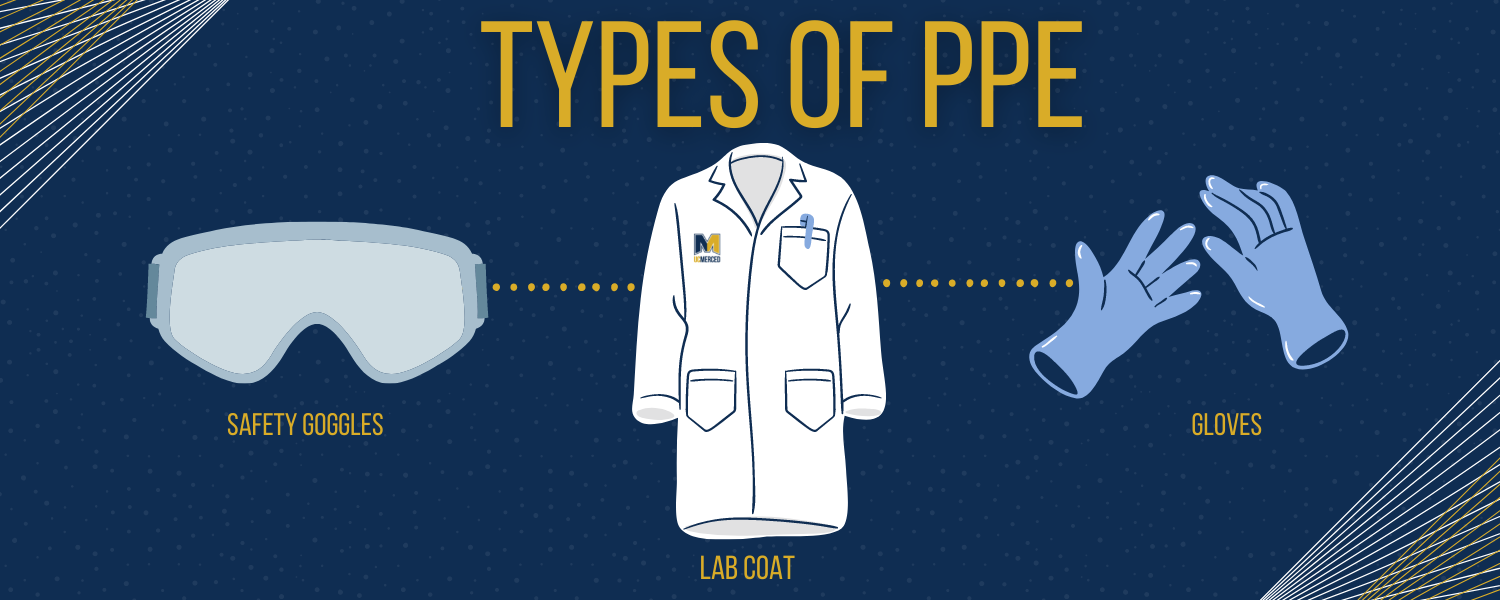
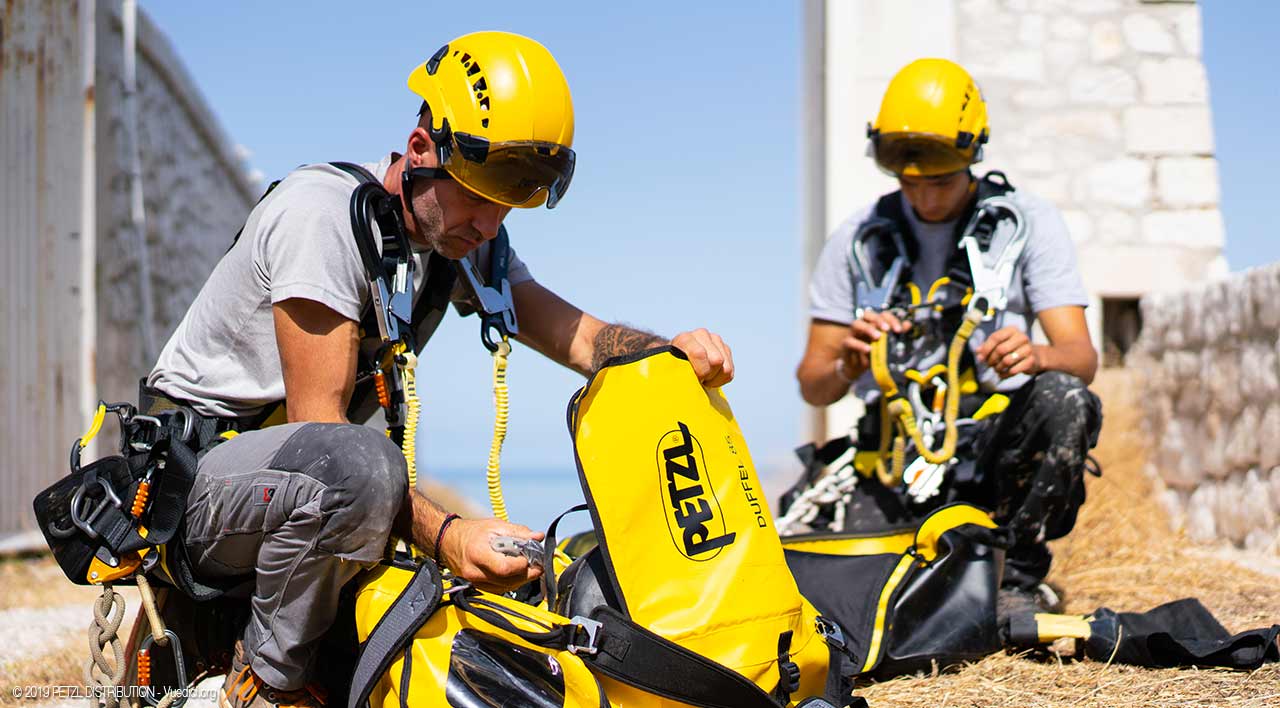
Representative image PPE, from helmets and goggles to respirators, gloves, safety shoes and harnesses, puts a barrier between a worker and a hazard. It is the…
Read guide →
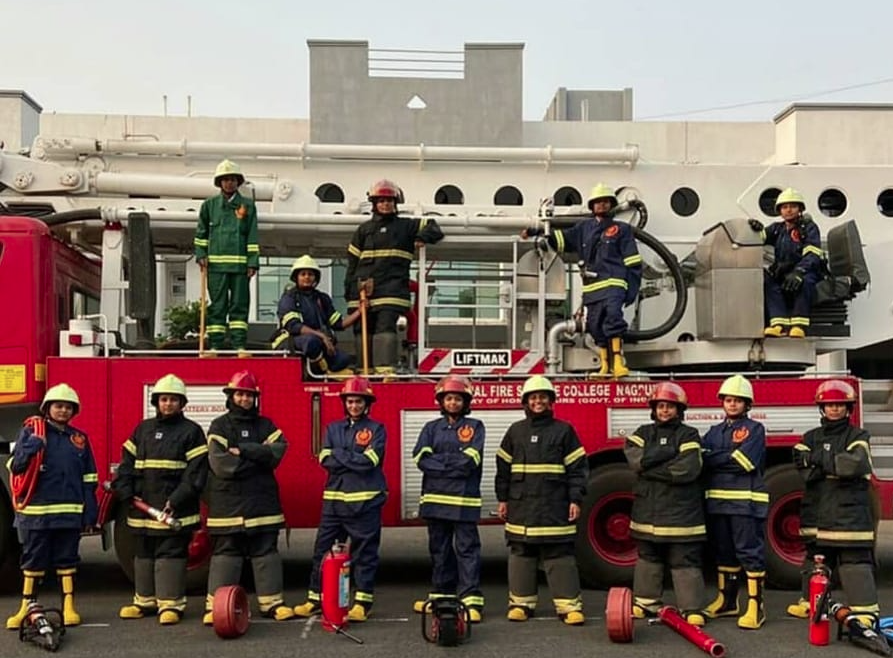
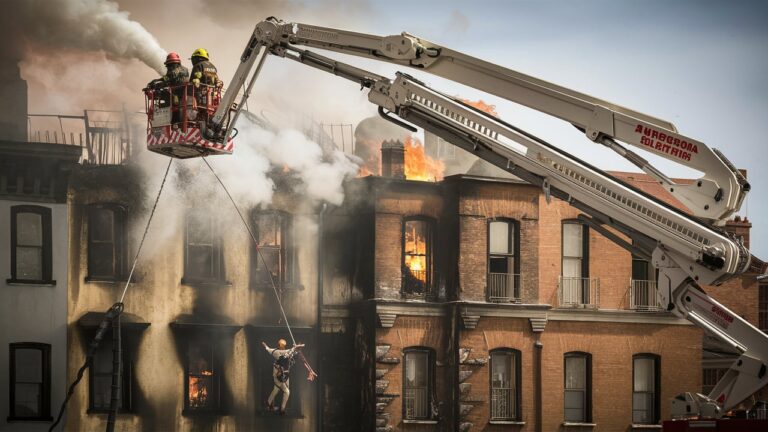
A hydraulic platform is a fire vehicle with a long, jointed boom and a basket that lifts firefighters to upper floors. Crews use it…
Read guide →
Representative image Safety in a chemical unit rests on knowing your hazards, training every worker for the real job, storing and handling chemicals correctly, using suitable…
Read guide →
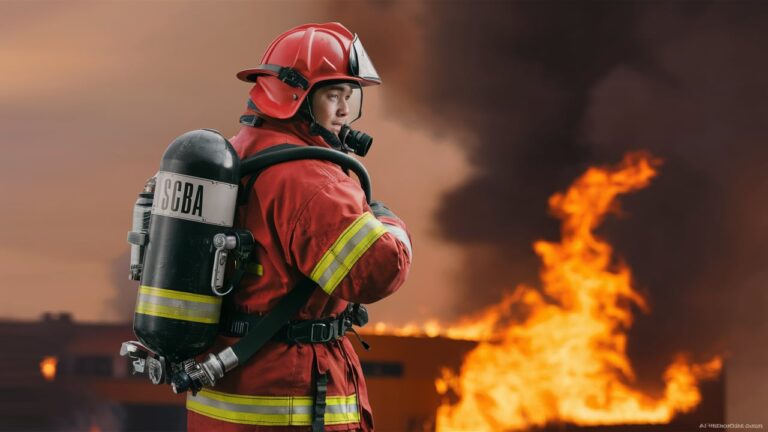
A self-contained breathing apparatus (SCBA) gives a firefighter clean air from a cylinder on the back in smoke, toxic gas or low-oxygen air. It…
Read guide →
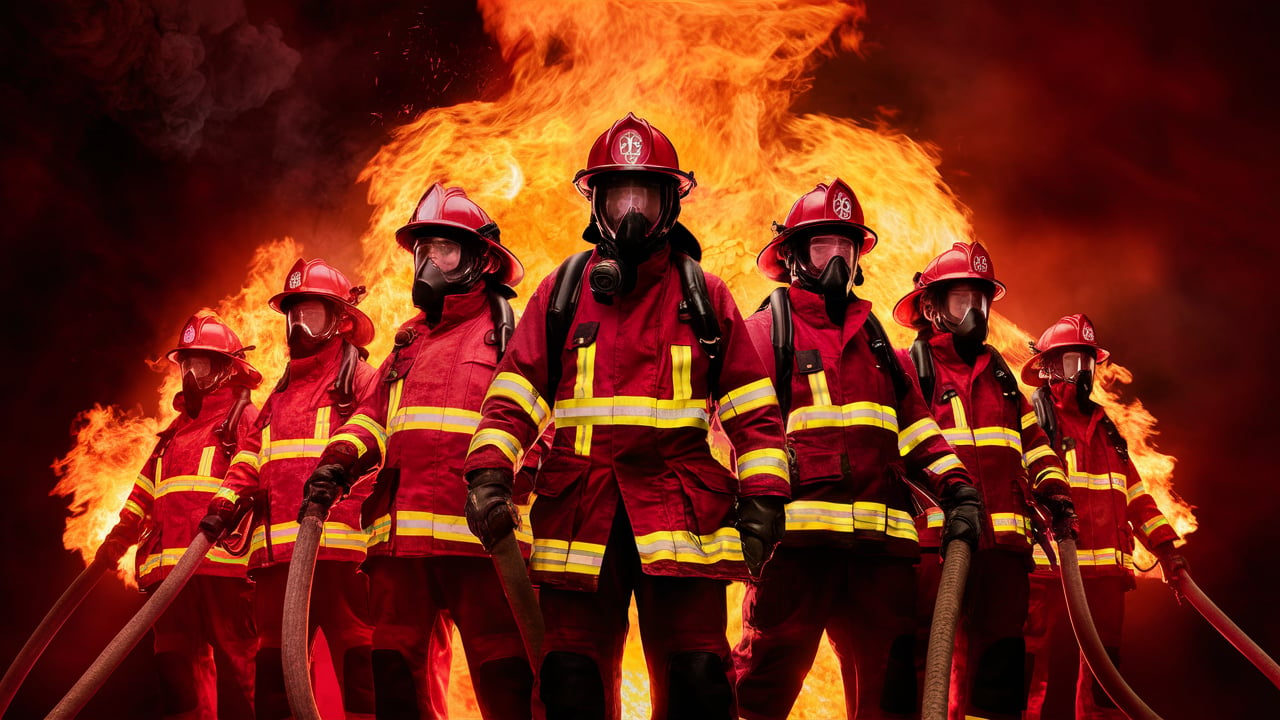
Representative image A firefighter's suit (turnout or bunker gear) has a flame-resistant outer shell, a moisture barrier and an insulating thermal liner that together slow heat…
Read guide →
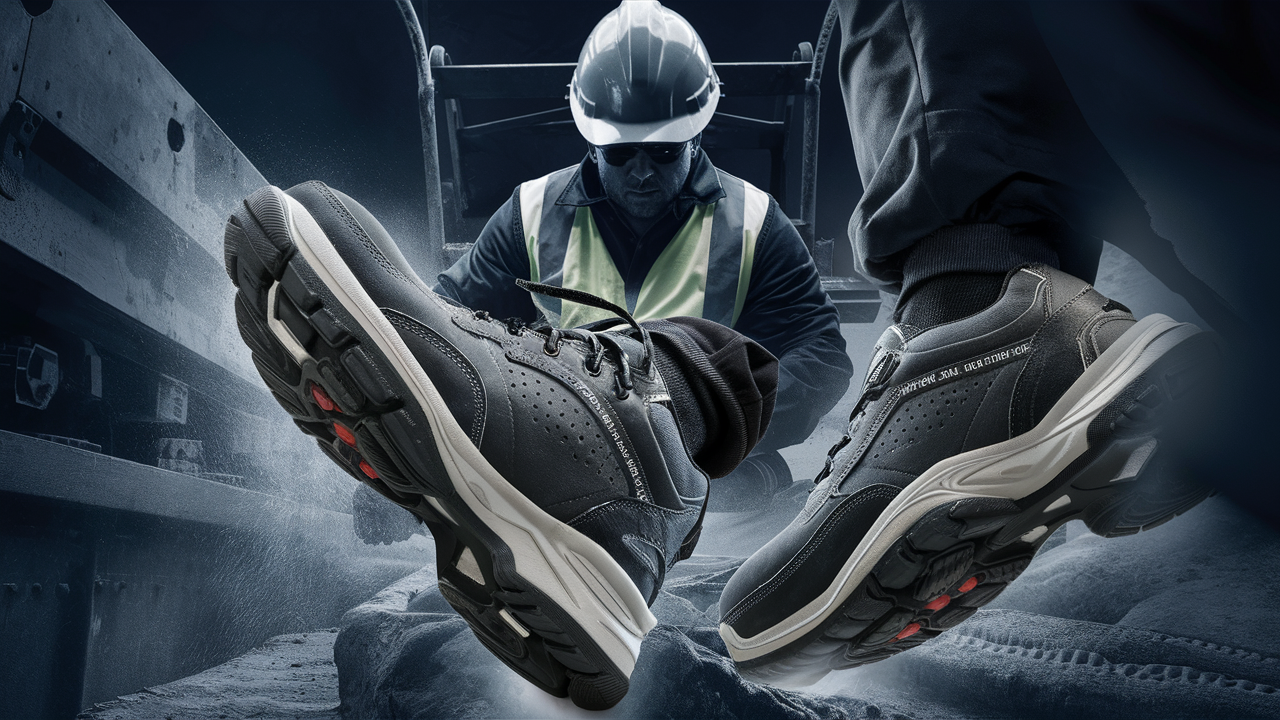
Representative image Safety shoes protect workers' feet from falling objects, punctures, slips, electric shock, chemicals and heat. This guide explains the main types, from steel and…
Read guide →
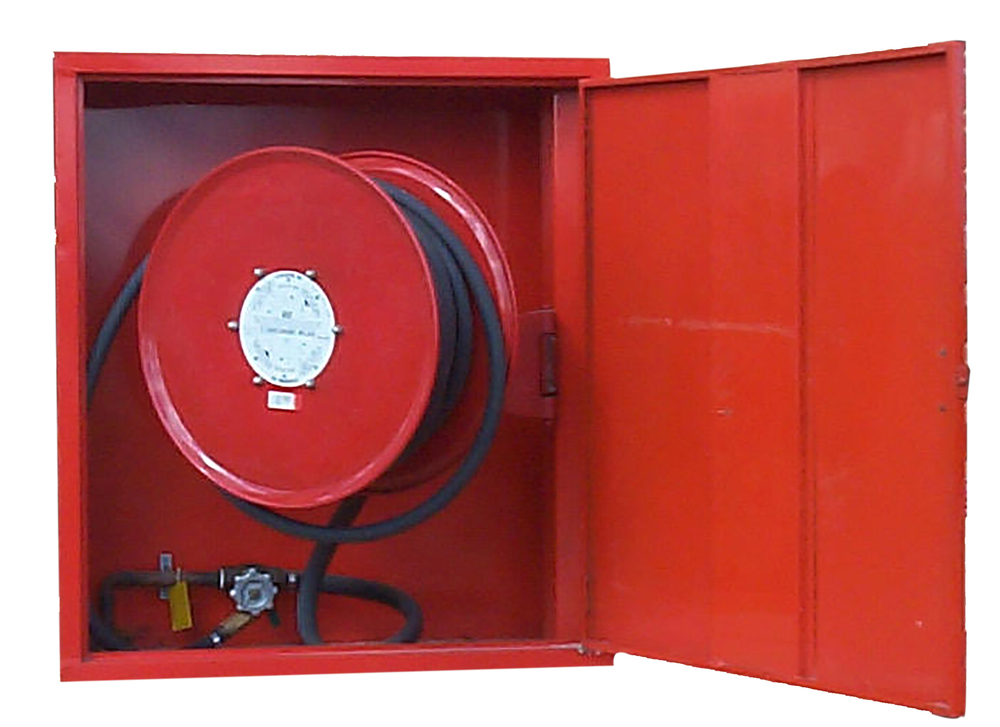
Representative image How to Use a Fire Hose Reel: A Step-by-Step Guide is rebuilt as practical India-facing guidance connecting prevention, correct equipment, early warning, clear escape,…
Read guide →
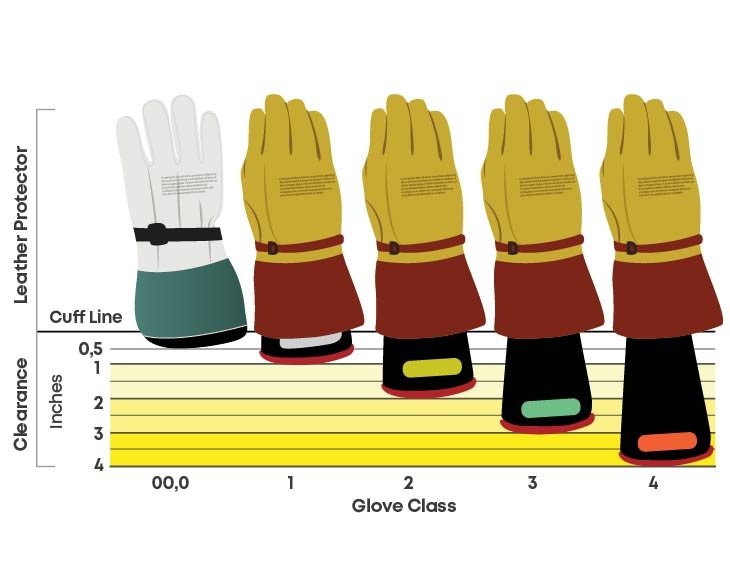
Electrical safety gloves (representative image) Electric gloves, or rubber insulating gloves, protect against shock and arc burns, but only up to the voltage class they are rated for and…
Read guide →
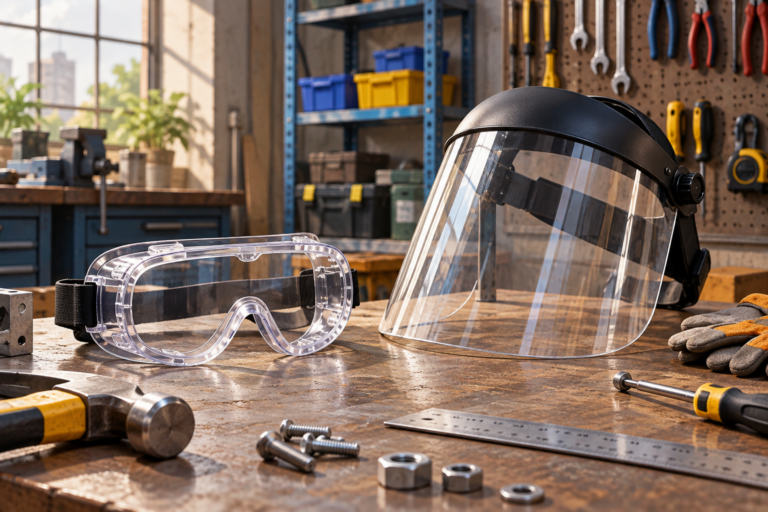
AI-generated editorial illustration; not an incident photograph. Safety goggles protect the eyes from flying particles, dust, chemical splashes and impacts in workshops, labs and on construction sites. This guide covers the…
Read guide →
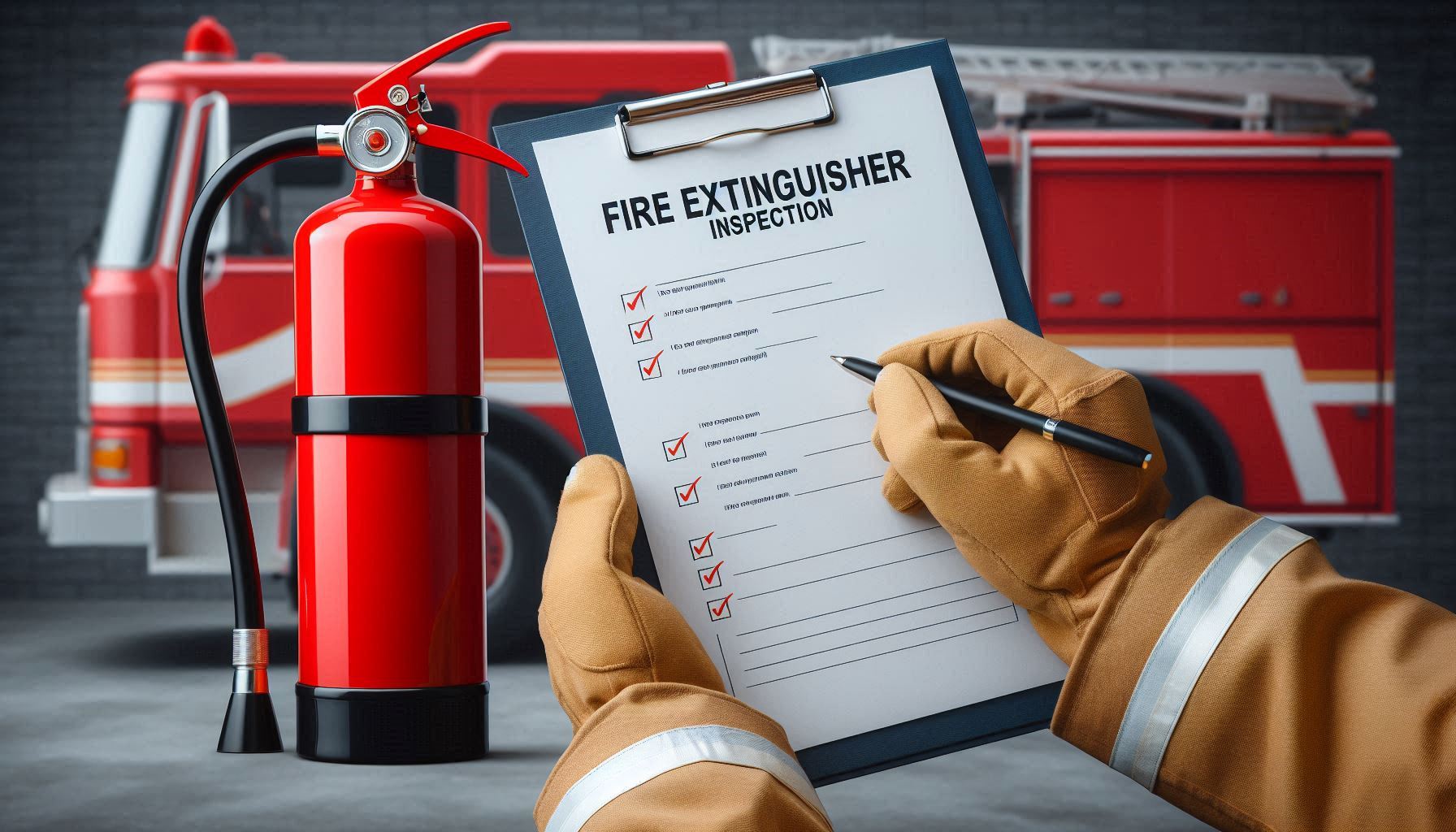
AI-generated editorial illustration; not an incident photograph. Check every fire extinguisher once a month: it should be easy to reach, undamaged, with the gauge needle in the green, the pin and…
Read guide →
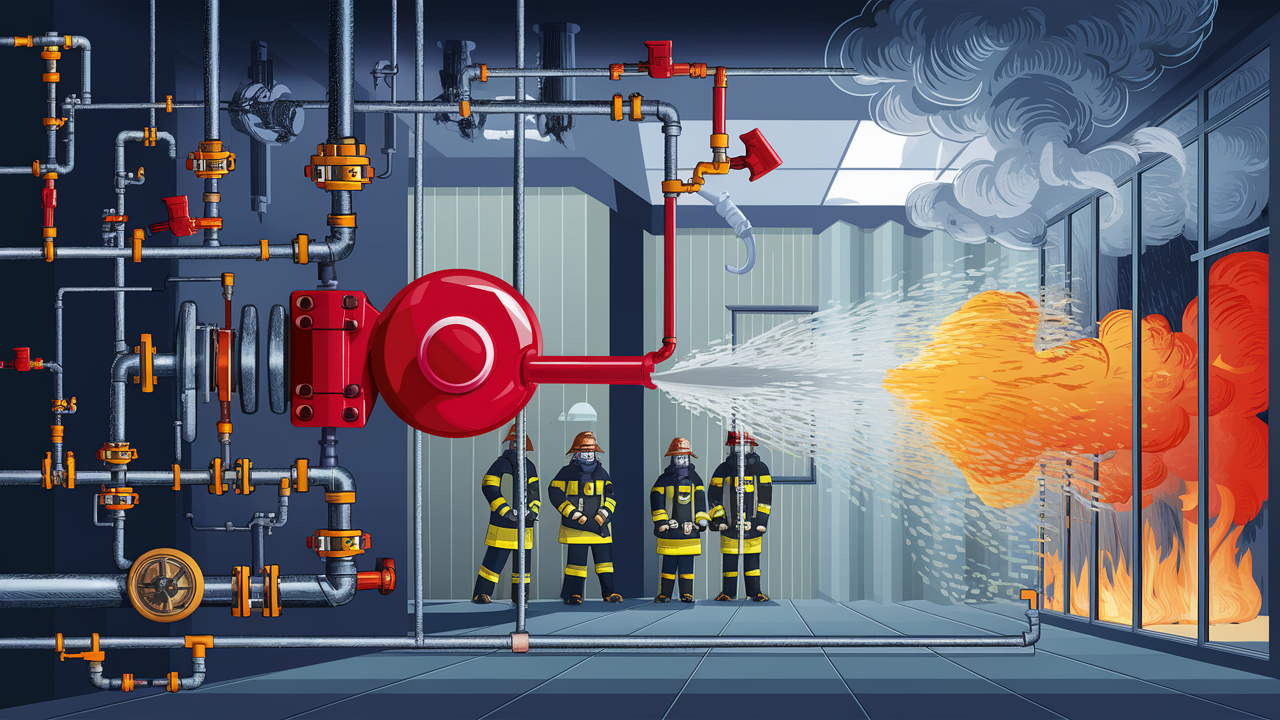
Representative image Sprinklers fight fire with water and open one head at a time when heat reaches it. Suppression systems use gas, wet chemical or foam,…
Read guide →
AI-generated editorial illustration; not an incident photograph. The red hose box on each floor holds a landing valve that only trained fire teams and the fire brigade should open. This page…
Read guide →
Representative image Every summer, fire calls rise as air-conditioners, coolers and wiring run flat out in extreme heat. This post looks at Delhi Fire Services call…
Read guide →
AI-generated editorial illustration; not an incident photograph. Delhi Fire Services counted 83 fire deaths and more than 390 injuries in Delhi between January and late June 2024, against 39 deaths in…
Read guide →
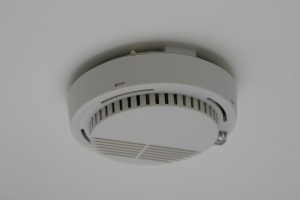
AI-generated editorial illustration; not an incident photograph. How to choose, fit, test and look after smoke detectors at home or at work, and what to do when the alarm goes off.…
Read guide →
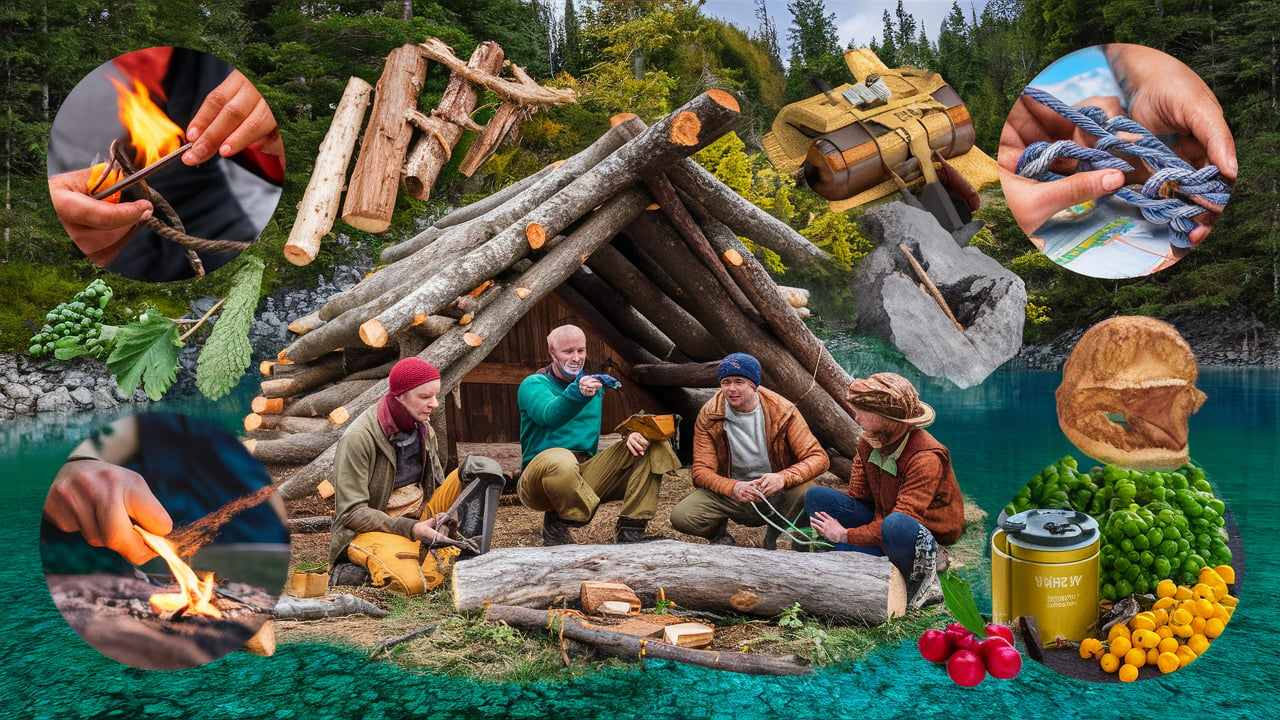
Representative image Before any trek or camping trip, tell someone at home your route and return time, and carry a map, compass, torch, whistle, first-aid kit,…
Read guide →
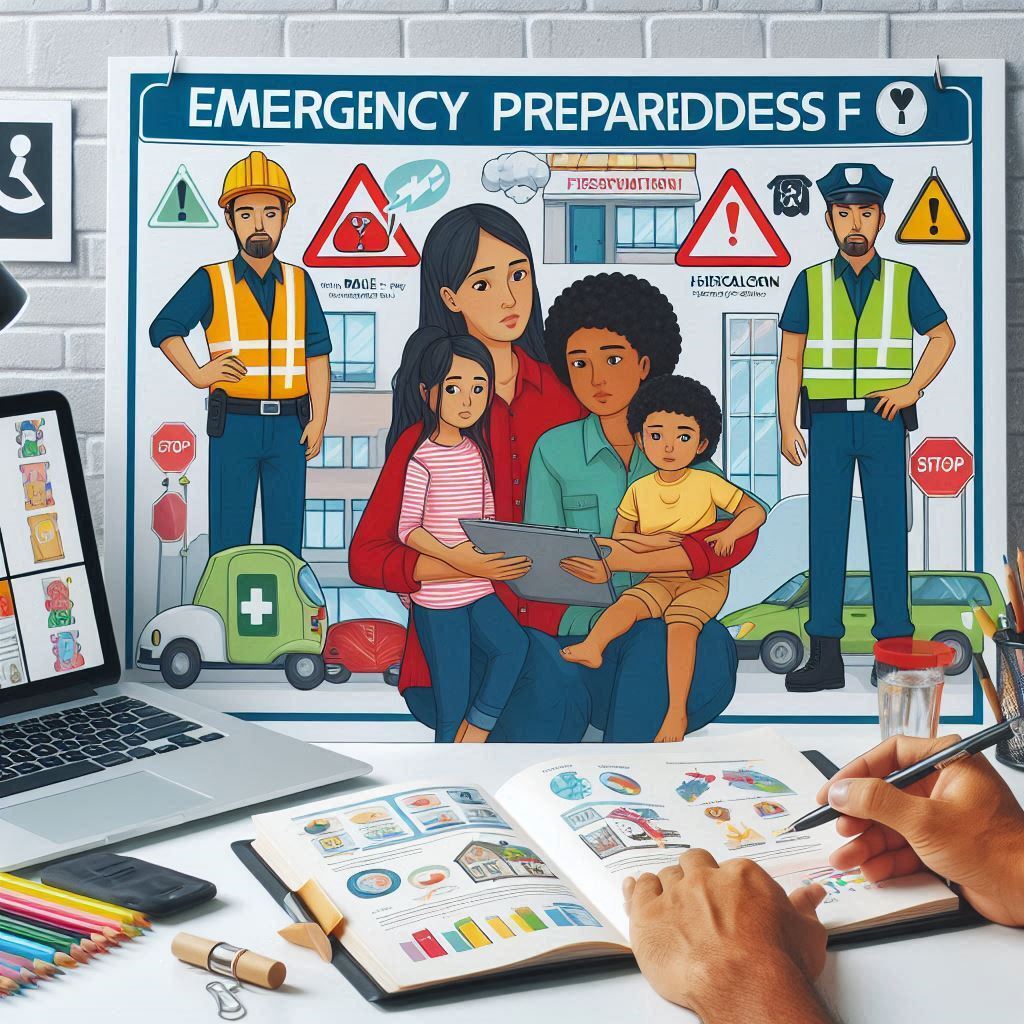
Representative image A family emergency plan makes sure everyone knows who to call, where to meet and what to do if a fire, flood, earthquake or…
Read guide →
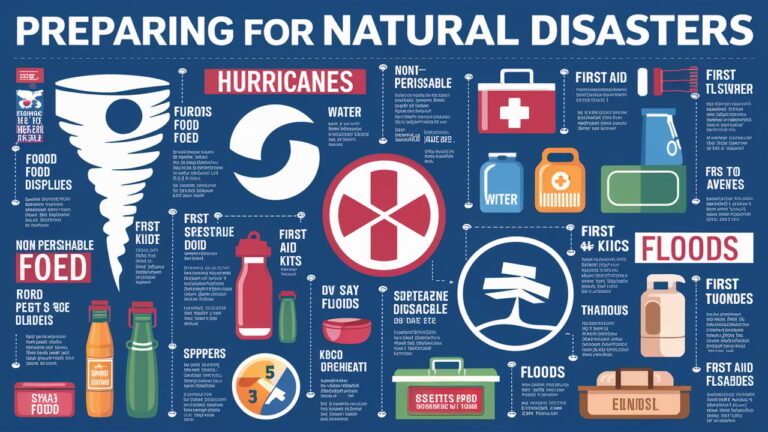
Every part of India faces some natural hazard. This guide helps a family prepare for the ones that matter where they live: earthquakes, cyclones,…
Read guide →
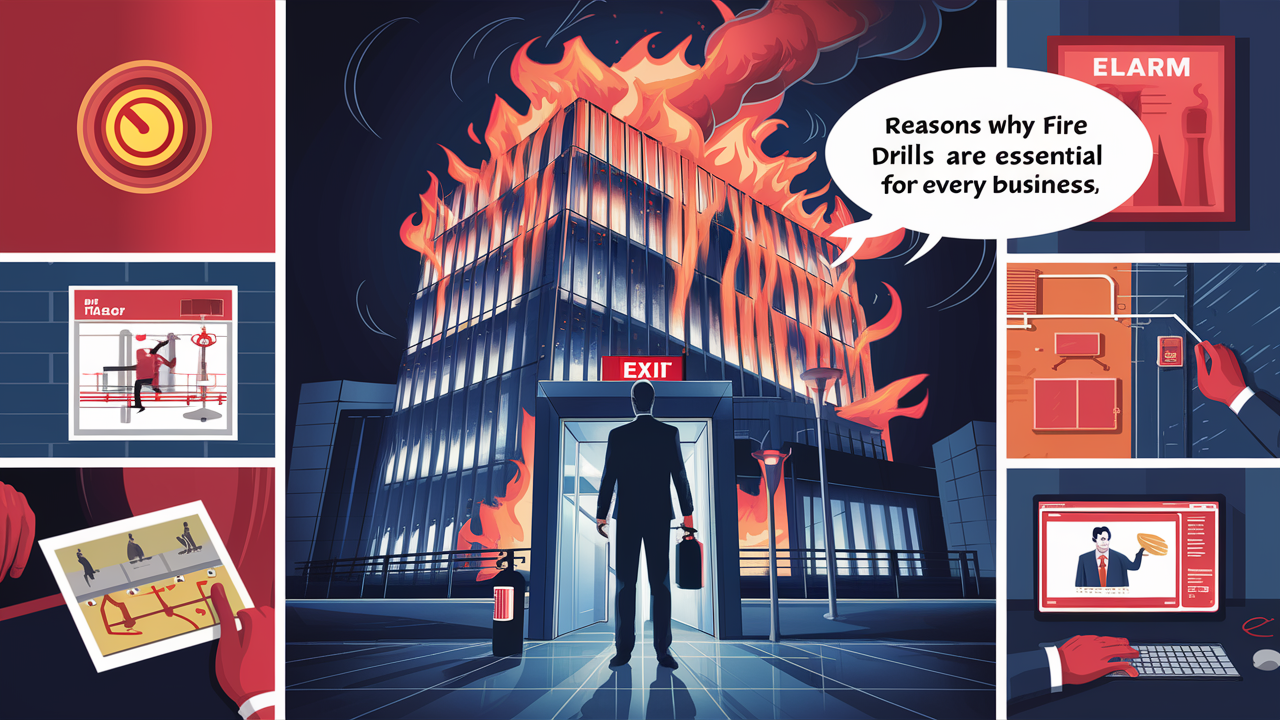
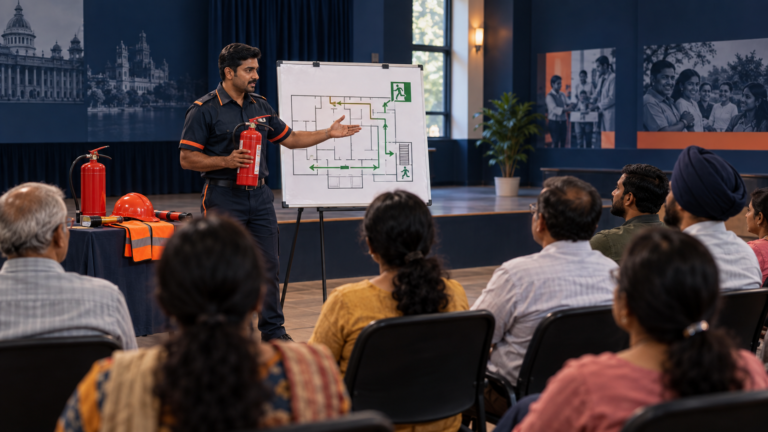
Representative image A fire drill shows how long it really takes to get everyone out, and where the plan fails. Here are five reasons every business…
Read guide →
Representative image Fire safety signs work only if people know them before the emergency. Green signs show the way out, red signs mark fire equipment and…
Read guide →
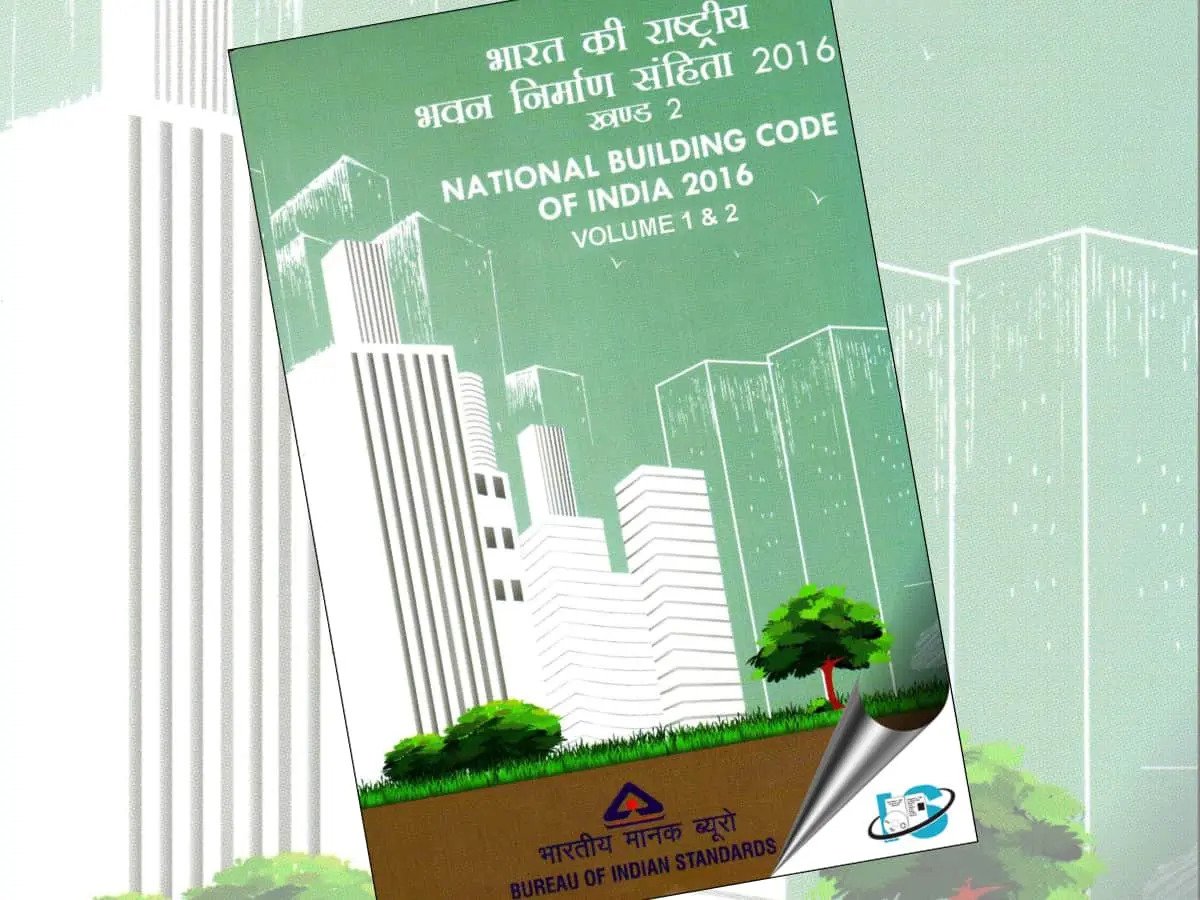
Representative image India's National Building Code sets detailed fire safety rules for public buildings, from fire-resistant materials and protected exits to alarms, sprinklers and fireman's lifts.…
Read guide →
Representative image Fire accidents keep recurring in India, the post argues, because fire safety audits lack a clear legal scope, method and frequency, while common hazards…
Read guide →
Representative image On 25 May 2024, a fire at Rajkot's TRP Game Zone killed at least 27 people and a fire at a newborn hospital in…
Read guide →
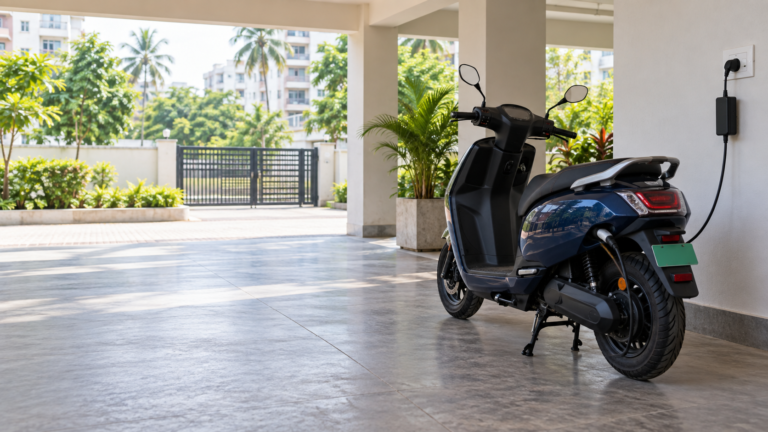
E-bike battery fires can have different causes. Use a charger compatible with the exact vehicle, do not block an exit while charging, stop using…
Read guide →
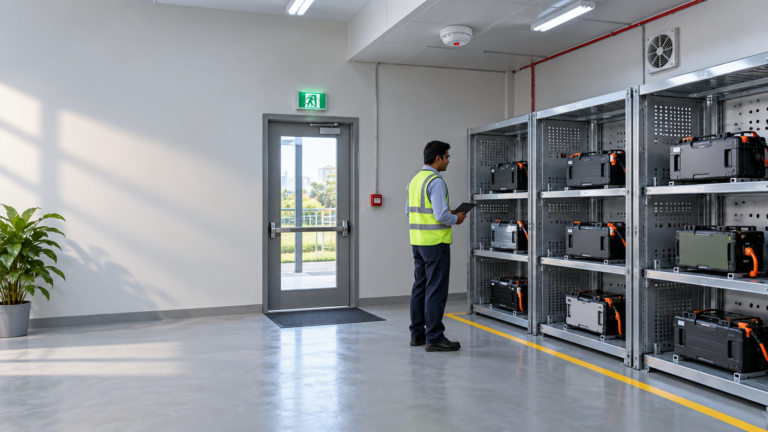
For any place that stores or charges lithium-ion batteries, safety starts with knowing what batteries you have, using matching chargers, spotting damage early, protection…
Read guide →
A 2023 peer-reviewed study looked at reported hospital fires in India from 2010 onwards. In its sample, electrical short circuits caused 89% of fires,…
Read guide →
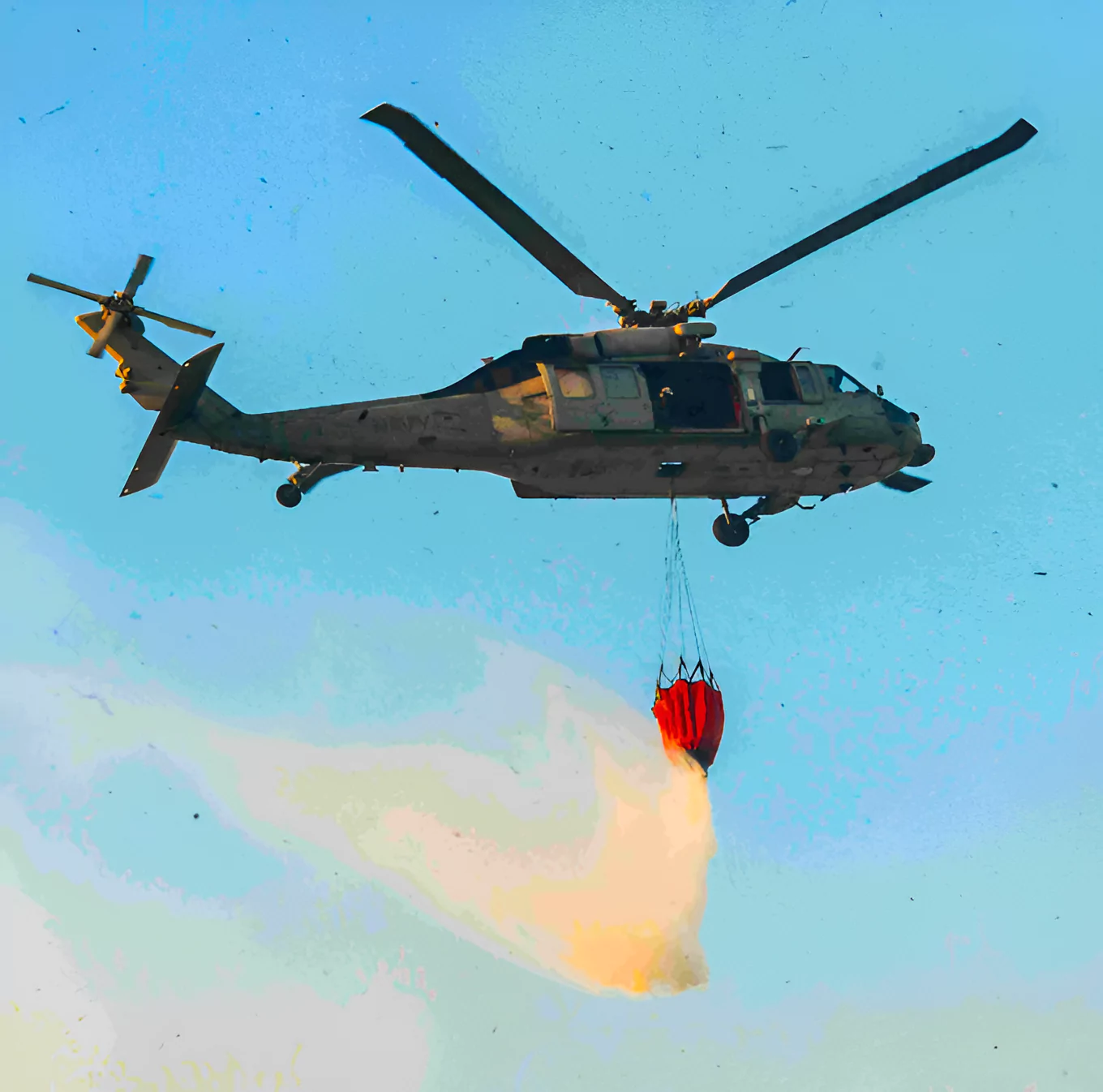
Representative image The Bambi Bucket is a collapsible bucket slung under a helicopter to scoop water and drop it on forest fires. Here is how it…
Read guide →
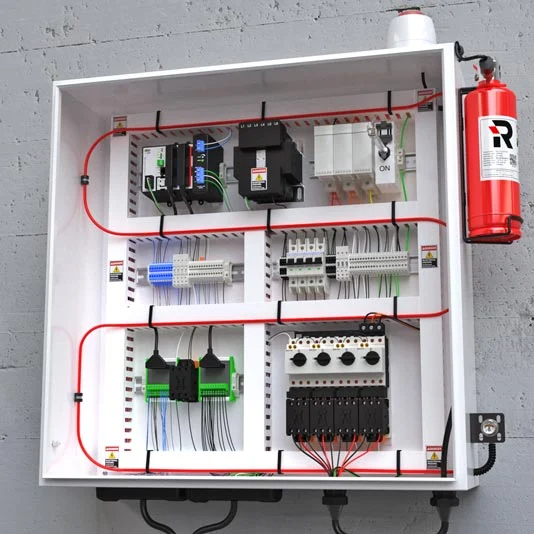
Direct-release fire suppression system in an electrical cabinet (representative image) Panel fires usually start inside a closed box, out of sight. An in-cabinet suppression system detects the fire there and releases FM-200 or CO2…
Read guide →
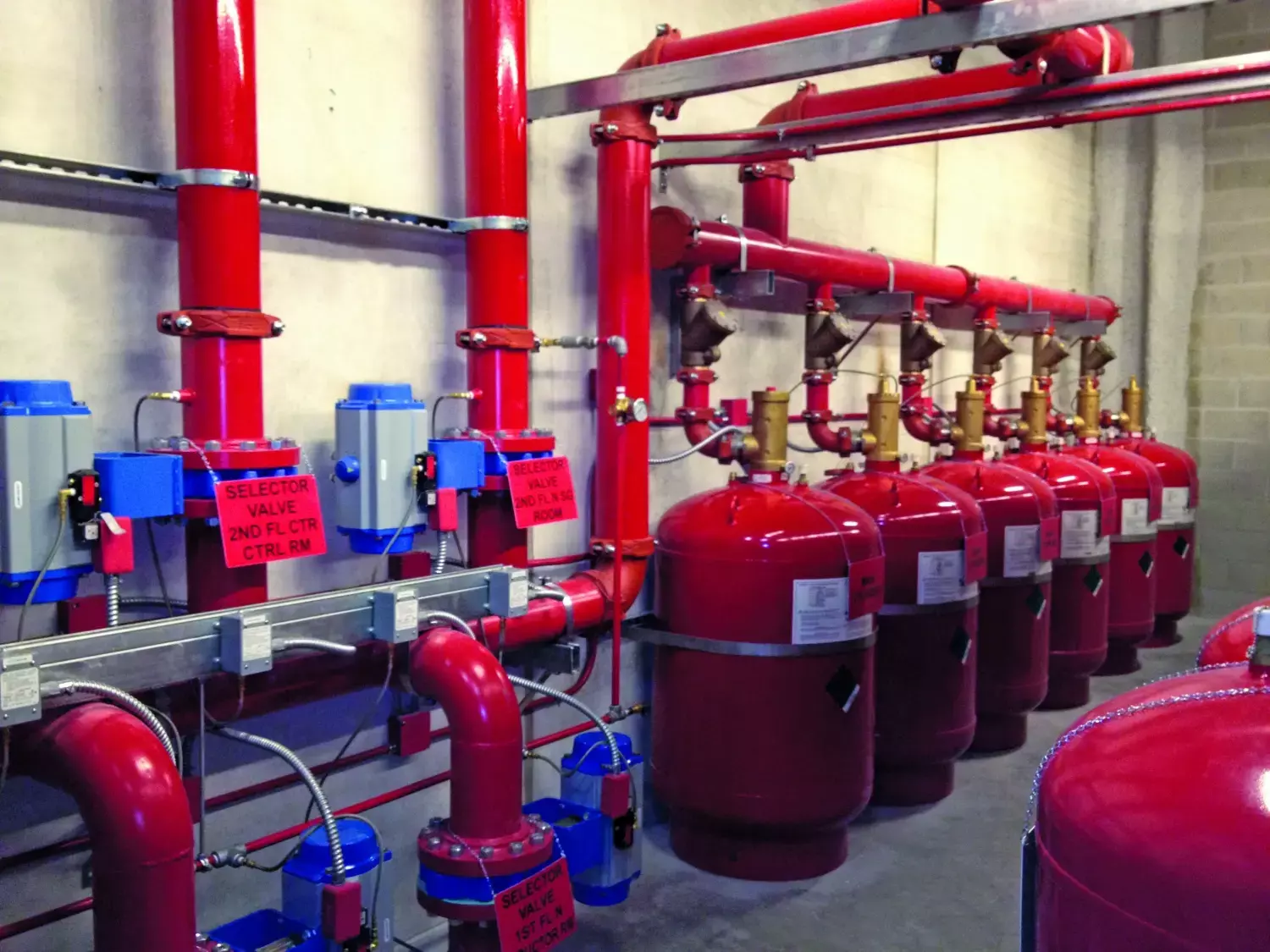
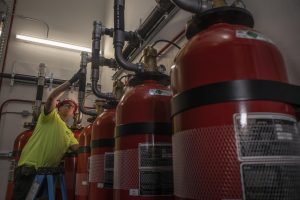
Clean-agent fire suppression system (representative image) Fire suppression systems fall into five broad groups: water-based (deluge and water mist), gas (inert gas and CO2), foam, dry chemical, and pre-engineered special…
Read guide →
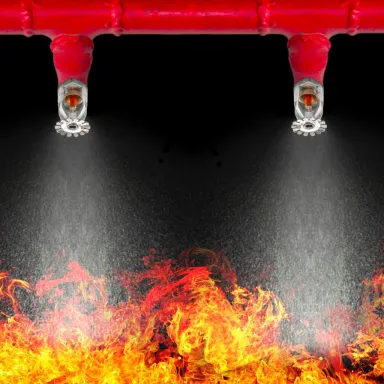
Pendent fire sprinklers discharging on a fire (representative image) ISO 6182 is the international series of standards for sprinkler-system parts. Part 1 covers sprinkler heads, Part 2 covers alarm, dry pipe, deluge and…
Read guide →
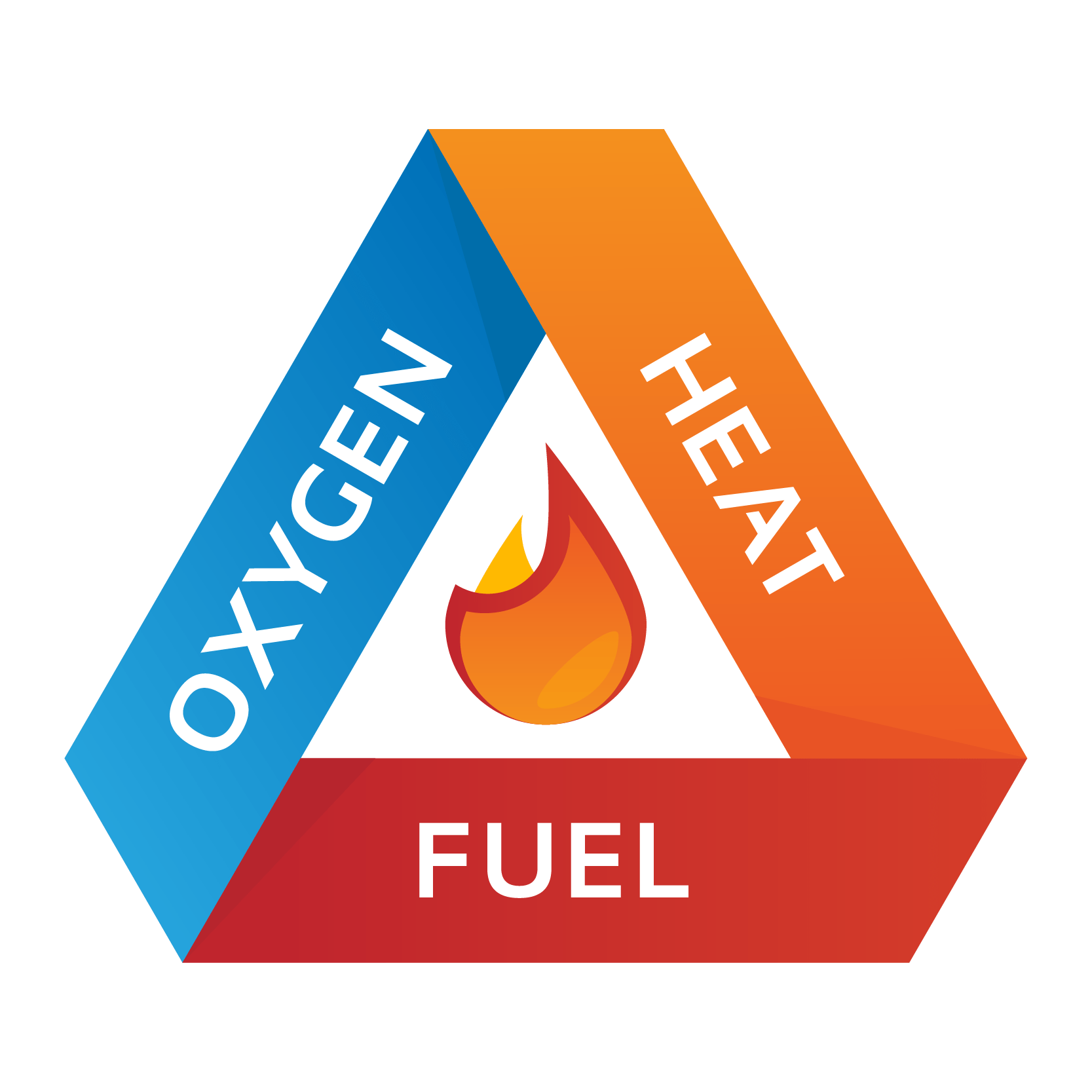
A fire needs fuel, heat and oxygen. Take away any one of them and it cannot start, or it goes out. That simple idea…
Read guide →
AI-generated editorial illustration; not an incident photograph. A carbon dioxide (CO₂) extinguisher puts out fires by pushing oxygen away, and that is also what makes it risky for people. In a…
Read guide →
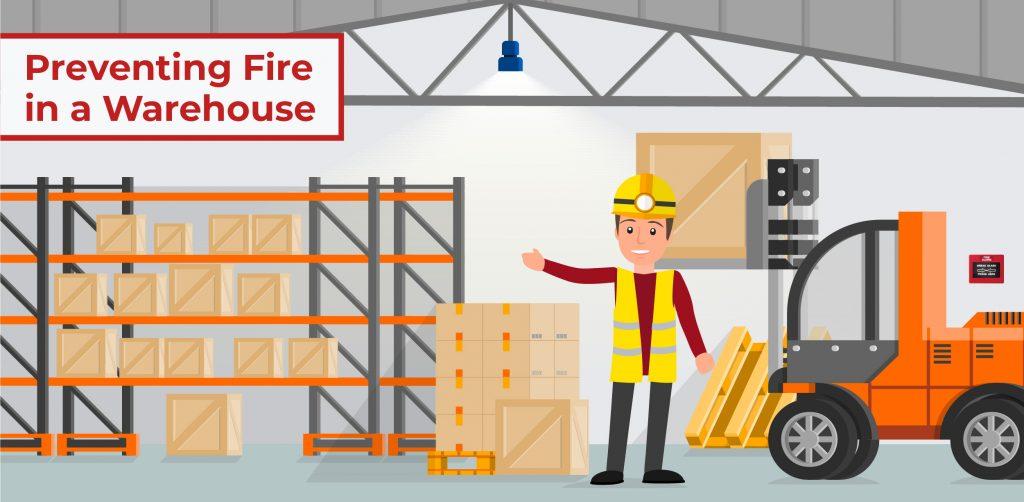
Warehouse fire (representative image) Warehouses and godowns hold a lot of fuel in one place, so a small fire can spread fast. Most warehouse fires start with combustible…
Read guide →
AI-generated editorial illustration; not an incident photograph. A fire door holds back fire and smoke for a rated time, but only when it is shut. This guide explains what ratings such…
Read guide →
AI-generated editorial illustration; not an incident photograph. A fire hydrant system of pipes, valves, outlets, hoses and pumps gives firefighters water under pressure on every floor, but only if it is…
Read guide →
AI-generated editorial illustration; not an incident photograph. India's roads have changed beyond recognition since 1947. This post traces how road accidents and deaths rose with vehicle numbers, especially after the 1990s,…
Read guide →
Representative image Simple ways to teach children fire safety at home: what starts fires, stop, drop and roll, the sound of the smoke alarm, the family…
Read guide →
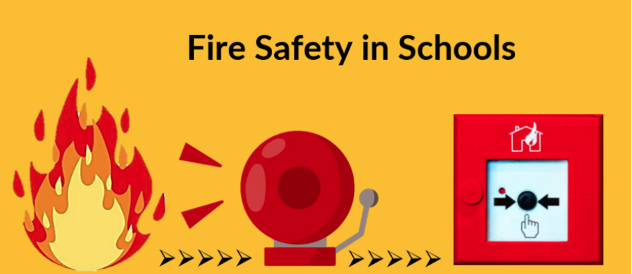
Representative image Fire safety in schools and coaching classes means stopping fires from starting and making sure every child can get out quickly. Check wiring, kitchens,…
Read guide →
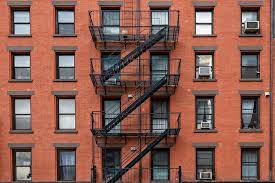
Representative image A fire escape ladder is a last-resort way out of an upper-floor window when the stairs and main door are cut off by smoke…
Read guide →
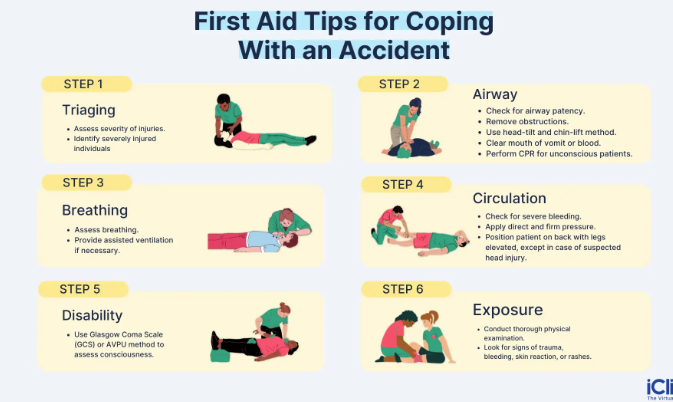
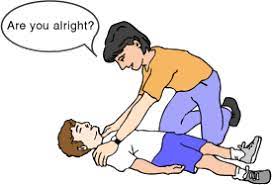
Representative image The first few minutes before the ambulance arrives are in your hands. Check for danger, call 112 early, start CPR if someone is unresponsive…
Read guide →
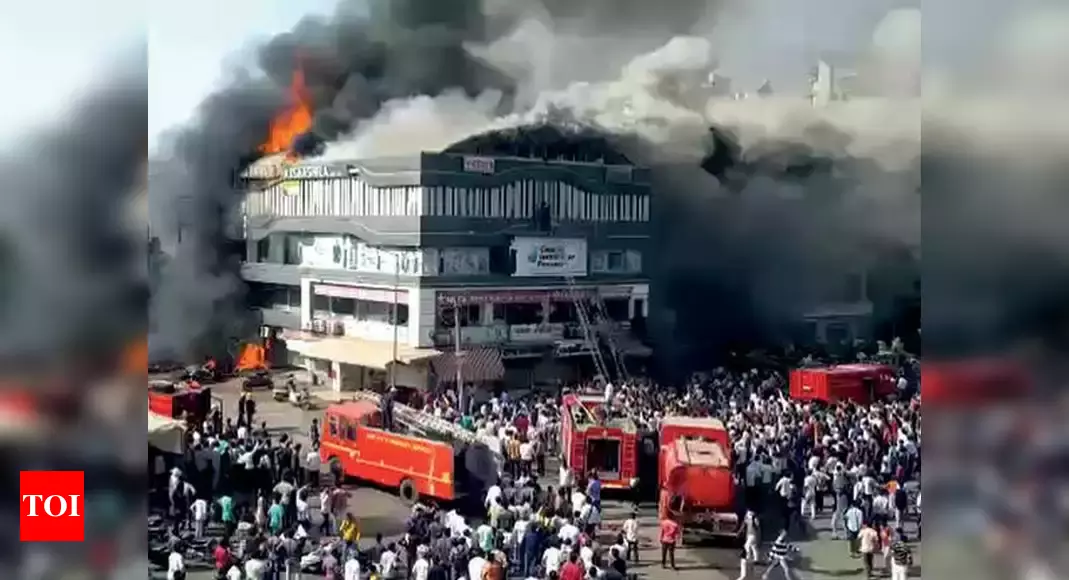
Representative image Lessons for parents and coaching-centre owners from the 24 May 2019 Takshashila Arcade fire in Surat, which killed 22 people, most of them students.…
Read guide →
Representative image In most emergencies, the neighbours are on the spot long before the fire brigade or rescue teams. A society, colony or village that has…
Read guide →
અગ્નિશામકની મૂળભૂત બાબતો: આગને નિયંત્રણમાં રાખવા માટે એક વ્યાપક માર્ગદર્શિકા is rebuilt as practical India-facing guidance connecting prevention, correct equipment, early warning, clear escape,…
Read guide →
Representative image Road crashes killed 1,72,890 people in India in 2023 (MoRTH). This post looks at the emergency response after a crash: how ambulance services grew…
Read guide →
Representative image Responders walk on glass, nails, water, foam and hot surfaces, sometimes near live wiring. Choose boots for those hazards: a toe cap, a puncture-resistant…
Read guide →
Firefighter (representative image) In fire smoke, only positive-pressure SCBA, which carries its own air, protects you. Filter masks such as N95 or FFP2 stop particles but not…
Read guide →
Firefighter (representative image) High visibility clothing keeps responders and road workers from being hit by making them easy to see, by day and in headlights at night.…
Read guide →
Fire, rescue and industrial helmets are built for different jobs and are not interchangeable. Pick a helmet rated for your work, set it up…
Read guide →

Sirens, pumps, generators and power tools can damage a responder's hearing over the years, and that damage cannot be reversed. Choose earplugs, earmuffs or…
Read guide →

Firefighting, rescue and first-aid work each need a different glove. Pick gloves for the actual hazard, whether heat, cuts, chemicals or body fluids, and…
Read guide →
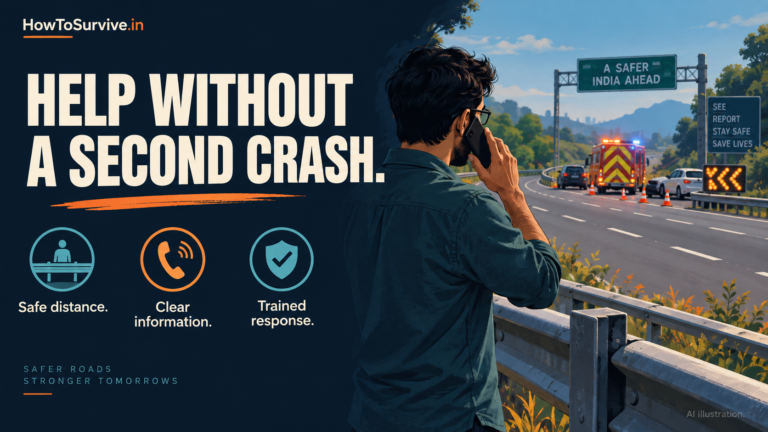
Firefighter (representative image) Fire protective clothing works as a layered system: a flame-resistant outer shell, a moisture barrier and a thermal lining. Structural turnout gear, proximity suits…
Read guide →

A face shield keeps splashes, sprays and flying particles off your face. It is not enough eye protection on its own, it does not…
Read guide →
Representative image A home fire extinguisher helps only if it suits the fires your home could actually have, the person at home can lift it, and…
Read guide →

Firefighter (representative image) Five everyday causes start many fires at home: unattended cooking, heaters, electrical faults, candles and diyas, and cigarettes or bidis thrown away while still…
Read guide →
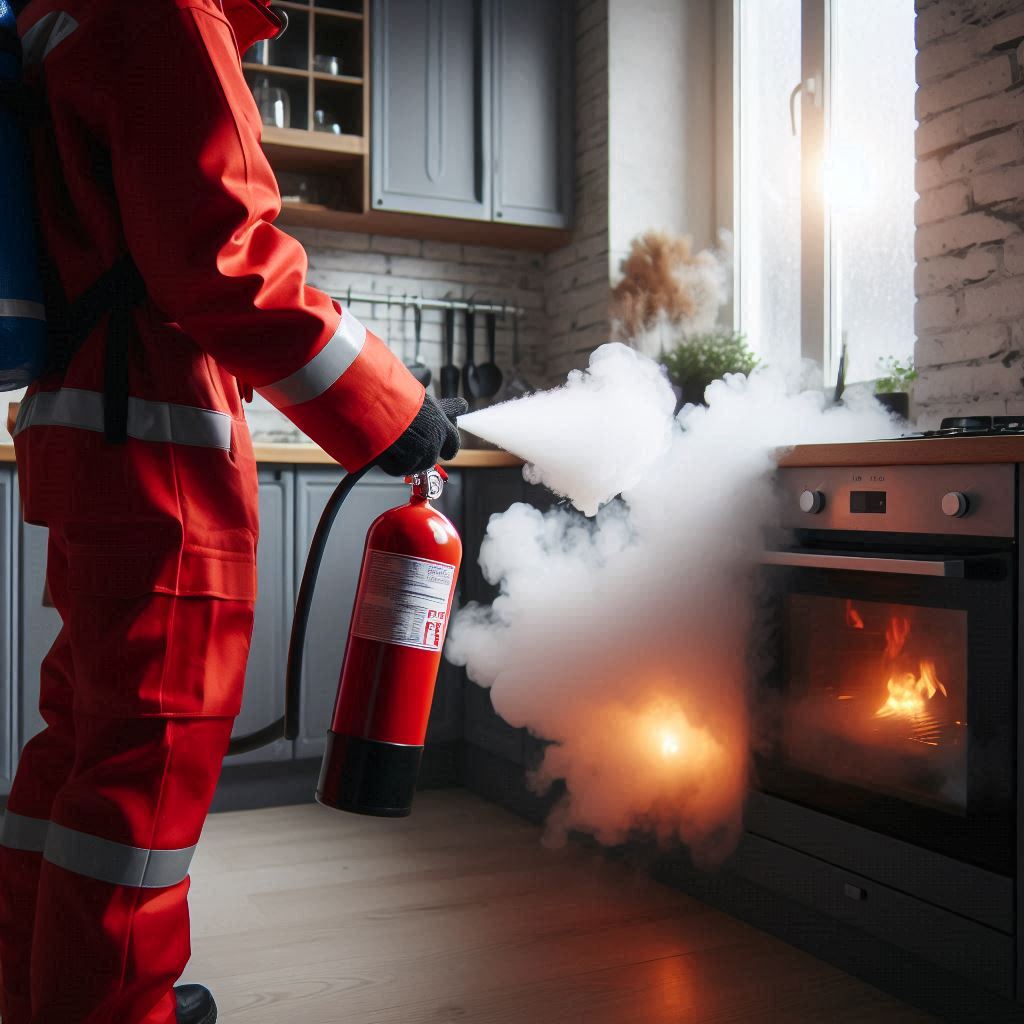
Representative image Most kitchen fires start with something ordinary: a pan left on the flame, a cloth too close to the burner, oil left to overheat…
Read guide →
Representative image A fire drill turns an evacuation plan into something people have actually done. This guide explains why drills matter and how to run one…
Read guide →

Representative image Know your extinguisher before you need it: the safety pin and tamper seal, the operating lever, the hose and nozzle, the pressure gauge and…
Read guide →

Representative image An evacuation goes smoothly only when people already know their way out, where to gather and who is in charge. Every office, factory, school…
Read guide →

Representative image A home fire escape plan means everyone in the family already knows two ways out of every room, where to meet outside, who helps…
Read guide →

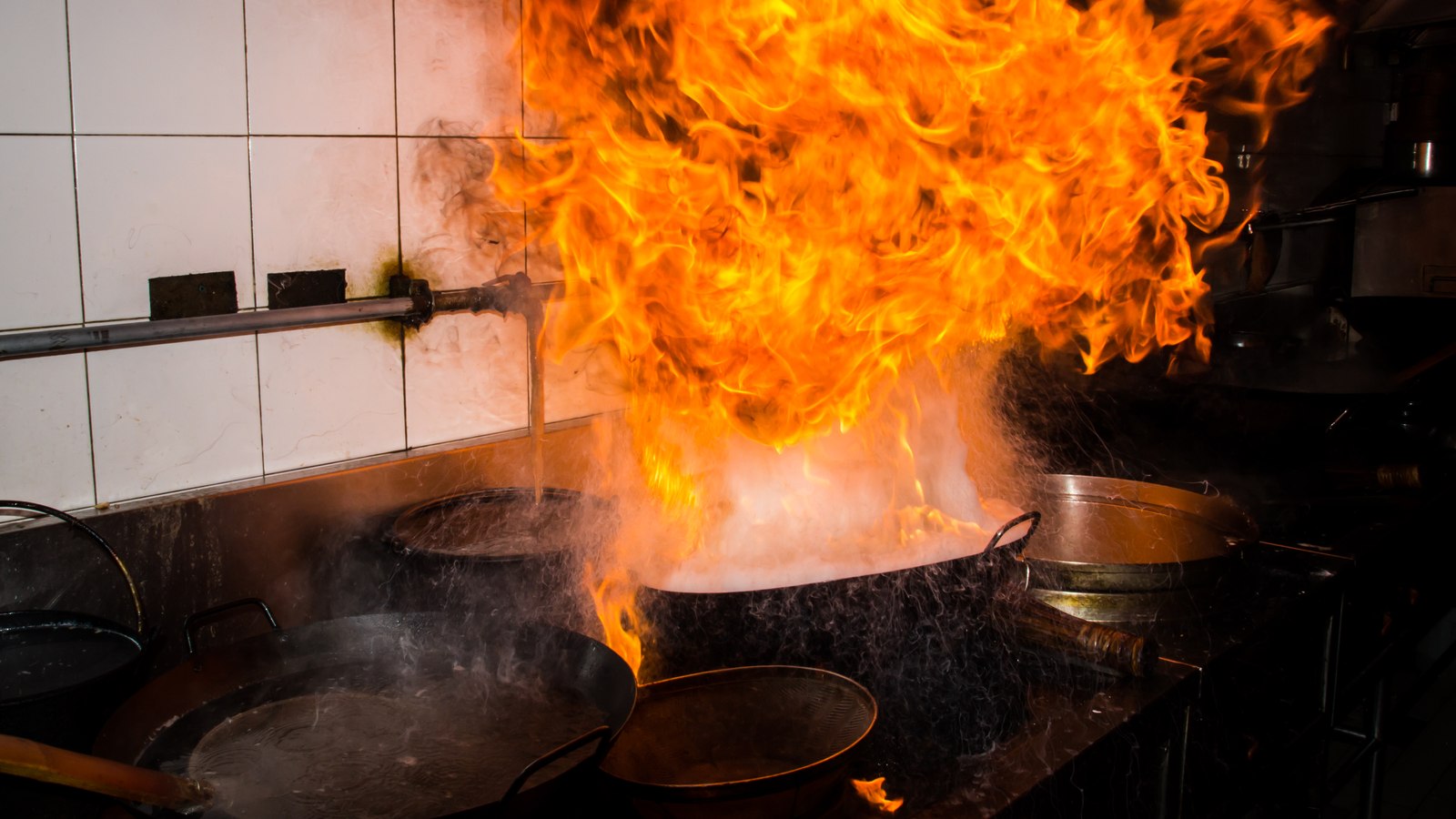
Cooking fire (representative image) Smoking oil is already too hot, so turn off the gas and leave the kadhai where it is. If a small fire stays inside…
Read guide →

Household fire-safety graphic A home needs five things in place. Working smoke alarms, fitted in the right places and tested. A practised escape plan with two ways…
Read guide →
Representative graphic First find out what is burning, then look at everything else that can hurt you. A bin fire, a room fire, a solvent fire…
Read guide →
Representative image A PPE inspection ends in a decision, not a tick. First confirm the item, the wearer, its rating, its identification number, when it is…
Read guide →
Representative image PPE usually fails in the gap between the rule book and the real job. A worker takes off fogged goggles because he cannot see,…
Read guide →
Representative image Choosing PPE starts with the job, not the catalogue. List what can hurt the worker, such as flame, radiant heat, splashes, smoke, chemicals, falling…
Read guide →
Representative image Firefighter PPE works as one system: helmet, protective hood, coat and trousers, gloves, boots, eye and hearing protection where needed, breathing apparatus with its…
Read guide →
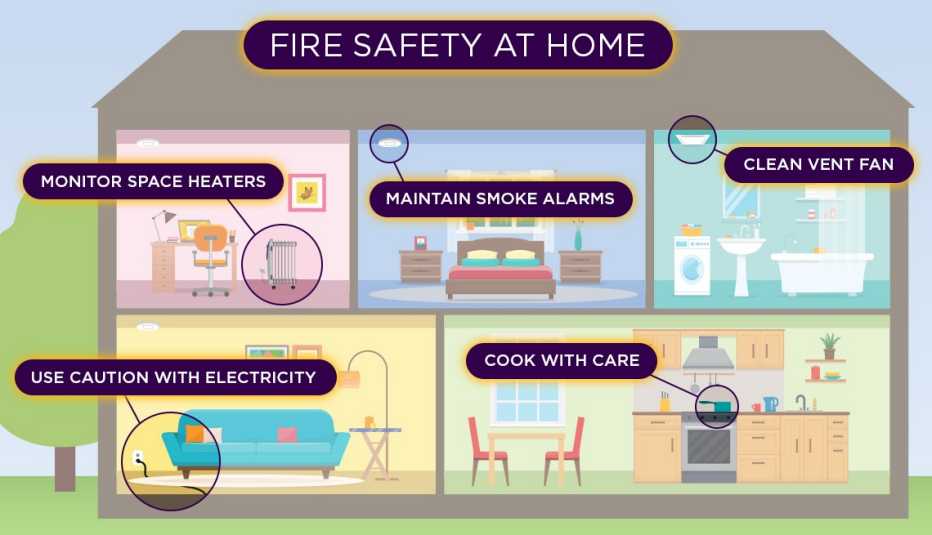
Existing HowToSurvive.in household fire-safety image used in the original post; the export… Fire safety becomes reliable when ordinary behaviour supports the building's protective systems every day. Stay with frying, grilling and boiling; keep combustibles and children…
Read guide →
Representative image A main fire pump boosts water flow and pressure when the supply alone cannot feed the hydrants, hose reels, sprinklers or water spray. A…
Read guide →
Existing HowToSurvive.in featured image from the original environmental fire-protection post The largest environmental benefit often comes from preventing a fire or controlling it while small. An uncontrolled fire consumes building materials, releases smoke and…
Read guide →
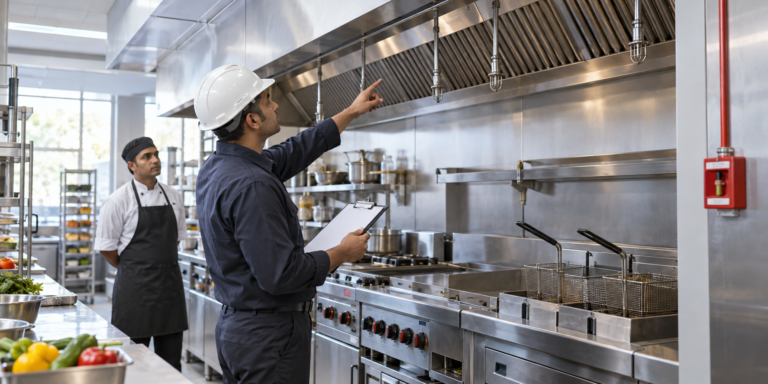
Inspect the commercial cooking system as a whole: appliance and nozzle layout, detection, manual release, interlocks, alarms, grease extraction and records. Service intervals must…
Read guide →
Existing HowToSurvive.in image from the original post: use as the lead home… Moving day changes the home's risk: unfamiliar exits, blocked passages, temporary extension leads, cardboard packaging, new appliances, LPG connections and contractors can all coincide.…
Read guide →

Existing HowToSurvive.in featured image assigned to this post A critical asset is any equipment, data, material or service whose loss would stop an essential operation, create a dangerous process condition, or take…
Read guide →
Existing HowToSurvive.in FM-200 and CO₂ image FM-200 (HFC-227ea) puts out fire mainly by absorbing heat and is stored as a liquefied gas. It does not harm the ozone layer and…
Read guide →
Existing HowToSurvive.in water-system image Water mist controls or extinguishes fire through combinations of cooling, local oxygen displacement as droplets evaporate, radiant-heat attenuation and surface wetting. Its success depends…
Read guide →
Existing HowToSurvive.in hydrostatic-testing image An extinguisher is a pressure vessel. It can rust, dent, crack, thin out or be damaged by heat even if it has never been…
Read guide →

Existing HowToSurvive.in smoke-alarm image Smoke sensors react to tiny particles in the air. They cannot always tell whether those particles came from a dangerous fire or from cooking,…
Read guide →
Existing HowToSurvive.in fire-detection image A developing fire can produce smoke particles, heat, flame radiation, gases, sparks or embers in different orders and quantities. Smoke detection usually gives earlier…
Read guide →
Existing HowToSurvive.in special-hazard suppression image Special-hazard suppression is used when a conventional sprinkler alone cannot meet the fire scenario or business objective. The engineer begins with the burning material…
Read guide →
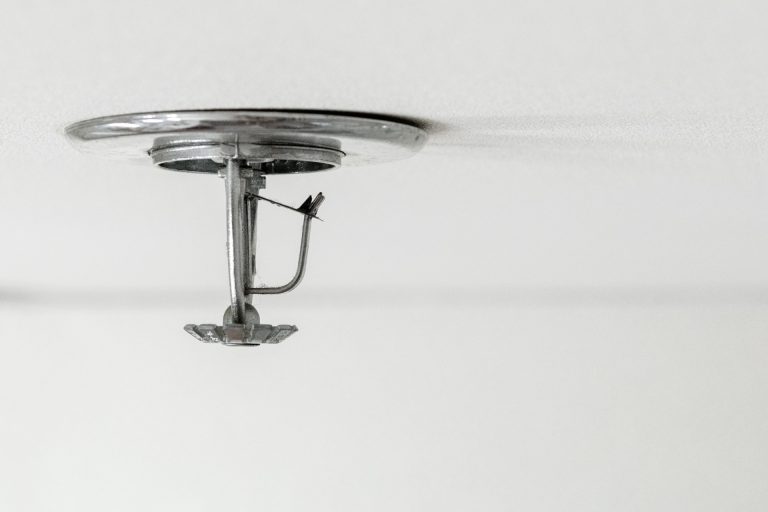
Existing HowToSurvive.in fire-sprinkler image A fire sprinkler is a nozzle, fed by a designed water supply, that opens on heat. In most systems each head opens on its…
Read guide →
Existing HowToSurvive.in government-building fire-protection image Government facilities combine life-safety responsibilities with public access, critical records, digital services, sensitive rooms and operational continuity. An office may carry a large paper…
Read guide →
Existing HowToSurvive.in workplace fire-safety image Workplace fire safety starts before you buy any equipment. Know what can burn, what can set it alight, how fire and smoke could spread,…
Read guide →
Existing HowToSurvive.in high-rise fire-safety image A fire in a tall building is not simply a ground-level fire higher up. Long climbs, smoke moving through shafts, lifts that cannot be…
Read guide →
Existing HowToSurvive.in ESFR warehouse-sprinkler image ESFR, Early Suppression Fast Response, is a sprinkler design for storage. It combines a fast response to heat with a heavy, forceful spray meant…
Read guide →
Existing HowToSurvive.in battery-storage image Thermal runaway is a self-accelerating failure in which a lithium-ion cell generates heat faster than it can dissipate it. Internal defects, electrical abuse, external…
Read guide →
Existing HowToSurvive.in sprinkler-head comparison graphic The familiar four labels are useful visually: a pendent sprinkler hangs below the pipe, a concealed pendent sits behind a heat-releasing cover plate, an…
Read guide →
Existing HowToSurvive.in facility-maintenance image Facility maintenance is a safety system for the whole building: the structure and outer walls, electrical supply, HVAC, plumbing, lifts, fire protection, emergency power…
Read guide →
Warehouse storage creates a changing fire load; existing HowToSurvive.in article image. Warehouses bring together tall and changing storage, packaging that burns, vehicles, battery chargers, electrical systems and sometimes dangerous chemicals. The NFPA estimates that US…
Read guide →
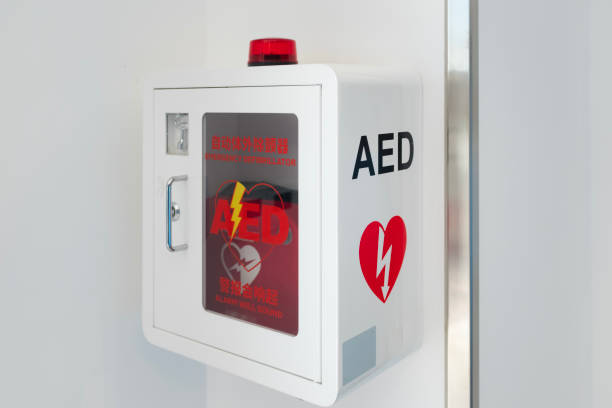
Existing HowToSurvive.in AED image An automated external defibrillator (AED) is a portable device that analyses a collapsed person's heart rhythm and advises—or automatically delivers—a shock only when it…
Read guide →
Existing HowToSurvive.in industrial alarm header image A fire alarm detects or receives a fire signal and initiates the site's planned response. A mass-notification or emergency-communication layer adds actionable information across…
Read guide →
Existing HowToSurvive.in sprinkler backflow image A fire sprinkler connection can link a building's fire system to the drinking-water supply. Backpressure or backsiphonage can make water flow the wrong way,…
Read guide →
Existing HowToSurvive.in holiday fire-safety image Festivals bring fire risks together: extra lights, open flames, long hours of cooking, decorations that burn, crowded rooms and fireworks. Check light strings and…
Read guide →
Existing HowToSurvive.in clean-agent system image A clean-agent system may protect a defined special hazard with little agent residue, but performance and life safety depend on the specific chemistry, enclosure,…
Read guide →
Existing HowToSurvive.in wired-versus-wireless alarm image A wired fire alarm carries device signals over cable; a wireless or radio-linked system carries some device communications over an approved radio network. Neither…
Read guide →
Existing HowToSurvive.in fire-alarm monitoring image A local fire alarm detects or receives a manual signal, identifies the affected point or zone, warns occupants and may operate programmed safety functions.…
Read guide →
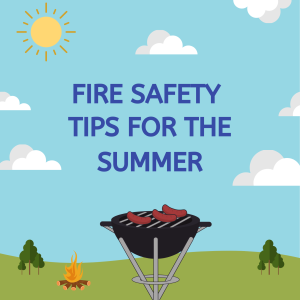
Existing HowToSurvive.in summer fire-safety illustration Staying safe from fire in summer means taking care both inside and outside the home. Use grills, sigris and camping stoves only in the…
Read guide →
Existing HowToSurvive.in extinguisher maintenance article image Fire extinguishers do not all have one fixed expiry date. Whether one is still fit for use depends on its type, how it is…
Read guide →
Children should learn how fires start, how to report danger and how to get out without hiding, pushing or going back. Adults stay responsible…
Read guide →
Existing HowToSurvive.in home-alarm article image A home smoke alarm keeps sampling the air for smoke and gives an early warning. Fit one inside every bedroom, one outside each sleeping…
Read guide →
In a fire, the first jobs are to warn people, call 101 or 112 and keep your way out open. A trained adult may…
Read guide →
Existing HowToSurvive.in archive illustration for building fire-protection systems Fire protection in a building works in layers. Passive protection, such as fire-rated walls and floors, compartments, sealed shafts, fire doors and fire-stopping, slows…
Read guide →
Existing HowToSurvive.in archive illustration for emerging firefighting technology The most useful new firefighting tools help crews see more and reach further. Thermal drones give a view from above. Small indoor drones and…
Read guide →
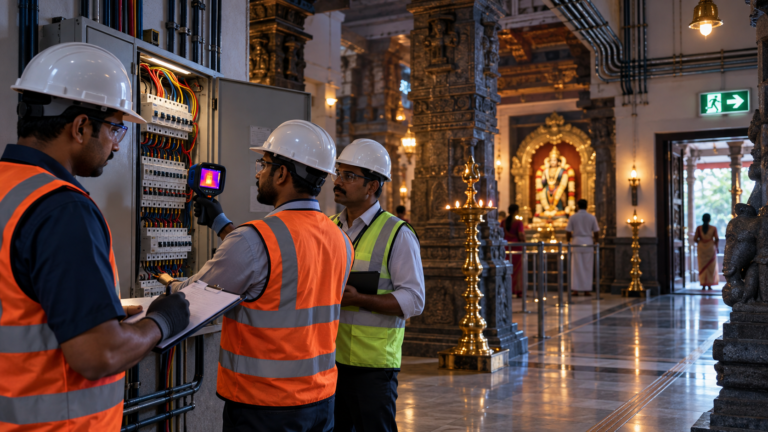
Religious buildings often experience large changes in electrical demand during festivals, temporary illumination, sound systems, kitchens and commercial activity. A competent audit must examine…
Read guide →
Fire safety works only when three things work together: prevention, life safety and fire protection. Part 4 of the National Building Code of India…
Read guide →No safety guides match these filters. Try Clear filters.